
Middle Atlantic UPX-EXPANRUN-OL15 vs Middle Atlantic OL1500R: Specification Comparison
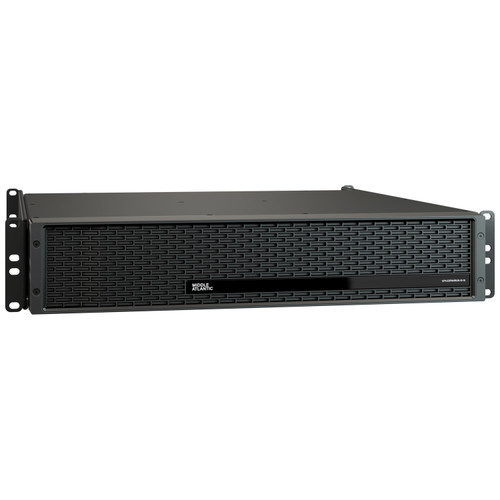
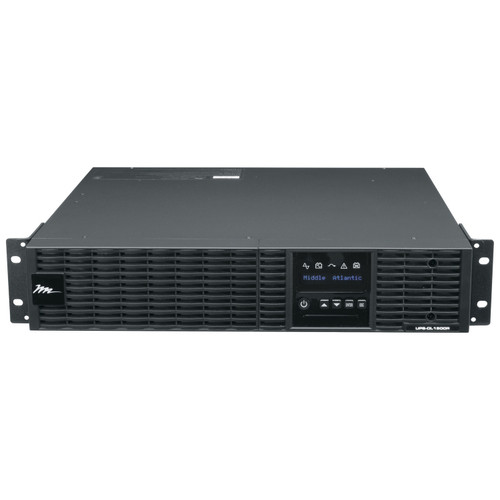
Both the Middle Atlantic UPX-EXPANRUN-OL15 and the UPS-OL1500R are 2RU, 1500VA rack-mount online UPS units sharing the same plug type, receptacle type, operating temperature range, and 120 VAC input. The key distinction is device role: the UPX-EXPANRUN-OL15 is a run-time expansion unit designed to add battery capacity to a host Nexsys UPS system, while the UPS-OL1500R is a self-contained Premium Online Double Conversion UPS with its own inverter, outlets, and watt rating. Buyers cross-shopping these should understand they serve different deployment architectures.
In This Guide
- Which unit delivers standalone power protection and what output capacity does each provide?
- How do the two units compare in physical footprint, weight, and rack installation requirements?
- What platform dependencies, certifications, and compliance attributes should installers verify before specifying either unit?
- Which should you choose: the UPX-EXPANRUN-OL15 or the OL1500R?
- Side-by-Side Specs
- FAQ
Which unit delivers standalone power protection and what output capacity does each provide?
The UPS-OL1500R is a fully self-contained online double-conversion UPS rated at 1500VA / 1350W with 8 NEMA 5-15R output receptacles and a 120 VAC AC output, making it a complete power protection appliance. The UPX-EXPANRUN-OL15, by contrast, is a run-time expansion module: its output is 48 VDC—not 120 VAC—meaning it feeds battery energy back into a compatible Nexsys host UPS rather than powering loads directly. No watt rating or outlet count is listed in its specs. A buyer needing a standalone UPS must select the OL1500R; the UPX-EXPANRUN-OL15 cannot function independently as a UPS.
How do the two units compare in physical footprint, weight, and rack installation requirements?
Both units occupy 2RU of rack space and share a 19 in (48.3 cm) width and 4 mounting points. Depth differs slightly: the UPX-EXPANRUN-OL15 is 16 in (40.6 cm) deep versus 15.57 in (39.6 cm) for the OL1500R—a negligible 0.43 in difference. Weight is the more significant contrast: the UPX-EXPANRUN-OL15 weighs 61.7 lbs (28 kg) versus 47.7 lbs (21.6 kg) for the OL1500R, a difference of 14 lbs (6.4 kg). The expansion unit's greater weight reflects its additional battery mass. Cord length also differs: 6 ft (1.8 m) on the UPX-EXPANRUN-OL15 versus 10 ft (3.1 m) on the OL1500R. Minimum mounting depth is 18 in for the expansion unit versus 20.7 in for the OL1500R; maximum is 32 in versus 36.2 in respectively.
What platform dependencies, certifications, and compliance attributes should installers verify before specifying either unit?
The UPX-EXPANRUN-OL15 is explicitly branded as a NEXSYS UPS accessory—its Special Features field reads 'NEXSYS UPS'—and its 48 VDC output voltage confirms it requires a compatible Middle Atlantic Nexsys host unit to function. No standalone management interface or outlet count is specified. Certifications listed include FCC and RoHS (via CSA and REACH fields) plus a 3-year battery warranty notation and patent reference. The OL1500R lists FCC and RoHS compliance. Neither unit is TAA compliant per spec. The UPX-EXPANRUN-OL15 originates from China (Country of Origin specified); the OL1500R has no Country of Origin listed in the provided specs. Both share the same NEMA 5-15P plug and NEMA 5-15R receptacle type and identical operating temperature range of 32°–104°F (0°–40°C).
Which should you choose: the UPX-EXPANRUN-OL15 or the OL1500R?
Our take: The UPS-OL1500R is the stronger choice when a buyer needs a complete, standalone 1500VA online double-conversion UPS—it delivers 1350W of protected 120 VAC output across 8 outlets with no external dependencies. The UPX-EXPANRUN-OL15 is not a direct substitute: its 48 VDC output confirms it is a battery expansion module, not an independent UPS, and no outlet count or watt rating is provided for it. Three concrete spec deltas reinforce this: the OL1500R provides 8 NEMA 5-15R outlets (versus none listed for the expansion unit), outputs 120 VAC AC power (versus 48 VDC on the expansion unit), and is rated at 1350W (no equivalent watt figure exists for the UPX-EXPANRUN-OL15). Specify the UPX-EXPANRUN-OL15 exclusively when extending runtime on an existing, compatible Middle Atlantic Nexsys UPS platform; specify the OL1500R for any new standalone rack power protection installation.
Side-by-Side Comparison
Spec-for-spec, from manufacturer data.
| Specification | Middle Atlantic UPX-EXPANRUN-OL15 | Middle Atlantic OL1500R |
|---|---|---|
| Device Role | Runtime expansion module (requires host UPS) | Standalone online UPS |
| VA Rating | 1500VA | 1500VA |
| Watt Rating | — | 1350W |
| Topology | Online | Online Double Conversion |
| AC Output Voltage | 110–127 VAC (via host) | 120 VAC |
| DC Output Voltage | 48 VDC | — |
| Outlet Count | — | 8 × NEMA 5-15R |
| Input Voltage | 120 VAC | 120 VAC (implied; NEMA 5-15P) |
| Plug Type | NEMA 5-15P | NEMA 5-15P |
| Receptacle Type | NEMA 5-15R | NEMA 5-15R |
| Rack Units | 2 RU | 2 RU |
| Width | 19 in (48.3 cm) | 19 in (48.3 cm) |
| Depth | 16 in (40.6 cm) | 15.57 in (39.6 cm) |
| Height | 3.5 in (8.9 cm) | 3.46 in (8.8 cm) |
| Weight | 61.7 lbs (28 kg) | 47.7 lbs (21.6 kg) |
| Cord Length | 6 ft (1.8 m) | 10 ft (3.1 m) |
| Operating Temp | 32°–104°F (0°–40°C) | 32°–104°F (0°–40°C) |
| TAA Compliant | No | No |
| Compliance | FCC, RoHS | FCC, RoHS |
| Country of Origin | China | — |
Frequently Asked Questions
Which should you choose: the UPX-EXPANRUN-OL15 or the OL1500R?
The UPS-OL1500R is the stronger choice when a buyer needs a complete, standalone 1500VA online double-conversion UPS—it delivers 1350W of protected 120 VAC output across 8 outlets with no external dependencies. The UPX-EXPANRUN-OL15 is not a direct substitute: its 48 VDC output confirms it is a battery expansion module, not an independent UPS, and no outlet count or watt rating is provided for it. Three concrete spec deltas reinforce this: the OL1500R provides 8 NEMA 5-15R outlets (versus none listed for the expansion unit), outputs 120 VAC AC power (versus 48 VDC on the expansion unit), and is rated at 1350W (no equivalent watt figure exists for the UPX-EXPANRUN-OL15). Specify the UPX-EXPANRUN-OL15 exclusively when extending runtime on an existing, compatible Middle Atlantic Nexsys UPS platform; specify the OL1500R for any new standalone rack power protection installation.
Can I use the UPX-EXPANRUN-OL15 as a standalone UPS instead of buying the OL1500R?
No. The UPX-EXPANRUN-OL15 outputs 48 VDC and is spec'd as a NEXSYS UPS run-time expansion module. It has no AC output and no listed outlet receptacles, so it cannot power loads directly. It must be paired with a compatible Middle Atlantic Nexsys host UPS unit.
Which unit is heavier and does that affect rack planning?
The UPX-EXPANRUN-OL15 is heavier at 61.7 lbs (28 kg) versus 47.7 lbs (21.6 kg) for the OL1500R—a 14 lb (6.4 kg) difference. Both are 2RU, so the expansion unit's additional battery mass means installers should verify their rack's weight rating before stacking multiple units or combining the expansion module with a host Nexsys UPS in the same rack.
Do both units meet the same compliance and certification standards?
Both units list FCC and RoHS compliance in the provided specs, and neither is TAA compliant. The UPX-EXPANRUN-OL15 additionally references a 3-year battery warranty and patent notations. Country of Origin is listed as China for the UPX-EXPANRUN-OL15; no Country of Origin is provided in the specs for the OL1500R.
More UPS Comparisons
- APC by Schneider Electric SMX1500RMI2U vs CyberPower PRL1500RT2UC
- APC by Schneider Electric SMX1500RMI2U vs CyberPower BRG1500AVRLCD2
- APC by Schneider Electric SMX1500RMI2U vs CyberPower PR1500LCD
- APC by Schneider Electric SMX1500RMI2U vs APC by Schneider Electric BR1500MS2
- APC by Schneider Electric SMX1500RMI2U vs APC by Schneider Electric SMTL1500RM3UCUS
- CyberPower PRL1500RT2UC vs APC by Schneider Electric BR1500MS2
UPS Buying Guides
Get a Second Opinion on Your Camera Choice
Share your site layout, coverage goals, and budget. Our team will validate the camera selection, flag anything we would change, and recommend products that match the use case.