
CyberPower PRL1500RT2UC vs APC by Schneider Electric SMT1500J: Specification Comparison
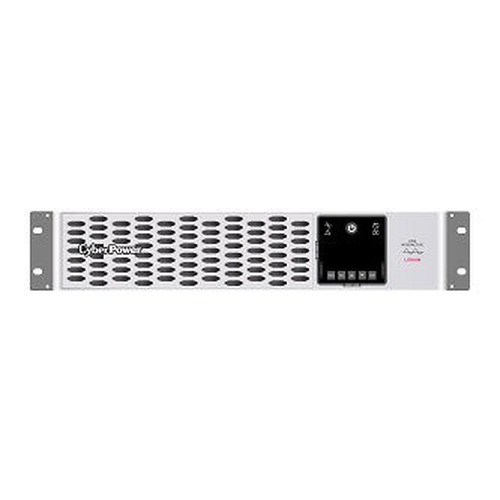
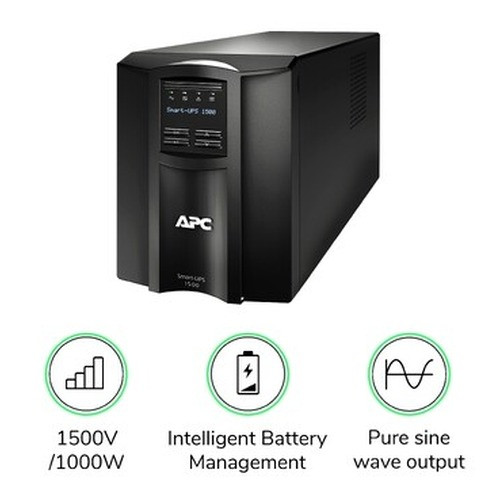
Both the CyberPower PRL1500RT2UC and the APC SMT1500J are 1500VA line-interactive UPS units targeting rack-mount or tower deployments in commercial and light-industrial environments. The comparison pits CyberPower's lithium-ion platform—rated at a true 1500W output with a full power factor of 1.0—against APC's established lead-acid Smart-UPS line, derated to 980W at 1500VA. Key decision axes are runtime and battery technology, power capacity and protection depth, and management and integration capability.
In This Guide
- Which UPS delivers longer runtime and a better battery technology story?
- How do real-watt output capacity, surge protection, and voltage regulation compare?
- Which unit offers broader management, monitoring, and platform integration options?
- Which should you choose: the PRL1500RT2UC or the SMT1500J?
- Side-by-Side Specs
- FAQ
Which UPS delivers longer runtime and a better battery technology story?
The PRL1500RT2UC uses four 12.8V / 6Ah lithium-ion cells (RB1260x4), achieving a manufacturer-stated 8.7 minutes at full load and 18.7 minutes at half load. Recharge time is 2 hours. Lithium-ion chemistry offers a longer calendar life, a wider storage temperature range (5–113 °F), and no need for periodic equalization charges compared with lead-acid.
The SMT1500J uses a sealed lead-acid battery, with rated runtimes of 7 minutes at full load and 24 minutes at half load. Recharge time is 4 hours—double the CyberPower figure. At half load the SMT1500J posts a 5.3-minute advantage; at full load the PRL1500RT2UC is 1.7 minutes ahead. The SMT1500J's storage temperature range is not specified in the provided data.
For installations where loads run near full capacity—common in high-density IP camera or NVR racks—the PRL1500RT2UC's full-load runtime edge and faster recharge are operationally meaningful. For lighter loads where 24-minute half-load runtime is the priority, the SMT1500J holds an advantage from the provided specs.
How do real-watt output capacity, surge protection, and voltage regulation compare?
The PRL1500RT2UC is rated 1500VA / 1500W with an output power factor of 1.0, meaning every VA of capacity translates directly to usable wattage. Surge suppression is rated at 2,430 J. Automatic Voltage Regulation (AVR) provides double-boost and single-buck correction, and the input voltage window spans 70–155 VAC before the unit switches to battery. Transfer time is 6 ms typical, 11 ms maximum.
The SMT1500J is rated 1500VA / 980W, reflecting a 0.65 power factor. Its surge energy rating is 459 J—approximately one-fifth of the CyberPower figure. The input voltage range is 80–123 VAC standard (adjustable 70–125 VAC). Transfer time is not stated in the provided specifications. AVR is listed as a feature but no boost/buck detail is provided.
The 520W gap in real watt capacity is the single largest quantitative difference in this comparison. A load drawing 1,000W can be supported by the PRL1500RT2UC but exceeds the SMT1500J's rated output. Surge suppression is also substantially higher on the CyberPower unit (2,430 J vs. 459 J), which is relevant for environments with frequent transient events.
Which unit offers broader management, monitoring, and platform integration options?
The PRL1500RT2UC ships with USB and RS-232 serial ports and supports SNMP, cloud monitoring, relay contact, and EPO (Emergency Power Off) natively. Remote card management is available via the optional RMCARD205. The included management software is PowerPanel® Business Edition. A multifunction LCD display provides local status. The connected-equipment guarantee is stated at $400,000.
The SMT1500J provides RS-232 and USB interfaces and includes one SmartSlot expansion bay, which accommodates APC's range of network management cards for SNMP/web access—though no specific card is included per the provided specs. The unit also features an audible alarm and LCD display. A connected-equipment guarantee value is not stated in the provided specifications.
The PRL1500RT2UC delivers more native communication options out of the box (SNMP, cloud, relay, EPO) without an additional card purchase, whereas the SMT1500J's SmartSlot provides comparable SNMP capability only with an add-on card. Buyers already invested in APC's EcoStruxure or NMC ecosystem may weight the SmartSlot's ecosystem compatibility differently.
Which should you choose: the PRL1500RT2UC or the SMT1500J?
Our take: The PRL1500RT2UC is the stronger choice when real-watt output capacity, surge protection depth, and native management breadth are the deciding factors. Its 1500W true output versus the SMT1500J's 980W is a 520W advantage that directly determines which loads each unit can sustain—critical for high-density NVR or camera racks. Surge suppression is 2,430 J on the CyberPower versus 459 J on the APC, a five-to-one margin relevant in sites with transient-prone circuits. Recharge time is 2 hours versus 4 hours, minimizing vulnerability windows after a discharge event. The SMT1500J holds one clear numerical edge: 24-minute half-load runtime versus 18.7 minutes. Buyers running lightly loaded systems through extended outages, or those with existing APC NMC infrastructure leveraging the SmartSlot, may find the SMT1500J the more practical fit. For new deployments requiring maximum protected wattage and richer out-of-box management, the PRL1500RT2UC's spec sheet supports a clear advantage.
Side-by-Side Comparison
Spec-for-spec, from manufacturer data.
| Specification | CyberPower PRL1500RT2UC | APC by Schneider Electric SMT1500J |
|---|---|---|
| Capacity (VA) | 1500 VA | 1500 VA |
| Capacity (Watts) | 1500 W | 980 W |
| Output Power Factor | 1.0 | 0.65 |
| Topology | Line Interactive | Line Interactive |
| Output Waveform | Sine Wave | Sine Wave |
| Battery Chemistry | Lithium-Ion | Lead Acid |
| Runtime at Full Load | 8.7 min | 7 min |
| Runtime at Half Load | 18.7 min | 24 min |
| Recharge Time | 2 hours | 4 hours |
| Surge Energy Rating | 2,430 J | 459 J |
| Input Voltage Range | 70–155 VAC | 80–123 VAC (adj. 70–125 VAC) |
| Transfer Time | 6 ms typical / 11 ms max | Not specified |
| Communication (native) | USB, RS-232, SNMP, Cloud, Relay, EPO | RS-232, USB |
| Expansion Slot | — | 1 x SmartSlot |
| Form Factor | Rack/Tower, 2U | Not specified in provided data |
| Warranty | 5-Year Limited | 2-Year Limited |
Frequently Asked Questions
Which should you choose: the PRL1500RT2UC or the SMT1500J?
The PRL1500RT2UC is the stronger choice when real-watt output capacity, surge protection depth, and native management breadth are the deciding factors. Its 1500W true output versus the SMT1500J's 980W is a 520W advantage that directly determines which loads each unit can sustain—critical for high-density NVR or camera racks. Surge suppression is 2,430 J on the CyberPower versus 459 J on the APC, a five-to-one margin relevant in sites with transient-prone circuits. Recharge time is 2 hours versus 4 hours, minimizing vulnerability windows after a discharge event. The SMT1500J holds one clear numerical edge: 24-minute half-load runtime versus 18.7 minutes. Buyers running lightly loaded systems through extended outages, or those with existing APC NMC infrastructure leveraging the SmartSlot, may find the SMT1500J the more practical fit. For new deployments requiring maximum protected wattage and richer out-of-box management, the PRL1500RT2UC's spec sheet supports a clear advantage.
Can either UPS handle a load above 1,000 watts?
Only the PRL1500RT2UC is rated to do so—its output is specified at 1500W with a power factor of 1.0. The SMT1500J is rated 980W (1500VA at a 0.65 power factor); loads exceeding 980W would be outside its rated capacity per the provided specifications.
Does the SMT1500J or PRL1500RT2UC last longer on battery during a power outage?
It depends on load level. At full load the PRL1500RT2UC provides 8.7 minutes versus 7 minutes for the SMT1500J. At half load the SMT1500J provides 24 minutes versus 18.7 minutes for the PRL1500RT2UC. Neither unit's runtime at other load percentages is provided in the available specifications.
Do I need to buy an add-on card to get SNMP monitoring on either unit?
For the PRL1500RT2UC, SNMP is listed as a native communication option; the optional RMCARD205 adds remote management card functionality but SNMP support is indicated in the base spec. For the SMT1500J, SNMP capability requires populating the SmartSlot with an APC network management card, which is not included per the provided specifications.
More UPS Comparisons
- APC by Schneider Electric SMX1500RMI2U vs CyberPower PRL1500RT2UC
- APC by Schneider Electric SMX1500RMI2U vs CyberPower BRG1500AVRLCD2
- APC by Schneider Electric SMX1500RMI2U vs CyberPower PR1500LCD
- APC by Schneider Electric SMX1500RMI2U vs APC by Schneider Electric BR1500MS2
- APC by Schneider Electric SMX1500RMI2U vs APC by Schneider Electric SMTL1500RM3UCUS
- CyberPower PRL1500RT2UC vs APC by Schneider Electric BR1500MS2
UPS Buying Guides
Get a Second Opinion on Your Camera Choice
Share your site layout, coverage goals, and budget. Our team will validate the camera selection, flag anything we would change, and recommend products that match the use case.