
CyberPower PR750RTXL2UC vs CyberPower PR750LCDRT1U: Specification Comparison
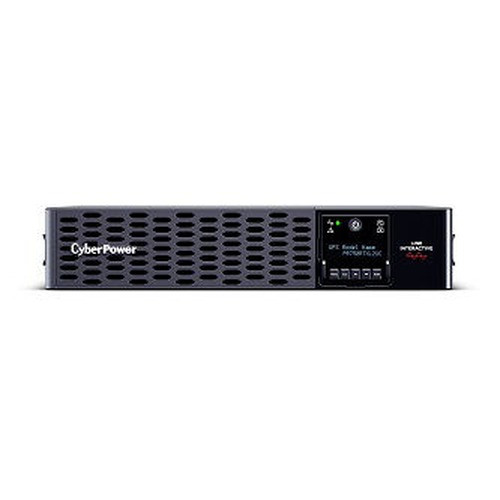
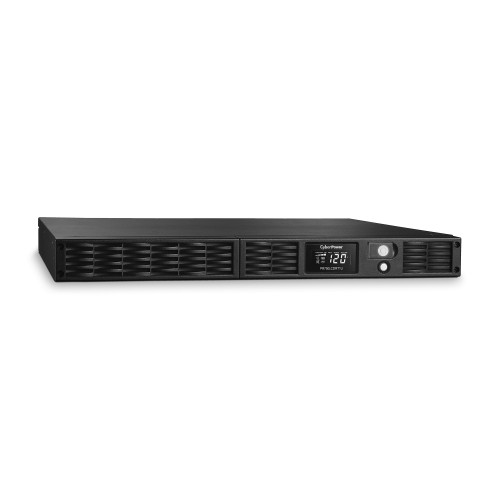
Both units are CyberPower 750 VA line-interactive sine-wave UPS systems designed for rack or tower deployment in IT and physical-security environments. The PR750RTXL2UC is a 2U model targeting installations that require richer communication options — including cloud management and SNMP — while the PR750LCDRT1U is a 1U model suited to density-constrained racks. This comparison covers power and runtime performance, physical and rack characteristics, and communication and management capabilities: the three axes that drive most UPS purchasing decisions at this capacity tier.
In This Guide
- Which UPS delivers more usable runtime and cleaner power protection?
- How do the two units differ in rack space, weight, and physical footprint?
- Which unit offers more complete communication and remote-management integration?
- Which should you choose: the PR750RTXL2UC or the PR750LCDRT1U?
- Side-by-Side Specs
- FAQ
Which UPS delivers more usable runtime and cleaner power protection?
Both models are rated at 750 VA with a line-interactive sine-wave topology, so the fundamental power conditioning architecture is identical. The PR750RTXL2UC publishes explicit runtime figures — 11.3 minutes at full load (750 W) and 28 minutes at half load (375 W) — using four sealed lead-acid batteries. The PR750LCDRT1U also uses four 6 V/7 Ah sealed lead-acid batteries, but its datasheet does not include published runtime figures at either full or half load, so a direct runtime comparison cannot be made from the available specifications.
On voltage regulation, the PR750RTXL2UC specifies Double Boost / Single Buck AVR across an adjustable 70–155 VAC input range, with selectable on-battery output voltages of 100/110/120/125 VAC ± 5%. The PR750LCDRT1U lists an 80–150 VAC input range and 120 VAC ± 5% output, but does not detail the number of boost or buck steps. The PR750RTXL2UC's wider input range (70 VAC floor vs. 80 VAC) provides more headroom on low-voltage utility feeds. Surge suppression is specified at 2,430 J for the PR750RTXL2UC; the PR750LCDRT1U does not publish a joule rating in the provided specs.
Output power factor is listed at 1.0 for the PR750RTXL2UC, meaning its 750 VA rating translates directly to 750 W of real-power capacity. The PR750LCDRT1U does not publish an output power factor in the available specifications, so its real-power capacity cannot be confirmed from spec data alone.
How do the two units differ in rack space, weight, and physical footprint?
The most immediately visible difference is rack height. The PR750RTXL2UC occupies 2U (43.43 × 8.64 × 41.15 cm / W×H×D) and weighs 24.09 kg (approximately 53.1 lb). The PR750LCDRT1U occupies 1U (17.25 × 1.75 × 15.8 in / W×H×D, approximately 43.8 × 4.4 × 40.1 cm) and weighs 30.7 lb (approximately 13.9 kg). The PR750LCDRT1U therefore saves 1U of rack space and is roughly 10 kg lighter — meaningful advantages in dense telecom cabinets or edge enclosures where vertical space and floor-load budgets are constrained.
Both units are listed as Rack/Tower convertible, so either can be oriented vertically in a tower configuration where rack mounting is not available. The PR750LCDRT1U's shallower published depth (15.8 in / ~40.1 cm) is slightly less than the PR750RTXL2UC's 41.15 cm, which may matter in shallow-depth wall-mount enclosures. Neither spec sheet calls out a minimum enclosure depth requirement beyond the unit dimensions themselves.
Audible noise is specified at 52.5 dB for the PR750RTXL2UC; no noise figure is published for the PR750LCDRT1U. Operating temperature is stated for the PR750LCDRT1U (0–40 °C / 32–104 °F) but is not provided in the PR750RTXL2UC spec sheet as supplied.
Which unit offers more complete communication and remote-management integration?
The PR750RTXL2UC has the substantially richer communication stack. It ships with USB, serial (1 × serial port), dry-contact relay, EPO (Emergency Power Off), and native cloud connectivity, and it supports SNMP via an optional RMCARD205 management card. It also bundles PowerPanel® Business software for centralized UPS management. The connected-equipment guarantee is $400,000.
The PR750LCDRT1U's available specifications do not detail communication interfaces beyond the product-type description ('Smart App LCD AVR'). No USB port count, serial port, SNMP capability, EPO terminal, relay output, software bundle, or connected-equipment guarantee figure is listed in the provided data. Buyers requiring documented SNMP, EPO, or cloud integration should verify PR750LCDRT1U interface specifications directly with CyberPower before specifying it.
The PR750RTXL2UC lists compliance with no specific safety standards in the provided data; the PR750LCDRT1U is listed as UL 1778 certified and RoHS compliant — certifications not confirmed in the PR750RTXL2UC spec sheet as supplied. Both units carry a 3-year warranty.
Which should you choose: the PR750RTXL2UC or the PR750LCDRT1U?
Our take: The PR750RTXL2UC is the stronger choice when communication depth, wider input-voltage tolerance, and documented runtime performance are decision criteria. It publishes a 70–155 VAC input range versus the PR750LCDRT1U's 80–150 VAC, a confirmed 2,430 J surge rating versus no published joule figure, and explicit runtime data (11.3 min full / 28 min half load) that the PR750LCDRT1U's available specs do not match. Its native cloud, EPO, dry-contact relay, and optional SNMP card support enterprise and multi-site deployments managed through PowerPanel® Business. The PR750LCDRT1U counters with a 1U profile versus 2U, a lighter weight of ~13.9 kg versus ~24.1 kg, and listed UL 1778 and RoHS certifications. It is the appropriate choice when rack-unit density is the primary constraint and advanced remote management is handled elsewhere in the architecture. Confirm PR750LCDRT1U communication interfaces directly with CyberPower before specifying.
Side-by-Side Comparison
Spec-for-spec, from manufacturer data.
| Specification | CyberPower PR750RTXL2UC | CyberPower PR750LCDRT1U |
|---|---|---|
| Capacity (VA / W) | 750 VA / 750 W | 750 VA / — W (W not stated) |
| Topology | Line Interactive | Line Interactive |
| Waveform | Sine Wave | Sine Wave (Pure Sinewave) |
| Form Factor / Rack Height | Rack / Tower — 2U | Rack / Tower — 1U |
| Dimensions W×H×D | 43.43 × 8.64 × 41.15 cm | 43.8 × 4.4 × 40.1 cm (converted from in) |
| Weight | 24.09 kg (53.1 lb) | 13.9 kg (30.7 lb) |
| Nominal Input Voltage | 120 VAC | 120 VAC |
| Input Voltage Range | 70 – 155 VAC | 80 – 150 VAC |
| Output Voltage | 100–125 VAC ± 5% | 120 VAC ± 5% |
| Output Power Factor | 1.0 | — |
| AVR | Double Boost / Single Buck | AVR (steps not specified) |
| Runtime at Full Load | 11.3 min | — |
| Runtime at Half Load | 28 min | — |
| Battery | 4 × Sealed Lead-Acid | 4 × 6 V/7 Ah Sealed Lead-Acid |
| Typical Recharge Time | 3 hours | — |
| Outlets | 8 × NEMA 5-15R | 7 × NEMA 5-15R |
| Surge Suppression | 2,430 J | — |
| Communication Interfaces | USB, Serial, Relay, EPO, Cloud; SNMP via opt. card | — |
| Management Software | PowerPanel® Business | — |
| Cord Length | 10 ft | — |
| Plug Type | NEMA 5-15P | NEMA 5-15P (implied by 15A/5-15R) |
| Connected Equipment Guarantee | $400,000 | — |
| Warranty | 3 Year | 3 Year |
| Certifications | — | UL 1778, RoHS |
| Audible Noise | 52.5 dB | — |
| Operating Temperature | — | 0–40 °C (32–104 °F) |
Frequently Asked Questions
Which should you choose: the PR750RTXL2UC or the PR750LCDRT1U?
The PR750RTXL2UC is the stronger choice when communication depth, wider input-voltage tolerance, and documented runtime performance are decision criteria. It publishes a 70–155 VAC input range versus the PR750LCDRT1U's 80–150 VAC, a confirmed 2,430 J surge rating versus no published joule figure, and explicit runtime data (11.3 min full / 28 min half load) that the PR750LCDRT1U's available specs do not match. Its native cloud, EPO, dry-contact relay, and optional SNMP card support enterprise and multi-site deployments managed through PowerPanel® Business. The PR750LCDRT1U counters with a 1U profile versus 2U, a lighter weight of ~13.9 kg versus ~24.1 kg, and listed UL 1778 and RoHS certifications. It is the appropriate choice when rack-unit density is the primary constraint and advanced remote management is handled elsewhere in the architecture. Confirm PR750LCDRT1U communication interfaces directly with CyberPower before specifying.
Which unit is better for a managed IT environment that needs SNMP and remote monitoring?
The PR750RTXL2UC is the documented choice here. It supports SNMP via the optional RMCARD205 card, includes a dry-contact relay, EPO terminal, and native cloud connectivity, and bundles PowerPanel® Business software. The PR750LCDRT1U's available specifications do not confirm any of these interfaces, so its suitability for SNMP-managed environments cannot be verified from the provided data.
If I only have 1U of free rack space, can the PR750RTXL2UC fit?
No. The PR750RTXL2UC requires 2U of rack space (8.64 cm / approximately 3.5 in of height). The PR750LCDRT1U is the 1U option in this comparison, measuring 1.75 in tall. If your enclosure has only a single rack unit available, the PR750LCDRT1U is the only viable choice between these two models.
Do both units carry the same warranty and connected-equipment guarantee?
Both units carry a 3-year warranty. However, only the PR750RTXL2UC publishes a connected-equipment guarantee — $400,000 — in the provided specifications. No connected-equipment guarantee figure is listed for the PR750LCDRT1U in the available spec data. Verify this with CyberPower directly if the guarantee is a procurement requirement.
More UPS Comparisons
- APC by Schneider Electric SMT750C vs CyberPower PR750RTXL2UC
- APC by Schneider Electric SMT750C vs Vertiv GXT5-750LVRT2UXL
- APC by Schneider Electric SMT750C vs CyberPower PR750LCDRT1U
- APC by Schneider Electric SMT750C vs CyberPower AVRG750U
- APC by Schneider Electric SMT750C vs APC by Schneider Electric SMT750CUS
- APC by Schneider Electric SMT750CUS vs CyberPower PR750RTXL2UC
UPS Buying Guides
Get a Second Opinion on Your Camera Choice
Share your site layout, coverage goals, and budget. Our team will validate the camera selection, flag anything we would change, and recommend products that match the use case.