
CyberPower PR2200LCD vs APC by Schneider Electric SMT2200I: Specification Comparison
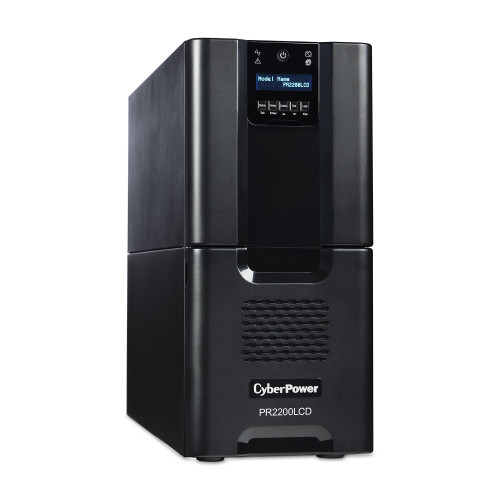
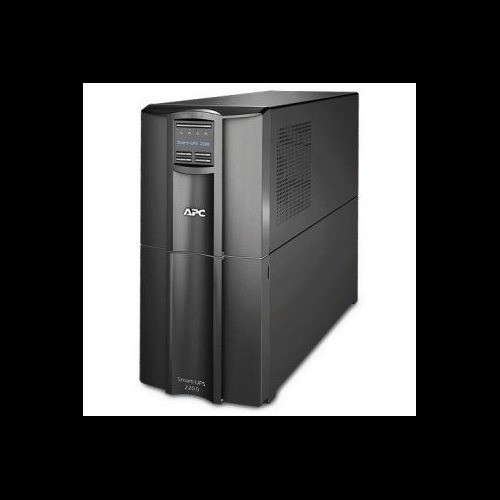
Both the CyberPower PR2200LCD and the APC SMT2200I are 2200VA line-interactive, pure sine-wave tower UPS units targeting IT rooms, network closets, and server environments requiring conditioned power and runtime backup. The comparison spans power capacity and outlet configuration, physical and environmental specifications, and battery plus management capabilities. The most critical differentiator is regional voltage compatibility — 120V (North American) for the CyberPower versus 230V (international) for the APC — which in most deployments makes this a region-driven decision before any other factor.
In This Guide
- Which UPS delivers the right voltage, output connections, and surge protection for my installation?
- How do these units compare in size, weight, and operating environment tolerances?
- What do these units offer in terms of battery runtime support, recharge, and management interfaces?
- Which should you choose: the PR2200LCD or the SMT2200I?
- Side-by-Side Specs
- FAQ
Which UPS delivers the right voltage, output connections, and surge protection for my installation?
The PR2200LCD is built for 120V AC input and output (±5%), targeting North American infrastructure. Its spec sheet lists 10 output receptacles and a 30A input connection, but outlet type is not specified beyond count. Surge energy rating is not stated in the provided specs.
The SMT2200I operates on 230V nominal input and output, with an input voltage range of 160–286V (adjustable to 151–302V), and supports 50/60 Hz input. Output connections are explicitly itemized: 1× IEC C19, 8× IEC C13, and 2× IEC Jumper outlets — 11 total protected positions. Transfer time is specified at 2ms typical. Surge energy rating is 365 Joules.
For any 230V environment (Europe, Middle East, Asia-Pacific, most of Latin America), only the SMT2200I is electrically compatible. For 120V North American installations, only the PR2200LCD applies. Outlet type and surge joule rating are not provided for the PR2200LCD, so direct comparison on those sub-dimensions is not possible from the supplied specs.
How do these units compare in size, weight, and operating environment tolerances?
The PR2200LCD measures 7.7 × 17 × 20.2 in (W×H×D) and weighs 116 lb (approximately 52.6 kg). Operating temperature range is 32–104°F (0–40°C). No audible noise figure, humidity range, operating elevation, or storage specifications are provided in the supplied specs.
The SMT2200I measures 197 × 435 × 544 mm (W×H×D) — approximately 7.8 × 17.1 × 21.4 in — and weighs 48.8 kg net (61.9 kg shipping). It specifies operating relative humidity of 0–95%, operating elevation up to 3,000 meters, storage temperature of −15 to 45°C, storage elevation up to 15,000 meters, audible noise of 45.0 dBA, and online thermal dissipation of 275.0 BTU/hr.
The two units are physically similar in footprint and height. The PR2200LCD is notably heavier at ~116 lb (52.6 kg) versus 48.8 kg for the SMT2200I — a meaningful difference for rack room logistics and floor-load planning. The SMT2200I provides substantially richer environmental data; the PR2200LCD's spec sheet is silent on humidity, elevation, noise, and heat dissipation, which may complicate data center compliance documentation.
What do these units offer in terms of battery runtime support, recharge, and management interfaces?
The PR2200LCD's battery specs list type as Sealed Lead-Acid. No recharge time, expected battery life, replacement battery part number, or runtime curves are included in the provided specs. The product name references an LCD control panel. Compliance standards listed are UL1778 and RoHS.
The SMT2200I specifies a typical recharge time of 3 hours, expected battery life of 3–5 years, replacement battery part number RBC55, and an RBC quantity of 1. It includes a SmartSlot expansion interface (1 available slot) for network management cards or other accessories, plus a multi-function LCD control panel. Conformance approvals include CE, CSA, EAC, EN/IEC 62040-1, EN/IEC 62040-2, RCM, and VDE.
The SMT2200I offers a richer documented management story via SmartSlot, a known replacement battery SKU (RBC55), and quantified battery lifecycle data. The PR2200LCD does not disclose comparable battery or interface management detail in the provided specs, making lifecycle cost planning more opaque. Warranty terms differ: APC covers the unit for 3 years but batteries separately for only 2 years; CyberPower offers a single 3-year limited warranty with no stated battery carve-out in the provided specs.
Which should you choose: the PR2200LCD or the SMT2200I?
Our take: The SMT2200I is the stronger choice when the installation is in a 230V region and detailed environmental, battery, and management documentation is required. The single largest differentiator is voltage class: the PR2200LCD is a 120V unit and the SMT2200I is a 230V unit — they are not interchangeable across regions. Beyond voltage, the SMT2200I specifies 365 Joules surge protection, a 2ms transfer time, an 11-outlet IEC output configuration, and a SmartSlot expansion port — none of which are documented in the PR2200LCD's provided specs. The SMT2200I is also 7.8 kg lighter (48.8 kg vs ~52.6 kg). The PR2200LCD carries UL1778 listing for North American compliance, which the SMT2200I does not. For a 120V North American server room, the PR2200LCD is the only electrically suitable option of the two; for any 230V deployment requiring documented environmental ratings and field-replaceable battery planning, the SMT2200I has the spec depth to support it.
Side-by-Side Comparison
Spec-for-spec, from manufacturer data.
| Specification | CyberPower PR2200LCD | APC by Schneider Electric SMT2200I |
|---|---|---|
| VA Rating | 2200VA | 2200VA |
| Topology | Not specified in provided specs | Line Interactive |
| Waveform | Sine wave (per product name) | Sine wave |
| Nominal Input Voltage | 120V AC | 230V |
| Input Voltage Range | — | 160 – 286V (adj. 151 – 302V) |
| Nominal Output Voltage | 120V AC ±5% | 230V |
| Output Frequency | — | 47 – 53 Hz |
| Transfer Time | — | 2ms typical |
| Output Connections | 10 outlets (type not specified) | 1× IEC C19, 8× IEC C13, 2× IEC Jumpers |
| Surge Energy Rating | — | 365 Joules |
| Battery Type | Sealed Lead-Acid | Sealed Lead-Acid |
| Typical Recharge Time | — | 3 hours |
| Expected Battery Life | — | 3 – 5 years |
| Replacement Battery SKU | — | RBC55 |
| Management Interface | — | SmartSlot (1 slot) |
| Dimensions (W×H×D) | 7.7 × 17 × 20.2 in | 197 × 435 × 544 mm (~7.8 × 17.1 × 21.4 in) |
| Net Weight | ~52.6 kg (116 lb) | 48.8 kg |
| Audible Noise | — | 45.0 dBA |
| Operating Temperature | 0 – 40°C | 0 – 40°C |
| Operating Humidity | — | 0 – 95% |
| Operating Elevation | — | 0 – 3,000 m |
| Conformance / Certifications | UL1778, RoHS | CE, CSA, EAC, EN/IEC 62040-1, EN/IEC 62040-2, RCM, VDE, RoHS |
| Unit Warranty | 3 Year Limited | 3 years (unit) |
| Battery Warranty | Not separately stated in provided specs | 2 years |
| Form Factor | Tower | Tower |
| Color | — | Black |
Frequently Asked Questions
Which should you choose: the PR2200LCD or the SMT2200I?
The SMT2200I is the stronger choice when the installation is in a 230V region and detailed environmental, battery, and management documentation is required. The single largest differentiator is voltage class: the PR2200LCD is a 120V unit and the SMT2200I is a 230V unit — they are not interchangeable across regions. Beyond voltage, the SMT2200I specifies 365 Joules surge protection, a 2ms transfer time, an 11-outlet IEC output configuration, and a SmartSlot expansion port — none of which are documented in the PR2200LCD's provided specs. The SMT2200I is also 7.8 kg lighter (48.8 kg vs ~52.6 kg). The PR2200LCD carries UL1778 listing for North American compliance, which the SMT2200I does not. For a 120V North American server room, the PR2200LCD is the only electrically suitable option of the two; for any 230V deployment requiring documented environmental ratings and field-replaceable battery planning, the SMT2200I has the spec depth to support it.
Can I use either of these UPS units in the United States on standard 120V circuits?
Only the CyberPower PR2200LCD is rated for 120V AC input and output, which matches North American standard circuits. The APC SMT2200I is designed for 230V nominal input and output with IEC-standard connectors used in Europe and other international markets. Connecting the SMT2200I to a 120V supply would be outside its specified input voltage range of 160–286V and is not supported by the provided specs.
Which unit gives me more flexibility for remote monitoring and network management card expansion?
The APC SMT2200I includes one SmartSlot interface, which accepts APC network management cards and other SmartSlot accessories, enabling SNMP monitoring, remote shutdown, and integration with data center management software. The CyberPower PR2200LCD's provided specs do not document an equivalent expansion slot or network interface port, so a direct comparison on this dimension cannot be made from the available data.
How do the warranties compare, and is the battery covered?
CyberPower offers a 3-year limited warranty on the PR2200LCD with no battery exclusion stated in the provided specs. APC covers the SMT2200I for 3 years on the unit but limits battery warranty to 2 years separately. Buyers with high battery-replacement exposure should note the APC battery warranty is one year shorter than the unit warranty; the CyberPower warranty terms on batteries are not explicitly broken out in the supplied data.
More UPS Comparisons
- CyberPower PR2200RTXL2UC vs APC by Schneider Electric SRT2200RMXLA
- CyberPower PR2200RTXL2UC vs APC by Schneider Electric SRT2200XLA
- CyberPower PR2200RTXL2UC vs APC by Schneider Electric SRT2200RMXLA-NC
- CyberPower PR2200RTXL2UC vs APC by Schneider Electric SMT2200I
- CyberPower PR2200RTXL2UC vs CyberPower OL2K2RTHD
- CyberPower PR2200RTXL2UC vs CyberPower OL2200RTXL2U
UPS Buying Guides
Get a Second Opinion on Your Camera Choice
Share your site layout, coverage goals, and budget. Our team will validate the camera selection, flag anything we would change, and recommend products that match the use case.