
CyberPower PR2200RTXL2UC vs CyberPower OL2K2RTHD: Specification Comparison
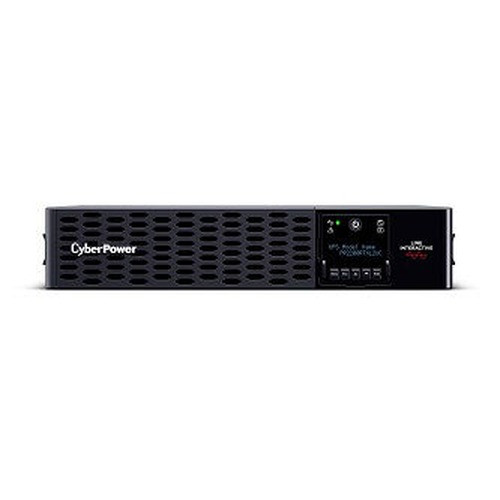
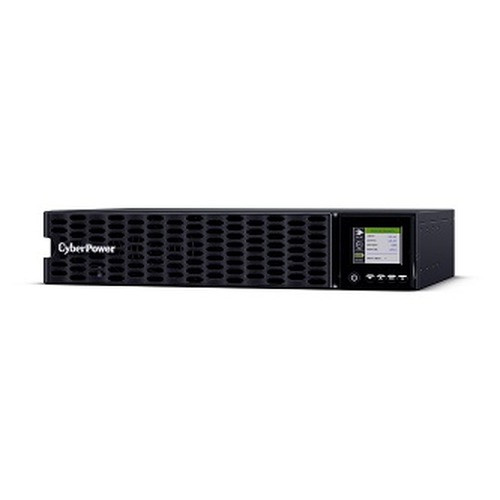
Both the CyberPower PR2200RTXL2UC and the OL2K2RTHD are 2200VA, 2U rack-mount UPS units targeting server rooms, network closets, and small data centers. The core distinction lies in topology: the PR2200RTXL2UC is a Line Interactive design rated at 2200W, while the OL2K2RTHD is an Online Double-Conversion unit rated at 1800W. Buyers evaluating these two models are typically choosing between lower acquisition cost with fast transfer times versus zero-transfer-time isolation and tighter output regulation for sensitive or mission-critical loads.
In This Guide
- How do the UPS topologies and power-quality specs affect protection of critical loads?
- What runtime and battery characteristics should buyers expect under load?
- How do outlet configurations, communication options, and management capabilities compare?
- Which should you choose: the PR2200RTXL2UC or the OL2K2RTHD?
- Side-by-Side Specs
- FAQ
How do the UPS topologies and power-quality specs affect protection of critical loads?
The PR2200RTXL2UC uses Line Interactive topology with Automatic Voltage Regulation (Double Boost, Single Buck), delivering output at 100/110/120 VAC ±5% and a typical transfer time of 4 ms to battery. It produces a true Sine Wave both on-line and on-battery, with an output power factor of 1.0, meaning its full 2200 VA translates to 2200W of usable watt capacity.
The OL2K2RTHD uses Online Double-Conversion topology, which means the load is continuously powered through the inverter — transfer time is 0 ms because there is no switching event. Output voltage is regulated to 100–125 VAC ±2%, tighter than the ±5% of the PR2200RTXL2UC. Harmonic distortion is specified at <5%. However, its power factor yields only 1800W from the 2200 VA rating — 400W less than the PR2200RTXL2UC at identical VA. An ECO Mode is available at >96% efficiency; Online mode thermal dissipation rises to 497 BTU/hr versus the PR2200RTXL2UC's 135 BTU/hr — a meaningful difference for thermal planning.
What runtime and battery characteristics should buyers expect under load?
At full load, both units are closely matched: the PR2200RTXL2UC provides 3.2 minutes and the OL2K2RTHD provides 3.1 minutes. At half load, the OL2K2RTHD edges ahead at 10.3 minutes versus 10.0 minutes for the PR2200RTXL2UC. Note that 'half load' for the PR2200RTXL2UC means 1100W, while for the OL2K2RTHD it means 900W, so the loads being compared are not identical in absolute wattage.
The PR2200RTXL2UC uses 4 batteries at 12V/9Ah (Sealed Lead-Acid) with a specified typical recharge time of 3 hours. The OL2K2RTHD uses 3 Sealed Lead-Acid batteries; a recharge time is not provided in the supplied specifications. The PR2200RTXL2UC also specifies a 30A circuit breaker on the input, compared to 20A on the OL2K2RTHD — relevant when determining branch circuit requirements.
How do outlet configurations, communication options, and management capabilities compare?
The PR2200RTXL2UC provides 8 total NEMA 5-20R outlets, of which 4 are designated as Critical Load outlets, and all 8 are battery-backed. Its input plug is a NEMA L5-30P (twist-lock, 30A), which requires a matching receptacle. Communication includes USB, Serial, SNMP, EPO, and native Cloud connectivity. Management runs via PowerPanel® Business software, and a 3-Year Limited Warranty covers the unit with a $400,000 Connected Equipment Guarantee.
The OL2K2RTHD provides 8 total outlets — 7 x NEMA 5-20R plus 1 x NEMA L5-20R — on a NEMA 5-20P input plug (standard 20A). Communication includes USB, Serial, SNMP, and EPO; Cloud connectivity is not listed in the provided specifications. Remote management is available via the optional RMCARD205 (not included). Management software is PowerPanel Business Edition. Warranty is Three-Year Limited; a Connected Equipment Guarantee dollar figure is not provided in the supplied specifications. Automatic and Manual Bypass are specified on the OL2K2RTHD; bypass is not listed for the PR2200RTXL2UC.
Which should you choose: the PR2200RTXL2UC or the OL2K2RTHD?
Our take: The OL2K2RTHD is the stronger choice when load sensitivity demands zero-transfer-time protection and tighter output voltage regulation. Its Online Double-Conversion topology delivers 0 ms transfer time and ±2% output regulation versus the PR2200RTXL2UC's 4 ms transfer and ±5% regulation — a meaningful difference for servers, medical equipment, or any load intolerant of even brief voltage excursions. It also includes Automatic and Manual Bypass, adding a serviceability path the PR2200RTXL2UC's specs do not list. Conversely, the PR2200RTXL2UC delivers 2200W usable power against the OL2K2RTHD's 1800W — a 400W advantage at the same VA rating — and generates only 135 BTU/hr versus up to 497 BTU/hr for the OL2K2RTHD in Online mode, a significant cooling-load difference. Its $400,000 Connected Equipment Guarantee and native Cloud management are also absent from the OL2K2RTHD's listed specs. Choose the PR2200RTXL2UC for higher-wattage loads in thermally constrained spaces; choose the OL2K2RTHD for sensitive electronics requiring continuous, regulated, zero-gap power.
Side-by-Side Comparison
Spec-for-spec, from manufacturer data.
| Specification | CyberPower PR2200RTXL2UC | CyberPower OL2K2RTHD |
|---|---|---|
| Topology | Line Interactive | Online Double-Conversion |
| Capacity (VA) | 2200 VA | 2200 VA |
| Capacity (Watts) | 2200 W | 1800 W |
| Output Power Factor | 1.0 | Not specified (derived ~0.82) |
| Transfer Time | 4 ms (typical) | 0 ms |
| Output Voltage Regulation | ±5% | ±2% |
| Waveform (on battery) | Sine Wave | Sine Wave |
| Runtime at Full Load | 3.2 min | 3.1 min |
| Runtime at Half Load | 10.0 min | 10.3 min |
| Total Outlets | 8 x NEMA 5-20R | 7 x NEMA 5-20R + 1 x NEMA L5-20R |
| Input Plug | NEMA L5-30P (twist-lock, 30A) | NEMA 5-20P (standard, 20A) |
| Input Circuit Breaker | 30 A | 20 A |
| Surge Suppression | 2430 J | 710 J |
| Communication | USB, Serial, SNMP, EPO, Cloud | USB, Serial, SNMP, EPO |
| Bypass | Not specified | Automatic and Manual |
| Thermal Dissipation | 135 BTU/hr | 176 BTU/hr (ECO) / 497 BTU/hr (Online) |
| Audible Noise | 57.5 dBA | 24.2–57.1 dBA |
| Battery Count / Spec | 4 x 12V/9Ah SLA | 3 x SLA (size not specified) |
| Recharge Time | 3 hours (typical) | Not specified |
| Form Factor / Rack Height | Rack/Tower, 2U | Rack, 2U |
| Weight | 79.6 lbs (36.11 kg) | 38.6 lbs (17.5 kg) |
| Connected Equipment Guarantee | $400,000 | Not specified |
| Management Software | PowerPanel® Business | PowerPanel Business Edition |
| Warranty | 3-Year Limited | Three-Year Limited |
Frequently Asked Questions
Which should you choose: the PR2200RTXL2UC or the OL2K2RTHD?
The OL2K2RTHD is the stronger choice when load sensitivity demands zero-transfer-time protection and tighter output voltage regulation. Its Online Double-Conversion topology delivers 0 ms transfer time and ±2% output regulation versus the PR2200RTXL2UC's 4 ms transfer and ±5% regulation — a meaningful difference for servers, medical equipment, or any load intolerant of even brief voltage excursions. It also includes Automatic and Manual Bypass, adding a serviceability path the PR2200RTXL2UC's specs do not list. Conversely, the PR2200RTXL2UC delivers 2200W usable power against the OL2K2RTHD's 1800W — a 400W advantage at the same VA rating — and generates only 135 BTU/hr versus up to 497 BTU/hr for the OL2K2RTHD in Online mode, a significant cooling-load difference. Its $400,000 Connected Equipment Guarantee and native Cloud management are also absent from the OL2K2RTHD's listed specs. Choose the PR2200RTXL2UC for higher-wattage loads in thermally constrained spaces; choose the OL2K2RTHD for sensitive electronics requiring continuous, regulated, zero-gap power.
Which unit is better for servers and network gear that cannot tolerate any power interruption?
The OL2K2RTHD is better suited for that use case. Its Online Double-Conversion topology means the load runs continuously through the inverter with a 0 ms transfer time, so there is no switching event when utility power fails or fluctuates. The PR2200RTXL2UC's Line Interactive design has a specified typical transfer time of 4 ms, which is within tolerance for most modern servers but is not zero.
Which UPS can power higher-wattage equipment — the PR2200RTXL2UC or the OL2K2RTHD?
The PR2200RTXL2UC supports up to 2200W (output power factor of 1.0 at 2200 VA). The OL2K2RTHD is rated at 1800W despite sharing the same 2200 VA capacity, reflecting a power factor below 1.0. If your connected load approaches or exceeds 1800W, the PR2200RTXL2UC has more usable watt headroom.
Is there a difference in heat output and cooling requirements between these two units?
Yes — a substantial one. The PR2200RTXL2UC dissipates 135 BTU/hr. The OL2K2RTHD dissipates 176 BTU/hr in ECO Mode and up to 497 BTU/hr in standard Online mode. If rack cooling capacity is constrained, the PR2200RTXL2UC places a significantly lower thermal burden on the environment.
More UPS Comparisons
- CyberPower PR2200RTXL2UC vs APC by Schneider Electric SRT2200RMXLA
- CyberPower PR2200RTXL2UC vs APC by Schneider Electric SRT2200XLA
- CyberPower PR2200RTXL2UC vs APC by Schneider Electric SRT2200RMXLA-NC
- CyberPower PR2200RTXL2UC vs APC by Schneider Electric SMT2200I
- CyberPower PR2200RTXL2UC vs CyberPower OL2200RTXL2U
- APC by Schneider Electric SRT2200RMXLA vs CyberPower OL2K2RTHD
UPS Buying Guides
Get a Second Opinion on Your Camera Choice
Share your site layout, coverage goals, and budget. Our team will validate the camera selection, flag anything we would change, and recommend products that match the use case.