
CyberPower PR2200RTXL2UC vs APC by Schneider Electric SRT2200RMXLA-NC: Specification Comparison
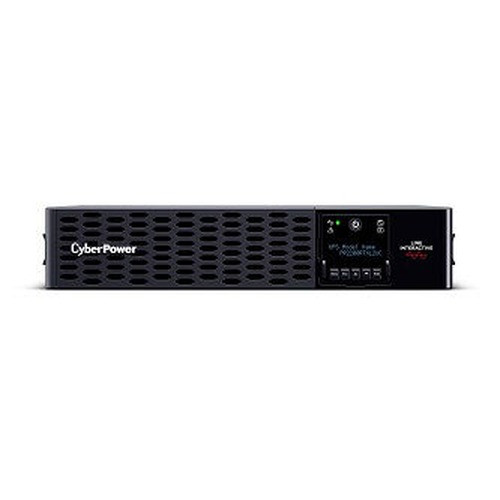
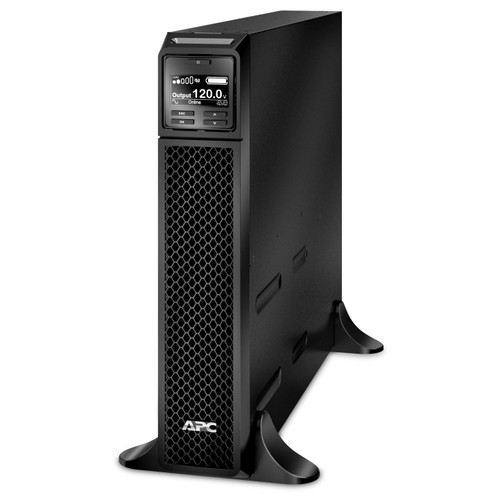
Both the CyberPower PR2200RTXL2UC and the APC SRT2200RMXLA-NC are 2200VA, 2U rack-mount UPS units designed for IT closets, server rooms, and critical-load protection at the 120V/2200VA tier. The comparison covers topology and power quality, output capacity and runtime, and management depth — the three axes that drive purchase decisions for rack UPS at this class. One is Line Interactive; the other is Double Conversion Online. That single architectural difference cascades through efficiency, heat, isolation quality, and total cost of ownership.
In This Guide
- Which topology delivers cleaner power isolation and what does that cost in efficiency?
- How do rated output wattage, runtime, and battery expansion options compare?
- What management, communication, and software ecosystem does each unit support?
- Which should you choose: the PR2200RTXL2UC or the SRT2200RMXLA-NC?
- Side-by-Side Specs
- FAQ
Which topology delivers cleaner power isolation and what does that cost in efficiency?
The PR2200RTXL2UC uses Line Interactive topology with Automatic Voltage Regulation (Double Boost, Single Buck) and a true sine wave output. It corrects under- and over-voltage without switching to battery, but the load remains on a conditioned utility path — not fully galvanically isolated from the mains. Transfer time on a genuine outage is specified at 4 ms. Input voltage range is 75–149 VAC, with an adjustable range of 70–155 VAC, so it absorbs significant browndowns before going to battery. Output power factor is 1.0, meaning the full 2200 W of real power is available at 2200 VA.
The SRT2200RMXLA-NC uses Double Conversion Online topology. The load runs continuously off the inverter; the rectifier rebuilds DC from mains at all times, so transfer time to battery during a mains failure is effectively 0 ms — the inverter never stops. This provides complete isolation from mains-borne noise, harmonics, and frequency deviations. APC specifies output harmonic distortion at less than 2% and a crest factor of 3:1. The rated kW output is 1800 W against 2200 VA, implying a 0.82 power factor — 400 W less real power than the CyberPower at the same VA rating. APC specifies heat dissipation at 535 BTU/hr versus 135 BTU/hr for the PR2200RTXL2UC, a direct consequence of double-conversion losses; buyers must account for additional cooling capacity.
How do rated output wattage, runtime, and battery expansion options compare?
The PR2200RTXL2UC delivers 2200 W real power (power factor 1.0). CyberPower specifies runtime at half load (1100 W) as 10 minutes and at full load (2200 W) as 3.2 minutes. The internal battery pack consists of 4 × 12V/9Ah sealed lead-acid cells. Battery expansion options are not listed in the provided specifications. Recharge time is 3 hours. Surge suppression is rated at 2430 J.
The SRT2200RMXLA-NC is rated at 1800 W / 2200 VA (0.82 pf). APC specifies the internal battery at 72V / 306 VAh runtime capacity; specific half-load and full-load runtime minutes are not provided in the supplied specifications. Battery life is listed as 3–5 years. The APC platform explicitly supports external battery modules: SRT72RMBP packs extending runtime from 918 VAh (1 pack) up to 6,426 VAh (10 packs), making it scalable for extended runtime requirements. Replacement batteries are APCRBC141 and SRT72RMBPUS. Battery charge power is 102 W rated. Surge suppression rating is not specified in the provided data.
What management, communication, and software ecosystem does each unit support?
The PR2200RTXL2UC provides USB, serial (1 port), SNMP, EPO (Emergency Power Off), and cloud connectivity. Management software is CyberPower PowerPanel® Business, which supports remote monitoring and control. The cloud integration is native to the unit without requiring a separate network management card. The unit carries a 3-year limited warranty and a $400,000 Connected Equipment Guarantee. Safety certifications listed are UL1778, VCCI, FCC Class A, and CSA C22.2 No 107.3.
The SRT2200RMXLA-NC includes audible and visible alarms prioritized by severity. The '-NC' suffix in the SKU denotes No Communications card installed; the specific communication interfaces available (NMC slot, USB, serial) are not enumerated in the provided specifications, nor is compatible management software named. IP degree of protection is IP20. A built-in bypass is included. The APC Smart-UPS Online platform broadly supports NMC2/NMC3 cards and APC's EcoStruxure ecosystem, but those details are not present in the supplied spec sheet and cannot be cited here.
Which should you choose: the PR2200RTXL2UC or the SRT2200RMXLA-NC?
Our take: The SRT2200RMXLA-NC is the stronger choice when load isolation quality and runtime scalability are the primary requirements. Its Double Conversion Online topology delivers 0 ms transfer time and less than 2% output harmonic distortion — critical for sensitive medical, broadcast, or high-frequency-switching loads — while its external battery module ecosystem (up to 10 × SRT72RMBP packs) enables runtime far beyond what the internal battery provides. The PR2200RTXL2UC counters with 2200 W real output power versus 1800 W for the APC (a 22% wattage advantage at the same VA), dramatically lower heat dissipation (135 vs 535 BTU/hr), a specified 3-year warranty with $400,000 connected-equipment guarantee, and native cloud plus EPO management without an add-on card. Buyers running standard IT loads who need maximum real-power headroom and lower thermal footprint should favor the CyberPower; those requiring true online isolation or runtime extension for mission-critical infrastructure should favor the APC despite its higher thermal output and lower watt rating.
Side-by-Side Comparison
Spec-for-spec, from manufacturer data.
| Specification | CyberPower PR2200RTXL2UC | APC by Schneider Electric SRT2200RMXLA-NC |
|---|---|---|
| VA Rating | 2200 VA | 2200 VA |
| Watt Rating | 2200 W | 1800 W |
| Output Power Factor | 1.0 | 0.82 (implied) |
| Topology | Line Interactive | Double Conversion Online |
| Transfer Time | 4 ms | 0 ms (online) |
| Waveform | Sine Wave | Sine Wave |
| Output Harmonic Distortion | — | Less than 2% |
| Input Connection | NEMA L5-30P | NEMA 5-20P |
| Output Outlets | 8 × NEMA 5-20R | 6 × NEMA 5-20R + 1 × NEMA L5-20R |
| Cord Length | 10 ft | 6 ft (1.83 m) |
| Runtime at Half Load | 10 min | — |
| Runtime at Full Load | 3.2 min | — |
| Battery Expandable | — | Yes (SRT72RMBP, up to 10 packs) |
| Battery Recharge Time | 3 hours | 3 hours |
| Heat Dissipation | 135 BTU/hr | 535 BTU/hr |
| Acoustic Noise | 57.5 dBA | 55 dBA |
| Form Factor | 2U Rack/Tower | 2U Rack |
| Weight | 79.6 lbs (36.11 kg) | 55.01 lbs (24.95 kg) |
| Warranty | 3-Year Limited | — |
| Connected Equipment Guarantee | $400,000 | — |
| Surge Suppression | 2430 J | — |
| Communication | USB, Serial, SNMP, EPO, Cloud | — |
| Management Software | PowerPanel® Business | — |
Frequently Asked Questions
Which should you choose: the PR2200RTXL2UC or the SRT2200RMXLA-NC?
The SRT2200RMXLA-NC is the stronger choice when load isolation quality and runtime scalability are the primary requirements. Its Double Conversion Online topology delivers 0 ms transfer time and less than 2% output harmonic distortion — critical for sensitive medical, broadcast, or high-frequency-switching loads — while its external battery module ecosystem (up to 10 × SRT72RMBP packs) enables runtime far beyond what the internal battery provides. The PR2200RTXL2UC counters with 2200 W real output power versus 1800 W for the APC (a 22% wattage advantage at the same VA), dramatically lower heat dissipation (135 vs 535 BTU/hr), a specified 3-year warranty with $400,000 connected-equipment guarantee, and native cloud plus EPO management without an add-on card. Buyers running standard IT loads who need maximum real-power headroom and lower thermal footprint should favor the CyberPower; those requiring true online isolation or runtime extension for mission-critical infrastructure should favor the APC despite its higher thermal output and lower watt rating.
Which unit is better suited for sensitive or medical-grade equipment that cannot tolerate any power interruption?
The SRT2200RMXLA-NC is better suited. Its Double Conversion Online topology means the load runs continuously off the inverter with effectively 0 ms transfer time and output harmonic distortion specified at less than 2%. The PR2200RTXL2UC is Line Interactive with a specified 4 ms transfer time, which is acceptable for most IT equipment but does not provide the same level of isolation.
Can I extend the runtime on either unit if I need more than a few minutes of backup?
Only the SRT2200RMXLA-NC lists external battery expansion in the provided specifications. APC's SRT72RMBP external battery packs scale from 918 VAh (1 pack) to 6,426 VAh (10 packs). No external battery expansion option is listed in the CyberPower PR2200RTXL2UC specifications supplied.
Which unit will add more heat to my rack environment, and does that matter for cooling planning?
The SRT2200RMXLA-NC dissipates 535 BTU/hr versus 135 BTU/hr for the PR2200RTXL2UC — nearly four times more. This is a direct consequence of double-conversion losses and is a real consideration for rack thermal budgeting. A data room or wiring closet with limited cooling capacity may need to account for the additional 400 BTU/hr when deploying the APC unit.
More UPS Comparisons
- CyberPower PR2200RTXL2UC vs APC by Schneider Electric SRT2200RMXLA
- CyberPower PR2200RTXL2UC vs APC by Schneider Electric SRT2200XLA
- CyberPower PR2200RTXL2UC vs APC by Schneider Electric SMT2200I
- CyberPower PR2200RTXL2UC vs CyberPower OL2K2RTHD
- CyberPower PR2200RTXL2UC vs CyberPower OL2200RTXL2U
- APC by Schneider Electric SRT2200RMXLA vs CyberPower OL2K2RTHD
UPS Buying Guides
Get a Second Opinion on Your Camera Choice
Share your site layout, coverage goals, and budget. Our team will validate the camera selection, flag anything we would change, and recommend products that match the use case.