
CyberPower PR1500RT2UC vs APC by Schneider Electric SMT1500J: Specification Comparison
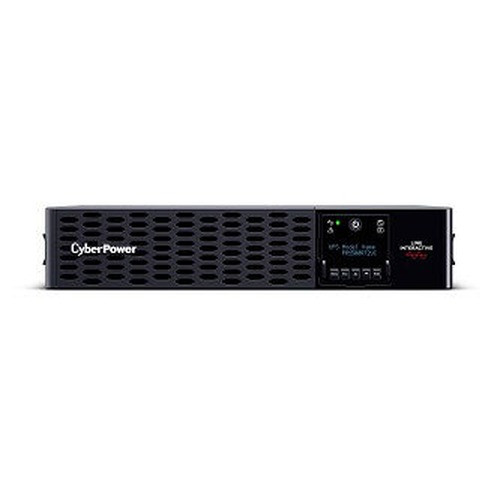
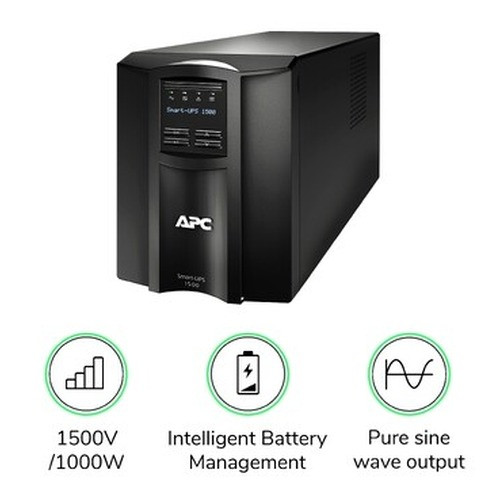
Both the CyberPower PR1500RT2UC and the APC SMT1500J are 1500VA line-interactive UPS units targeting small-to-medium IT and physical-security infrastructure. The CyberPower is a 2U rack/tower unit rated at 1500W true output for the North American 120V market, while the APC is a tower unit rated at 980W for the Japanese 100V market. The comparison covers power capacity and waveform quality, battery runtime and input voltage tolerance, and management interfaces — the three axes that most directly drive a UPS purchasing decision.
In This Guide
- How do the two units compare on real power output and waveform quality?
- Which unit offers better battery runtime and input voltage tolerance for real installations?
- What management and monitoring options does each unit support?
- Which should you choose: the PR1500RT2UC or the SMT1500J?
- Side-by-Side Specs
- FAQ
How do the two units compare on real power output and waveform quality?
The PR1500RT2UC delivers 1500W at a power factor of 1.0, meaning its VA and watt ratings are identical and every advertised VA translates directly to usable watts. The SMT1500J is rated at 980W against 1500VA, yielding a power factor of approximately 0.65. For equipment with modern switched-mode power supplies — cameras, NVRs, switches — that draw close to unity power factor, the CyberPower provides meaningfully more headroom (1500W vs 980W) before the UPS reaches its output limit.
Both units produce a sine-wave output under battery, which is the correct waveform for active PFC power supplies common in rack-mount servers and network equipment. Neither unit presents a risk of incompatibility with PFC loads on this axis.
Surge energy absorption also favors the PR1500RT2UC substantially: 2430 J versus 459 J on the SMT1500J. For a security head-end or NVR rack subject to transient events, that is a more than 5× difference in rated surge capacity.
Which unit offers better battery runtime and input voltage tolerance for real installations?
Runtime data is only explicitly provided for the SMT1500J: 7 minutes at full load and 24 minutes at half load. The PR1500RT2UC spec sheet does not state a runtime figure, so no direct comparison can be made on this dimension from the provided data.
Input voltage tolerance is specified for both. The PR1500RT2UC operates from 75V to 149V, a 74V window centered on 120V North American mains. The SMT1500J operates from 80V to 123V standard (with adjustable extension to 70–125V), a narrower window suited to 100V Japanese grid infrastructure. These figures are not directly comparable because the units target different nominal mains voltages — 120V versus 100V.
Recharge time is stated only for the SMT1500J at 4 hours. The PR1500RT2UC does not specify recharge time in the provided data.
What management and monitoring options does each unit support?
The SMT1500J provides RS-232 serial and USB (Type B) management interfaces, an expansion SmartSlot for optional network management cards, and an LCD display for local status. It also includes a serial cable in the box. These features support integration with UPS management software and remote monitoring via an optional network card.
The PR1500RT2UC specifications do not list remote management interfaces, an LCD display, or an expansion slot in the provided data. Audible alarms are confirmed on both units. EMI/RFI noise filtering is confirmed for the PR1500RT2UC; this is not stated in the SMT1500J spec sheet.
For deployments requiring network-based UPS monitoring — such as integration with a VMS or NVR graceful-shutdown agent — the SMT1500J's documented RS-232, USB, and SmartSlot support gives it a clear advantage from the available specs. The PR1500RT2UC's management capabilities beyond audible alarms are not established by the provided data.
Which should you choose: the PR1500RT2UC or the SMT1500J?
Our take: The PR1500RT2UC is the stronger choice when raw watt output and surge protection are the primary concerns in a 120V North American installation. It delivers 1500W versus the SMT1500J's 980W — a 53% advantage in usable power — and absorbs surges rated at 2430 J versus 459 J, more than five times higher. However, the SMT1500J documents runtime (7 min full / 24 min half load), a 4-hour recharge time, RS-232 and USB management ports, an LCD display, and a SmartSlot expansion bay — none of which appear in the PR1500RT2UC's provided specifications. Additionally, the two units target different mains voltages (120V vs 100V), making them non-interchangeable across markets. Buyers in North America needing maximum watt capacity and surge absorption should favor the PR1500RT2UC; those requiring documented runtime, network management integration, or operating in a 100V environment should favor the SMT1500J.
Side-by-Side Comparison
Spec-for-spec, from manufacturer data.
| Specification | CyberPower PR1500RT2UC | APC by Schneider Electric SMT1500J |
|---|---|---|
| UPS Topology | Line-Interactive | Line-Interactive |
| Output Power Capacity (VA) | 1500 VA | 1500 VA |
| Output Power (Watts) | 1500 W | 980 W |
| Power Factor | 1.0 | ~0.65 (derived) |
| Output Waveform | Sine | Sinewave |
| Nominal Input Voltage | 120 V (North America) | 100 V (Japan) |
| Input Voltage Range | 75 V – 149 V | 80 V – 123 V (adj. 70–125 V) |
| Input Frequency | 47–63 Hz | 47–53 / 57–63 Hz |
| Surge Energy Rating | 2430 J | 459 J |
| Response Time | 6 ms | — |
| Runtime at Full Load | — | 7 min |
| Runtime at Half Load | — | 24 min |
| Battery Recharge Time | — | 4 hours |
| Management Interfaces | — | RS-232, USB (Type B), SmartSlot |
| LCD Display | — | Yes |
| Audible Alarm | Yes | Yes |
| EMI/RFI Filtering | Yes | — |
| Noise Level | 52.5 dB | 45 dBA |
| Output Connectors | 8 x NEMA 5-15 | 8 x NEMA 5-15 |
| Warranty | — | 2 years limited |
Frequently Asked Questions
Which should you choose: the PR1500RT2UC or the SMT1500J?
The PR1500RT2UC is the stronger choice when raw watt output and surge protection are the primary concerns in a 120V North American installation. It delivers 1500W versus the SMT1500J's 980W — a 53% advantage in usable power — and absorbs surges rated at 2430 J versus 459 J, more than five times higher. However, the SMT1500J documents runtime (7 min full / 24 min half load), a 4-hour recharge time, RS-232 and USB management ports, an LCD display, and a SmartSlot expansion bay — none of which appear in the PR1500RT2UC's provided specifications. Additionally, the two units target different mains voltages (120V vs 100V), making them non-interchangeable across markets. Buyers in North America needing maximum watt capacity and surge absorption should favor the PR1500RT2UC; those requiring documented runtime, network management integration, or operating in a 100V environment should favor the SMT1500J.
Which UPS puts out more usable power for my NVR and camera rack — the PR1500RT2UC or the SMT1500J?
The PR1500RT2UC is rated at 1500W output at a power factor of 1.0. The SMT1500J is rated at 980W despite sharing the 1500VA label, because its power factor is approximately 0.65. If your load approaches or exceeds 980W, only the PR1500RT2UC has the headroom to support it — provided your installation runs on 120V North American mains.
Does the SMT1500J or the PR1500RT2UC offer better protection against power surges?
The PR1500RT2UC carries a surge energy rating of 2430 J. The SMT1500J is rated at 459 J. On the basis of the provided specifications, the PR1500RT2UC offers substantially greater rated surge absorption — more than five times higher — which is relevant for head-end equipment in environments prone to transient overvoltage events.
Can I monitor either of these UPS units remotely over the network?
The SMT1500J provides RS-232 and USB management interfaces and includes a SmartSlot expansion bay that accepts optional network management cards, enabling remote monitoring and graceful-shutdown integration. The PR1500RT2UC's provided specifications do not list RS-232, USB management, or a network expansion slot, so its remote management capabilities cannot be confirmed from the available data. If network-based UPS monitoring is a requirement, the SMT1500J has documented support for it.
More UPS Comparisons
- APC by Schneider Electric SMX1500RMI2U vs CyberPower PRL1500RT2UC
- APC by Schneider Electric SMX1500RMI2U vs CyberPower BRG1500AVRLCD2
- APC by Schneider Electric SMX1500RMI2U vs CyberPower PR1500LCD
- APC by Schneider Electric SMX1500RMI2U vs APC by Schneider Electric BR1500MS2
- APC by Schneider Electric SMX1500RMI2U vs APC by Schneider Electric SMTL1500RM3UCUS
- CyberPower PRL1500RT2UC vs APC by Schneider Electric BR1500MS2
UPS Buying Guides
Get a Second Opinion on Your Camera Choice
Share your site layout, coverage goals, and budget. Our team will validate the camera selection, flag anything we would change, and recommend products that match the use case.