
CyberPower OL1000RTXL2U vs CyberPower PR1000RTXL2UC: Specification Comparison
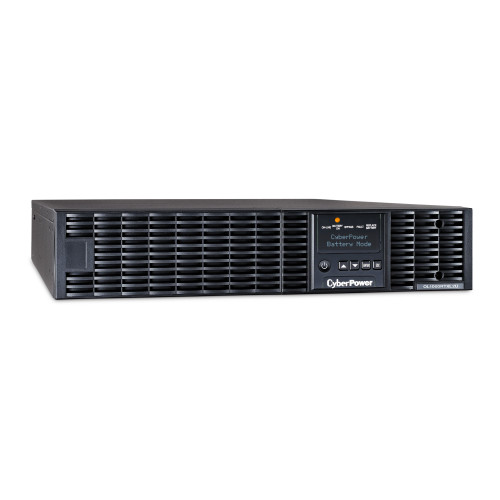
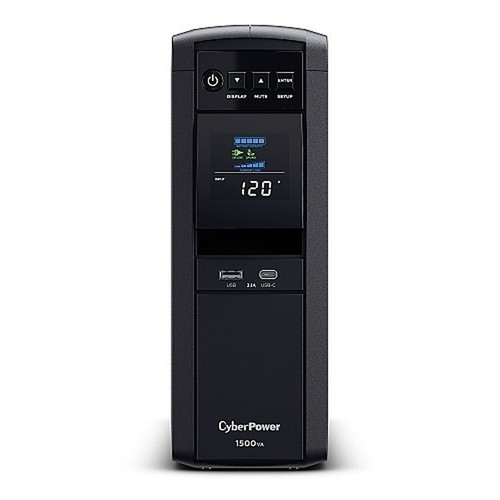
Both units are CyberPower 1000VA, 2U rack/tower UPS systems targeting IT closets, edge deployments, and light server rooms where power conditioning and battery backup are required. The OL1000RTXL2U is a double-conversion online UPS rated at 1000VA/900W, while the PR1000RTXL2UC is a line-interactive UPS rated at 1000VA/1000W. Despite sharing the same VA rating, form factor, and outlet count, their topologies, power delivery characteristics, and protection philosophies differ meaningfully—making this a legitimate cross-shop for buyers deciding how much power conditioning their load actually needs.
In This Guide
- How does each unit's topology affect the quality and continuity of power delivered to connected equipment?
- What are the real differences in usable wattage, battery configuration, and how long each unit can sustain a load?
- Which unit offers stronger monitoring, management integration, and long-term ownership assurance?
- Which should you choose: the OL1000RTXL2U or the PR1000RTXL2UC?
- Side-by-Side Specs
- FAQ
How does each unit's topology affect the quality and continuity of power delivered to connected equipment?
The OL1000RTXL2U uses double-conversion online topology, meaning incoming AC is continuously rectified to DC and then re-inverted to AC. Connected equipment runs entirely off the inverter at all times—there is no transfer time when utility power fails, and the output is fully isolated from input anomalies such as frequency drift, voltage sags, surges, and noise. Output voltage is held to ±2% across a wide 96–150 VAC input range at full load.
The PR1000RTXL2UC uses line-interactive topology with automatic voltage regulation (AVR), providing double-boost and single-buck correction. It does not regenerate AC continuously; instead it conditions incoming power and switches to battery only when input falls outside its 75–149 VAC range. CyberPower specifies a typical transfer time of 4 ms on this unit. Output voltage regulation is ±5%, looser than the online model. The line-interactive design is more efficient under normal utility conditions but does not provide the same isolation from power quality events that double-conversion does.
For loads sensitive to any momentary interruption or to power quality—such as precision networking gear, storage arrays, or equipment in areas with frequent voltage instability—the online topology of the OL1000RTXL2U is the stronger match. The PR1000RTXL2UC is appropriate where power quality is generally stable and a brief 4 ms transfer window is acceptable.
What are the real differences in usable wattage, battery configuration, and how long each unit can sustain a load?
Despite identical 1000VA ratings, the two units differ in watt capacity. The OL1000RTXL2U is rated at 900W (0.9 power factor), while the PR1000RTXL2UC is rated at 1000W with an output power factor of 1.0. For loads that draw close to 1000W, the PR1000RTXL2UC provides more headroom; loads between 900W and 1000W cannot be supported by the OL1000RTXL2U.
Battery configurations also differ. The OL1000RTXL2U uses three 12V/9Ah sealed lead-acid cells; the PR1000RTXL2UC uses four 12V/7Ah cells. Total energy storage is approximately 324 Wh for the online unit versus 336 Wh for the line-interactive unit—a negligible difference in practice. Both units specify 8 minutes of runtime at full load and approximately 20–21 minutes at half load.
Both units support hot-swappable batteries per their respective spec sets—the OL1000RTXL2U explicitly states hot-swap; the PR1000RTXL2UC's spec data does not explicitly use that term, though its battery configuration is listed. Recharge time is 4 hours to 90% on the OL1000RTXL2U and 3 hours on the PR1000RTXL2UC. The PR1000RTXL2UC weighs 55.3 lb versus 39.6 lb for the OL1000RTXL2U—a factor in dense rack deployments where rail load ratings matter.
Which unit offers stronger monitoring, management integration, and long-term ownership assurance?
Both units include USB and serial ports. The OL1000RTXL2U lists USB, Serial, and Network as connectivity options. The PR1000RTXL2UC specifies USB, Serial, SNMP, Relay, and EPO (Emergency Power Off) contacts, and ships with cloud management via PowerPanel® Business software. The presence of a dry-contact relay port and EPO terminal on the PR1000RTXL2UC is relevant for facilities management and generator integration scenarios. The OL1000RTXL2U lists generator compatibility but does not specify EPO or relay in its connectivity fields.
The PR1000RTXL2UC also specifies 4 of its 8 outlets as 'critical load' outlets—a segmentation useful for shedding non-essential loads automatically to extend runtime for priority equipment. The OL1000RTXL2U lists all 8 outlets as battery-backed but does not specify outlet segmentation by priority in the provided specs.
Warranty is a meaningful differentiator: the PR1000RTXL2UC carries a 3-Year Limited warranty and a $400,000 connected equipment guarantee per its spec sheet. The OL1000RTXL2U is listed only as 'Manufacturer Warranty' with no duration or connected equipment guarantee amount provided in the supplied specs. Buyers in regulated or insurance-sensitive environments should factor this gap. The PR1000RTXL2UC also specifies surge suppression energy at 2430 J; the OL1000RTXL2U's specs do not list a joule rating.
Which should you choose: the OL1000RTXL2U or the PR1000RTXL2UC?
Our take: The OL1000RTXL2U is the stronger choice when load sensitivity to power quality or zero-transfer-time continuity is the primary requirement. Its double-conversion topology delivers ±2% output voltage regulation versus ±5% on the PR1000RTXL2UC, and eliminates the 4 ms transfer window entirely. However, the PR1000RTXL2UC counters with a 1000W real-power rating versus 900W, meaning loads between 900W and 1000W are only supportable by the line-interactive unit. The PR1000RTXL2UC also carries an explicit 3-Year Limited warranty and a $400,000 connected equipment guarantee—neither figure is provided in the OL1000RTXL2U specs. For facilities requiring EPO control, relay contacts, and outlet segmentation (4 critical-load outlets), the PR1000RTXL2UC is better specified. Choose the OL1000RTXL2U for pure power-quality isolation in sensitive or noisy utility environments; choose the PR1000RTXL2UC for higher watt capacity, richer facilities integration, and a documented warranty commitment.
Side-by-Side Comparison
Spec-for-spec, from manufacturer data.
| Specification | CyberPower OL1000RTXL2U | CyberPower PR1000RTXL2UC |
|---|---|---|
| Topology | Double-Conversion Online | Line-Interactive |
| Capacity (VA) | 1000 VA | 1000 VA |
| Capacity (Watts) | 900 W | 1000 W |
| Output Power Factor | Not specified in provided specs | 1.0 |
| Output Voltage Regulation | ±2% | ±5% |
| Transfer Time (to battery) | 0 ms (always on inverter) | 4 ms (typical) |
| Input Voltage Range | 96–150 VAC (full load) | 75–149 VAC |
| Output Waveform | Pure Sine Wave | Sine Wave |
| Outlets (total / battery-backed) | 8 / 8 NEMA 5-15R | 8 / 8 NEMA 5-15R (4 critical-load) |
| Battery Configuration | 3 × 12V/9Ah SLA (~324 Wh) | 4 × 12V/7Ah SLA (~336 Wh) |
| Runtime at Full Load | 8 minutes | 8 minutes |
| Runtime at Half Load | 21 minutes | 20 minutes |
| Recharge Time | 4 hours to 90% | 3 hours (typical) |
| Connectivity | USB, Serial, Network | USB, Serial, SNMP, Relay, EPO |
| Weight | 39.6 lb (17.96 kg) | 55.3 lb (25.08 kg) |
| Warranty | Manufacturer Warranty (duration not specified) | 3-Year Limited / $400,000 CEG |
| Surge Suppression | Not specified in provided specs | 2430 J |
| Form Factor | Rack/Tower 2U | Rack/Tower 2U |
| Certifications | UL1778, FCC Class B, CSA C22.2 No. 107.3, RoHS | UL1778, FCC Class B, CSA C22.2 No. 107.3, RoHS, VCCI, DOE |
Frequently Asked Questions
Which should you choose: the OL1000RTXL2U or the PR1000RTXL2UC?
The OL1000RTXL2U is the stronger choice when load sensitivity to power quality or zero-transfer-time continuity is the primary requirement. Its double-conversion topology delivers ±2% output voltage regulation versus ±5% on the PR1000RTXL2UC, and eliminates the 4 ms transfer window entirely. However, the PR1000RTXL2UC counters with a 1000W real-power rating versus 900W, meaning loads between 900W and 1000W are only supportable by the line-interactive unit. The PR1000RTXL2UC also carries an explicit 3-Year Limited warranty and a $400,000 connected equipment guarantee—neither figure is provided in the OL1000RTXL2U specs. For facilities requiring EPO control, relay contacts, and outlet segmentation (4 critical-load outlets), the PR1000RTXL2UC is better specified. Choose the OL1000RTXL2U for pure power-quality isolation in sensitive or noisy utility environments; choose the PR1000RTXL2UC for higher watt capacity, richer facilities integration, and a documented warranty commitment.
Which unit is better if my load draws close to 1000 watts?
The PR1000RTXL2UC, which is rated at 1000W with an output power factor of 1.0. The OL1000RTXL2U is rated at 900W; loads between 900W and 1000W exceed its specified capacity and cannot be supported by that unit.
Does the OL1000RTXL2U protect better against power quality problems than the PR1000RTXL2UC?
Yes, based on the provided specs. The OL1000RTXL2U uses double-conversion online topology, continuously re-generating AC from the inverter and holding output voltage to ±2%. The PR1000RTXL2UC is line-interactive with ±5% regulation and a 4 ms transfer time when switching to battery. For loads sensitive to voltage transients, frequency variation, or any break in power, the online topology is the more protective design.
What warranty and connected equipment protection does each unit carry?
The PR1000RTXL2UC specifies a 3-Year Limited warranty and a $400,000 connected equipment guarantee per its spec sheet. The OL1000RTXL2U is listed as 'Manufacturer Warranty' in the provided specs with no duration or connected equipment guarantee amount stated. Buyers requiring a documented warranty term or equipment guarantee should confirm OL1000RTXL2U warranty details directly with CyberPower before purchase.
More UPS Comparisons
- CyberPower PR1000RTXL2UC vs APC by Schneider Electric SURT1000RMXLI
- CyberPower PR1000RTXL2UC vs APC by Schneider Electric SMT1000CUS
- CyberPower PR1000RTXL2UC vs Vertiv GXT5-1000LVRT2UXL
- CyberPower PR1000RTXL2UC vs APC by Schneider Electric SMT1000J
- CyberPower PR1000RTXL2UC vs CyberPower CP1000PFCLCD
- CyberPower PR1000RTXL2UC vs CyberPower PR1000LCD
UPS Buying Guides
Get a Second Opinion on Your Camera Choice
Share your site layout, coverage goals, and budget. Our team will validate the camera selection, flag anything we would change, and recommend products that match the use case.