
CyberPower PR1000RTXL2UC vs APC by Schneider Electric SMT1000J: Specification Comparison
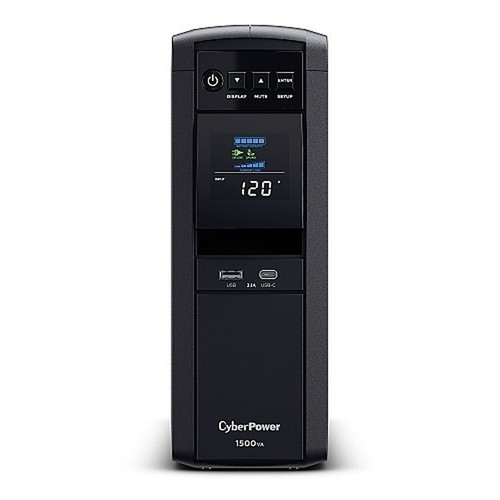
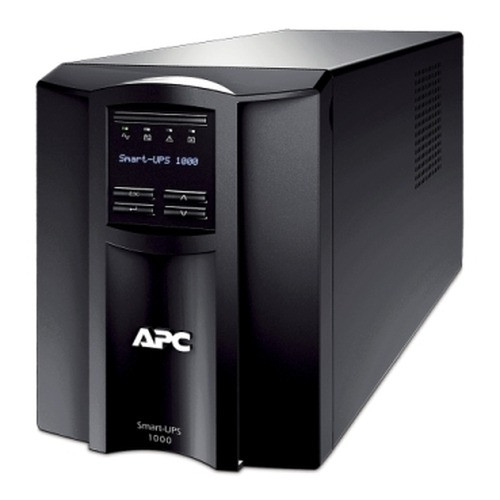
Both the CyberPower PR1000RTXL2UC and the APC SMT1000J are 1000 VA line-interactive UPS units with sine-wave output, sealed lead-acid batteries, and eight NEMA 5-15R output receptacles — making them genuine cross-shop candidates for small server rooms, network closets, and edge deployments requiring clean power protection at the 1 kVA tier. This comparison evaluates their real-load power capacity and runtime, physical form factor and installation fit, and management depth and integration options using only the published specifications for each model.
In This Guide
- Which UPS delivers more usable power and how long will it run your load?
- How does each unit fit into a rack environment and what are the installation constraints?
- What remote monitoring, software, and integration options does each unit support?
- Which should you choose: the PR1000RTXL2UC or the SMT1000J?
- Side-by-Side Specs
- FAQ
Which UPS delivers more usable power and how long will it run your load?
The PR1000RTXL2UC is rated at 1000 VA and 1000 W, yielding a power factor of 1.0. At half load (500 W) it delivers 20 minutes of runtime; at full load (1000 W), 8 minutes. The SMT1000J is also rated 1000 VA but only 670 W, reflecting a power factor of 0.67. No half-load or full-load runtime figures are provided in the SMT1000J specification data.
For resistive or near-unity-power-factor loads — such as modern server PSUs with active PFC — the PR1000RTXL2UC's 1000 W continuous output capacity is directly usable without derating. The SMT1000J's 670 W ceiling means loads above that wattage cannot be supported even though the VA rating matches. Buyers running high-density compute or storage with published watt draws near or above 670 W must account for this gap.
Surge suppression also differs substantially: the PR1000RTXL2UC is rated at 2430 joules versus the SMT1000J's 459 joules — a 5:1 ratio that matters in environments prone to transient events on the utility feed.
How does each unit fit into a rack environment and what are the installation constraints?
The PR1000RTXL2UC is a dual-mode Rack/Tower unit occupying 2U of rack space (434 mm W × 86 mm H × 411 mm D) and ships with a 10 ft. input cord terminated in NEMA 5-15P. It weighs 55.30 lbs. (25.08 kg) and requires a 15 A circuit breaker, which is specified. Its operating temperature range is 32–104 °F with 0–95% relative humidity and an operating elevation ceiling of 9,843 ft.
The SMT1000J specification lists only a single depth dimension of 6.8 in. and shipping dimensions (12.9 in. W × 23.4 in. D × 14.8 in. H). No rack-unit height, rack-mount form factor, or explicit rack/tower designation is provided in the available spec data. The unit ships with a 6 ft. power cable and weighs 50.2 lbs. Its localization is listed as Japan with a nominal 100 V input, which constrains deployment to 100 V utility environments without additional step-up infrastructure.
The PR1000RTXL2UC is explicitly rated for 100–125 VAC input and includes an adjustable voltage range of 70–155 VAC with AVR providing double boost and single buck, supporting North American utility variability. The SMT1000J's adjustable input range tops out at 125 VAC, and its nominal input is 100 VAC — a specification consistent with a Japan-market SKU.
What remote monitoring, software, and integration options does each unit support?
The PR1000RTXL2UC provides USB, Serial (DB9), SNMP, Relay (dry contact), and EPO (Emergency Power Off) interfaces. It ships with PowerPanel® Business management software and includes a multifunction LCD panel. The SNMP interface enables integration with network management systems without an add-on card. The dry-contact relay and EPO port support integration with building management systems and controlled shutdown of downstream infrastructure.
The SMT1000J lists a single USB interface (Type A, 4-pin) for management and one SmartSlot expansion bay — APC's proprietary slot for add-on network management cards such as AP9630/AP9631. No SNMP card is included in the base unit per the specifications. No bundled management software is named in the spec data. The unit includes an audible alarm and LCD display per the features field.
For out-of-the-box SNMP visibility in an existing NMS environment, the PR1000RTXL2UC requires no additional hardware. The SMT1000J can reach equivalent or deeper APC-ecosystem management capability via a SmartSlot NMC, but that card is a separate purchase not reflected in the base specification. The PR1000RTXL2UC also carries a $400,000 connected equipment guarantee versus no figure stated for the SMT1000J.
Which should you choose: the PR1000RTXL2UC or the SMT1000J?
Our take: The PR1000RTXL2UC is the stronger choice when deploying in a North American rack environment where actual watt draw approaches 1000 W and out-of-the-box SNMP management is required. Three concrete spec deltas drive this: first, the PR1000RTXL2UC delivers 1000 W versus the SMT1000J's 670 W — a 49% higher continuous power ceiling; second, its surge suppression rating is 2430 J versus 459 J; third, it includes SNMP, Serial, dry-contact, and EPO interfaces natively while the SMT1000J ships with USB only and requires a separate SmartSlot NMC for network management. The SMT1000J warrants consideration in APC-homogeneous environments where the SmartSlot ecosystem and APC software infrastructure are already deployed, or where the Japan 100 V localization matches the facility's utility standard. Neither unit's runtime under real load can be directly compared, as the SMT1000J provides no runtime figures in the available specification data.
Side-by-Side Comparison
Spec-for-spec, from manufacturer data.
| Specification | CyberPower PR1000RTXL2UC | APC by Schneider Electric SMT1000J |
|---|---|---|
| Capacity (VA) | 1000 VA | 1000 VA |
| Capacity (Watts) | 1000 W | 670 W |
| Output Power Factor | 1.0 | 0.67 |
| Topology | Line Interactive | Line Interactive |
| Output Waveform | Sine Wave | Sine Wave |
| Runtime at Half Load | 20 min | — |
| Runtime at Full Load | 8 min | — |
| Surge Suppression | 2430 J | 459 J |
| Total / Battery-Backed Outlets | 8 / 8 | 8 / 8 (spec lists 8 output) |
| Input Voltage (Nominal) | 120 VAC | 100 VAC |
| Input Voltage Range (Adjustable) | 70–155 VAC | 70–125 VAC |
| Management Interfaces | USB, Serial, SNMP, Relay, EPO | USB only (SmartSlot for NMC) |
| Bundled Software | PowerPanel® Business | — |
| Battery Recharge Time | 3 hours | 4 hours |
| Form Factor | 2U Rack/Tower | — |
| Warranty | 3-Year Limited | 2-Year Limited |
| Connected Equipment Guarantee | $400,000 | — |
| Weight | 55.30 lbs. (25.08 kg) | 50.2 lbs. |
Frequently Asked Questions
Which should you choose: the PR1000RTXL2UC or the SMT1000J?
The PR1000RTXL2UC is the stronger choice when deploying in a North American rack environment where actual watt draw approaches 1000 W and out-of-the-box SNMP management is required. Three concrete spec deltas drive this: first, the PR1000RTXL2UC delivers 1000 W versus the SMT1000J's 670 W — a 49% higher continuous power ceiling; second, its surge suppression rating is 2430 J versus 459 J; third, it includes SNMP, Serial, dry-contact, and EPO interfaces natively while the SMT1000J ships with USB only and requires a separate SmartSlot NMC for network management. The SMT1000J warrants consideration in APC-homogeneous environments where the SmartSlot ecosystem and APC software infrastructure are already deployed, or where the Japan 100 V localization matches the facility's utility standard. Neither unit's runtime under real load can be directly compared, as the SMT1000J provides no runtime figures in the available specification data.
Can either of these UPS units support a server drawing close to 900 W?
Only the PR1000RTXL2UC can support a 900 W load — its specified continuous output is 1000 W. The SMT1000J is rated for a maximum of 670 W continuous output despite sharing the 1000 VA label; a 900 W load would exceed its capacity. No runtime data is available for the SMT1000J, so even at loads within its 670 W ceiling, expected runtime cannot be stated from the published specifications.
Do I need to buy an extra card to get SNMP monitoring on the SMT1000J?
Per the published specifications, yes. The SMT1000J includes one USB interface and one free SmartSlot expansion bay; SNMP capability is not listed as a built-in feature. The PR1000RTXL2UC includes SNMP natively alongside USB and Serial interfaces, requiring no additional hardware for network management system integration.
Is the SMT1000J suitable for installation in a U.S. data center rack?
The SMT1000J's specifications list a Japan localization and a nominal input voltage of 100 VAC with an adjustable range topping out at 125 VAC. No rack-mount form factor, rack-unit height, or explicit dual-voltage support for 120 VAC nominal North American circuits is stated in the available spec data. The PR1000RTXL2UC is explicitly rated for 100–125 VAC nominal input and is specified as a 2U Rack/Tower unit with North American certifications (UL1778, CSA C22.2 No. 107.3, FCC Class B).
More UPS Comparisons
- CyberPower PR1000RTXL2UC vs APC by Schneider Electric SURT1000RMXLI
- CyberPower PR1000RTXL2UC vs APC by Schneider Electric SMT1000CUS
- CyberPower PR1000RTXL2UC vs Vertiv GXT5-1000LVRT2UXL
- CyberPower PR1000RTXL2UC vs CyberPower CP1000PFCLCD
- CyberPower PR1000RTXL2UC vs CyberPower PR1000LCD
- CyberPower CP1000PFCLCD vs APC by Schneider Electric SURT1000RMXLI
UPS Buying Guides
Get a Second Opinion on Your Camera Choice
Share your site layout, coverage goals, and budget. Our team will validate the camera selection, flag anything we would change, and recommend products that match the use case.