
CyberPower PR1000RTXL2UC vs Vertiv GXT5-1000LVRT2UXL: Specification Comparison
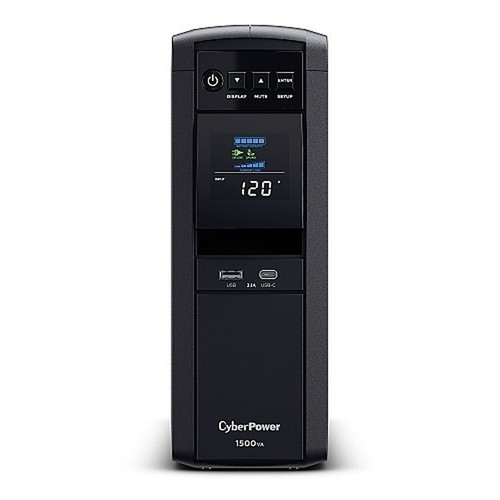
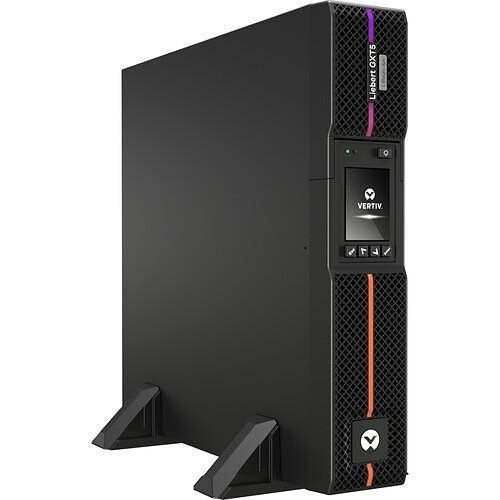
Both the CyberPower PR1000RTXL2UC and the Vertiv GXT5-1000LVRT2UXL are 1000VA/1000W, 2U rack/tower-convertible UPS units targeting the same IT and network-closet market segment at identical rated capacity. The central dividing line is topology: one is line-interactive with sine-wave output, the other is online double-conversion with zero transfer time. Buyers cross-shopping these two will weigh power protection depth, outlet count and configuration flexibility, runtime scalability, and management breadth against their application's tolerance for even milliseconds of transfer delay.
In This Guide
- How does each unit protect connected equipment during power anomalies, and what does that mean for transfer time and output quality?
- What runtime does each unit deliver, and how expandable is the battery subsystem for longer backup requirements?
- How many outlets does each unit provide, how are they managed, and what communication and software options exist for remote monitoring?
- Which should you choose: the PR1000RTXL2UC or the GXT5-1000LVRT2UXL?
- Side-by-Side Specs
- FAQ
How does each unit protect connected equipment during power anomalies, and what does that mean for transfer time and output quality?
The CyberPower PR1000RTXL2UC uses a line-interactive topology with automatic voltage regulation (AVR) offering double-boost and single-buck correction across a 75–149 VAC input range without switching to battery. When battery is required, transfer time is specified at 4 ms, and on-battery waveform remains a sine wave at 100/110/120/125 VAC ±5%. Surge suppression is rated at 2,430 J, and the unit carries a $400,000 connected-equipment guarantee.
The Vertiv GXT5-1000LVRT2UXL uses online double-conversion topology, meaning all output power is continuously regenerated through the inverter regardless of input conditions. Transfer time is effectively zero because there is no switching event — the inverter is always active. Output voltage regulation is tighter at ±3% versus ±5% for the CyberPower. In ECO mode the GXT5 claims up to 98% efficiency; in full online mode, up to 95%. Surge withstand is referenced to ANSI C62.41 Category B; a joule rating is not stated in the provided specs. The GXT5 does not list a connected-equipment guarantee in its provided specifications.
What runtime does each unit deliver, and how expandable is the battery subsystem for longer backup requirements?
The PR1000RTXL2UC ships with four internal 12V/7Ah sealed lead-acid batteries and specifies 20 minutes at half load and 8 minutes at full load. Recharge time is listed at approximately 3 hours. The provided specs describe no external battery expansion capability.
The GXT5-1000LVRT2UXL uses hot-swappable, front-accessible VRLA batteries replaceable without tools. Its specs explicitly support runtime scalability via optional external battery cabinets, daisy-chained up to three additional units, giving integrators a path to substantially extended runtimes without replacing the base UPS. Specific half-load and full-load runtime figures are not provided in the supplied specifications for the GXT5. Battery replacement on the GXT5 requires no tools and is front-accessible, a meaningful operational advantage in dense rack environments.
How many outlets does each unit provide, how are they managed, and what communication and software options exist for remote monitoring?
The PR1000RTXL2UC provides eight NEMA 5-15R outlets, all eight on battery backup, with four designated as critical-load outlets. Communication interfaces include USB, RS-232 serial (1 port), SNMP, relay dry-contact output (1), and EPO (emergency power off). Management is handled through CyberPower's PowerPanel® Business software, which is included. The input cord is 10 ft.
The GXT5-1000LVRT2UXL provides six NEMA 5-15R outlets organized into programmable groups, two fewer than the CyberPower. Communications include USB and RS-232 serial; SNMP and network management require an optional Intellislot network card, which is not included and not priced in the provided specs. No relay, dry-contact, or EPO interfaces are listed in the supplied specifications. The GXT5 does not reference bundled management software in the provided specs. The input cord is 6 ft, 4 ft shorter than the CyberPower. The GXT5 carries a TAA compliance certification and Energy Star 2.0, while the PR1000RTXL2UC carries UL1778, CSA C22.2 No. 107.3, FCC Class B, RoHS, and DOE compliance.
Which should you choose: the PR1000RTXL2UC or the GXT5-1000LVRT2UXL?
Our take: The GXT5-1000LVRT2UXL is the stronger choice when the load demands zero-transfer-time protection and tighter ±3% output voltage regulation — characteristic requirements of sensitive network gear, medical-adjacent IT, or any system that cannot tolerate even a 4 ms switchover. Three concrete spec deltas: the GXT5 delivers zero transfer time versus 4 ms for the CyberPower; output regulation is ±3% versus ±5%; and the GXT5 supports hot-swap batteries plus up to three external battery cabinets for runtime extension, while the CyberPower specifies no expansion path. Conversely, the PR1000RTXL2UC ships with eight battery-backed outlets versus six on the GXT5, includes SNMP, dry-contact, and EPO interfaces out of the box without an optional card, and provides explicit runtime figures (20 min at half load, 8 min at full load). For budget-conscious line-interactive deployments needing more outlets and integrated SNMP from day one, the CyberPower is the practical choice.
Side-by-Side Comparison
Spec-for-spec, from manufacturer data.
| Specification | CyberPower PR1000RTXL2UC | Vertiv GXT5-1000LVRT2UXL |
|---|---|---|
| Topology | Line Interactive | Online Double-Conversion |
| Capacity (VA / W) | 1000 VA / 1000 W | 1000 VA / 1000 W |
| Form Factor | 2U Rack/Tower | 2U Rack/Tower Convertible |
| Transfer Time | 4 ms | Zero (always-on inverter) |
| Output Waveform | Sine Wave | Pure Sinewave |
| Output Voltage Regulation | ±5% | ±3% |
| Outlets (Total / Battery-Backed) | 8 / 8 (4 critical load) | 6 / 6 (programmable groups) |
| Outlet Type | NEMA 5-15R | NEMA 5-15R |
| Input Cord / Plug | 10 ft / NEMA 5-15P | 6 ft / NEMA 5-15P |
| Battery Type | Sealed Lead-Acid (12V/7Ah x4) | VRLA, hot-swap, front-accessible |
| External Battery Expansion | — | Up to 3 external cabinets |
| Runtime at Half Load | 20 min | — |
| Runtime at Full Load | 8 min | — |
| Communications (Standard) | USB, RS-232, SNMP, Relay, EPO | USB, RS-232 (SNMP via optional card) |
| Efficiency | — | Up to 98% (ECO) / 95% (online) |
| Certifications | UL1778, CSA C22.2, FCC Class B, RoHS, DOE | TAA, Energy Star 2.0, cULus, FCC Class A, CE |
| Warranty | 3-Year Limited | 3-Year Advanced Replacement (batteries included) |
| Weight | 55.30 lbs (25.08 kg) | 37 lbs (16.8 kg) |
Frequently Asked Questions
Which should you choose: the PR1000RTXL2UC or the GXT5-1000LVRT2UXL?
The GXT5-1000LVRT2UXL is the stronger choice when the load demands zero-transfer-time protection and tighter ±3% output voltage regulation — characteristic requirements of sensitive network gear, medical-adjacent IT, or any system that cannot tolerate even a 4 ms switchover. Three concrete spec deltas: the GXT5 delivers zero transfer time versus 4 ms for the CyberPower; output regulation is ±3% versus ±5%; and the GXT5 supports hot-swap batteries plus up to three external battery cabinets for runtime extension, while the CyberPower specifies no expansion path. Conversely, the PR1000RTXL2UC ships with eight battery-backed outlets versus six on the GXT5, includes SNMP, dry-contact, and EPO interfaces out of the box without an optional card, and provides explicit runtime figures (20 min at half load, 8 min at full load). For budget-conscious line-interactive deployments needing more outlets and integrated SNMP from day one, the CyberPower is the practical choice.
Is the GXT5-1000LVRT2UXL or PR1000RTXL2UC better for servers or storage arrays that cannot tolerate any power interruption?
The GXT5-1000LVRT2UXL is better suited for that scenario. Its online double-conversion topology regenerates output power continuously, producing zero transfer time to battery. The PR1000RTXL2UC is line-interactive and specifies a 4 ms transfer time, which most servers tolerate but some storage controllers and sensitive networking gear may not.
Which unit is easier to expand if I need longer runtime down the road?
The Vertiv GXT5-1000LVRT2UXL explicitly supports optional external battery cabinets, daisy-chained up to three units, and its internal batteries are hot-swappable without tools. The CyberPower PR1000RTXL2UC does not list any external battery expansion capability in the provided specifications, making the GXT5 the clear choice if scalable runtime is a project requirement.
Which unit provides more built-in management and monitoring interfaces without buying add-ons?
The CyberPower PR1000RTXL2UC includes USB, RS-232 serial, SNMP, a relay dry-contact output, and EPO in the base unit, along with PowerPanel® Business software. The Vertiv GXT5-1000LVRT2UXL provides USB and RS-232 serial natively; SNMP and network card functionality require a separately purchased optional Intellislot card. No bundled management software is listed in the GXT5's provided specifications.
More UPS Comparisons
- CyberPower PR1000RTXL2UC vs APC by Schneider Electric SURT1000RMXLI
- CyberPower PR1000RTXL2UC vs APC by Schneider Electric SMT1000CUS
- CyberPower PR1000RTXL2UC vs APC by Schneider Electric SMT1000J
- CyberPower PR1000RTXL2UC vs CyberPower CP1000PFCLCD
- CyberPower PR1000RTXL2UC vs CyberPower PR1000LCD
- CyberPower CP1000PFCLCD vs APC by Schneider Electric SURT1000RMXLI
UPS Buying Guides
Get a Second Opinion on Your Camera Choice
Share your site layout, coverage goals, and budget. Our team will validate the camera selection, flag anything we would change, and recommend products that match the use case.