
CyberPower OL1000RTXL2U vs APC by Schneider Electric SURT1000RMXLI: Specification Comparison
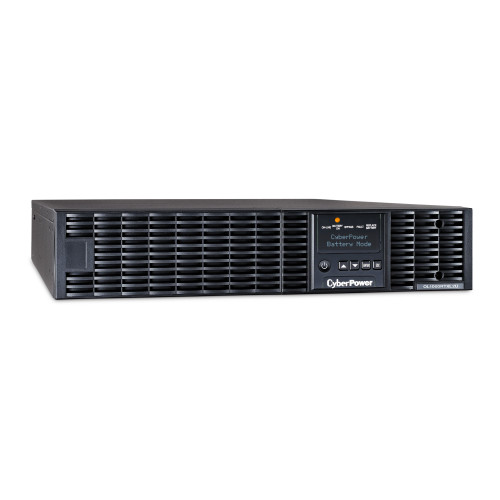
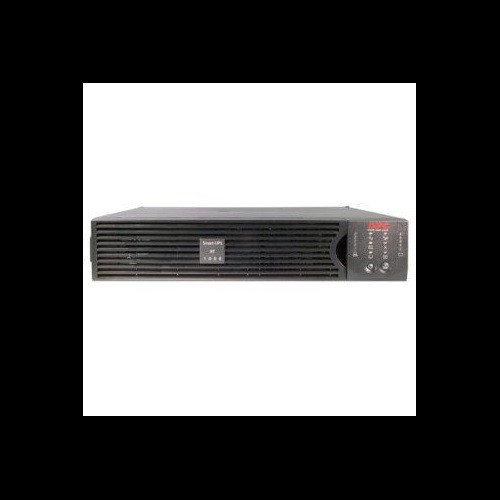
Both the CyberPower OL1000RTXL2U and the APC SURT1000RMXLI are 1000 VA double-conversion online UPS units in a 2U rack form factor, making them direct cross-shop candidates for IT buyers protecting network equipment, servers, and security infrastructure. The comparison spans power capacity and efficiency, battery and runtime characteristics, and connectivity with management features. Key differences emerge immediately: the CyberPower targets 100–125 V North American installations while the APC targets 220–240 V international markets, a critical deployment constraint buyers must verify before selecting.
In This Guide
- How do the two units compare on usable power output, efficiency, and voltage compatibility?
- Which unit offers better runtime, battery serviceability, and recharge characteristics?
- What monitoring, management connectivity, and protection features does each unit provide?
- Which should you choose: the OL1000RTXL2U or the SURT1000RMXLI?
- Side-by-Side Specs
- FAQ
How do the two units compare on usable power output, efficiency, and voltage compatibility?
The CyberPower OL1000RTXL2U is rated at 1000 VA / 900 W, yielding a power factor of 0.90. It supports a configurable output voltage of 100/110/115/120/125 VAC ±2% and accepts an input range of 96–150 VAC at full load on a standard NEMA 5-15P plug. In ECO mode, the unit reaches up to 94% efficiency. Output is pure sine wave across all 8 NEMA 5-15R outlets, all of which are battery-backed.
The APC SURT1000RMXLI is rated at 1000 VA / 700 W, yielding a power factor of 0.70. Its main input voltage is 230 V (also accepting 220 V and 240 V) via an IEC 60320 C14 connector, with an input range of 160–280 V. Output is sine wave with stated harmonic distortion of less than 3% and a crest factor of 3:1. It provides 6 IEC 60320 outlets plus 2 IEC jumper positions. No efficiency figure is provided in the supplied specifications.
The OL1000RTXL2U delivers 200 W more usable power (900 W vs. 700 W) at the same VA rating, a significant capacity advantage for power-dense loads. Voltage ecosystem is mutually exclusive as specified: the CyberPower is a North American 120 V unit; the APC is a 230 V international unit. Buyers must match the unit to their facility voltage before any other consideration.
Which unit offers better runtime, battery serviceability, and recharge characteristics?
The CyberPower OL1000RTXL2U uses three 12 V / 9 Ah sealed lead-acid batteries (total 324 Wh capacity as configured). At full load (900 W) runtime is specified as 8 minutes; at half load (450 W) it extends to 21 minutes. Batteries are hot-swappable, meaning replacement can occur without a maintenance window or load shutdown. Recharge time to 90% capacity is specified at 4 hours.
The APC SURT1000RMXLI uses a lead-acid battery with a rated recharge time of 3 hours and a stated battery life of 3–5 years. Battery charger power is rated at 109 W. Runtime figures at full or half load are not provided in the supplied specifications. Hot-swap capability is not stated in the provided specs.
The CyberPower provides explicit runtime data (8 min / 21 min) that the APC spec sheet does not supply, making runtime planning straightforward only for the CyberPower. The APC recharges faster (3 hours vs. 4 hours to 90%). The APC does provide a battery life estimate of 3–5 years; no equivalent figure appears in the CyberPower specs. Hot-swappability is confirmed only for the CyberPower.
What monitoring, management connectivity, and protection features does each unit provide?
The CyberPower OL1000RTXL2U includes USB, serial, and network connectivity ports on the unit. An LCD control panel provides local status visibility. The unit is generator compatible per specification. It carries UL1778, FCC Part 15 Class B, CSA C22.2 No. 107.3, and RoHS certifications, positioning it for North American deployments requiring UL listing.
The APC SURT1000RMXLI includes one free expansion slot (management card bay). Surge protection is specified at 420 J with IEEE surge let-through rated at zero and clamping response time meeting UL 1449. Full-time multi-pole noise filtering is included. A built-in bypass is present. Acoustic output is rated at 50 dBA and heat dissipation at 324 Btu/h. Certifications include C-Tick, CE, GOST, VDE, and UK PSTI, targeting international and European regulatory environments. No onboard USB, serial, or network port is specified; management relies on the optional expansion slot.
The CyberPower provides built-in multi-protocol management connectivity (USB, serial, network) without requiring an add-on card. The APC's single expansion slot supports optional network management cards but ships with no onboard network port per the provided specs. The APC specifies surge energy (420 J) and noise filtering detail that the CyberPower spec sheet does not enumerate. Certification ecosystems are geographically distinct and non-interchangeable.
Which should you choose: the OL1000RTXL2U or the SURT1000RMXLI?
Our take: The OL1000RTXL2U is the stronger choice when the installation is on a 100–125 V North American circuit and built-in management connectivity plus higher watt output are priorities. At 900 W versus the SURT1000RMXLI's 700 W, the CyberPower delivers 200 W more usable capacity at the same VA rating—a 29% real-power advantage. It also ships with USB, serial, and network interfaces onboard, while the APC requires a separately purchased management card to achieve equivalent remote monitoring. Hot-swap battery replacement is confirmed on the CyberPower; it is not stated for the APC. Conversely, the SURT1000RMXLI is the appropriate unit for 220–240 V international deployments, carries CE/VDE/GOST certifications for European and global compliance, specifies surge energy at 420 J, and recharges in 3 hours versus 4. Neither unit should be cross-deployed outside its rated input voltage range.
Side-by-Side Comparison
Spec-for-spec, from manufacturer data.
| Specification | CyberPower OL1000RTXL2U | APC by Schneider Electric SURT1000RMXLI |
|---|---|---|
| UPS Topology | Double-Conversion Online | Double-Conversion Online |
| Rated Capacity (VA) | 1000 VA | 1000 VA |
| Rated Capacity (W) | 900 W | 700 W |
| Power Factor | 0.90 | 0.70 |
| Form Factor | Rack/Tower 2U | Rack-mounted 2U |
| Input Voltage Range | 96–150 VAC (full load) | 160–280 V |
| Nominal Input Voltage | 100–125 VAC | 230 V (220/240 V accepted) |
| Input Connection | NEMA 5-15P | IEC 60320 C14 |
| Output Outlets | 8 × NEMA 5-15R (all battery-backed) | 6 IEC 60320 + 2 IEC Jumpers |
| Output Waveform | Pure Sine Wave | Sine Wave (<3% THD) |
| Battery Type | Sealed Lead-Acid, 3 × 12V/9Ah | Lead-Acid (capacity not specified) |
| Battery Hot-Swappable | Yes | Not specified |
| Runtime at Full Load | 8 min (900 W) | Not specified |
| Runtime at Half Load | 21 min (450 W) | Not specified |
| Battery Recharge Time | 4 hours to 90% | 3 hours |
| Battery Life Estimate | Not specified | 3–5 years |
| Efficiency | Up to 94% (ECO mode) | Not specified |
| Management Connectivity | USB, Serial, Network (built-in) | 1 expansion slot (card not included) |
| Local Display | LCD control panel | Not specified |
| Surge Energy Rating | Not specified | 420 J |
| Noise Filtering | Not specified | Full-time multi-pole |
| Built-in Bypass | Not specified | Yes |
| Acoustic Level | Not specified | 50 dBA |
| Heat Dissipation | Not specified | 324 Btu/h |
| Operating Temperature | 0–40 °C | 0–40 °C |
| Certifications | UL1778, FCC Part 15 Class B, CSA C22.2 No. 107.3, RoHS | C-Tick, CE, GOST, VDE, UK PSTI |
| Dimensions (W×H×D) | 432 × 89 × 429 mm | 432 × 85 × 483 mm |
| Weight | 17.96 kg | 23 kg |
| Generator Compatible | Yes | Not specified |
Frequently Asked Questions
Which should you choose: the OL1000RTXL2U or the SURT1000RMXLI?
The OL1000RTXL2U is the stronger choice when the installation is on a 100–125 V North American circuit and built-in management connectivity plus higher watt output are priorities. At 900 W versus the SURT1000RMXLI's 700 W, the CyberPower delivers 200 W more usable capacity at the same VA rating—a 29% real-power advantage. It also ships with USB, serial, and network interfaces onboard, while the APC requires a separately purchased management card to achieve equivalent remote monitoring. Hot-swap battery replacement is confirmed on the CyberPower; it is not stated for the APC. Conversely, the SURT1000RMXLI is the appropriate unit for 220–240 V international deployments, carries CE/VDE/GOST certifications for European and global compliance, specifies surge energy at 420 J, and recharges in 3 hours versus 4. Neither unit should be cross-deployed outside its rated input voltage range.
Can I use the SURT1000RMXLI in a North American 120 V data center?
No. Per the provided specifications, the SURT1000RMXLI has a main input voltage of 230 V with an input range of 160–280 V and an IEC 60320 C14 inlet. It is not rated for 120 V North American circuits. The OL1000RTXL2U, with its 96–150 VAC input range and NEMA 5-15P plug, is the appropriate unit for 120 V environments.
Which unit supports remote monitoring without buying an add-on card?
The OL1000RTXL2U includes USB, serial, and network connectivity as specified, enabling remote monitoring without additional hardware. The SURT1000RMXLI's specifications list one free expansion slot but do not indicate any onboard network or USB management port; remote management would require a separately purchased network management card.
How long will the OL1000RTXL2U power a 900 W load, and is runtime data available for the SURT1000RMXLI?
The OL1000RTXL2U is specified at 8 minutes of runtime at full load (900 W) and 21 minutes at half load (450 W). The provided specifications for the SURT1000RMXLI do not include runtime figures at any load level, so a direct runtime comparison cannot be made from the available data.
More UPS Comparisons
- CyberPower PR1000RTXL2UC vs APC by Schneider Electric SURT1000RMXLI
- CyberPower PR1000RTXL2UC vs APC by Schneider Electric SMT1000CUS
- CyberPower PR1000RTXL2UC vs Vertiv GXT5-1000LVRT2UXL
- CyberPower PR1000RTXL2UC vs APC by Schneider Electric SMT1000J
- CyberPower PR1000RTXL2UC vs CyberPower CP1000PFCLCD
- CyberPower PR1000RTXL2UC vs CyberPower PR1000LCD
UPS Buying Guides
Get a Second Opinion on Your Camera Choice
Share your site layout, coverage goals, and budget. Our team will validate the camera selection, flag anything we would change, and recommend products that match the use case.