
CyberPower BRG1500AVRLCD2 vs CyberPower PR1500LCD: Specification Comparison
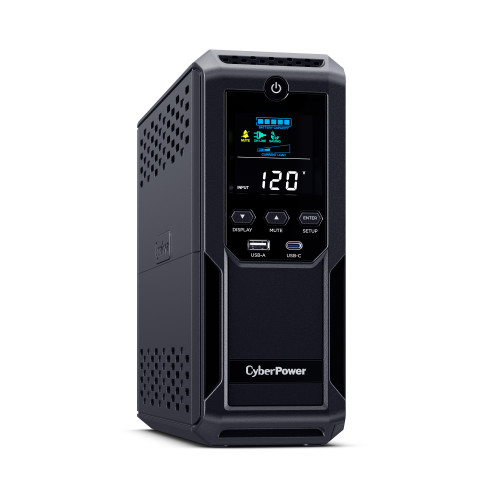
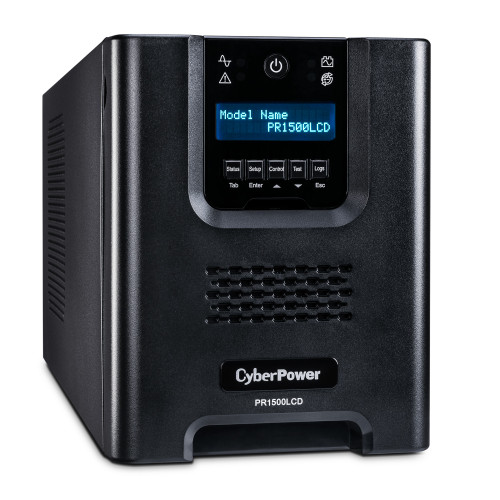
Both the CyberPower BRG1500AVRLCD2 and PR1500LCD are 1500VA line-interactive mini-tower UPS units in the same power class, aimed at small-to-mid business workstations, edge servers, and security appliances requiring battery backup with automatic voltage regulation. The BRG1500AVRLCD2 belongs to the Intelligent LCD series while the PR1500LCD is part of the Smart App Sinewave series. Key differentiators span output waveform type, VA-to-watt power factor, battery capacity and serviceability, outlet count, and warranty terms — all directly impacting suitability for sensitive active-PFC loads versus general IT gear.
In This Guide
- Which UPS delivers more usable power and a cleaner output waveform for sensitive loads?
- How do runtime, battery capacity, and field serviceability compare between these two units?
- Which unit offers better outlet coverage, management integration, and long-term ownership terms?
- Which should you choose: the BRG1500AVRLCD2 or the PR1500LCD?
- Side-by-Side Specs
- FAQ
Which UPS delivers more usable power and a cleaner output waveform for sensitive loads?
The PR1500LCD carries a 1:1 VA-to-watt ratio — 1500 VA / 1500 W — meaning its full rated VA translates entirely into usable watts, giving it a power factor of 1.0. The BRG1500AVRLCD2 is rated 1500 VA / 900 W, a 0.6 power factor, so a substantial portion of its VA rating is non-real power; maximum deliverable real load is capped at 900 W.
Output waveform is equally decisive for active-PFC power supplies common in modern servers, NAS units, and high-end workstations. The PR1500LCD produces a true sine wave on battery, which is required — or strongly preferred — for active-PFC loads. The BRG1500AVRLCD2 outputs a simulated (stepped approximation) sine wave, which can cause instability, audible noise, or premature shutdown on active-PFC equipment. For loads that do not contain active-PFC supplies — older workstations, network switches, IP cameras, or standard monitors — the simulated sine wave is functionally adequate.
Both units regulate voltage via AVR with automatic boost and buck. Input voltage range differs: the BRG1500AVRLCD2 spans 57–120 VAC, while the PR1500LCD accepts 78–149 VAC. The PR1500LCD's wider upper range (to 149 VAC) is useful in environments with occasional voltage swells above standard line voltage, whereas the BRG1500AVRLCD2's lower floor (57 VAC) provides protection against deeper sags.
How do runtime, battery capacity, and field serviceability compare between these two units?
At half load, the PR1500LCD runs 15.1 minutes at 750 W versus 12 minutes at 450 W for the BRG1500AVRLCD2. Because the PR1500LCD's half-load benchmark is 750 W (vs. 450 W for the BRG), the PR1500LCD sustains a heavier actual load for longer — a meaningful operational difference for installations powering dense edge equipment.
Battery capacity explains much of this gap. The PR1500LCD is fitted with 2 × 12V/17Ah sealed lead-acid cells (408 Wh aggregate theoretical capacity). The BRG1500AVRLCD2 uses 2 × 12V/9Ah cells (216 Wh aggregate) — less than 53% of the PR1500LCD's capacity. This directly limits how long the BRG1500AVRLCD2 can sustain loads, particularly at or near its 900 W ceiling.
A critical field-serviceability advantage belongs to the PR1500LCD: its batteries are hot-swappable, meaning replacement is possible without powering down connected equipment. The BRG1500AVRLCD2 specs do not indicate hot-swap capability. For installations where downtime is costly — server rooms, 24/7 surveillance recording systems, or access control panels — hot-swap battery replacement is a material operational benefit. The PR1500LCD also specifies a transfer time of less than 4 ms; the BRG1500AVRLCD2 does not list a transfer time specification.
Which unit offers better outlet coverage, management integration, and long-term ownership terms?
Outlet count favors the BRG1500AVRLCD2: it provides 12 × NEMA 5-15R receptacles (6 battery + surge, 6 surge-only), compared to 8 × NEMA 5-15R on the PR1500LCD — all 8 of which are battery and surge protected; the PR1500LCD specifies no surge-only outlets. For deployments consolidating many low-draw devices (IP cameras, switches, access points, thin clients), the BRG1500AVRLCD2's 12-outlet layout reduces the need for additional PDUs.
Both units offer USB and serial connectivity for software-based management using CyberPower's PowerPanel suite. The PR1500LCD lists SNMP as a built-in connectivity option. The BRG1500AVRLCD2 treats SNMP/HTTP management as optional via an add-on RMCARD card, not included in the base unit. The PR1500LCD also specifies GreenPower UPS Bypass mode, which reduces energy consumption under light loads — a feature absent from the BRG1500AVRLCD2 specs. The PR1500LCD's FCC classification is Class A (industrial environments); the BRG1500AVRLCD2 is FCC Class B (residential/light commercial).
Warranty terms differ significantly. The BRG1500AVRLCD2 carries a 5-year warranty and a $500,000 connected equipment guarantee. The PR1500LCD provides a 3-year limited warranty and a $375,000 connected equipment guarantee. Buyers who weight long-term coverage and equipment protection value will find the BRG1500AVRLCD2 superior on these contract terms, even though it is the less powerful unit in absolute watt capacity.
Which should you choose: the BRG1500AVRLCD2 or the PR1500LCD?
Our take: The PR1500LCD is the stronger choice when powering active-PFC servers, NAS devices, or any load requiring a clean sine wave on battery, or when the installation demands hot-swappable batteries and a full 1500 W of usable real power. Its 2 × 12V/17Ah battery pack (versus the BRG1500AVRLCD2's 2 × 12V/9Ah) delivers 15.1 minutes at 750 W compared to 12 minutes at only 450 W, and its true sine wave output eliminates compatibility risk with modern power supplies. The BRG1500AVRLCD2 is the better fit when outlet density matters — 12 versus 8 receptacles — loads are non-PFC (cameras, switches, older hardware), and a longer warranty with higher equipment guarantee ($500,000 vs. $375,000 over 5 years vs. 3 years) is a procurement priority. Choose the PR1500LCD for server and mixed-compute environments; choose the BRG1500AVRLCD2 for high-outlet-count physical-security edge deployments on tighter budgets with simpler, non-PFC loads.
Side-by-Side Comparison
Spec-for-spec, from manufacturer data.
| Specification | CyberPower BRG1500AVRLCD2 | CyberPower PR1500LCD |
|---|---|---|
| Series | Intelligent LCD | Smart App Sinewave |
| Form Factor | Mini-Tower | Mini-Tower |
| Capacity (VA) | 1500 VA | 1500 VA |
| Capacity (Watts) | 900 W | 1500 W |
| Power Factor | 0.60 | 1.00 |
| Output Waveform | Simulated Sine Wave | True Sine Wave |
| Input Voltage Range | 57–120 VAC | 78–149 VAC |
| Total Outlets (NEMA 5-15R) | 12 (6 battery+surge, 6 surge-only) | 8 (all battery+surge) |
| Battery Specification | 2 × 12V/9Ah SLA | 2 × 12V/17Ah SLA |
| Hot-Swappable Battery | Not specified | Yes |
| Runtime at Half Load | 12 min at 450 W | 15.1 min at 750 W |
| Runtime at Full Load | 2 min at 900 W | 4.7 min at 1500 W |
| Transfer Time | Not specified | < 4 ms |
| Built-in SNMP/Network Mgmt | Optional (RMCARD add-on) | Yes (USB/Serial/SNMP) |
| Warranty | 5 Year | 3 Year Limited |
| Connected Equipment Guarantee | $500,000 | $375,000 |
| FCC Classification | Class B | Class A |
| Active-PFC Compatible | Not specified | Yes |
Frequently Asked Questions
Which should you choose: the BRG1500AVRLCD2 or the PR1500LCD?
The PR1500LCD is the stronger choice when powering active-PFC servers, NAS devices, or any load requiring a clean sine wave on battery, or when the installation demands hot-swappable batteries and a full 1500 W of usable real power. Its 2 × 12V/17Ah battery pack (versus the BRG1500AVRLCD2's 2 × 12V/9Ah) delivers 15.1 minutes at 750 W compared to 12 minutes at only 450 W, and its true sine wave output eliminates compatibility risk with modern power supplies. The BRG1500AVRLCD2 is the better fit when outlet density matters — 12 versus 8 receptacles — loads are non-PFC (cameras, switches, older hardware), and a longer warranty with higher equipment guarantee ($500,000 vs. $375,000 over 5 years vs. 3 years) is a procurement priority. Choose the PR1500LCD for server and mixed-compute environments; choose the BRG1500AVRLCD2 for high-outlet-count physical-security edge deployments on tighter budgets with simpler, non-PFC loads.
Can either of these UPS units power a modern server or NAS with an active-PFC power supply?
The PR1500LCD is specified for active-PFC compatible operation and outputs a true sine wave on battery, making it suitable for active-PFC server and NAS power supplies. The BRG1500AVRLCD2 produces a simulated sine wave and does not list active-PFC compatibility; using it with active-PFC equipment may cause instability or premature shutdown under battery operation.
Which unit lets me replace the battery without shutting down my equipment?
The PR1500LCD specifies hot-swappable batteries, allowing replacement under load without disconnecting protected equipment. The BRG1500AVRLCD2 specifications do not indicate hot-swap capability, so a standard battery replacement would require powering down connected devices.
I need to back up many IP cameras and a small PoE switch — which unit gives me more outlet flexibility?
The BRG1500AVRLCD2 provides 12 × NEMA 5-15R outlets (6 battery-backed plus surge, 6 surge-only), compared to 8 × NEMA 5-15R on the PR1500LCD (all battery-backed). For consolidating multiple cameras, a switch, and an NVR without an additional PDU, the BRG1500AVRLCD2's outlet count is the practical advantage — provided the total real-power draw stays within its 900 W limit.
More UPS Comparisons
- APC by Schneider Electric SMX1500RMI2U vs CyberPower PRL1500RT2UC
- APC by Schneider Electric SMX1500RMI2U vs CyberPower BRG1500AVRLCD2
- APC by Schneider Electric SMX1500RMI2U vs CyberPower PR1500LCD
- APC by Schneider Electric SMX1500RMI2U vs APC by Schneider Electric BR1500MS2
- APC by Schneider Electric SMX1500RMI2U vs APC by Schneider Electric SMTL1500RM3UCUS
- CyberPower PRL1500RT2UC vs APC by Schneider Electric BR1500MS2
UPS Buying Guides
Get a Second Opinion on Your Camera Choice
Share your site layout, coverage goals, and budget. Our team will validate the camera selection, flag anything we would change, and recommend products that match the use case.