
Brother TD2120NT vs Sato WT212-404CW-EX1-2: Specification Comparison
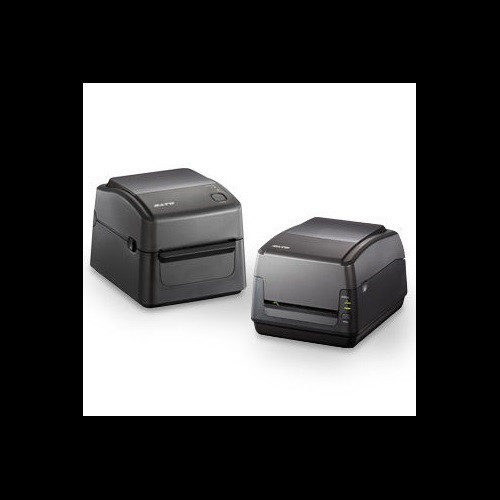
Both the Brother TD2120NT and the Sato WT212-404CW-EX1-2 are desktop-class label and receipt printers aimed at facility, retail, and light-industrial environments where compact footprint and wireless connectivity matter. The comparison pits Brother's 2.2-inch Wi-Fi inkjet against Sato's wider-format dual-mode thermal unit. Key decision axes are print technology and resolution, media width and throughput capability, and connectivity plus ecosystem features.

In This Guide
- Which printer delivers the right combination of print technology and resolution for your label output requirements?
- How do the two printers compare on maximum media width, print speed, and throughput capacity?
- Which printer offers broader connectivity options and built-in features relevant to deployment and serviceability?
- Which should you choose: the TD2120NT or the WT212-404CW-EX1-2?
- Side-by-Side Specs
- FAQ
Which printer delivers the right combination of print technology and resolution for your label output requirements?
The Brother TD2120NT uses inkjet technology at 600 DPI. That resolution exceeds the Sato unit's 203 DPI by nearly 3×, making the TD2120NT the higher-fidelity option for fine-detail output such as GS1 barcodes and small alphanumeric text on narrow labels. However, inkjet technology introduces considerations around ink consumables, smear resistance on certain substrates, and long-term archival durability that thermal technologies do not.
The Sato WT212-404CW-EX1-2 prints at 203 DPI via either direct thermal or thermal transfer modes. Direct thermal requires no ribbon and suits short-lifecycle labels; thermal transfer uses a ribbon (up to 984 ft / 300 m) and produces more durable, chemical-resistant output suited to asset tags, shipping labels, and outdoor-rated applications. The Sato's dual-mode capability gives operators flexibility the Brother's single inkjet method does not provide. Resolution adequacy at 203 DPI depends on label content: standard logistics barcodes at typical sizes are well within GS1 tolerances at 203 DPI, but very small or high-density barcodes benefit from higher DPI.
How do the two printers compare on maximum media width, print speed, and throughput capacity?
Media width is a hard constraint in label printing. The Brother TD2120NT supports a maximum print width of 2.2 inches and a maximum paper width of 2.2 inches. This limits the unit to narrow-format labels, small receipts, and wristbands or similar narrow stock. No print speed is specified in the provided TD2120NT data.
The Sato WT212-404CW-EX1-2 accepts media from 1 inch up to 4.65 inches wide with a maximum print width of 4.09 inches. That wider media range covers the full spectrum from narrow shelf-edge labels to standard 4-inch shipping and compliance labels — a format the Brother cannot accommodate. The Sato also specifies a print speed of 6 inches per second (ips), enabling measurable throughput estimation for batch or high-volume label runs. Media roll diameter is supported up to 5 inches, facilitating longer unattended print runs. These factors make the Sato materially more capable for mid-volume or wider-format workflows.
Which printer offers broader connectivity options and built-in features relevant to deployment and serviceability?
The Brother TD2120NT specifies Wi-Fi (802.11 b/g/n) connectivity and TCP/IP print queue integration compatible with Windows and macOS spoolers. No additional wired or short-range wireless interfaces are listed in the provided specifications. This positions the TD2120NT for straightforward wireless network deployments where a single interface suffices.
The Sato WT212-404CW-EX1-2 provides four interfaces — USB 2.0, Ethernet, Wi-Fi, and Bluetooth — covering wired and wireless network integration as well as direct device pairing. Built-in hardware features include an LCD display for operator feedback, an automatic cutter for finished-label separation without manual tearing, and tool-free printhead replacement designed to reduce service downtime. The unit also specifies 16 MB flash memory, 32 MB SDRAM, and 16 MB user storage — none of which are specified for the Brother. The Sato's operating temperature range of 41°F to 104°F (5°C to 40°C) and AC 100–240 V universal power are documented; equivalent environmental specs are absent from the Brother's provided data.
Which should you choose: the TD2120NT or the WT212-404CW-EX1-2?
Our take: The WT212-404CW-EX1-2 is the stronger choice when print width beyond 2.2 inches, dual thermal print modes, or a documented print speed are required. The Sato supports media up to 4.65 inches wide versus the Brother's 2.2-inch ceiling — a hard limit that disqualifies the TD2120NT for standard 4-inch shipping or compliance labels entirely. The Sato prints at a specified 6 ips while the TD2120NT provides no speed figure. The Sato's four connectivity interfaces (USB, Ethernet, Wi-Fi, Bluetooth) and built-in automatic cutter further extend its operational versatility. The TD2120NT is the stronger choice only when the application is strictly narrow-format (≤2.2 inches), resolution fidelity at 600 DPI is a documented requirement over the Sato's 203 DPI, and a minimal single-interface wireless deployment is preferred. Buyers printing standard shipping or asset labels should select the Sato; buyers printing narrow receipt or wristband media where high DPI is required should evaluate the Brother.
Side-by-Side Comparison
Spec-for-spec, from manufacturer data.
| Specification | Brother TD2120NT | Sato WT212-404CW-EX1-2 |
|---|---|---|
| Print Method | Inkjet | Direct Thermal / Thermal Transfer |
| Print Resolution | 600 DPI | 203 DPI |
| Maximum Print Width | 2.2 inches | 4.09 inches |
| Media Width Range | Up to 2.2 inches | 1" to 4.65" |
| Print Speed | — | 6 ips |
| Connectivity | Wi-Fi | USB 2.0, Ethernet, Wi-Fi, Bluetooth |
| Form Factor | Desktop | Desktop |
| Automatic Cutter | — | Yes |
| LCD Display | — | Yes |
| Tool-Free Printhead Replacement | — | Yes |
| Flash Memory | — | 16 MB |
| SDRAM | — | 32 MB |
| Max Ribbon Length | — | 984 ft (300 m) |
| Max Media Roll Diameter | — | 5 inches |
| Operating Temperature | — | 41°F to 104°F (5°C to 40°C) |
| Warranty | Manufacturer Warranty (duration not specified) | 1-year Warranty |
Frequently Asked Questions
Which should you choose: the TD2120NT or the WT212-404CW-EX1-2?
The WT212-404CW-EX1-2 is the stronger choice when print width beyond 2.2 inches, dual thermal print modes, or a documented print speed are required. The Sato supports media up to 4.65 inches wide versus the Brother's 2.2-inch ceiling — a hard limit that disqualifies the TD2120NT for standard 4-inch shipping or compliance labels entirely. The Sato prints at a specified 6 ips while the TD2120NT provides no speed figure. The Sato's four connectivity interfaces (USB, Ethernet, Wi-Fi, Bluetooth) and built-in automatic cutter further extend its operational versatility. The TD2120NT is the stronger choice only when the application is strictly narrow-format (≤2.2 inches), resolution fidelity at 600 DPI is a documented requirement over the Sato's 203 DPI, and a minimal single-interface wireless deployment is preferred. Buyers printing standard shipping or asset labels should select the Sato; buyers printing narrow receipt or wristband media where high DPI is required should evaluate the Brother.
Is the TD2120NT or WT212-404CW-EX1-2 better for printing standard 4-inch shipping labels?
The Sato WT212-404CW-EX1-2 is the only option here. Its maximum print width is 4.09 inches and it accepts media up to 4.65 inches wide, which covers standard shipping label stock. The Brother TD2120NT has a hard maximum print width of 2.2 inches and cannot produce a 4-inch label.
Which printer is better suited for high-resolution barcode printing on very small labels?
Based on specified resolution, the Brother TD2120NT at 600 DPI offers nearly three times the dot density of the Sato WT212-404CW-EX1-2 at 203 DPI. For very small or high-density barcodes on narrow labels (≤2.2 inches wide), the TD2120NT's higher resolution is a meaningful advantage. For standard logistics barcodes at typical sizes, 203 DPI is generally within GS1 tolerances.
Does either printer support wired Ethernet for integration into a managed network switch?
Only the Sato WT212-404CW-EX1-2 specifies Ethernet connectivity. The Brother TD2120NT's provided specifications list only Wi-Fi; no wired Ethernet interface is documented for that model.
More Label Printer Comparisons
- Brother TD4550DNWB vs Sato WWCT04241-WCN
- Brother TD4550DNWB vs Sato WWCT04241-NDR
- Brother TD4550DNWB vs Sato WT212-404CW-EX1-2
- Brother TD4550DNWB vs Sato WWCT04441-WDR
- Brother TD4550DNWB vs Brother TD4420DNC
- Brother TD4550DNWB vs Brother TD4410D
Label Printer Buying Guides
Get a Second Opinion on Your Camera Choice
Share your site layout, coverage goals, and budget. Our team will validate the camera selection, flag anything we would change, and recommend products that match the use case.