
Brother TD4550DNWB vs Sato WWCT04241-WCN: Specification Comparison
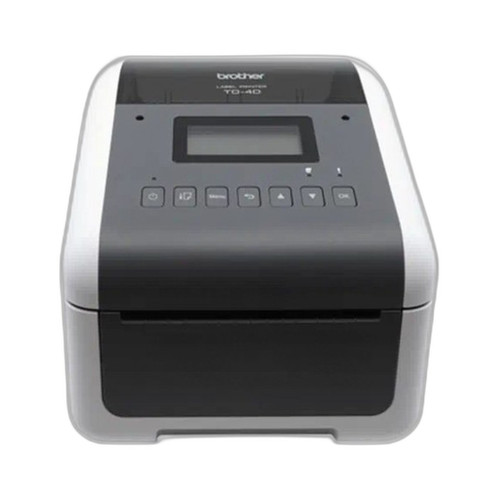
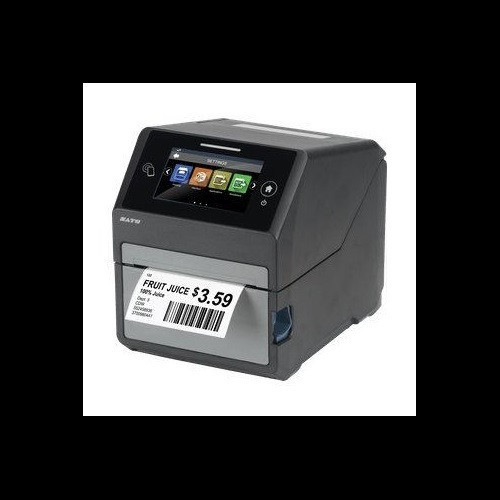
Both the Brother TD4550DNWB and the Sato WWCT04241-WCN (CT4-LX) are direct thermal desktop label printers targeting professional labeling environments. The Brother unit is a receipt-and-label-focused direct thermal printer with a 4.3-inch LCD and multi-protocol wireless connectivity. The Sato CT4-LX adds thermal transfer capability, UHF RFID encoding, a full-color touchscreen, and significantly larger onboard memory, positioning it as a more advanced RFID-capable labeling platform. Both occupy the desktop form factor and are realistically cross-shopped by IT buyers and systems integrators evaluating label printing infrastructure.
In This Guide
- How do print speed, resolution, and print method compare between the TD4550DNWB and WWCT04241-WCN?
- Which printer offers stronger RFID encoding, memory capacity, and operator interface features?
- How do connectivity options, media handling, and operating environment differ between these two printers?
- Which should you choose: the TD4550DNWB or the WWCT04241-WCN?
- Side-by-Side Specs
- FAQ
How do print speed, resolution, and print method compare between the TD4550DNWB and WWCT04241-WCN?
The Brother TD4550DNWB prints at 6 ips at 300 dpi using direct thermal only — no ribbon is required, which reduces consumable management overhead in high-volume, receipt-style or short-lifespan label runs.
The Sato WWCT04241-WCN (CT4-LX) supports both direct thermal and thermal transfer print methods. Its resolution is specified as 305 dpi in the primary spec fields and confirmed in the datasheet annotations. Print speed is listed as 8 ips in one spec field and 6 ips in another within the provided data; both values are present in the source specs and cannot be independently reconciled here — buyers should verify with Sato documentation.
The Sato's thermal transfer capability means it can print on a wider range of label stocks, including polyester and polypropylene, using ribbons up to 984 ft in capacity. The Brother's direct-thermal-only design eliminates ribbon cost but limits media durability for outdoor or chemical-exposure environments.
Which printer offers stronger RFID encoding, memory capacity, and operator interface features?
The Sato WWCT04241-WCN includes integrated UHF RFID encoding at 860–960 MHz conforming to EPC Class 1 Gen 2 (EPC C1G2). The Brother TD4550DNWB has no RFID capability specified in its provided specs. For any deployment requiring simultaneous label print-and-encode — supply chain, asset tracking, retail inventory — the Sato is the only option of the two.
Memory is a significant differentiator. The Sato carries 4 GB Flash (with 2 GB user storage) and 1 GB DDR3 RAM. The Brother provides 64 MB Flash (40 MB available for templates and databases) and 256 MB SDRAM. The Sato's memory footprint is roughly 50–60 times larger for storage, supporting substantially larger label libraries and more complex variable-data formats.
For the operator interface, the Brother offers a 4.3-inch LCD enabling on-device configuration. The Sato provides a 4.3-inch full-color touchscreen, which typically offers a richer interactive configuration experience. Neither unit's touch or button layout is further specified in the provided data.
How do connectivity options, media handling, and operating environment differ between these two printers?
The Brother TD4550DNWB exposes USB, Serial, Bluetooth BLE, WLAN (Wi-Fi), and LAN (Ethernet) interfaces and supports programming via ZPL II, CPCL, Raster Graphics, and Text. Its paper width range is 0.75 to 4.65 inches with a maximum print width of 4.27 inches, accommodating labels, tags, wristbands, and receipts.
The Sato WWCT04241-WCN lists USB 2.0, Ethernet, NFC, and Wi-Fi interfaces. Notably, NFC is specified for the Sato but not for the Brother. Bluetooth is listed in the Sato's top-level connectivity field but not in the datasheet annotation interfaces list; buyers should confirm with Sato. The Sato's max media width is 4.1 inches (minimum 1 inch) with a maximum roll OD of 5 inches. Serial interface is not specified for the Sato.
Operating environment is specified only for the Sato: 32°F to 104°F (0°C to 40°C), AC 100–240V universal input. The Brother's operating temperature range is not provided in the supplied specs. Weight differs: the Brother is 4.58 lbs versus the Sato's 7.3 lbs, reflecting the Sato's additional RFID and thermal transfer hardware. The Sato carries a stated 1-year manufacturer warranty; the Brother's warranty duration is not quantified in the provided specs beyond 'Manufacturer Warranty.'
Which should you choose: the TD4550DNWB or the WWCT04241-WCN?
Our take: The WWCT04241-WCN is the stronger choice when UHF RFID label encoding, thermal transfer media flexibility, or large onboard label storage are requirements. Its EPC C1G2 UHF encoding at 860–960 MHz is absent entirely from the TD4550DNWB's spec set, making the Sato the only viable option of the two for RFID-enabled supply chain or asset-tracking workflows. The Sato also provides 4 GB Flash versus the Brother's 64 MB Flash — a roughly 60× storage advantage for complex label libraries — and supports thermal transfer printing with ribbon capacity up to 984 ft, extending label durability to outdoor and harsh-environment stocks. The TD4550DNWB is the more appropriate choice for receipt-and-label environments that require Serial connectivity, ZPL II or CPCL programming language support, lighter physical footprint (4.58 lbs vs. 7.3 lbs), or where ribbon-free direct thermal operation is a deliberate operational preference. Platform integrators should note that the Brother's Serial port is unmatched in the Sato's listed interfaces.
Side-by-Side Comparison
Spec-for-spec, from manufacturer data.
| Specification | Brother TD4550DNWB | Sato WWCT04241-WCN |
|---|---|---|
| Print Method | Direct Thermal only | Direct Thermal / Thermal Transfer |
| Print Speed | 6 ips | 6–8 ips (conflicting spec values; verify with Sato) |
| Print Resolution | 300 dpi | 305 dpi |
| Max Print Width | 4.27" | 4.09" |
| Media Width Range | 0.75" – 4.65" | 1.0" – 4.1" |
| Max Media Roll OD | — | 5" |
| Ribbon Capacity | N/A (direct thermal only) | 984 ft |
| RFID | — | UHF 860–960 MHz, EPC C1G2 |
| Display | 4.3" LCD | 4.3" Full-Color Touchscreen |
| Flash Memory | 64 MB (40 MB usable) | 4 GB (2 GB user storage) |
| RAM | 256 MB SDRAM | 1 GB DDR3 |
| Interfaces | USB, Serial, Bluetooth BLE, WLAN, LAN | USB 2.0, Ethernet, NFC, Wi-Fi |
| Programming Languages | ZPL II, CPCL, Raster Graphics, Text | — |
| Weight | 4.58 lbs | 7.3 lbs |
| Dimensions (W×D×H) | 7.08" × 8.82" × 6.10" | 7.0" × 9.375" × 8.4375" |
| Warranty | Manufacturer Warranty (duration not specified) | 1-year Warranty |
Frequently Asked Questions
Which should you choose: the TD4550DNWB or the WWCT04241-WCN?
The WWCT04241-WCN is the stronger choice when UHF RFID label encoding, thermal transfer media flexibility, or large onboard label storage are requirements. Its EPC C1G2 UHF encoding at 860–960 MHz is absent entirely from the TD4550DNWB's spec set, making the Sato the only viable option of the two for RFID-enabled supply chain or asset-tracking workflows. The Sato also provides 4 GB Flash versus the Brother's 64 MB Flash — a roughly 60× storage advantage for complex label libraries — and supports thermal transfer printing with ribbon capacity up to 984 ft, extending label durability to outdoor and harsh-environment stocks. The TD4550DNWB is the more appropriate choice for receipt-and-label environments that require Serial connectivity, ZPL II or CPCL programming language support, lighter physical footprint (4.58 lbs vs. 7.3 lbs), or where ribbon-free direct thermal operation is a deliberate operational preference. Platform integrators should note that the Brother's Serial port is unmatched in the Sato's listed interfaces.
Can either the TD4550DNWB or the WWCT04241-WCN print and encode RFID labels in a single pass?
Only the Sato WWCT04241-WCN supports RFID encoding. It includes an integrated UHF RFID encoder operating at 860–960 MHz conforming to the EPC Class 1 Gen 2 standard, enabling simultaneous print-and-encode in a single pass. The Brother TD4550DNWB has no RFID capability listed in its provided specifications.
Which printer is better suited for environments already standardized on ZPL II label formats?
The Brother TD4550DNWB explicitly lists ZPL II (along with CPCL, Raster Graphics, and Text) as supported programming languages in its specifications. The Sato WWCT04241-WCN's supported programming languages are not detailed in the provided spec data. Buyers with existing ZPL II label templates should confirm Sato CT4-LX language compatibility directly with Sato before assuming cross-compatibility.
Is the TD4550DNWB or WWCT04241-WCN better for high-volume label library deployments with many stored templates?
The Sato WWCT04241-WCN holds a substantial advantage in onboard storage: 4 GB Flash with 2 GB user-accessible storage and 1 GB DDR3 RAM. The Brother TD4550DNWB provides 64 MB Flash with 40 MB available for templates and databases, plus 256 MB SDRAM. For deployments requiring large numbers of stored label formats or variable-data databases resident on the printer, the Sato's memory capacity is significantly larger.
More Label Printer Comparisons
- Brother TD4550DNWB vs Sato WWCT04241-NDR
- Brother TD4550DNWB vs Sato WT212-404CW-EX1-2
- Brother TD4550DNWB vs Sato WWCT04441-WDR
- Brother TD4550DNWB vs Brother TD4420DNC
- Brother TD4550DNWB vs Brother TD4410D
- Brother TD4420DNC vs Sato WWCT04241-WCN
Label Printer Buying Guides
Get a Second Opinion on Your Camera Choice
Share your site layout, coverage goals, and budget. Our team will validate the camera selection, flag anything we would change, and recommend products that match the use case.