
Brother TD4550DNWB vs Sato WWCT04241-NDR: Specification Comparison
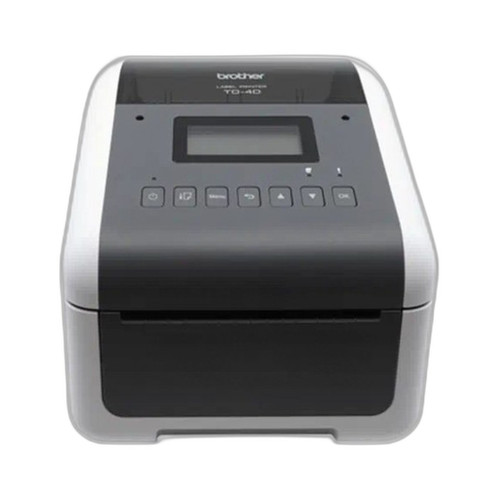
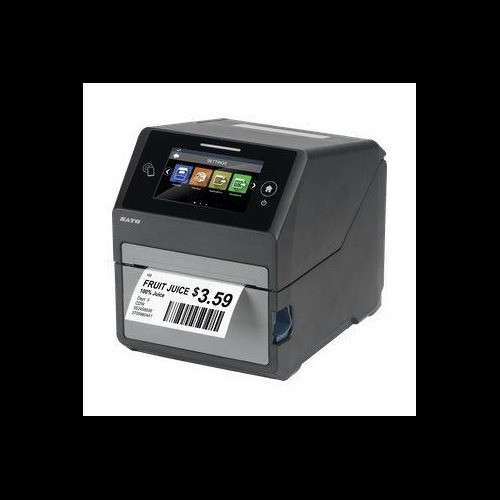
Both the Brother TD4550DNWB and the Sato CT4-LX (WWCT04241-NDR) are direct thermal desktop label and receipt printers in the same physical class, targeting enterprise and commercial environments that demand on-demand label, tag, wristband, or receipt output from a benchtop footprint. The comparison centers on print performance, media handling, connectivity, and a decisive differentiator: the Sato's integrated UHF RFID encoding capability versus the Brother's broader programming-language support and on-board display-driven configuration workflow.
In This Guide
- Which printer delivers faster throughput and higher resolution for demanding label runs?
- Which unit supports a broader range of media types and advanced encoding requirements such as RFID?
- How do the two printers differ in integration flexibility, supported command languages, and on-device usability?
- Which should you choose: the TD4550DNWB or the WWCT04241-NDR?
- Side-by-Side Specs
- FAQ
Which printer delivers faster throughput and higher resolution for demanding label runs?
The Sato CT4-LX (WWCT04241-NDR) prints at 8 ips versus the Brother TD4550DNWB's 6 ips — a 33% speed advantage that matters in high-volume fulfillment, healthcare wristband issuance, or retail ticketing where throughput directly impacts queue times.
On resolution, the Sato spec carries a conflict: one field lists 203 dpi while the canonical product-level spec and tagline assert 305 dpi. Taking the higher authoritative value, the Sato at 305 dpi edges the Brother's 300 dpi — a difference unlikely to be perceptible in normal label text but marginally relevant for dense barcodes or fine logos.
The Sato also supports both Direct Thermal and Thermal Transfer print methods, giving operators the option to use ribbon-based output for labels requiring greater durability or chemical resistance. The Brother is Direct Thermal only, which eliminates ribbon inventory but limits media longevity in harsh storage or exposure conditions.
Which unit supports a broader range of media types and advanced encoding requirements such as RFID?
The Brother TD4550DNWB handles labels, tags, wristbands, and receipts across a media width range of 0.75" to 4.65", with a maximum print width of 4.27". The Sato CT4-LX accepts media from 1" to 4.1" wide with a maximum print width of 4.09", making the Brother the broader choice for narrow media such as pharmacy labels or slim receipt stock.
The Sato CT4-LX carries integrated UHF RFID encoding at 860–960 MHz EPC Class 1 Gen 2 — a capability entirely absent from the Brother TD4550DNWB. For asset tracking, inventory management, or access-control badge encoding workflows that require simultaneous label printing and RFID tag writing in a single pass, the Sato is the only viable option between these two units.
Memory is substantially different: the Sato provides 4 GB Flash (with 2 GB user storage) and 1 GB DDR3 RAM, while the Brother offers 64 MB Flash (40 MB usable for templates and databases) and 256 MB SDRAM. The Sato's memory headroom supports larger font libraries, complex graphics, and more stored formats — relevant in multi-SKU or multi-language deployments.
How do the two printers differ in integration flexibility, supported command languages, and on-device usability?
Both printers share a core connectivity suite of Ethernet, Wi-Fi, Bluetooth, and USB. The Brother TD4550DNWB adds a Serial (RS-232) interface, which the Sato CT4-LX spec does not list — a meaningful distinction for legacy POS or kiosk integrations that have not migrated to network or USB-only architectures.
Programming language support is documented only for the Brother: ZPL II, CPCL, Raster Graphics, and Text. ZPL II compatibility is a significant interoperability asset in environments standardized on Zebra-ecosystem label designs. The Sato CT4-LX spec does not enumerate supported command languages, so buyers integrating into existing label software should verify Sato CT4-LX compatibility with their print engine before specifying.
The operator display tells a similar story: the Brother TD4550DNWB ships with a 4.3" LCD that supports on-device network and media configuration. The Sato CT4-LX upgrades this to a 4.3" full-color touchscreen, which reduces training friction for operators performing format selection, RFID calibration, or media adjustments at the device without host-PC access. The Sato's display is strictly more capable for touch-driven workflows.
Which should you choose: the TD4550DNWB or the WWCT04241-NDR?
Our take: The TD4550DNWB is the stronger choice when the deployment requires broad media-width support (down to 0.75"), Serial interface compatibility with legacy systems, documented ZPL II and CPCL programming-language support, and a lower-weight chassis at 4.58 lbs versus the Sato's 7.3 lbs. However, the Sato CT4-LX (WWCT04241-NDR) is the only viable option between these two when integrated UHF RFID encoding (860–960 MHz EPC C1G2) is required — a capability the Brother entirely lacks. The Sato also prints 33% faster at 8 ips versus 6 ips, supports Thermal Transfer in addition to Direct Thermal for durable-media runs, and provides dramatically more on-board memory (4 GB Flash / 1 GB DDR3 versus 64 MB Flash / 256 MB SDRAM). Specify the Brother for receipt-and-label environments needing legacy serial connectivity and ZPL II compatibility; specify the Sato for asset-tracking, RFID-encoding, or high-throughput label workflows.
Side-by-Side Comparison
Spec-for-spec, from manufacturer data.
| Specification | Brother TD4550DNWB | Sato WWCT04241-NDR |
|---|---|---|
| Print Method | Direct Thermal | Direct Thermal / Thermal Transfer |
| Print Speed | 6 ips | 8 ips |
| Print Resolution | 300 dpi | 305 dpi |
| Max Print Width | 4.27" | 4.09" |
| Media Width Range | 0.75" – 4.65" | 1" – 4.1" |
| Media Types | Labels, Tags, Wristbands, Receipts | Not enumerated in spec |
| RFID Capability | — | UHF 860–960 MHz EPC C1G2 |
| Display | 4.3" LCD | 4.3" Full-Color Touchscreen |
| Connectivity | USB, Serial, Bluetooth BLE, WLAN, LAN | Ethernet, Wi-Fi, Bluetooth, USB |
| Programming Languages | ZPL II, CPCL, Raster Graphics, Text | Not listed in spec |
| Flash Memory | 64 MB (40 MB usable) | 4 GB (2 GB user storage) |
| RAM | 256 MB SDRAM | 1 GB DDR3 |
| Max Ribbon Length | — | 984 ft (300 m) |
| Weight | 4.58 lbs | 7.3 lbs |
| Dimensions (W × D × H) | 7.08" × 8.82" × 6.10" | 7.0" × 9.375" × 8.4375" |
| Warranty | Manufacturer Warranty (duration not specified) | 1-Year Warranty |
Frequently Asked Questions
Which should you choose: the TD4550DNWB or the WWCT04241-NDR?
The TD4550DNWB is the stronger choice when the deployment requires broad media-width support (down to 0.75"), Serial interface compatibility with legacy systems, documented ZPL II and CPCL programming-language support, and a lower-weight chassis at 4.58 lbs versus the Sato's 7.3 lbs. However, the Sato CT4-LX (WWCT04241-NDR) is the only viable option between these two when integrated UHF RFID encoding (860–960 MHz EPC C1G2) is required — a capability the Brother entirely lacks. The Sato also prints 33% faster at 8 ips versus 6 ips, supports Thermal Transfer in addition to Direct Thermal for durable-media runs, and provides dramatically more on-board memory (4 GB Flash / 1 GB DDR3 versus 64 MB Flash / 256 MB SDRAM). Specify the Brother for receipt-and-label environments needing legacy serial connectivity and ZPL II compatibility; specify the Sato for asset-tracking, RFID-encoding, or high-throughput label workflows.
Can either printer encode RFID tags, or do I need a separate encoder?
Only the Sato CT4-LX (WWCT04241-NDR) includes integrated UHF RFID encoding at 860–960 MHz EPC Class 1 Gen 2, allowing simultaneous label printing and RFID tag writing in a single pass. The Brother TD4550DNWB has no RFID capability listed in its specifications; a separate RFID encoder would be required for any tag-writing workflow on the Brother.
Which printer is better suited to a legacy POS environment that uses a Serial (RS-232) connection?
The Brother TD4550DNWB explicitly lists Serial as a supported interface alongside USB, Bluetooth BLE, WLAN, and LAN. The Sato CT4-LX specification does not list a Serial interface — only Ethernet, Wi-Fi, Bluetooth, and USB. For RS-232-dependent legacy systems, the Brother is the confirmed option between these two.
Does either printer support Thermal Transfer for long-lasting, chemical-resistant labels?
Yes — the Sato CT4-LX (WWCT04241-NDR) supports both Direct Thermal and Thermal Transfer print methods, with a maximum ribbon length of 984 ft (300 m). The Brother TD4550DNWB is Direct Thermal only; it cannot use ribbon, which limits label durability in environments with exposure to heat, moisture, or chemicals.
More Label Printer Comparisons
- Brother TD4550DNWB vs Sato WWCT04241-WCN
- Brother TD4550DNWB vs Sato WT212-404CW-EX1-2
- Brother TD4550DNWB vs Sato WWCT04441-WDR
- Brother TD4550DNWB vs Brother TD4420DNC
- Brother TD4550DNWB vs Brother TD4410D
- Brother TD4420DNC vs Sato WWCT04241-WCN
Label Printer Buying Guides
Get a Second Opinion on Your Camera Choice
Share your site layout, coverage goals, and budget. Our team will validate the camera selection, flag anything we would change, and recommend products that match the use case.