
Axis T8508 vs Vivotek IHT-1271: Specification Comparison
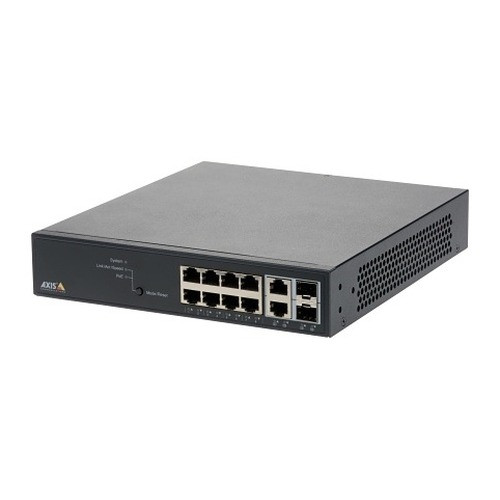
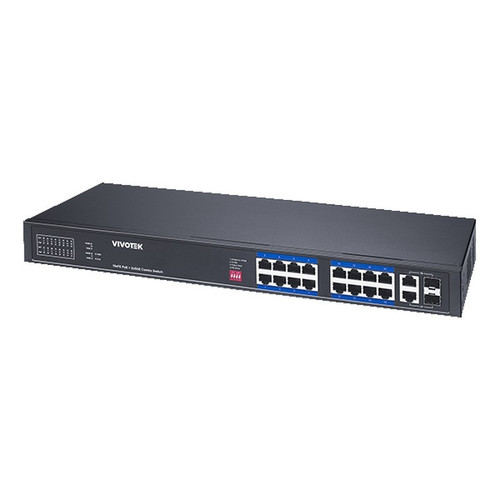
Both the Axis T8508 (01191-004) and the Vivotek AW-IHT-1271 are 8-port Gigabit PoE+ managed switches designed for IP security camera deployments. The T8508 is a rack-mountable indoor unit powered by AC mains, while the IHT-1271 is a compact industrial switch powered by dual 48–57 VDC inputs rated for harsh environments. Buyers evaluating these will weigh PoE power budget, uplink port count, environmental tolerance, redundancy, and depth of L2/L3 management features against their installation context.
In This Guide
Which switch delivers more PoE power and uplink flexibility?
The Axis T8508 provides 8 PoE+ ports (IEEE 802.3at, up to 30 W each) with a total PoE power budget of 130 W across all ports simultaneously. Its two combo RJ45/SFP uplink ports offer either copper or fiber uplink connectivity. Switching capacity is 20 Gbps at 14.9 Mpps forwarding rate, with a MAC table of 8K entries and jumbo frame support up to 9,216 bytes.
The Vivotek AW-IHT-1271 also provides 8 PoE+ ports (IEEE 802.3af/at, up to 30 W each) but with a total PoE power budget of 240 W — nearly double the T8508. Beyond the 8 PoE RJ45 ports, it adds 4 dedicated 100M/1G SFP ports, giving it six total uplink or fiber-expansion paths. Switching capacity is 24 Gbps at 17.856 Mpps, MAC table is also 8K, and jumbo frames support up to 9,600 bytes.
For installations requiring maximum simultaneous PoE draw — dense camera arrays with pan-tilt-zoom motors, heaters, or IR illuminators — the IHT-1271's 240 W budget is a decisive hardware advantage. The T8508's 130 W budget constrains average per-port draw to approximately 16 W when all 8 ports are loaded. The IHT-1271 also provides four additional SFP fiber slots absent on the T8508.
Which switch is built for harsher installation environments?
The Axis T8508 is rated for indoor use with an operating temperature range of 0°C to 50°C and storage of -10°C to 70°C. It is housed in a metal chassis, draws power from 100–240 V AC at 50/60 Hz, and provides 6 kV surge protection on all network ports and AC lines. Mechanical compliance includes EMC EN 55032/35, FCC Part 15B, VCCI, RCM, and IEC 62368-1 safety. Vibration, shock, and freefall ratings are not listed in the provided specifications.
The Vivotek AW-IHT-1271 carries a full industrial temperature rating of -40°C to 75°C operating and -40°C to 85°C storage — a 40-degree cold-floor extension and a 25-degree upper-limit extension relative to the T8508. It accepts dual 48–57 VDC inputs with redundant power backup, eliminating a single point of failure at the power supply level. Per-port surge protection is rated at 6 kV. EMS compliance covers ESD, RS, EFT, Surge, CS, and PFMF. Mechanical durability is validated to IEC 60068-2-6 (vibration), IEC 60068-2-27 (shock), and IEC 60068-2-32 (freefall). Safety marks include CE, LVD, VCCI, and FCC Part 15 Class A.
For outdoor cabinets, industrial enclosures, transportation hubs, parking structures, or any site with temperature extremes below 0°C or above 50°C, the IHT-1271 is the only option of the two. The T8508's AC input is suitable for equipment rooms with standard power infrastructure; the IHT-1271's DC input requires a 48–57 VDC source, which is standard in industrial and telecom cabinet designs but requires a separate AC-to-DC supply in typical IT closets.
Which switch offers deeper management and surveillance-platform integration?
The Axis T8508 integrates natively with AXIS Device Manager for discovery, configuration, and monitoring of Axis network devices. Management protocols include SNMP, SSH, HTTPS, NTP, and a web interface. Security features include IEEE 802.1X network access control, ACL, Private VLANs, DHCP Snooping, IP address filtering, HTTPS encryption, and password protection. VLAN support and a built-in DHCP server are specified. The spec does not list STP/RSTP/MSTP, LACP, IGMP Snooping, RMON, QoS queue depth, RADIUS, DDoS prevention, LLDP, or IEEE 1588v2 PTP among its listed features.
The Vivotek AW-IHT-1271 includes a surveillance-device management layer that auto-discovers up to 256 Vivotek and ONVIF devices, supports topology, floor, and Google Map views, and allows PoE port scheduling (7/24 on/off), alive checking for powered devices, and per-port power delay. At the network layer it supports IEEE 802.1D/w/s (STP/RSTP/MSTP), 802.3ad LACP (up to 4 ports per group, 6 groups), IGMP Snooping v1/v2/v3, 4,096 VLAN IDs (802.1Q tag-based, port-based, MAC-based, Q-in-Q, voice VLAN, management VLAN, GVRP), 8 hardware QoS queues with strict priority and WRR, RADIUS authentication, DDoS prevention, IP Source Guard, Storm Control, BPDU Guard, STP Root Guard, RMON (groups 1/2/3/9), CLI, LLDP/LLDP-MED, IEEE 1588v2 PTP, S-Flow, UPnP, and dual image firmware. IPv6 is supported across web, SSL, SSH, Telnet, SNMP, RADIUS, Syslog, DNS client, TFTP, SNTP, and protocol-based VLANs. ITU-T G.8031 and G.8032 ring protection with sub-20 ms convergence are also specified.
The T8508's management depth is appropriate for Axis-centric camera networks managed through AXIS Device Manager. The IHT-1271 provides a significantly broader feature set covering advanced redundancy protocols, granular QoS, ring protection, and deep IPv6 support, making it suitable for multi-vendor or carrier-grade network segments. Its Vivotek-specific management GUI adds value only in Vivotek-camera deployments; it does not list native integration with AXIS Device Manager.
Which should you choose: the T8508 or the IHT-1271?
Our take: The AW-IHT-1271 is the stronger choice when the installation demands industrial temperature tolerance, higher PoE headroom, or a deeper managed-switch feature set. Concretely: its PoE power budget is 240 W versus the T8508's 130 W — a 110 W advantage that allows all 8 ports to run at full 30 W simultaneously; its operating temperature floor reaches -40°C versus the T8508's 0°C, covering outdoor and unheated enclosures; and it adds 4 SFP fiber uplinks versus the T8508's 2 combo ports, plus ring-protection protocols (ITU-T G.8031/G.8032) with sub-20 ms convergence. The T8508 is the more appropriate choice for temperature-controlled equipment rooms in Axis-centric installations where AXIS Device Manager integration, AC mains power, and a rack-mount form factor are priorities, and where the 130 W PoE budget is sufficient for the camera load.
Side-by-Side Comparison
Spec-for-spec, from manufacturer data.
| Specification | Axis T8508 | Vivotek IHT-1271 |
|---|---|---|
| Product Type | Managed PoE+ Switch (Indoor) | Managed PoE+ Industrial Switch |
| PoE Ports | 8x RJ45 PoE+ (IEEE 802.3at) | 8x RJ45 PoE+/af (IEEE 802.3at/af) |
| Uplink / Expansion Ports | 2x Combo RJ45/SFP | 4x SFP (100M/1G) + 1x RJ45 Console |
| Total PoE Power Budget | 130 W | 240 W |
| Max PoE Per Port | 30 W | 30 W |
| Switching Capacity | 20 Gbps | 24 Gbps |
| Forwarding Rate | 14.9 Mpps | 17.856 Mpps |
| MAC Address Table | 8K | 8K |
| Jumbo Frames | 9,216 Bytes | 9,600 Bytes |
| Operating Temperature | 0°C to 50°C | -40°C to 75°C |
| Storage Temperature | -10°C to 70°C | -40°C to 85°C |
| Power Input | 100–240 V AC, 50/60 Hz | 48–57 VDC (Dual redundant inputs) |
| Surge Protection | 6 kV (all network ports + AC lines) | 6 kV per PoE port |
| Redundant Power Input | — | Yes (PW1 + PW2) |
| Ring Protection | — | ITU-T G.8031 / G.8032 (<20 ms) |
| Management Software | AXIS Device Manager | Vivotek Surveillance GUI + ONVIF discovery |
| VLAN IDs Supported | Not specified in provided specs | 4,096 (802.1Q tag-based) |
| Spanning Tree | Not specified in provided specs | STP / RSTP / MSTP (802.1D/w/s) |
| IEEE 1588v2 PTP | — | Yes |
| Vibration / Shock Rating | — | IEC 60068-2-6 / IEC 60068-2-27 |
| Dimensions (WxDxH) | 220 x 242 x 44 mm | 62 x 135 x 130 mm |
| Weight | 2.1 kg | 0.68 kg |
| Warranty | 5 years | 60 months (5 years) |
Frequently Asked Questions
Which should you choose: the T8508 or the IHT-1271?
The AW-IHT-1271 is the stronger choice when the installation demands industrial temperature tolerance, higher PoE headroom, or a deeper managed-switch feature set. Concretely: its PoE power budget is 240 W versus the T8508's 130 W — a 110 W advantage that allows all 8 ports to run at full 30 W simultaneously; its operating temperature floor reaches -40°C versus the T8508's 0°C, covering outdoor and unheated enclosures; and it adds 4 SFP fiber uplinks versus the T8508's 2 combo ports, plus ring-protection protocols (ITU-T G.8031/G.8032) with sub-20 ms convergence. The T8508 is the more appropriate choice for temperature-controlled equipment rooms in Axis-centric installations where AXIS Device Manager integration, AC mains power, and a rack-mount form factor are priorities, and where the 130 W PoE budget is sufficient for the camera load.
Can the T8508 or IHT-1271 power all 8 cameras at 30 W each simultaneously?
The AW-IHT-1271 can: its 240 W total PoE budget equals 8 ports × 30 W. The T8508 cannot sustain full 30 W on all 8 ports at once — its 130 W budget limits average simultaneous draw to roughly 16 W per port across all 8. If your cameras draw close to 30 W each (e.g., PTZ with heater), the IHT-1271 is the appropriate choice.
Is either switch suitable for outdoor or unheated cabinet installations?
Only the Vivotek AW-IHT-1271 is rated for those conditions. It operates from -40°C to 75°C and is validated to IEC 60068-2-6 (vibration) and IEC 60068-2-27 (shock). The Axis T8508 is rated for indoor use only, with an operating floor of 0°C, and no vibration or shock ratings are listed in its specifications.
Does the T8508 work with non-Axis cameras, and does the IHT-1271 work with non-Vivotek cameras?
Yes to both. Both switches are standard IEEE 802.3at PoE+ Gigabit Ethernet switches and will power and pass traffic from any IEEE-compliant IP camera regardless of brand. The T8508's AXIS Device Manager integration provides enhanced discovery and management specifically for Axis devices. The IHT-1271's surveillance management GUI auto-discovers Vivotek devices and ONVIF-compliant cameras; non-ONVIF third-party cameras would be managed through standard network management interfaces (web GUI, CLI, SNMP) only.
More Network Switch Comparisons
- Vivotek IHT-1271 vs TP-Link SG3210XHP-M2
- Vivotek IHT-1271 vs TP-Link S4500-8GP2F
- Vivotek IHT-1271 vs TP-Link SG1210P
- Vivotek IHT-1271 vs Allied Telesis AT-x530L-10GHXm-10
- Vivotek IHT-1271 vs Vivotek GEV-108A-130
- Vivotek IHT-1271 vs Vivotek IHT-1000
Network Switch Buying Guides
Get a Second Opinion on Your Camera Choice
Share your site layout, coverage goals, and budget. Our team will validate the camera selection, flag anything we would change, and recommend products that match the use case.