
Axis A8207-VE vs Axis I8016-LVE: Specification Comparison
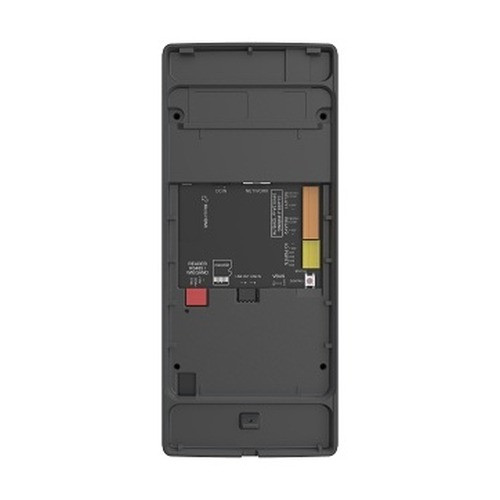
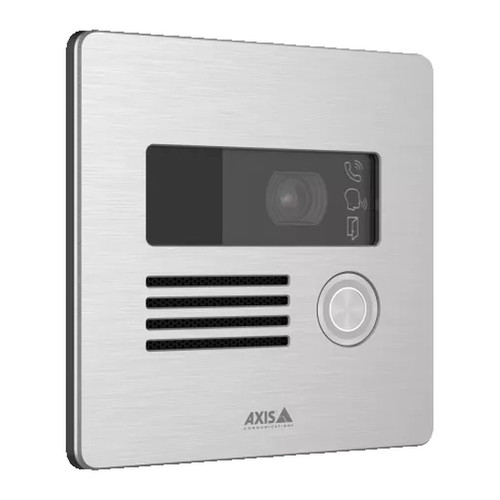
Both the Axis A8207-VE Mk II and the Axis I8016-LVE are wired network video intercoms designed for secure building entry points, making them legitimate cross-shop candidates for integrators specifying video door stations. The A8207-VE is a purpose-built outdoor door station with a fisheye-style wide-angle sensor and onboard access-control I/O, while the I8016-LVE is a compact flush-mount intercom emphasizing higher resolution and vandal resistance. This comparison covers imaging and field of view, environmental and physical durability, and access-control integration depth.
In This Guide
Which intercom delivers better image quality and coverage at the door?
The A8207-VE Mk II captures video at 3MP with a 180° horizontal field of view, providing full-width vestibule coverage in a single frame without mechanical pan. It operates at 30 fps and applies Forensic WDR to handle the high-contrast backlighting conditions typical of glass entry doors. Compression is H.264; no additional compression formats are listed in the provided specs.
The I8016-LVE steps up to 5MP resolution with a 140° field of view—narrower than the A8207-VE but still wide-angle. It adds invisible 850 nm IR illumination for low-light and zero-ambient-light operation without visible light spillover, paired with a Day/Night capability noted in its specs. No WDR specification is listed for the I8016-LVE in the provided data.
Resolution favors the I8016-LVE (5MP vs. 3MP), while coverage angle favors the A8207-VE (180° vs. 140°). The A8207-VE's Forensic WDR is a documented spec; whether the I8016-LVE includes any WDR is not stated. The I8016-LVE's invisible IR provides night-vision capability not present in the A8207-VE's specs.
Which unit is better hardened for high-risk or outdoor installation?
The A8207-VE Mk II carries an IP66 ingress-protection rating, confirming dust-tight sealing and protection against powerful water jets—appropriate for direct outdoor exposure. Its IK08 impact rating indicates resistance to 5-joule strikes. Operating temperature range is specified as -40 to 55 °C, making it suitable for extreme cold climates as well as hot environments. The housing is white and the unit is explicitly rated for outdoor use.
The I8016-LVE achieves IK10 vandal resistance, two full IK grades above the A8207-VE's IK08, meaning it withstands 20-joule impacts—relevant for high-risk lobbies, correctional facilities, or exposed urban installations. Its environment rating is listed as 'Vandal Resistant.' However, no IP ingress-protection rating and no operating temperature range are provided in the available specs for the I8016-LVE, so weatherproofing cannot be confirmed from the data on hand.
For confirmed all-weather outdoor duty the A8207-VE's IP66 and -40 °C floor are documented; the I8016-LVE's equivalent ratings are absent from the provided spec set. For pure physical tamper resistance, IK10 (I8016-LVE) outclasses IK08 (A8207-VE) by a measurable margin.
Which intercom integrates more deeply with access control and building systems?
The A8207-VE Mk II includes 4 alarm inputs, 2 relay outputs, and a video output, giving it native dry-contact I/O for door strikes, REX sensors, and alarm panels without an external controller. It is powered by PoE+ (802.3at), carries H.264 compression for VMS compatibility, and supports microSD local storage. The unit's architecture positions it as a self-contained door-controller node on the network.
The I8016-LVE uses SIP protocol for call signaling and is listed as ONVIF Profile S compliant, allowing it to register with any SIP PBX or unified-communications platform alongside IP video management systems. Its compact 2-gang form factor simplifies flush retrofits in existing wall boxes. No alarm input/output count, relay count, or onboard storage is specified in the provided data.
Integrators building a dedicated access-control topology with door strikes and alarm loops will find the A8207-VE's 4 inputs and 2 relays directly actionable without additional hardware. Integrators deploying into a SIP telephony or UC environment, or requiring ONVIF Profile S VMS registration, have an explicit specification on the I8016-LVE; equivalent SIP or ONVIF claims for the A8207-VE are not present in the provided specs. Warranty terms also differ: A8207-VE carries a 3-year warranty; the I8016-LVE carries a 5-year warranty.
Which should you choose: the A8207-VE or the I8016-LVE?
Our take: The A8207-VE Mk II is the stronger choice when the installation demands confirmed all-weather outdoor operation, native access-control I/O, and full-vestibule coverage in a single sensor. Its documented -40 to 55 °C operating range, IP66 rating, 4 alarm inputs, and 2 relays make it a self-contained door-control node that the I8016-LVE cannot match on paper—no IP rating, no temperature range, and no I/O counts are provided for the I8016-LVE. Conversely, the I8016-LVE is the stronger choice when resolution, vandal hardening, and SIP/UC integration are the primary drivers: it delivers 5MP versus 3MP, achieves IK10 versus IK08, and carries an explicit SIP and ONVIF Profile S specification suited to telephony-centric or VMS-agnostic deployments. Platform qualifier: specify the A8207-VE for Axis-ecosystem access-control projects requiring field I/O; specify the I8016-LVE for SIP-PBX or high-impact-risk lobby retrofits where a flush 2-gang footprint is required.
Side-by-Side Comparison
Spec-for-spec, from manufacturer data.
| Specification | Axis A8207-VE | Axis I8016-LVE |
|---|---|---|
| SKU | 02026-001 | 01995-001 |
| Resolution | 3MP | 5MP |
| Field of View | 180° horizontal | 140° |
| WDR | Forensic WDR | — |
| IR Night Vision | — | Invisible 850 nm IR |
| Day/Night | — | Yes |
| IP Rating | IP66 | — |
| Vandal Rating | IK08 | IK10 |
| Operating Temperature | -40 to 55 °C | — |
| Power | PoE+ (802.3at) | — |
| Alarm Inputs / Outputs | 4 inputs / 2 relays | — |
| Communication Protocol | — | SIP |
| ONVIF | — | Profile S |
| Onboard Storage | microSD | — |
| Video Compression | H.264 | — |
| Warranty | 3 years | 5 years |
Frequently Asked Questions
Which should you choose: the A8207-VE or the I8016-LVE?
The A8207-VE Mk II is the stronger choice when the installation demands confirmed all-weather outdoor operation, native access-control I/O, and full-vestibule coverage in a single sensor. Its documented -40 to 55 °C operating range, IP66 rating, 4 alarm inputs, and 2 relays make it a self-contained door-control node that the I8016-LVE cannot match on paper—no IP rating, no temperature range, and no I/O counts are provided for the I8016-LVE. Conversely, the I8016-LVE is the stronger choice when resolution, vandal hardening, and SIP/UC integration are the primary drivers: it delivers 5MP versus 3MP, achieves IK10 versus IK08, and carries an explicit SIP and ONVIF Profile S specification suited to telephony-centric or VMS-agnostic deployments. Platform qualifier: specify the A8207-VE for Axis-ecosystem access-control projects requiring field I/O; specify the I8016-LVE for SIP-PBX or high-impact-risk lobby retrofits where a flush 2-gang footprint is required.
Does either intercom work without a separate access-control panel to trigger a door strike?
The A8207-VE Mk II includes 4 alarm inputs and 2 relay outputs per its spec sheet, so it can directly drive a door strike or magloc and read a REX sensor without an external controller. The I8016-LVE's spec data provided here does not list any alarm inputs, relay outputs, or dry-contact I/O, so its ability to trigger a door strike natively cannot be confirmed from the available information.
Which unit is better for a cold-climate outdoor installation like a parking garage entry in a northern climate?
The A8207-VE Mk II specifies a -40 °C lower operating limit, making it suitable for severe cold-weather outdoor use. No operating temperature range is listed for the I8016-LVE in the provided specs, so cold-climate suitability cannot be verified for that model. The A8207-VE also carries an IP66 weatherproofing rating; the I8016-LVE's IP rating is not stated.
Is the A8207-VE or I8016-LVE better for a lobby where physical attack on the intercom is a concern?
The I8016-LVE is rated IK10, which withstands 20-joule impacts—the highest standard IK rating. The A8207-VE is rated IK08, which withstands 5-joule impacts. For installations where deliberate physical attack is anticipated, the I8016-LVE's IK10 rating provides meaningfully greater resistance to impact damage.
More Intercom Comparisons
- Hanwha TID-600R vs Aiphone IX-EA
- Hanwha TID-600R vs Axis A8207-VE
- Hanwha TID-600R vs Aiphone IX-DVF-6
- Hanwha TID-600R vs Aiphone JOS-1FW
- Aiphone IX-EA vs Axis A8207-VE
- Aiphone IX-EA vs 2N 01273-001
Intercom Buying Guides
Get a Second Opinion on Your Camera Choice
Share your site layout, coverage goals, and budget. Our team will validate the camera selection, flag anything we would change, and recommend products that match the use case.