
APC by Schneider Electric SURT1000RMXLI vs CyberPower PR1000LCD: Specification Comparison
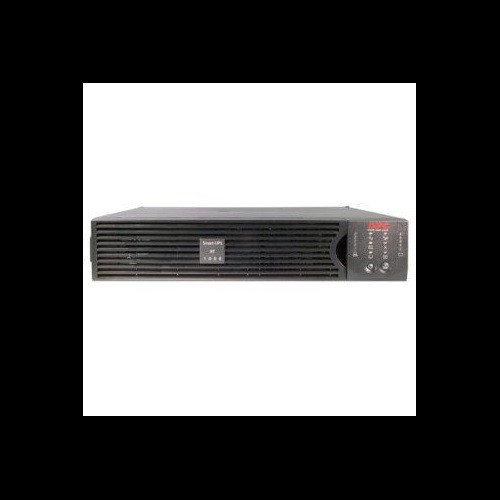
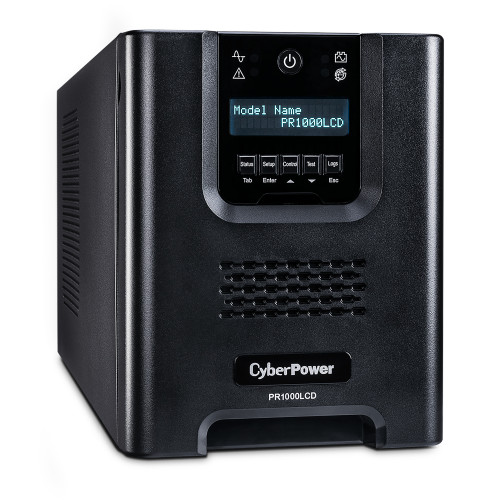
Both units are 1000VA sine-wave uninterruptible power supplies targeting business-critical loads, but they occupy distinct niches within that class. The APC SURT1000RMXLI is a 230V double-conversion online rack-mount UPS designed for 2U data-center or wiring-closet installation in regions running 220–240V infrastructure. The CyberPower PR1000LCD is a 120V line-interactive mini-tower unit aimed at North American office or edge deployments. Buyers comparing these should be aware that the two units are electrically incompatible—they cannot be substituted in the same facility without a voltage infrastructure change.
In This Guide
- Which UPS topology and power-quality architecture better protects sensitive loads?
- How do rated capacity, real-world runtime, and battery characteristics compare?
- Which unit better fits rack infrastructure, remote monitoring, and management integration?
- Which should you choose: the SURT1000RMXLI or the PR1000LCD?
- Side-by-Side Specs
- FAQ
Which UPS topology and power-quality architecture better protects sensitive loads?
The SURT1000RMXLI uses double-conversion online topology: the load runs continuously from the inverter, so utility power never reaches connected equipment directly. This yields zero transfer time during an outage, hardware-enforced output isolation, and a specified total harmonic distortion of less than 3% with a 3:1 crest factor. APC rates surge let-through at zero (IEEE) with a clamping response that meets UL 1449, and lists surge energy absorption at 420 J.
The PR1000LCD uses line-interactive topology with automatic voltage regulation (AVR). Under normal conditions the load runs from conditioned utility power; on outage the unit transfers to battery with a 4 ms typical transfer time. CyberPower specifies a pure sine wave output on battery and rates surge energy absorption at 1030 J—2.45× the APC figure. Output voltage regulation is ±5% at 120 VAC.
For loads that are intolerant of any power-line anomaly—servers with tight voltage windows, medical or broadcast equipment—double-conversion eliminates the 4 ms transfer window entirely and provides the tightest output regulation. Line-interactive is appropriate where the 4 ms transfer time is acceptable and surge-energy headroom is a priority.
How do rated capacity, real-world runtime, and battery characteristics compare?
Both units are rated at 1000VA. The SURT1000RMXLI is rated at 700W (0.7 power factor), while the PR1000LCD is rated at 1000W (1.0 power factor). A load drawing 1000W would exceed the APC's 700W limit; the CyberPower can sustain the full 1000W. At 50% load (500W), the PR1000LCD delivers 10.5 minutes of runtime; at full 1000W it delivers 3.1 minutes. APC does not publish runtime figures in the provided specifications.
Battery configurations differ substantially. The SURT1000RMXLI uses a single lead-acid pack with a 3-hour recharge time and a rated battery life of 3–5 years; the charger is rated at 109W. The PR1000LCD uses two 12V/12Ah sealed lead-acid batteries, user-replaceable in the field, with a 3-hour quick-charge mode or 8-hour eco-mode recharge. APC does not specify Ah capacity in the provided data, preventing a direct energy-storage comparison.
The SURT1000RMXLI accepts an external battery module (EBM) to extend runtime—the spec references 1 free expansion slot—whereas the PR1000LCD spec does not mention an external battery expansion option.
Which unit better fits rack infrastructure, remote monitoring, and management integration?
The SURT1000RMXLI occupies 2U of rack space (H 8.5 cm × W 43.2 cm × D 48.3 cm, 23 kg) and connects via an IEC 60320 C14 input with six IEC 60320 C13 and two IEC jumper outputs—standard rack PDU connectors for 230V environments. It includes one free expansion slot for an optional network management card (NMC), enabling SNMP integration when the card is installed. The provided specifications do not list built-in USB or serial ports; management connectivity depends on adding an NMC card.
The PR1000LCD is a mini-tower (6.7 × 8.7 × 17 inches, 44 lbs) with eight NEMA 5-15R outlets (four designated as critical-load priority) and a NEMA 5-15P input with a 6-foot cord—North American plug standard. Connectivity includes built-in USB, serial, and SNMP ports. The unit ships with a removable multifunction LCD on a 4.5-foot cable and bundles PowerPanel Business Edition management software. No rack-mount option is mentioned in the provided specifications.
Acoustic output for the APC unit is specified at 50 dBA and heat dissipation at 324 Btu/h, with an IP20 enclosure rating. The PR1000LCD specification does not provide acoustic level, heat dissipation, or IP rating data. Operating temperature range is 0–40°C for both units.
Which should you choose: the SURT1000RMXLI or the PR1000LCD?
Our take: The SURT1000RMXLI is the stronger choice when the installation is rack-based, runs on 230V infrastructure, and requires zero-transfer-time protection for power-sensitive equipment. Its double-conversion online topology eliminates the 4 ms transfer window that the PR1000LCD's line-interactive design carries, and its 2U rack form factor with IEC C13 outputs integrates directly into standard rack PDU chains. However, three spec deltas favor the PR1000LCD in the right context: its 1000W real output rating versus the APC's 700W ceiling means it can sustain a full 1000VA load without derating; its 1030 J surge absorption rating is 2.45× the APC's 420 J; and its batteries are field-replaceable with published runtime figures (10.5 min at 500W). Specify the SURT1000RMXLI for 230V rack environments demanding true online double-conversion; specify the PR1000LCD for 120V North American deployments where watt-for-watt capacity, surge headroom, and built-in SNMP without an add-on card are priorities.
Side-by-Side Comparison
Spec-for-spec, from manufacturer data.
| Specification | APC by Schneider Electric SURT1000RMXLI | CyberPower PR1000LCD |
|---|---|---|
| UPS Topology | Double-conversion online | Line-interactive with AVR |
| Rated Capacity (VA) | 1000 VA | 1000 VA |
| Rated Capacity (W) | 700 W | 1000 W |
| Input Voltage | 160–280 VAC (nominal 230V) | 78–149 VAC (nominal 120V) |
| Output Voltage | 220 / 230 / 240 VAC | 120 VAC ± 5% |
| Waveform | Sine wave | Pure sine wave (AC and battery) |
| Transfer Time | Zero (online) | 4 ms typical |
| Surge Energy Absorption | 420 J | 1030 J |
| Output Connections | 6x IEC C13 + 2x IEC jumper | 8x NEMA 5-15R |
| Form Factor | 2U rack-mount | Mini-tower (floor/desktop) |
| Dimensions (H×W×D) | 8.5 × 43.2 × 48.3 cm | 8.7 × 6.7 × 17 in (22.1 × 17 × 43.2 cm) |
| Weight | 23 kg (50.7 lbs) | 44 lbs (20 kg) |
| Battery | Lead-acid (Ah not specified) | 2× 12V/12Ah sealed lead-acid, user-replaceable |
| Battery Recharge Time | 3 hours | 3 hours (quick) / 8 hours (eco) |
| Runtime at 50% Load | — (not specified) | 10.5 min at 500W |
| Built-in Management Ports | — (NMC card required) | USB, Serial, SNMP |
| Expansion Slot | 1 (for NMC/EBM) | — (not specified) |
| Operating Temperature | 0–40 °C | 0–40 °C (32–104 °F) |
| Acoustic Level | 50 dBA | — (not specified) |
| Certifications | CE, VDE, C-Tick, GOST, UK PSTI | UL1778, cUL 107.3, FCC Class A, Energy Star, RoHS |
Frequently Asked Questions
Which should you choose: the SURT1000RMXLI or the PR1000LCD?
The SURT1000RMXLI is the stronger choice when the installation is rack-based, runs on 230V infrastructure, and requires zero-transfer-time protection for power-sensitive equipment. Its double-conversion online topology eliminates the 4 ms transfer window that the PR1000LCD's line-interactive design carries, and its 2U rack form factor with IEC C13 outputs integrates directly into standard rack PDU chains. However, three spec deltas favor the PR1000LCD in the right context: its 1000W real output rating versus the APC's 700W ceiling means it can sustain a full 1000VA load without derating; its 1030 J surge absorption rating is 2.45× the APC's 420 J; and its batteries are field-replaceable with published runtime figures (10.5 min at 500W). Specify the SURT1000RMXLI for 230V rack environments demanding true online double-conversion; specify the PR1000LCD for 120V North American deployments where watt-for-watt capacity, surge headroom, and built-in SNMP without an add-on card are priorities.
Can I use either of these UPS units interchangeably in the same server room?
No. The SURT1000RMXLI is designed for 230V electrical infrastructure (input range 160–280V, IEC C14 plug) and is certified for markets running 220–240V. The PR1000LCD operates on 120V (78–149V input range, NEMA 5-15P plug) and is certified for North American use. Connecting either unit to the wrong voltage system will damage the UPS and connected equipment. They must be matched to the facility's electrical standard.
Which UPS offers better protection against power anomalies for a critical server or NVR?
The SURT1000RMXLI's double-conversion online topology provides superior protection: the inverter drives the load full-time, so there is zero transfer time during an outage and the output is fully isolated from utility-line noise and surges. The PR1000LCD is line-interactive with a 4 ms typical transfer time; while adequate for most servers and NVRs, equipment with extremely tight power tolerances may prefer zero-transfer double-conversion. For 230V installations the APC is the stronger choice on topology alone.
Which unit supports longer runtime or easier battery expansion?
The PR1000LCD publishes explicit runtime figures (10.5 minutes at 500W, 3.1 minutes at 1000W) and uses two user-replaceable 12V/12Ah batteries. The SURT1000RMXLI does not include runtime figures in its provided specifications, but it does offer one free expansion slot for an optional external battery module (EBM), which can extend runtime beyond what the internal battery provides—an option not mentioned in the PR1000LCD specifications. For installations where long runtime is critical, the APC's EBM expansion path may offer a greater ceiling, but confirm EBM compatibility and runtime targets with APC documentation before specifying.
More UPS Comparisons
- CyberPower PR1000RTXL2UC vs APC by Schneider Electric SURT1000RMXLI
- CyberPower PR1000RTXL2UC vs APC by Schneider Electric SMT1000CUS
- CyberPower PR1000RTXL2UC vs Vertiv GXT5-1000LVRT2UXL
- CyberPower PR1000RTXL2UC vs APC by Schneider Electric SMT1000J
- CyberPower PR1000RTXL2UC vs CyberPower CP1000PFCLCD
- CyberPower PR1000RTXL2UC vs CyberPower PR1000LCD
UPS Buying Guides
Get a Second Opinion on Your Camera Choice
Share your site layout, coverage goals, and budget. Our team will validate the camera selection, flag anything we would change, and recommend products that match the use case.