
APC by Schneider Electric SUA5000RMT5U vs CyberPower PR5000LCDRTXL5U: Specification Comparison
Both the APC SUA5000RMT5U and CyberPower PR5000LCDRTXL5U are 5000VA line-interactive rackmount/tower UPS systems rated for 208V environments, targeting data centers, server rooms, and critical IT infrastructure. This comparison evaluates backup runtime and battery characteristics, physical and environmental specifications, and standards compliance and warranty coverage — the three axes most relevant to installers and IT buyers selecting a 5U 208V UPS for rack deployments.
In This Guide
- Which UPS delivers better backup runtime and battery flexibility?
- How do the two units compare on physical footprint, weight, and operating environment?
- What standards compliance and warranty terms does each unit carry?
- Which should you choose: the SUA5000RMT5U or the PR5000LCDRTXL5U?
- Side-by-Side Specs
- FAQ
Which UPS delivers better backup runtime and battery flexibility?
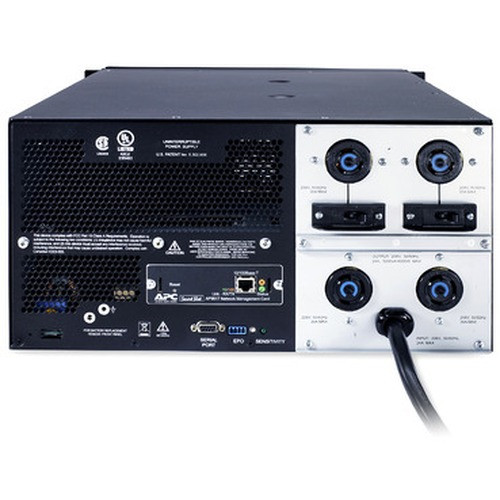
The APC SUA5000RMT5U is rated at 4,000W output with a specified backup time of 9.4 minutes at full load and 26.7 minutes at half load. Battery recharge time is listed at 3 hours. It uses Sealed Lead Acid (VRLA) technology and supports hot-swap battery replacement, allowing battery maintenance without shutting down connected loads.
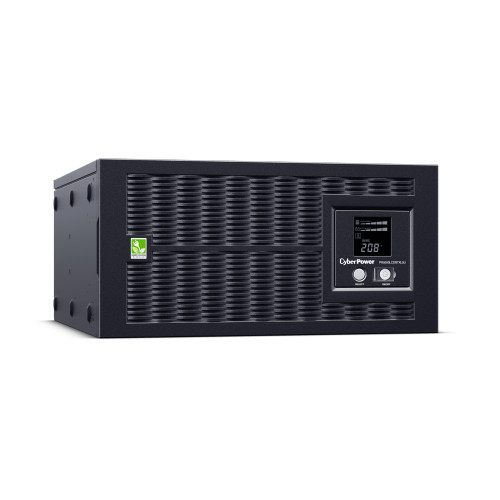
The CyberPower PR5000LCDRTXL5U specifies its battery pack as 16 x 12V/9Ah sealed lead-acid cells, which are user-replaceable and hot-swappable. However, no specific runtime figures at full or half load are provided in the available specifications. Output wattage is also not listed, making a direct runtime comparison impossible from the provided data alone.
For buyers who need confirmed runtime numbers to size their UPS for specific load scenarios, the APC unit provides the concrete figures required. The CyberPower's battery configuration detail (16 x 12V/9Ah) is useful for replacement planning but cannot substitute for published runtime curves absent from its spec sheet.
How do the two units compare on physical footprint, weight, and operating environment?
The APC SUA5000RMT5U specifies an operating temperature range of 0–40°C (32–104°F) and a storage range of -15–45°C. It is rated for operating altitudes up to 3,000m and non-operating altitudes up to 15,000m. Its included cable length is 2.44m. Weight and physical dimensions are not provided in the available specifications for this model.
The CyberPower PR5000LCDRTXL5U publishes physical dimensions of 17 x 8.75 x 24.25 inches (W x H x D) and a weight of 222 lb, which is critical for floor-loading and rack-capacity planning. Its operating temperature range matches the APC at 0–40°C (32–104°F). No altitude ratings are specified for the CyberPower unit.
Buyers planning installations at elevation — telecom shelters, mountain facilities, or high-altitude data centers — have a clear specification from APC (3,000m operating) but none from CyberPower. Conversely, buyers who need to verify rack weight capacity or plan for shipping and staging have concrete data only from CyberPower.
What standards compliance and warranty terms does each unit carry?
The APC SUA5000RMT5U specification sheet lists LED indicators, audible alarms, and Emergency Power Off (EPO) support — a requirement in many raised-floor data center environments per NEC and NFPA 75. No explicit standards certifications (UL, RoHS, ENERGY STAR) are listed in the provided specifications for this model, and no warranty term is stated.
The CyberPower PR5000LCDRTXL5U carries listed compliance with UL1778 (the U.S. standard for UPS equipment), RoHS, and ENERGY STAR qualification. It comes with a stated 3-year limited warranty. No EPO specification is provided for the CyberPower unit in the available data.
For procurement processes that require documented UL1778 listing or ENERGY STAR compliance (common in government, education, and enterprise RFPs), the CyberPower provides those certifications explicitly. For installations where EPO circuit integration is mandatory, APC specifies EPO support while CyberPower does not address it in the provided specs.
Which should you choose: the SUA5000RMT5U or the PR5000LCDRTXL5U?
Our take: The SUA5000RMT5U is the stronger choice when confirmed runtime data, EPO support, and high-altitude operation are decision criteria. APC publishes 9.4 minutes at full load and 26.7 minutes at half load — CyberPower provides no equivalent runtime figures, making load-sizing validation impossible from the available spec sheet. APC also explicitly lists EPO capability and a 3,000m operating altitude rating; neither appears in CyberPower's provided specifications. However, the PR5000LCDRTXL5U holds advantages where the APC spec sheet is silent: it documents a 222 lb weight (critical for rack and floor-load planning), specifies 16 x 12V/9Ah hot-swap battery cells for replacement sourcing, and carries confirmed UL1778, RoHS, and ENERGY STAR listings with a stated 3-year warranty. Buyers in regulated or government procurement environments requiring certified compliance documentation should favor the CyberPower, while mission-critical data center deployments requiring runtime assurance and EPO integration should favor the APC.
Side-by-Side Comparison
Spec-for-spec, from manufacturer data.
| Specification | APC by Schneider Electric SUA5000RMT5U | CyberPower PR5000LCDRTXL5U |
|---|---|---|
| Form Factor | Rack/Tower (5U) | Rack/Tower (5U) |
| VA Rating | 5000 VA | 5000 VA |
| Output Power (Watts) | 4000 W | — |
| Topology | Line-interactive | — |
| Input Voltage | 208 V | 208 VAC (nominal), 148–254 VAC range |
| Output Voltage | — | 208 VAC ± 5% |
| Input Frequency | 50/60 Hz | — |
| Battery Type | Sealed Lead Acid (VRLA) | Sealed Lead-Acid (16 x 12V/9Ah) |
| Hot-Swap Battery | Yes | Yes (user replaceable) |
| Runtime at Full Load | 9.4 min | — |
| Runtime at Half Load | 26.7 min | — |
| Battery Recharge Time | 3 h | — |
| Emergency Power Off (EPO) | Yes | — |
| Operating Temperature | 0–40°C | 0–40°C (32–104°F) |
| Operating Altitude | 0–3000 m | — |
| Weight | — | 222 lb |
| Dimensions (WxHxD) | — | 17 x 8.75 x 24.25 in |
| Noise Level | 53 dB | — |
| Standards / Certifications | — | UL1778, RoHS, ENERGY STAR |
| Warranty | — | 3-year limited |
Frequently Asked Questions
Which should you choose: the SUA5000RMT5U or the PR5000LCDRTXL5U?
The SUA5000RMT5U is the stronger choice when confirmed runtime data, EPO support, and high-altitude operation are decision criteria. APC publishes 9.4 minutes at full load and 26.7 minutes at half load — CyberPower provides no equivalent runtime figures, making load-sizing validation impossible from the available spec sheet. APC also explicitly lists EPO capability and a 3,000m operating altitude rating; neither appears in CyberPower's provided specifications. However, the PR5000LCDRTXL5U holds advantages where the APC spec sheet is silent: it documents a 222 lb weight (critical for rack and floor-load planning), specifies 16 x 12V/9Ah hot-swap battery cells for replacement sourcing, and carries confirmed UL1778, RoHS, and ENERGY STAR listings with a stated 3-year warranty. Buyers in regulated or government procurement environments requiring certified compliance documentation should favor the CyberPower, while mission-critical data center deployments requiring runtime assurance and EPO integration should favor the APC.
Which unit is easier to plan rack capacity around — the SUA5000RMT5U or the PR5000LCDRTXL5U?
The CyberPower PR5000LCDRTXL5U is easier to plan around for rack and floor-load capacity because it publishes physical dimensions (17 x 8.75 x 24.25 in) and weight (222 lb). The APC SUA5000RMT5U does not provide weight or dimensions in the available specifications, requiring a separate datasheet lookup before rack placement can be confirmed.
Does either UPS support Emergency Power Off (EPO) for raised-floor data center compliance?
Yes — the APC SUA5000RMT5U explicitly lists EPO support in its specifications. The CyberPower PR5000LCDRTXL5U does not mention EPO in the provided specification data. Buyers whose facility design or code authority requires an EPO circuit should verify CyberPower's EPO capability directly with the manufacturer before specifying the PR5000LCDRTXL5U.
Which UPS has a longer or better-documented warranty?
The CyberPower PR5000LCDRTXL5U carries a stated 3-year limited warranty per the provided specifications. No warranty term is listed in the available APC SUA5000RMT5U specification data. Buyers should consult APC's product documentation directly to confirm warranty terms before making a final purchasing decision based on coverage period.
More UPS Comparisons
- APC by Schneider Electric SRT5KRMXLIM vs Vertiv GXT5LI-5000MVRT3UXLN
- APC by Schneider Electric SRT5KRMXLIM vs CyberPower PR5000LCDRTXL5U
- APC by Schneider Electric SRT5KRMXLIM vs Vertiv GXT5LI-5KL630RT3UXLN
- APC by Schneider Electric SRT5KRMXLIM vs APC by Schneider Electric SRT5KRMXLT-IEC
- APC by Schneider Electric SRT5KRMXLIM vs APC by Schneider Electric SRT5KXLT-IEC
- APC by Schneider Electric SRT5KRMXLT-IEC vs Vertiv GXT5LI-5000MVRT3UXLN
UPS Buying Guides
Get a Second Opinion on Your Camera Choice
Share your site layout, coverage goals, and budget. Our team will validate the camera selection, flag anything we would change, and recommend products that match the use case.