
APC by Schneider Electric SRT5KRMXLT-IEC vs Vertiv GXT5LI-5000MVRT3UXLN: Specification Comparison
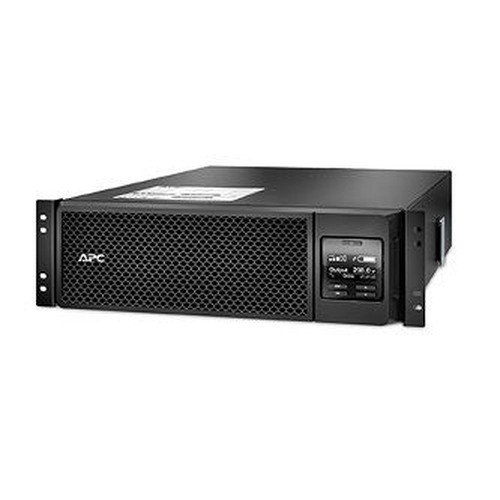
Both the APC Smart-UPS SRT5KRMXLT-IEC and the Vertiv GXT5LI-5000MVRT3UXLN are 5000VA double-conversion online UPS units designed for rackmount data center and critical infrastructure deployments. Buyers cross-shopping in the 5kVA online UPS tier will weigh power capacity and efficiency, input/output voltage flexibility, outlet configuration, physical footprint, and management interface options. This comparison draws strictly from the provided specifications for each unit.
In This Guide
- How do the two units compare on power capacity, output quality, and voltage flexibility?
- What are the physical form factor, battery chemistry, and management interface differences?
- Which unit better matches common outlet and safety certification requirements?
- Which should you choose: the SRT5KRMXLT-IEC or the GXT5LI-5000MVRT3UXLN?
- Side-by-Side Specs
- FAQ
How do the two units compare on power capacity, output quality, and voltage flexibility?
The APC SRT5KRMXLT-IEC is rated at 5000VA / 4250W, yielding a power factor of 0.85. The Vertiv GXT5LI-5000MVRT3UXLN is rated at 5000VA / 5000W, reflecting a unity (1.0) power factor — meaning it can deliver the full volt-ampere rating as usable watts under resistive and near-unity loads. For facilities running high-power-factor IT equipment such as modern servers with active PFC power supplies, the Vertiv's higher watt rating provides a meaningful headroom advantage.
On voltage range, the APC accepts an input of 100–275 V at 40–70 Hz and outputs 208 V, making it suited for single-phase 208 V IEC environments. The Vertiv accepts 120 V/240 V input and supports user-configurable 120 V/208 V or 120 V/240 V output, providing greater site flexibility. Both are double-conversion (online) units producing a true sine wave, which eliminates input power quality issues from reaching connected loads. The APC specifies output voltage THD of 2% and a crest factor of 3:1; equivalent output quality figures are not provided for the Vertiv.
What are the physical form factor, battery chemistry, and management interface differences?
The Vertiv GXT5LI-5000MVRT3UXLN specifies its physical dimensions: 5.2 in H × 16.9 in W × 35 in D, weighing 104.9 lbs. Rack unit height is not stated in the provided Vertiv spec, but the 5.2-inch height corresponds to approximately 3U. No physical dimensions or weight are provided for the APC SRT5KRMXLT-IEC in the supplied specifications.
The Vertiv unit carries the 'LI' designation, indicating a Lithium-Ion battery pack, certified under UL 1642 and UL 1973. Li-Ion chemistry typically offers longer service life, lower weight per capacity, and faster recharge times compared to traditional VRLA. The APC SRT5KRMXLT-IEC specifications do not specify battery chemistry in the data provided. The Vertiv is Energy Star 2.0 certified; no equivalent certification is listed for the APC in these specs.
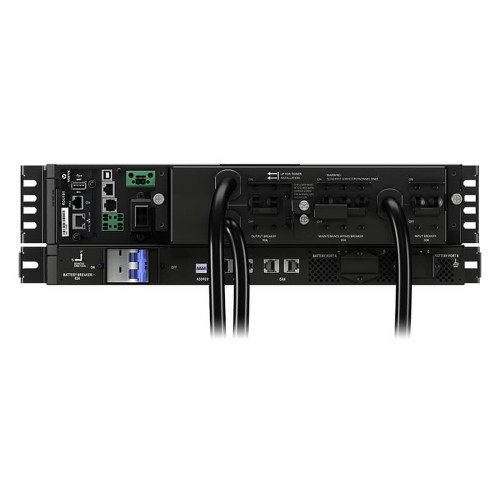
For management, the Vertiv lists Serial Port, Network RJ-45 (via RDU101 card), and USB interfaces. The APC specifies web-based management support and audible alarms; specific port types are not enumerated in the provided APC spec beyond the outlet listing. Both units support some form of network management, but the Vertiv's RDU101 network card slot is explicitly called out.
Which unit better matches common outlet and safety certification requirements?
The APC SRT5KRMXLT-IEC outputs through C13 couplers, C19 couplers, and IEC Jumpers — a configuration aligned with international IEC 60320 power distribution common in data centers and colocations using IEC PDUs and server power supplies. The unit also includes surge protection rated at 480 J and specifies a noise level of 55 dB. Auto-restart is listed as supported.
The Vertiv GXT5LI-5000MVRT3UXLN uses a NEMA L14-30P input wiring configuration, which is a North American twist-lock standard supporting split-phase 120/240 V. Output outlet details are not enumerated in the provided Vertiv specifications. Safety certifications for the Vertiv include UL 1778, CSA 22.2 No. 107.3, c-UL, and FCC Part 15 Class A — a robust North American certification set. The APC's safety certifications are not listed in the supplied spec data.
Which should you choose: the SRT5KRMXLT-IEC or the GXT5LI-5000MVRT3UXLN?
Our take: The GXT5LI-5000MVRT3UXLN is the stronger choice when maximum watt-for-VA output, Li-Ion battery longevity, and North American outlet/certification compliance are the primary requirements. At 5000W versus the APC's 4250W, the Vertiv delivers 750W more usable power at the same VA rating — a 17.6% real-power advantage that matters in dense server environments with near-unity PFC loads. Its Li-Ion chemistry (UL 1642/1973 certified) and Energy Star 2.0 rating further differentiate it for sites prioritizing battery service life and energy efficiency standards. However, the SRT5KRMXLT-IEC is the better fit for internationally oriented deployments requiring IEC 60320 C13/C19 outlet distribution, a wider verified input voltage window (100–275 V), and a broader frequency tolerance (40–70 Hz). Buyers in North American NEMA-wired facilities should favor the Vertiv; international or IEC-standard data centers should favor the APC.
Side-by-Side Comparison
Spec-for-spec, from manufacturer data.
| Specification | APC by Schneider Electric SRT5KRMXLT-IEC | Vertiv GXT5LI-5000MVRT3UXLN |
|---|---|---|
| Topology | Double-Conversion Online | Double-Conversion Online |
| Power Rating (VA) | 5000 VA | 5000 VA |
| Power Rating (W) | 4250 W | 5000 W |
| Power Factor | 0.85 | 1.0 |
| Input Voltage Range | 100–275 V | 120 V / 240 V |
| Input Frequency | 40–70 Hz | — |
| Output Voltage | 208 V | 120V/208V or 120V/240V (configurable) |
| Output Frequency | 50/60 Hz | — |
| Waveform | Sine | — |
| Output Voltage THD | 2% | — |
| Outlet Types | C13, C19, IEC Jumpers | — |
| Input Wiring | — | NEMA L14-30P |
| Battery Chemistry | — | Lithium-Ion |
| Management Interfaces | Web-based | Serial, USB, RJ-45 (RDU101) |
| Surge Protection | Yes (480 J) | — |
| Safety / Certifications | — | UL 1778, UL 1642, UL 1973, CSA 22.2 No. 107.3, FCC Part 15 Class A, Energy Star 2.0 |
| Noise Level | 55 dB | — |
| Dimensions (H × W × D) | — | 5.2 in × 16.9 in × 35 in |
| Weight | — | 104.9 lbs |
| Operating Temperature | — | 32°F–104°F (0°C–40°C) |
Frequently Asked Questions
Which should you choose: the SRT5KRMXLT-IEC or the GXT5LI-5000MVRT3UXLN?
The GXT5LI-5000MVRT3UXLN is the stronger choice when maximum watt-for-VA output, Li-Ion battery longevity, and North American outlet/certification compliance are the primary requirements. At 5000W versus the APC's 4250W, the Vertiv delivers 750W more usable power at the same VA rating — a 17.6% real-power advantage that matters in dense server environments with near-unity PFC loads. Its Li-Ion chemistry (UL 1642/1973 certified) and Energy Star 2.0 rating further differentiate it for sites prioritizing battery service life and energy efficiency standards. However, the SRT5KRMXLT-IEC is the better fit for internationally oriented deployments requiring IEC 60320 C13/C19 outlet distribution, a wider verified input voltage window (100–275 V), and a broader frequency tolerance (40–70 Hz). Buyers in North American NEMA-wired facilities should favor the Vertiv; international or IEC-standard data centers should favor the APC.
Is the SRT5KRMXLT-IEC or GXT5LI-5000MVRT3UXLN better for powering high-density modern servers?
The Vertiv GXT5LI-5000MVRT3UXLN is rated at 5000W — a unity power factor — while the APC SRT5KRMXLT-IEC delivers 4250W at 5000VA (0.85 power factor). Modern servers with active PFC power supplies draw at or near unity power factor, so the Vertiv provides 750W more usable capacity under those real-world loads.
Does the GXT5LI-5000MVRT3UXLN use lithium-ion batteries, and why does that matter?
Yes. The 'LI' in the Vertiv model designation indicates a Lithium-Ion battery pack, certified under UL 1642 and UL 1973. Li-Ion batteries typically have a longer service life, faster recharge times, and lower weight compared to traditional VRLA (lead-acid) batteries. The APC SRT5KRMXLT-IEC's battery chemistry is not specified in the provided data, so a direct comparison on this point cannot be made.
Which UPS works better in international or non-North-American data centers?
The APC SRT5KRMXLT-IEC is better suited for international deployments. It accepts 100–275 V input across 40–70 Hz and outputs 208 V through IEC C13/C19 outlets — standard in international and colocation environments. The Vertiv GXT5LI-5000MVRT3UXLN uses a NEMA L14-30P input connector and is configured for North American 120 V/240 V infrastructure, limiting its suitability outside North America.
More UPS Comparisons
- APC by Schneider Electric SRT5KRMXLIM vs Vertiv GXT5LI-5000MVRT3UXLN
- APC by Schneider Electric SRT5KRMXLIM vs CyberPower PR5000LCDRTXL5U
- APC by Schneider Electric SRT5KRMXLIM vs Vertiv GXT5LI-5KL630RT3UXLN
- APC by Schneider Electric SRT5KRMXLIM vs APC by Schneider Electric SRT5KRMXLT-IEC
- APC by Schneider Electric SRT5KRMXLIM vs APC by Schneider Electric SRT5KXLT-IEC
- APC by Schneider Electric SRT5KRMXLT-IEC vs CyberPower PR5000LCDRTXL5U
UPS Buying Guides
Get a Second Opinion on Your Camera Choice
Share your site layout, coverage goals, and budget. Our team will validate the camera selection, flag anything we would change, and recommend products that match the use case.