
APC by Schneider Electric SRT5KRMXLIM vs APC by Schneider Electric SRT5KXLT-IEC: Specification Comparison
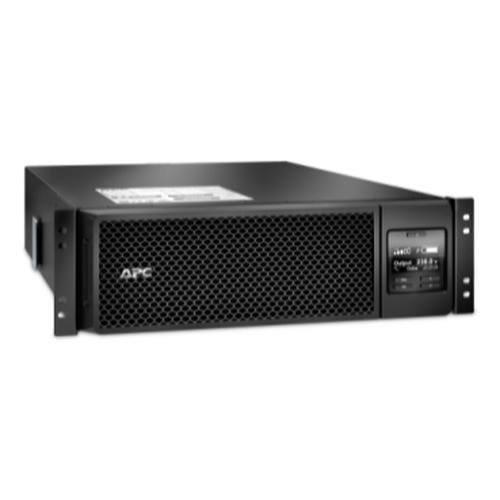
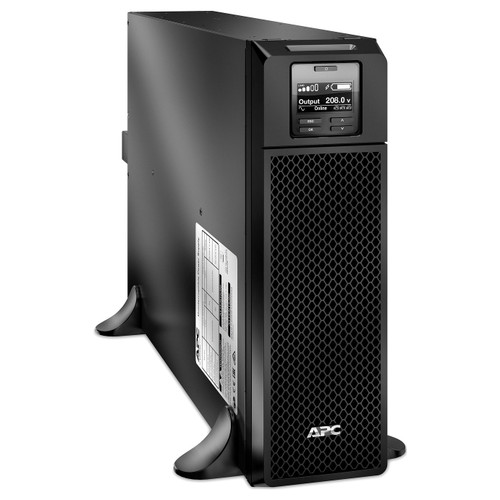
Both the SRT5KRMXLIM and the SRT5KXLT-IEC are APC Smart-UPS SRT series double-conversion (online) uninterruptible power supplies rated at 5000VA. This comparison examines their suitability for different installation environments by focusing on three decision-critical axes: usable power output and efficiency headroom, input voltage tolerance and frequency flexibility, and output voltage targeting plus management feature coverage. Neither unit is an accessory or a different device class; both are directly cross-shoppable 5kVA online UPS platforms for IT and industrial deployments.
In This Guide
- Which unit delivers more usable watt-capacity and cleaner output?
- Which UPS handles a wider range of input voltage and frequency conditions?
- Which unit targets the right output voltage range and offers stronger remote management?
- Which should you choose: the SRT5KRMXLIM or the SRT5KXLT-IEC?
- Side-by-Side Specs
- FAQ
Which unit delivers more usable watt-capacity and cleaner output?
The SRT5KRMXLIM is rated at 4500 W output power against the SRT5KXLT-IEC's 4250 W — a 250 W (5.9%) advantage that directly expands the usable headroom before the UPS reaches capacity. Both share a 5000VA apparent-power rating and a 3:1 crest factor, so neither has an edge in handling non-linear loads relative to the other.
On output waveform quality, the SRT5KRMXLIM specifies 'Pure sine' with a Total Harmonic Distortion (THD) of 3%, while the SRT5KXLT-IEC specifies 'Sine' with a lower stated THD of 2%. The SRT5KXLT-IEC's 1-percentage-point THD advantage may matter in sensitive lab or audio equipment contexts, though both figures are within ranges acceptable for standard server and network infrastructure. Both units operate at 50/60 Hz output and share an identical 480 J surge energy rating and 55 dB noise level.
Which UPS handles a wider range of input voltage and frequency conditions?
Input voltage tolerance is a significant differentiator. The SRT5KXLT-IEC accepts input from 100 V to 275 V, a 175 V span suited to facilities that see wide mains variation or that may need to operate across 100 V and 200 V infrastructure. The SRT5KRMXLIM accepts 160 V to 275 V, a narrower 115 V span that excludes sub-160 V environments entirely.
On input frequency, the SRT5KXLT-IEC tolerates a wider 40–70 Hz band, while the SRT5KRMXLIM accepts 45–65 Hz. The SRT5KXLT-IEC's wider band provides additional margin in generator-fed environments or in regions where mains frequency is less stable. The SRT5KRMXLIM's narrower frequency window is consistent with its marine-grade designation, where the connected generator or shore power is expected to be within tighter bounds.
The SRT5KRMXLIM lists temperature voltage compensation as a specified feature; the SRT5KXLT-IEC specification provided does not include this item. Temperature voltage compensation can extend battery service life in thermally variable environments such as marine engine rooms or outdoor enclosures.
Which unit targets the right output voltage range and offers stronger remote management?
Output voltage targets differ meaningfully by region and application. The SRT5KRMXLIM outputs in the 220–230 V range, making it appropriate for standard European/international 230 V single-phase infrastructure. The SRT5KXLT-IEC outputs in the 208–240 V range, covering both North American 208 V (common in data-center PDU circuits) and international 220/230/240 V loads — a broader output band for multi-standard facilities.
On management, the SRT5KXLT-IEC specification explicitly lists web-based management and auto-restart as features. Neither of these appears in the SRT5KRMXLIM specification as provided. Both units specify Emergency Power Off (EPO) and audible alarms. Buyers requiring network-based monitoring or unattended restart after a power event should note that web-based management and auto-restart are confirmed only for the SRT5KXLT-IEC from the provided specifications.
Which should you choose: the SRT5KRMXLIM or the SRT5KXLT-IEC?
Our take: The SRT5KRMXLIM is the stronger choice when deploying in a 230 V marine or similarly demanding physical environment where temperature voltage compensation and a 4500 W power ceiling are priorities. It delivers 250 W more usable output than the SRT5KXLT-IEC (4500 W vs. 4250 W) and explicitly lists temperature voltage compensation — a meaningful spec for thermally variable installations. However, the SRT5KXLT-IEC counters with a substantially wider input voltage window (100–275 V vs. 160–275 V), a broader input frequency band (40–70 Hz vs. 45–65 Hz), and confirmed web-based management plus auto-restart — none of which appear in the SRT5KRMXLIM specification. The SRT5KXLT-IEC also covers 208 V output for North American data-center circuits. Choose the SRT5KRMXLIM for marine-certified, 230 V-fixed environments needing maximum watt headroom; choose the SRT5KXLT-IEC for data centers or multi-standard facilities requiring broad input tolerance and network management.
Side-by-Side Comparison
Spec-for-spec, from manufacturer data.
| Specification | APC by Schneider Electric SRT5KRMXLIM | APC by Schneider Electric SRT5KXLT-IEC |
|---|---|---|
| UPS Topology | Double-conversion (Online) | Double-conversion (Online) |
| Output Power Capacity | 5000 VA | 5000 VA |
| Output Power (Watts) | 4500 W | 4250 W |
| Waveform | Pure sine | Sine |
| Output THD | 3% | 2% |
| Input Voltage Min | 160 V | 100 V |
| Input Voltage Max | 275 V | 275 V |
| Input Frequency Range | 45–65 Hz | 40–70 Hz |
| Output Voltage Range | 220–230 V | 208–240 V |
| Output Frequency | 50/60 Hz | 50/60 Hz |
| Surge Energy Rating | 480 J | 480 J |
| Crest Factor | 3:1 | 3:1 |
| Emergency Power Off (EPO) | Yes | Yes |
| Noise Level | 55 dB | 55 dB |
| Temperature Voltage Compensation | Yes | — |
| Web-Based Management | — | Yes |
| Auto-Restart | — | Yes |
Frequently Asked Questions
Which should you choose: the SRT5KRMXLIM or the SRT5KXLT-IEC?
The SRT5KRMXLIM is the stronger choice when deploying in a 230 V marine or similarly demanding physical environment where temperature voltage compensation and a 4500 W power ceiling are priorities. It delivers 250 W more usable output than the SRT5KXLT-IEC (4500 W vs. 4250 W) and explicitly lists temperature voltage compensation — a meaningful spec for thermally variable installations. However, the SRT5KXLT-IEC counters with a substantially wider input voltage window (100–275 V vs. 160–275 V), a broader input frequency band (40–70 Hz vs. 45–65 Hz), and confirmed web-based management plus auto-restart — none of which appear in the SRT5KRMXLIM specification. The SRT5KXLT-IEC also covers 208 V output for North American data-center circuits. Choose the SRT5KRMXLIM for marine-certified, 230 V-fixed environments needing maximum watt headroom; choose the SRT5KXLT-IEC for data centers or multi-standard facilities requiring broad input tolerance and network management.
Is the SRT5KRMXLIM or SRT5KXLT-IEC better for a data center running 208 V PDU circuits?
The SRT5KXLT-IEC is the appropriate choice. Its output voltage range covers 208–240 V, which includes the 208 V single-phase circuits common in North American data-center PDU environments. The SRT5KRMXLIM's output range is 220–230 V and does not list 208 V coverage in the provided specifications.
Which UPS is safer to use on a generator with variable frequency output?
The SRT5KXLT-IEC tolerates a wider input frequency band of 40–70 Hz compared to the SRT5KRMXLIM's 45–65 Hz. For generator-fed installations where output frequency may drift outside a narrow band, the SRT5KXLT-IEC provides greater margin per the provided specifications.
Does either UPS support remote monitoring without additional hardware?
Web-based management is listed as a specified feature only on the SRT5KXLT-IEC. This feature does not appear in the SRT5KRMXLIM specification as provided. Buyers requiring built-in network monitoring should verify connectivity options with APC directly for the SRT5KRMXLIM before purchasing.
More UPS Comparisons
- APC by Schneider Electric SRT5KRMXLIM vs Vertiv GXT5LI-5000MVRT3UXLN
- APC by Schneider Electric SRT5KRMXLIM vs CyberPower PR5000LCDRTXL5U
- APC by Schneider Electric SRT5KRMXLIM vs Vertiv GXT5LI-5KL630RT3UXLN
- APC by Schneider Electric SRT5KRMXLIM vs APC by Schneider Electric SRT5KRMXLT-IEC
- APC by Schneider Electric SRT5KRMXLT-IEC vs Vertiv GXT5LI-5000MVRT3UXLN
- APC by Schneider Electric SRT5KRMXLT-IEC vs CyberPower PR5000LCDRTXL5U
UPS Buying Guides
Get a Second Opinion on Your Camera Choice
Share your site layout, coverage goals, and budget. Our team will validate the camera selection, flag anything we would change, and recommend products that match the use case.