
APC by Schneider Electric SRT5KXLT-IEC vs CyberPower PR5000LCDRTXL5U: Specification Comparison
Both the APC Smart-UPS SRT5KXLT-IEC and the CyberPower PR5000LCDRTXL5U are 5000VA-class rack-capable uninterruptible power supplies targeting data centers, network closets, and critical infrastructure. This comparison evaluates their power conditioning and conversion architecture, battery and physical characteristics, and management and compliance capabilities — the three axes that drive purchasing decisions for 5kVA UPS systems supporting sensitive IT and security loads.
In This Guide
- Which UPS delivers cleaner, more resilient power conditioning for sensitive loads?
- How do the battery design and physical footprint compare for rack deployment?
- Which unit offers stronger management integration and carries relevant compliance certifications?
- Which should you choose: the SRT5KXLT-IEC or the PR5000LCDRTXL5U?
- Side-by-Side Specs
- FAQ
Which UPS delivers cleaner, more resilient power conditioning for sensitive loads?
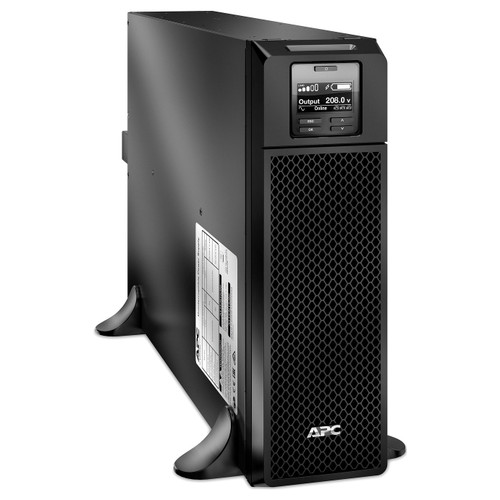
The SRT5KXLT-IEC uses double-conversion (online) topology, meaning incoming AC is continuously converted to DC and back to AC, isolating connected equipment from every input anomaly at all times. Output voltage THD is specified at 2%, and the crest factor is rated 3:1, both indicating a high-quality sine wave output. Input operating voltage range spans 100–275 V with a frequency window of 40–70 Hz, providing broad tolerance for degraded utility power.
The PR5000LCDRTXL5U specifies output voltage of 208 VAC ±5% and an input range of 148–254 VAC (nominal 208 VAC). Its topology is not explicitly stated in the provided specifications — the product name references 'AVR' (Automatic Voltage Regulation), which typically indicates a line-interactive design rather than double-conversion. Output waveform is described as 'Puresine' in the product name but waveform topology, THD percentage, and crest factor are absent from the provided specs.
For loads that are sensitive to input disturbances — servers, storage arrays, VoIP infrastructure, access control panels — double-conversion topology provides superior isolation. The SRT5KXLT-IEC's 2% THD and 3:1 crest factor are concrete, auditable figures. The PR5000LCDRTXL5U's topology and waveform quality metrics are not confirmed in the provided specifications.
How do the battery design and physical footprint compare for rack deployment?
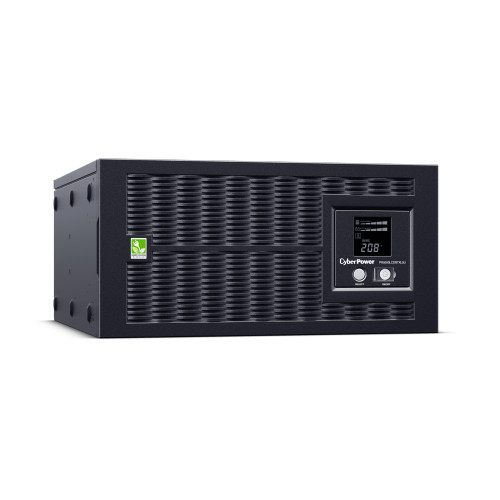
The PR5000LCDRTXL5U specifies its battery chemistry and configuration explicitly: 16 × 12V/9Ah sealed lead-acid cells, rated user-replaceable and hot-swappable. Physical dimensions are 17 × 8.75 × 24.25 in (W×H×D) in a 5U rack or tower form factor, with a published weight of 222 lb. Operating temperature range is 32–104°F (0–40°C).
The SRT5KXLT-IEC does not disclose battery chemistry, cell count, Ah rating, hot-swap capability, physical dimensions, weight, or operating temperature range in the provided specifications. These are significant omissions for buyers evaluating rack space, floor load, and serviceability.
The PR5000LCDRTXL5U provides substantially more physical and battery detail. Hot-swap battery capability is a meaningful operational advantage, allowing battery replacement without load transfer or downtime. Buyers must consult APC's published datasheets separately to obtain dimensional and battery serviceability data for the SRT5KXLT-IEC, as it is absent from the provided spec set.
Which unit offers stronger management integration and carries relevant compliance certifications?
The SRT5KXLT-IEC specifies web-based management, audible alarms, auto-restart, and Emergency Power Off (EPO) — the last being a critical safety and compliance feature for data center deployments requiring NEC Article 645 or similar shutdown capability. Surge energy rating is given as 480 J. Noise level is specified at 55 dB. Output frequency is 50/60 Hz.
The PR5000LCDRTXL5U carries UL1778, RoHS, and ENERGY STAR qualifications per the provided specs, and offers a 3-year limited warranty. Management interface details (web-based, SNMP, software) are not listed in the provided specifications beyond the 'Smart APP LCD' product name reference. EPO capability, surge energy rating, noise level, and auto-restart status are not specified.
The SRT5KXLT-IEC's EPO support is a hard requirement in many enterprise and co-location environments and is confirmed in the provided specs. The PR5000LCDRTXL5U's UL1778 and ENERGY STAR certifications are confirmed; its management integration depth is not documented in the provided spec set. Warranty comparison cannot be made for the SRT5KXLT-IEC as no warranty term is provided.
Which should you choose: the SRT5KXLT-IEC or the PR5000LCDRTXL5U?
Our take: The SRT5KXLT-IEC is the stronger choice when power quality, topology assurance, and emergency shutdown compliance are the primary requirements. Its double-conversion architecture provides continuous load isolation that line-interactive or AVR designs cannot match; its 2% output THD versus an unspecified figure for the PR5000LCDRTXL5U is a concrete differentiator for sensitive electronics. The confirmed EPO capability on the SRT5KXLT-IEC addresses a hard requirement in data center and IDF/MDF deployments. Conversely, the PR5000LCDRTXL5U provides substantially more physical transparency — 222 lb weight, 5U/17×8.75×24.25 in dimensions, 16×12V/9Ah hot-swappable battery cells, and confirmed UL1778/ENERGY STAR certifications — that the SRT5KXLT-IEC spec set does not supply. Buyers prioritizing serviceability, known floor-load planning, and certified efficiency should note those gaps in APC's provided data and consult the manufacturer datasheet directly before committing.
Side-by-Side Comparison
Spec-for-spec, from manufacturer data.
| Specification | APC by Schneider Electric SRT5KXLT-IEC | CyberPower PR5000LCDRTXL5U |
|---|---|---|
| UPS Topology | Double-conversion (Online) | — |
| Output Power Capacity | 5 kVA | 5 kVA (per product name; not confirmed in specs) |
| Output Power (Watts) | 4250 W | — |
| Output Waveform | Sine | Puresine (product name only; not confirmed in specs) |
| Output Voltage THD | 2% | — |
| Crest Factor | 3:1 | — |
| Input Voltage Range | 100–275 V | 148–254 VAC (nominal 208 VAC) |
| Input Frequency Range | 40–70 Hz | — |
| Output Voltage | 208–240 V | 208 VAC ±5% |
| Output Frequency | 50/60 Hz | — |
| Surge Energy Rating | 480 J | — |
| Emergency Power Off (EPO) | Yes | — |
| Battery Type / Config | — | 16 × 12V/9Ah Sealed Lead-Acid |
| Battery Hot-Swappable | — | Yes, user-replaceable |
| Form Factor | — | Rack/Tower (5U) |
| Dimensions (W×H×D) | — | 17 × 8.75 × 24.25 in |
| Weight | — | 222 lb |
| Operating Temperature | — | 32–104°F (0–40°C) |
| Noise Level | 55 dB | — |
| Web-Based Management | Yes | — |
| Auto-Restart | Yes | — |
| Audible Alarm | Yes | — |
| Certifications | — | UL1778, RoHS, ENERGY STAR |
| Warranty | — | 3 year limited |
Frequently Asked Questions
Which should you choose: the SRT5KXLT-IEC or the PR5000LCDRTXL5U?
The SRT5KXLT-IEC is the stronger choice when power quality, topology assurance, and emergency shutdown compliance are the primary requirements. Its double-conversion architecture provides continuous load isolation that line-interactive or AVR designs cannot match; its 2% output THD versus an unspecified figure for the PR5000LCDRTXL5U is a concrete differentiator for sensitive electronics. The confirmed EPO capability on the SRT5KXLT-IEC addresses a hard requirement in data center and IDF/MDF deployments. Conversely, the PR5000LCDRTXL5U provides substantially more physical transparency — 222 lb weight, 5U/17×8.75×24.25 in dimensions, 16×12V/9Ah hot-swappable battery cells, and confirmed UL1778/ENERGY STAR certifications — that the SRT5KXLT-IEC spec set does not supply. Buyers prioritizing serviceability, known floor-load planning, and certified efficiency should note those gaps in APC's provided data and consult the manufacturer datasheet directly before committing.
Is the SRT5KXLT-IEC or PR5000LCDRTXL5U better for protecting servers in a co-location or enterprise data center?
The SRT5KXLT-IEC is the more defensible choice for co-location and enterprise data center use based on the provided specifications. Its confirmed double-conversion topology continuously isolates the load from all input anomalies, its 2% output THD protects sensitive server power supplies, and its confirmed EPO capability meets the emergency shutdown requirements common in NEC Article 645 IT room designs. The PR5000LCDRTXL5U's topology is not confirmed in the provided specs, and its EPO capability is not listed.
Which UPS is easier to service in the field — can I swap batteries without taking the load offline?
The PR5000LCDRTXL5U explicitly specifies user-replaceable, hot-swappable sealed lead-acid batteries (16 × 12V/9Ah), meaning battery replacement can occur without shutting down connected equipment. The SRT5KXLT-IEC does not include battery type, Ah rating, or hot-swap capability in the provided specifications. Buyers requiring confirmed hot-swap serviceability should verify APC's published datasheet independently.
How do I know if either of these UPS units will fit in my rack and stay within my floor-load limits?
The PR5000LCDRTXL5U provides explicit dimensional and weight data in the provided specifications: 17 × 8.75 × 24.25 in (W×H×D), 5U form factor, 222 lb. The SRT5KXLT-IEC does not include dimensions or weight in the provided specifications. For floor-load and rack-space planning on the APC unit, you must obtain the manufacturer's published datasheet, as those figures cannot be derived from the spec set provided here.
More UPS Comparisons
- APC by Schneider Electric SRT5KRMXLIM vs Vertiv GXT5LI-5000MVRT3UXLN
- APC by Schneider Electric SRT5KRMXLIM vs CyberPower PR5000LCDRTXL5U
- APC by Schneider Electric SRT5KRMXLIM vs Vertiv GXT5LI-5KL630RT3UXLN
- APC by Schneider Electric SRT5KRMXLIM vs APC by Schneider Electric SRT5KRMXLT-IEC
- APC by Schneider Electric SRT5KRMXLIM vs APC by Schneider Electric SRT5KXLT-IEC
- APC by Schneider Electric SRT5KRMXLT-IEC vs Vertiv GXT5LI-5000MVRT3UXLN
UPS Buying Guides
Get a Second Opinion on Your Camera Choice
Share your site layout, coverage goals, and budget. Our team will validate the camera selection, flag anything we would change, and recommend products that match the use case.