
APC by Schneider Electric SRT2200XLA vs CyberPower PR2200RT2UC: Specification Comparison
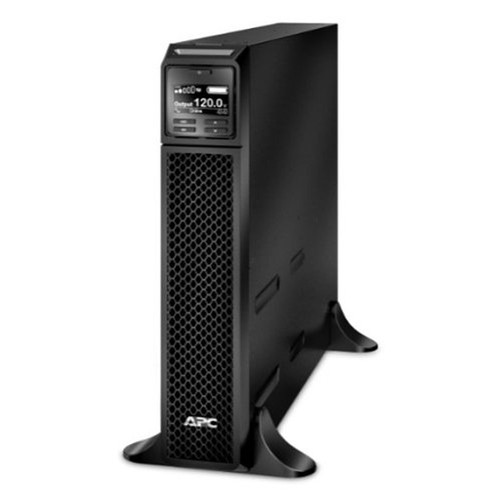
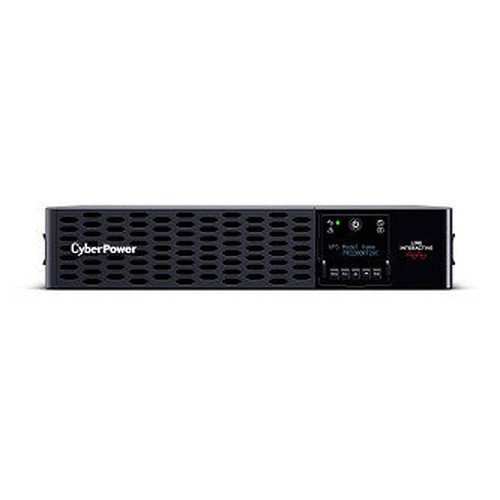
Both the APC Smart-UPS On-Line SRT2200XLA and the CyberPower PR2200RT2UC are 120V, 2200VA uninterruptible power supplies designed to protect IT and communications equipment from power anomalies. The SRT2200XLA is a tower-form double-conversion online UPS rated at 1800W, while the PR2200RT2UC is a 2U rack-mount line-interactive UPS rated at 2200W with a unity power factor. This comparison covers topology and output quality, runtime and battery architecture, and physical integration and management.
In This Guide
- Which UPS topology delivers cleaner, more reliable power to sensitive loads?
- How do the runtime and battery expansion options compare?
- Which unit fits better into a rack or data-center environment, and what management options are available?
- Which should you choose: the SRT2200XLA or the PR2200RT2UC?
- Side-by-Side Specs
- FAQ
Which UPS topology delivers cleaner, more reliable power to sensitive loads?
The SRT2200XLA uses Double Conversion Online topology, meaning load power is continuously regenerated through the inverter at all times. Incoming AC is rectified to DC, charges the battery bus, and the inverter produces a fresh sine wave output — the load never touches raw utility power. APC specifies total harmonic distortion (THD) of less than 2% and a crest factor of 3:1, with output frequency regulated to 50/60 Hz ±3 Hz synchronized to mains.
The PR2200RT2UC uses Line-Interactive topology. Under normal conditions the load runs directly from conditioned utility power with AVR (automatic voltage regulation) applied; the inverter engages only on transfer. CyberPower specifies a 6 ms transfer response time, an input operating range of 75–149V before battery is engaged, EMI/RFI noise filtering, a unity power factor (1.0), and 2430 J of surge energy rating. THD and crest factor are not specified for the PR2200RT2UC.
For loads that are acutely sensitive to any waveform deviation — medical-grade equipment, precision test gear, or dense virtualization hosts — double conversion eliminates transfer time and continuously isolates the load. Line-interactive is accepted practice for standard servers, networking gear, and workstations where the 6 ms transfer window is tolerable.
How do the runtime and battery expansion options compare?
The SRT2200XLA ships with one internal battery module providing 306 VAh of runtime capacity at a 72V battery bus, charged at 102W. APC states a typical recharge time of 3 hours and a battery life expectancy of 3–5 years. The replacement battery is APCRBC141 or SRT72RMBPUS. Critically, the SRT2200XLA supports external battery expansion via APC SRT72BP packs, scaling runtime from 918 VAh (1 pack) up to 6,426 VAh (10 packs) — a documented, additive architecture.
The PR2200RT2UC provides a 2430 J surge energy rating and specifies a heat dissipation of 135 BTU/h and a noise level of 52.5 dB. However, battery capacity (VAh), battery voltage, recharge time, battery life, replacement battery part number, and external battery extension options are not present in the provided specifications for the PR2200RT2UC.
Buyers requiring extended runtime through modular battery packs have documented path only on the SRT2200XLA. The PR2200RT2UC's runtime characteristics cannot be compared directly from the provided specs.
Which unit fits better into a rack or data-center environment, and what management options are available?
The SRT2200XLA is a tower-form unit: dimensions are given as 17.01 in (43.2 cm) and it weighs 55.12 lb (25 kg). It is explicitly spec'd as not rack-mountable in the provided data; mounting position is vertical. It is finished in black with IP20 ingress protection. APC offers an optional Network Management Card (NMC 2 or 3) with environmental monitoring; the NMC slot is present but the card is not included. The unit has one free expansion slot. Alarms are audible and visible, prioritized by severity.
The PR2200RT2UC is a 2U rack-mount form factor (as indicated by the 'RT2U' designation in the SKU and model name), which directly suits standard 19-inch equipment racks. Physical dimensions and weight are not provided in the specifications. CyberPower specifies cloud management capability (indicated by the 'C' suffix and 'Cloud' in the product name) and audible alarms; the specific management interface or protocol is not detailed in the provided specs. Noise level is specified at 52.5 dB.
Rack-based deployments will favor the PR2200RT2UC's native 2U form factor. Tower deployments or floor-standing scenarios suit the SRT2200XLA. For SNMP/network management in an APC ecosystem, the optional NMC provides deep integration; the CyberPower cloud management approach differs in architecture and compatibility profile.
Which should you choose: the SRT2200XLA or the PR2200RT2UC?
Our take: The SRT2200XLA is the stronger choice when load isolation, waveform purity, and scalable runtime are the primary requirements. Its double-conversion online topology delivers sub-2% THD and zero transfer time versus the PR2200RT2UC's 6 ms line-interactive transfer — a meaningful difference for sensitive or mission-critical loads. Its modular external battery architecture supports up to 6,426 VAh of documented runtime extension; the PR2200RT2UC's battery expansion capability is not specified. However, the PR2200RT2UC delivers 2200W at unity power factor versus the SRT2200XLA's 1800W at 0.82 PF, making it the higher real-power-output unit at this VA rating. The PR2200RT2UC's 2U rack-mount form factor and cloud management are advantages in standard rack deployments. Buyers running virtualization clusters or NVR stacks in a rack who need maximum watt capacity and native rack integration should favor the PR2200RT2UC; buyers prioritizing true online isolation, battery extensibility, and APC ecosystem management should choose the SRT2200XLA.
Side-by-Side Comparison
Spec-for-spec, from manufacturer data.
| Specification | APC by Schneider Electric SRT2200XLA | CyberPower PR2200RT2UC |
|---|---|---|
| UPS Topology | Double Conversion Online | Line-Interactive |
| VA Rating | 2200 VA | 2200 VA |
| Watt Rating | 1800 W | 2200 W |
| Power Factor | 0.82 (derived) | 1.0 |
| Input Voltage | 120V | 120V |
| Input Connection | NEMA 5-20P | — |
| Input Voltage Range (on battery) | — | 75–149V |
| Output Connections | (6) NEMA 5-20R, (1) NEMA L5-20R | (8) NEMA 5-20R |
| Waveform | Sine wave | Sine |
| Transfer Time | 0 ms (online) | 6 ms |
| Output THD | < 2% | — |
| Surge Energy Rating | — | 2430 J |
| Battery Voltage | 72V | — |
| Internal Battery Capacity | 306 VAh | — |
| Battery Recharge Time | 3 hours | — |
| Battery Extension Support | Yes (SRT72BP, up to 6,426 VAh) | — |
| Form Factor | Tower (not rack-mountable) | 2U Rack-Mount |
| Weight | 55.12 lb (25 kg) | — |
| Heat Dissipation | 535 BTU/h | 135 BTU/h |
| Network Management | Optional NMC 2/3 (not included) | Cloud (built-in) |
| IP Rating | IP20 | — |
| Noise Level | — | 52.5 dB |
| Operating Altitude | 0–10,000 ft | — |
| Battery Life | 3–5 years | — |
Frequently Asked Questions
Which should you choose: the SRT2200XLA or the PR2200RT2UC?
The SRT2200XLA is the stronger choice when load isolation, waveform purity, and scalable runtime are the primary requirements. Its double-conversion online topology delivers sub-2% THD and zero transfer time versus the PR2200RT2UC's 6 ms line-interactive transfer — a meaningful difference for sensitive or mission-critical loads. Its modular external battery architecture supports up to 6,426 VAh of documented runtime extension; the PR2200RT2UC's battery expansion capability is not specified. However, the PR2200RT2UC delivers 2200W at unity power factor versus the SRT2200XLA's 1800W at 0.82 PF, making it the higher real-power-output unit at this VA rating. The PR2200RT2UC's 2U rack-mount form factor and cloud management are advantages in standard rack deployments. Buyers running virtualization clusters or NVR stacks in a rack who need maximum watt capacity and native rack integration should favor the PR2200RT2UC; buyers prioritizing true online isolation, battery extensibility, and APC ecosystem management should choose the SRT2200XLA.
Is the SRT2200XLA or PR2200RT2UC better for a rack-mounted server environment?
The PR2200RT2UC is purpose-built for rack installation in a 2U form factor, making it the more practical choice for standard 19-inch rack deployments. The SRT2200XLA is specified as not rack-mountable and installs vertically as a tower unit. If your servers live in a rack, the PR2200RT2UC eliminates the need for floor space or a separate shelf.
Which UPS provides cleaner power for sensitive equipment like recording systems or precision electronics?
The SRT2200XLA's double-conversion online topology continuously regenerates output power through its inverter, specifying less than 2% total harmonic distortion and a 3:1 crest factor with zero transfer time. The PR2200RT2UC uses line-interactive topology with a 6 ms transfer time. For loads that are sensitive to any waveform anomaly or transfer gap, the SRT2200XLA's online double-conversion architecture is the more appropriate specification.
Can either UPS support extended runtime with additional battery packs?
The SRT2200XLA explicitly documents external battery extension via APC SRT72BP packs, scaling from a baseline 306 VAh up to 6,426 VAh with 10 packs attached — a fully specified, modular path. The provided specifications for the PR2200RT2UC do not include information on external battery extension options, battery capacity in VAh, or compatible expansion hardware. Buyers who require documented runtime scalability should use the SRT2200XLA or request CyberPower's published battery extension specifications before purchasing the PR2200RT2UC.
More UPS Comparisons
- CyberPower PR2200RTXL2UC vs APC by Schneider Electric SRT2200RMXLA
- CyberPower PR2200RTXL2UC vs APC by Schneider Electric SRT2200XLA
- CyberPower PR2200RTXL2UC vs APC by Schneider Electric SRT2200RMXLA-NC
- CyberPower PR2200RTXL2UC vs APC by Schneider Electric SMT2200I
- CyberPower PR2200RTXL2UC vs CyberPower OL2K2RTHD
- CyberPower PR2200RTXL2UC vs CyberPower OL2200RTXL2U
UPS Buying Guides
Get a Second Opinion on Your Camera Choice
Share your site layout, coverage goals, and budget. Our team will validate the camera selection, flag anything we would change, and recommend products that match the use case.