
APC by Schneider Electric SRT2200RMXLA vs CyberPower PR2200RT2UC: Specification Comparison
Both the APC SRT2200RMXLA and CyberPower PR2200RT2UC are 2U rackmount uninterruptible power supplies rated at 2200VA, targeting IT closets, network rooms, and small data center deployments running 120V North American loads. The comparison covers topology and output quality, battery and runtime extensibility, and thermal/management capability — the three axes that most directly govern suitability for mission-critical versus cost-sensitive installations.
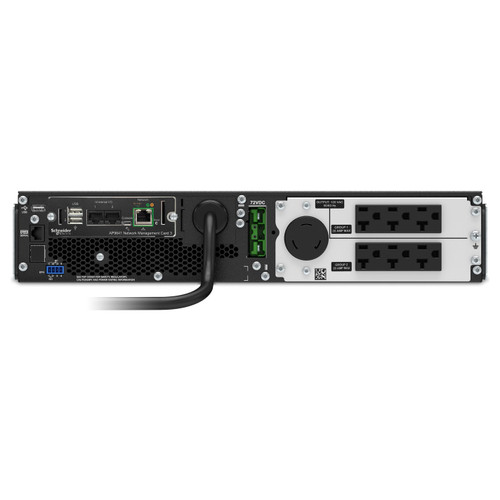
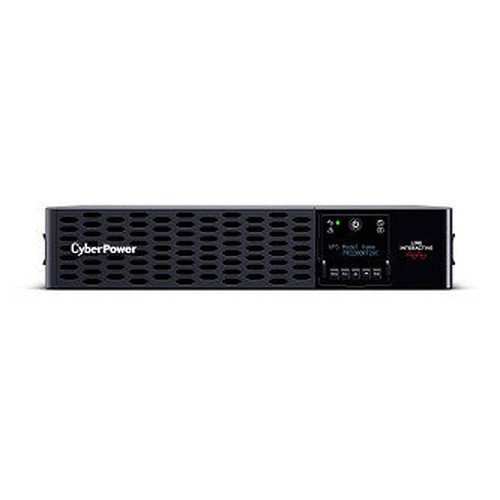
In This Guide
- How do topology and output power quality differ between the SRT2200RMXLA and PR2200RT2UC?
- Which model offers superior battery capacity, runtime extensibility, and replacement flexibility?
- How do thermal output, noise, and remote management capabilities compare?
- Which should you choose: the SRT2200RMXLA or the PR2200RT2UC?
- Side-by-Side Specs
- FAQ
How do topology and output power quality differ between the SRT2200RMXLA and PR2200RT2UC?
The SRT2200RMXLA uses Double Conversion Online topology, meaning the load is continuously powered from the inverter and the AC input never directly reaches connected equipment. APC specifies output harmonic distortion of less than 2%, a 3:1 crest factor tolerance, and a sine-wave output at 50/60 Hz ±3 Hz synchronized to mains. Rated output is 1800W / 2200VA.
The PR2200RT2UC uses Line-Interactive topology, where the inverter only engages on a transfer event. CyberPower specifies a 6 ms response time, sine-wave output, and a power factor of 1.0 (2200W / 2200VA). Input operating range spans 75V–149V before switching to battery. Surge energy rating is listed at 2430 J with EMI/RFI noise filtering.
The topological difference is material: Double Conversion provides zero-transfer-time, continuously conditioned output regardless of input anomalies. Line-Interactive offers a 6 ms transfer window and is primarily a voltage-regulation and surge-protection solution. For sensitive loads such as storage arrays or virtualization hosts with no tolerance for micro-interruptions, this distinction is critical. The CyberPower's wider input window (75V–149V) provides a broader voltage acceptance range before battery engagement, which the APC spec does not enumerate.
Power factor and apparent/real power also differ: the PR2200RT2UC specifies a unity power factor (2200W from 2200VA), while the SRT2200RMXLA is derated to 1800W from 2200VA, a power factor of approximately 0.82.
Which model offers superior battery capacity, runtime extensibility, and replacement flexibility?
The SRT2200RMXLA ships with one internal battery module at 72V / 306 VAh, a 102W charge rate, and a typical recharge time of 3 hours. APC specifies battery life at 3–5 years and provides explicit runtime extension via up to 10 external SRT72RMBP battery packs, scaling from 916 VAh (1 pack) to 6,426 VAh (10 packs). Replacement cartridges are identified as APCRBC141 and SRT72RMBPUS. A free external slot for one additional pack is noted.
The PR2200RT2UC specification as provided does not enumerate battery voltage, capacity in VAh, recharge time, battery life expectancy, replacement part numbers, or any runtime extension capability.
For installations where extended runtime is a design requirement — for example, sustaining a server through a prolonged utility outage or bridging to a generator — the SRT2200RMXLA provides a documented, scalable battery extension path with specific capacity values per added pack. No equivalent data is available for the PR2200RT2UC from the provided specification.
How do thermal output, noise, and remote management capabilities compare?
The SRT2200RMXLA is rated at 535 BTU/h heat dissipation, 55 dBA acoustic output, and carries an IP20 ingress protection rating. It supports optional Network Management Card 2 or 3 with environmental monitoring for SNMP/web-based remote management. Alarms are described as audible and visible, prioritized by severity. Operating altitude is rated to 10,000 ft, and the operating relative humidity range is 0–95% non-condensing.
The PR2200RT2UC is rated at 135 BTU/h heat dissipation and 52.5 dB noise level. The model name includes 'Cloud,' which may suggest cloud-based management capability, but no management interface, protocol, or cloud platform specification is provided in the supplied spec data. Audible alarms are confirmed. Operating humidity, altitude, and IP rating are not specified.
The SRT2200RMXLA generates substantially more heat (535 vs. 135 BTU/h), a direct consequence of continuous inverter operation in Double Conversion topology versus Line-Interactive. This has a real impact on cooling requirements in dense rack environments. Both units are within 2.5 dBA of each other acoustically. The APC unit's management card compatibility is documented; the CyberPower's management capability cannot be evaluated from the provided specs.
Which should you choose: the SRT2200RMXLA or the PR2200RT2UC?
Our take: The SRT2200RMXLA is the stronger choice when continuous power conditioning, documented runtime extensibility, and validated remote management are required. Its Double Conversion Online topology delivers zero-transfer-time, sub-2% harmonic distortion output not present in the Line-Interactive PR2200RT2UC. The APC unit supports up to 10 external battery packs with per-pack VAh values published (916–6,426 VAh increments), while the CyberPower provides no battery extension specification. The SRT2200RMXLA also documents optional NMC2/3 management cards with environmental monitoring. Trade-offs favor the PR2200RT2UC in two measurable areas: it delivers 2200W at unity power factor versus APC's 1800W at ~0.82 PF, and its heat dissipation is 135 BTU/h versus 535 BTU/h, easing rack cooling budgets. The PR2200RT2UC suits cost-sensitive deployments with well-regulated utility power and no runtime extension requirement. The SRT2200RMXLA is warranted for sensitive loads, generator-bridging scenarios, or environments where management integration is mandatory.
Side-by-Side Comparison
Spec-for-spec, from manufacturer data.
| Specification | APC by Schneider Electric SRT2200RMXLA | CyberPower PR2200RT2UC |
|---|---|---|
| UPS Topology | Double Conversion Online | Line-Interactive |
| Rated Capacity (VA) | 2200 VA | 2200 VA |
| Rated Output Power (W) | 1800 W | 2200 W |
| Output Power Factor | ~0.82 (1800W / 2200VA) | 1.0 (spec stated) |
| Input Voltage | 120V | 75V – 149V range |
| Input Connection | NEMA 5-20P | — |
| Output Connections | (6) NEMA 5-20R + (1) NEMA L5-20R | (8) NEMA 5-20R |
| Transfer Time | 0 ms (continuous inverter) | 6 ms |
| Waveform | Sine wave | Sine wave |
| Output Harmonic Distortion | < 2% | — |
| Battery Voltage / Capacity | 72V / 306 VAh (built-in) | — |
| Recharge Time | 3 hours | — |
| Runtime Extension | Up to 10 × SRT72RMBP packs (up to 6,426 VAh) | — |
| Heat Dissipation | 535 BTU/h | 135 BTU/h |
| Acoustic Level | 55 dBA | 52.5 dB |
| Remote Management | Optional NMC2 / NMC3 (SNMP + environmental monitoring) | — |
| Form Factor | 2U Rackmount | 2U Rackmount |
| Weight | 55.01 lb (24.95 kg) | — |
| Surge Energy Rating | — | 2430 J |
Frequently Asked Questions
Which should you choose: the SRT2200RMXLA or the PR2200RT2UC?
The SRT2200RMXLA is the stronger choice when continuous power conditioning, documented runtime extensibility, and validated remote management are required. Its Double Conversion Online topology delivers zero-transfer-time, sub-2% harmonic distortion output not present in the Line-Interactive PR2200RT2UC. The APC unit supports up to 10 external battery packs with per-pack VAh values published (916–6,426 VAh increments), while the CyberPower provides no battery extension specification. The SRT2200RMXLA also documents optional NMC2/3 management cards with environmental monitoring. Trade-offs favor the PR2200RT2UC in two measurable areas: it delivers 2200W at unity power factor versus APC's 1800W at ~0.82 PF, and its heat dissipation is 135 BTU/h versus 535 BTU/h, easing rack cooling budgets. The PR2200RT2UC suits cost-sensitive deployments with well-regulated utility power and no runtime extension requirement. The SRT2200RMXLA is warranted for sensitive loads, generator-bridging scenarios, or environments where management integration is mandatory.
Which UPS is better for powering servers or storage arrays that cannot tolerate even a brief power interruption?
The SRT2200RMXLA uses Double Conversion Online topology, which means connected equipment is always powered from the inverter — there is no transfer time when input power fails or degrades. The PR2200RT2UC is Line-Interactive with a specified 6 ms transfer time. For loads with zero tolerance for micro-interruptions, the SRT2200RMXLA's topology is the appropriate choice based on the provided specifications.
Can I extend runtime beyond the built-in battery on either of these units?
The SRT2200RMXLA supports up to 10 external SRT72RMBP battery packs, with APC specifying runtime capacity for each increment (916 VAh per pack, up to 6,426 VAh for 10 packs). The provided specification for the PR2200RT2UC does not include any battery extension options, replacement part numbers, or extended runtime capability. If scalable runtime is a requirement, only the SRT2200RMXLA provides that data.
Which unit will add less heat to my rack environment?
Based on the provided specifications, the PR2200RT2UC is rated at 135 BTU/h heat dissipation, compared to 535 BTU/h for the SRT2200RMXLA. The difference is a direct consequence of topology: Double Conversion Online (APC) runs the inverter continuously, while Line-Interactive (CyberPower) does not. If rack cooling capacity is constrained, the PR2200RT2UC imposes a significantly lower thermal burden per the available spec data.
More UPS Comparisons
- CyberPower PR2200RTXL2UC vs APC by Schneider Electric SRT2200RMXLA
- CyberPower PR2200RTXL2UC vs APC by Schneider Electric SRT2200XLA
- CyberPower PR2200RTXL2UC vs APC by Schneider Electric SRT2200RMXLA-NC
- CyberPower PR2200RTXL2UC vs APC by Schneider Electric SMT2200I
- CyberPower PR2200RTXL2UC vs CyberPower OL2K2RTHD
- CyberPower PR2200RTXL2UC vs CyberPower OL2200RTXL2U
UPS Buying Guides
Get a Second Opinion on Your Camera Choice
Share your site layout, coverage goals, and budget. Our team will validate the camera selection, flag anything we would change, and recommend products that match the use case.