
APC by Schneider Electric SRT2200RMXLA-NC vs CyberPower PR2200RT2UC: Specification Comparison
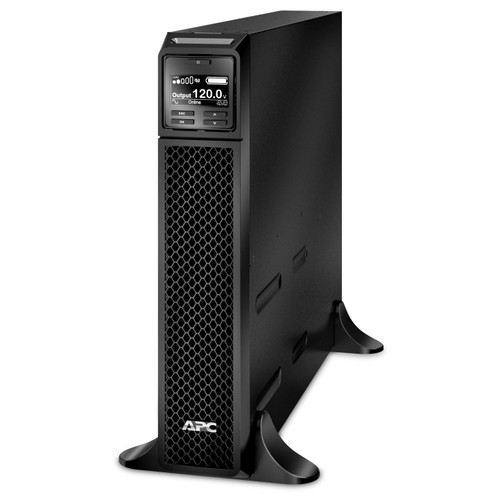
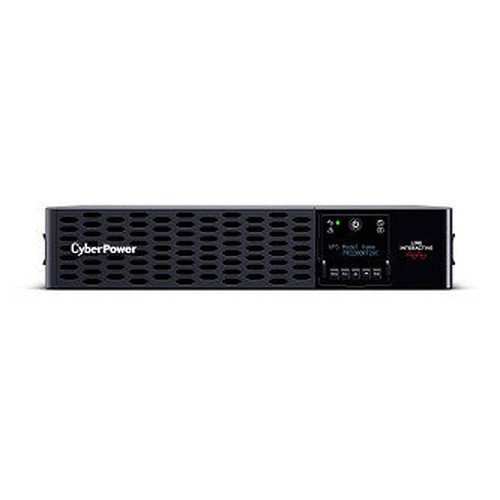
Both the APC SRT2200RMXLA-NC and CyberPower PR2200RT2UC are 2U rackmount uninterruptible power supplies rated at 2200VA for 120V North American installations. The comparison spans two distinct UPS topologies — Double Conversion Online versus Line-Interactive — alongside differences in output power, outlet configuration, battery runtime expandability, and environmental ratings. Installers and IT buyers specifying power protection for network closets, edge compute, or surveillance head-end equipment will find meaningful trade-offs between these two units.
In This Guide
- Which UPS topology and output power quality best protects your critical load?
- How does runtime capacity and battery expansion compare between these two units?
- Which unit better fits your outlet, mounting, and environmental requirements?
- Which should you choose: the SRT2200RMXLA-NC or the PR2200RT2UC?
- Side-by-Side Specs
- FAQ
Which UPS topology and output power quality best protects your critical load?
The APC SRT2200RMXLA-NC uses Double Conversion Online topology, which continuously regenerates a clean sine wave output regardless of input quality. Its output harmonic distortion is specified at less than 2%, and it delivers a crest factor of 3:1. Output frequency is maintained at 50/60 Hz ±3 Hz synchronized to mains. Rated output is 1800W / 2200VA.
The CyberPower PR2200RT2UC uses Line-Interactive topology, which conditions input power and switches to battery on an out-of-tolerance event with a specified response time of 6 ms. It delivers a sine wave output and is rated at 2200W / 2200VA — a unity power factor (1.0 per spec). Input operating voltage range is 75–149V at 47–63 Hz input frequency, and the unit includes EMI/RFI noise filtering. Output harmonic distortion and crest factor are not specified.
For loads sensitive to even brief voltage transitions or harmonic content — such as medical imaging, precision measurement, or high-density server infrastructure — the Double Conversion topology of the SRT2200RMXLA-NC provides zero-transfer-time isolation from input anomalies. The PR2200RT2UC's 6 ms transfer time is adequate for most IT equipment with internal hold-up, and its wide 75–149V input window reduces unnecessary battery cycling in environments with chronic voltage sag.
How does runtime capacity and battery expansion compare between these two units?
The APC SRT2200RMXLA-NC ships with one internal battery module providing 306 VAh of runtime capacity at a 72V battery bus, charged at 102W. Typical recharge time is 3 hours. Critically, the unit supports external battery expansion via the SRT72RMBP module family: one pack adds 918 VAh, scaling in increments up to 10 packs (6,426 VAh total). Expected battery life is 3–5 years; replacement batteries are APCRBC141 and SRT72RMBPUS.
The CyberPower PR2200RT2UC specifications provided do not include battery capacity in VAh, battery voltage, recharge time, expected battery life, or any external battery expansion options. Surge energy rating is listed at 2,430 J.
For deployments where extended runtime is a requirement — such as surveillance DVR/NVR systems that must continue recording through prolonged outages, or network infrastructure supporting extended failover — the SRT2200RMXLA-NC's documented expansion path is a concrete spec advantage. The PR2200RT2UC's runtime characteristics cannot be evaluated from the provided specifications.
Which unit better fits your outlet, mounting, and environmental requirements?
The APC SRT2200RMXLA-NC provides 7 output receptacles: 6× NEMA 5-20R and 1× NEMA L5-20R, fed from a NEMA 5-20P input on a 6 ft (1.83 m) cord. It is rated IP20, acoustically rated at 55 dBA, and dissipates 535 BTU/h. Operating altitude is 0–10,000 ft; storage altitude reaches 50,000 ft. Operating humidity is 0–95% non-condensing; storage temperature is −4 to 122°F (−20 to 50°C). Weight is 55.01 lb (24.95 kg).
The CyberPower PR2200RT2UC provides 8× NEMA 5-20R output receptacles from a 10 ft cord, with a maximum output current of 15A. Noise level is 52.5 dB and heat dissipation is 135 BTU/h. IP rating, operating altitude, storage temperature, storage altitude, and unit weight are not specified in the provided data.
The PR2200RT2UC offers one additional NEMA 5-20R outlet and a longer 10 ft input cord, and its 135 BTU/h heat dissipation is notably lower — relevant in thermally constrained enclosures. The SRT2200RMXLA-NC adds a locking L5-20R receptacle suited for high-availability loads requiring a secured connection, and its full environmental envelope is documented, enabling deployment qualification for altitude-sensitive or temperature-extreme edge installations.
Which should you choose: the SRT2200RMXLA-NC or the PR2200RT2UC?
Our take: The SRT2200RMXLA-NC is the stronger choice when output power purity, documented battery expandability, and full environmental qualification are non-negotiable. Its Double Conversion Online topology delivers sub-2% output harmonic distortion and zero transfer time versus the PR2200RT2UC's 6 ms Line-Interactive switch. The APC unit supports up to 10 external battery packs extending runtime to a documented 6,426 VAh, while the CyberPower's runtime capacity and expansion options are absent from the provided specifications. The SRT2200RMXLA-NC also ships with a locking L5-20R outlet alongside six 5-20R receptacles. Conversely, the PR2200RT2UC specifies 2200W at unity power factor versus the APC's 1800W real-power output, dissipates substantially less heat (135 vs. 535 BTU/h), and includes 8× NEMA 5-20R outlets on a 10 ft cord. It is the more appropriate choice for cost-sensitive deployments with predominantly switched-mode IT loads in well-cooled racks where extended runtime expansion is not required.
Side-by-Side Comparison
Spec-for-spec, from manufacturer data.
| Specification | APC by Schneider Electric SRT2200RMXLA-NC | CyberPower PR2200RT2UC |
|---|---|---|
| UPS Topology | Double Conversion Online | Line-Interactive |
| Rated Output Power | 1800W / 2200VA | 2200W / 2200VA |
| Power Factor | Not specified | 1.0 |
| Input Connection | NEMA 5-20P | Not specified |
| Input Voltage Range | 120V nominal | 75–149V |
| Input Frequency | 50/60 Hz | 47–63 Hz |
| Output Voltage | 120V | 120V |
| Output Frequency | 50/60 Hz ±3 Hz | 50/60 Hz |
| Output Receptacles | (6) NEMA 5-20R + (1) NEMA L5-20R | (8) NEMA 5-20R |
| Input Cord Length | 6 ft (1.83 m) | 10 ft |
| Transfer Time | Zero (online) | 6 ms |
| Output Harmonic Distortion | Less than 2% | — |
| Waveform | Sine wave | Sine wave |
| Form Factor | 2U Rackmount | 2U Rackmount |
| Heat Dissipation | 535 BTU/h | 135 BTU/h |
| Acoustic Level | 55 dBA | 52.5 dB |
| Battery Type | Lead-Acid, 72V | — |
| Internal Battery Capacity | 306 VAh | — |
| Battery Recharge Time | 3 hours | — |
| Battery Life | 3–5 years | — |
| External Battery Expansion | Yes (SRT72RMBP, up to 6,426 VAh) | — |
| Surge Energy Rating | — | 2,430 J |
| EMI/RFI Filtering | — | Yes |
| IP Rating | IP20 | — |
| Operating Altitude | 0–10,000 ft | — |
| Unit Weight | 55.01 lb (24.95 kg) | — |
| Bypass | Built-in | — |
Frequently Asked Questions
Which should you choose: the SRT2200RMXLA-NC or the PR2200RT2UC?
The SRT2200RMXLA-NC is the stronger choice when output power purity, documented battery expandability, and full environmental qualification are non-negotiable. Its Double Conversion Online topology delivers sub-2% output harmonic distortion and zero transfer time versus the PR2200RT2UC's 6 ms Line-Interactive switch. The APC unit supports up to 10 external battery packs extending runtime to a documented 6,426 VAh, while the CyberPower's runtime capacity and expansion options are absent from the provided specifications. The SRT2200RMXLA-NC also ships with a locking L5-20R outlet alongside six 5-20R receptacles. Conversely, the PR2200RT2UC specifies 2200W at unity power factor versus the APC's 1800W real-power output, dissipates substantially less heat (135 vs. 535 BTU/h), and includes 8× NEMA 5-20R outlets on a 10 ft cord. It is the more appropriate choice for cost-sensitive deployments with predominantly switched-mode IT loads in well-cooled racks where extended runtime expansion is not required.
Is the SRT2200RMXLA-NC or PR2200RT2UC better for a surveillance NVR or server room that needs extended runtime during power outages?
The SRT2200RMXLA-NC is the only unit of the two with a documented external battery expansion path. Its SRT72RMBP modules scale from 918 VAh (1 pack) up to 6,426 VAh (10 packs), and replacement batteries are identified by part number. The PR2200RT2UC's specifications do not include battery capacity, expansion options, or recharge time, so runtime cannot be projected from the provided data.
Does the Double Conversion topology of the APC unit matter for sensitive electronics compared to the CyberPower's Line-Interactive design?
Yes, for loads that cannot tolerate any input-to-output voltage transition. The SRT2200RMXLA-NC's Double Conversion Online design continuously regenerates the output sine wave — there is no transfer event. The PR2200RT2UC switches to battery within 6 ms when input falls outside its 75–149V window. Most IT equipment with internal hold-up capacitors tolerates a 6 ms transfer without issue, but precision instruments, some medical devices, and certain industrial controls may require the zero-transfer guarantee of Double Conversion.
Which unit runs cooler in a densely packed rack, and does that affect installation planning?
The PR2200RT2UC specifies 135 BTU/h heat dissipation versus 535 BTU/h for the SRT2200RMXLA-NC — a difference of 400 BTU/h. In a sealed or undersized rack, this is a meaningful thermal planning factor. The higher dissipation of the APC unit is a direct consequence of its Double Conversion topology, which processes all power through the inverter continuously. If rack cooling capacity is limited, the PR2200RT2UC's lower thermal output is a tangible advantage, provided its unspecified environmental envelope is acceptable for the installation site.
More UPS Comparisons
- CyberPower PR2200RTXL2UC vs APC by Schneider Electric SRT2200RMXLA
- CyberPower PR2200RTXL2UC vs APC by Schneider Electric SRT2200XLA
- CyberPower PR2200RTXL2UC vs APC by Schneider Electric SRT2200RMXLA-NC
- CyberPower PR2200RTXL2UC vs APC by Schneider Electric SMT2200I
- CyberPower PR2200RTXL2UC vs CyberPower OL2K2RTHD
- CyberPower PR2200RTXL2UC vs CyberPower OL2200RTXL2U
UPS Buying Guides
Get a Second Opinion on Your Camera Choice
Share your site layout, coverage goals, and budget. Our team will validate the camera selection, flag anything we would change, and recommend products that match the use case.