
APC by Schneider Electric SRT10KXLT-5KTF2 vs Panduit U10N11V: Specification Comparison
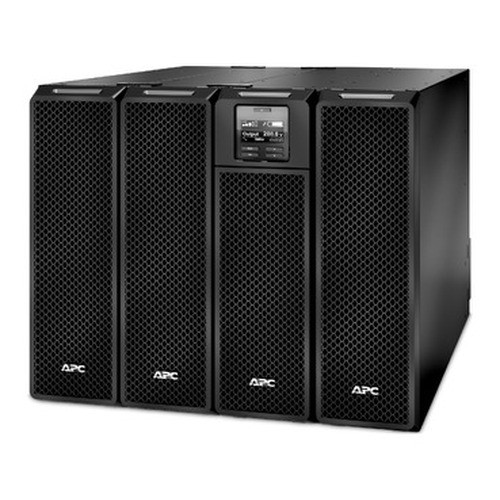
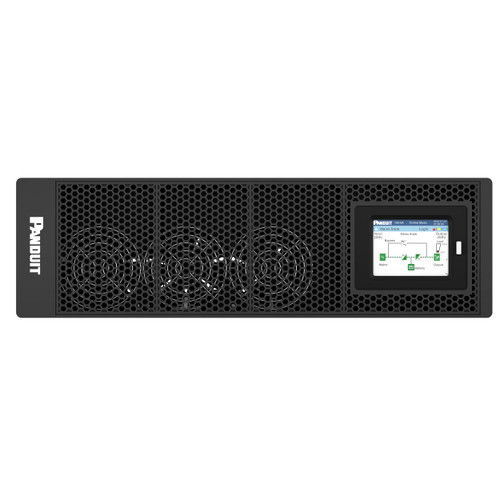
Both the APC Smart-UPS SRT10KXLT-5KTF2 and the Panduit SteadySine U10N11V are 10 kVA double-conversion online UPS units aimed at enterprise and data-center deployments. The APC unit ships with two integrated 208/240 V to 120 V step-down transformers, making it particularly suited to mixed-voltage environments. The Panduit is a rack-mount appliance targeting data center, edge, and MTDC applications. This comparison evaluates power specs, physical installation requirements, and management capabilities to help integrators and IT buyers select the right unit for their infrastructure.
In This Guide
- How do the input/output electrical specifications compare, and which unit handles mixed-voltage loads better?
- What are the physical form-factor and installation differences that affect rack planning?
- Which unit offers stronger remote management and integration capabilities for enterprise environments?
- Which should you choose: the SRT10KXLT-5KTF2 or the U10N11V?
- Side-by-Side Specs
- FAQ
How do the input/output electrical specifications compare, and which unit handles mixed-voltage loads better?
The APC SRT10KXLT-5KTF2 is rated at 10 kVA / 10,000 W and ships with two integrated 5 kVA 208/240 V-to-120 V step-down transformers, enabling direct support of mixed-voltage rack equipment without external transformer purchases. Its input voltage range spans 100–275 V with an input frequency window of 40–70 Hz, providing meaningful tolerance against utility fluctuations. Output voltage is selectable between 120 V and 240 V, output frequency is 50/60 Hz, and output THD is specified at 2%. The crest factor is rated 3:1, and surge energy absorption is 480 J.
The Panduit U10N11V is also rated 10 kVA with a pure sine wave output. However, the provided specifications do not state an input voltage range, input frequency tolerance, output voltage options, output THD, crest factor, or surge energy rating. The U10N11V uses hardwire terminals for input connection; the APC's input connection type is not stated in the provided specifications. Buyers needing explicit electrical tolerance figures or a surge joule rating will find the APC spec sheet more complete based on available data.
What are the physical form-factor and installation differences that affect rack planning?
The Panduit U10N11V discloses concrete rack-installation dimensions: 10.3 in (262 mm) high, 17.3 in (440 mm) wide, approximately 6U, in a 19-inch EIA rack-mountable form factor compatible with both 2-post and 4-post configurations. Battery modules are hot-swappable, a significant operational advantage for maintaining runtime without a maintenance window.
The APC SRT10KXLT-5KTF2 specifications provided do not include rack-unit height, overall dimensions, or weight. The unit is described as incorporating two 5 kVA step-down transformers, which typically increases physical bulk relative to a transformer-free model. The APC spec sheet notes a noise level of 55 dB, a figure absent from the Panduit data. Buyers finalizing rack layouts should obtain APC's dimensional data sheet independently, as those values are not present in the specs supplied here.
Which unit offers stronger remote management and integration capabilities for enterprise environments?
The APC SRT10KXLT-5KTF2 specifies web-based management and auto-restart as built-in features. Audible alarms are also confirmed. These capabilities are native to the unit as shipped.
The Panduit U10N11V includes a network card slot described as SNMP-ready, but the network management adapter is sold separately. No web-based management or auto-restart capability is confirmed in the provided specifications. Panduit lists the U10N11V as comparable to the APC SRT10KRMXLT, Eaton 9PX10KSP, Liebert GXT5-10K, and Tripp Lite SU10000RT3U, which gives integrators a benchmark for ecosystem fit, but that is a vendor-provided cross-reference, not an independently verified compatibility claim. Buyers standardized on SNMP-based infrastructure management should budget for the additional Panduit network card and verify firmware compatibility with their NMS platform before purchasing.
Which should you choose: the SRT10KXLT-5KTF2 or the U10N11V?
Our take: The SRT10KXLT-5KTF2 is the stronger choice when a deployment requires mixed-voltage load support and fully specified electrical tolerances out of the box. It ships with two integrated 5 kVA step-down transformers eliminating a separate procurement step, declares a 100–275 V input range versus no stated range for the U10N11V, and includes native web-based management while the Panduit's network card is an add-on. The Panduit U10N11V has a clear edge in installation planning transparency—its 6U / 10.3 in height and 19-inch 2-post/4-post compatibility are explicitly stated, and hot-swappable batteries reduce maintenance downtime, neither of which is confirmed in the APC specs provided. Choose the APC for transformer-integrated mixed-voltage racks with built-in remote management; choose the Panduit where hot-swap battery serviceability and confirmed rack dimensions are the primary planning constraints, provided the missing electrical specs are obtained from Panduit directly.
Side-by-Side Comparison
Spec-for-spec, from manufacturer data.
| Specification | APC by Schneider Electric SRT10KXLT-5KTF2 | Panduit U10N11V |
|---|---|---|
| Topology | Double-conversion (Online) | Double-Conversion Online |
| Rated Capacity | 10 kVA / 10,000 W | 10 kVA (watts not stated) |
| Output Waveform | Sine wave | Pure sine wave |
| Input Voltage Range | 100–275 V | — |
| Input Frequency Range | 40–70 Hz | — |
| Output Voltage | 120 V – 240 V | — |
| Output Frequency | 50/60 Hz | — |
| Output THD | 2% | — |
| Crest Factor | 3:1 | — |
| Surge Energy Rating | 480 J | — |
| Integrated Step-Down Transformers | 2 × 5 kVA (208/240 V → 120 V) | — |
| Form Factor | — | Rack-mountable, 19" EIA (2-post/4-post) |
| Rack Height | — | 6U (approx) / 10.3" (262 mm) |
| Width | — | 17.3" (440 mm) |
| Battery Serviceability | — | Hot-swappable modules |
| Input Connection | — | Hardwire terminals |
| Management (Built-in) | Web-based management, audible alarms, auto-restart | Network card slot (adapter sold separately) |
| Noise Level | 55 dB | — |
Frequently Asked Questions
Which should you choose: the SRT10KXLT-5KTF2 or the U10N11V?
The SRT10KXLT-5KTF2 is the stronger choice when a deployment requires mixed-voltage load support and fully specified electrical tolerances out of the box. It ships with two integrated 5 kVA step-down transformers eliminating a separate procurement step, declares a 100–275 V input range versus no stated range for the U10N11V, and includes native web-based management while the Panduit's network card is an add-on. The Panduit U10N11V has a clear edge in installation planning transparency—its 6U / 10.3 in height and 19-inch 2-post/4-post compatibility are explicitly stated, and hot-swappable batteries reduce maintenance downtime, neither of which is confirmed in the APC specs provided. Choose the APC for transformer-integrated mixed-voltage racks with built-in remote management; choose the Panduit where hot-swap battery serviceability and confirmed rack dimensions are the primary planning constraints, provided the missing electrical specs are obtained from Panduit directly.
Do I need to buy anything extra to get network monitoring on either unit?
For the APC SRT10KXLT-5KTF2, web-based management is specified as a built-in feature—no add-on card is listed as required based on the provided specs. For the Panduit U10N11V, the network card slot is SNMP-ready but the management adapter is explicitly noted as sold separately, meaning you must budget for that additional component to enable remote monitoring.
Which unit is better suited to a rack that mixes 208 V and 120 V equipment?
The APC SRT10KXLT-5KTF2 is specifically designed for this scenario: it ships with two integrated 208/240 V-to-120 V 5 kVA step-down transformers. The Panduit U10N11V specifications provided do not describe integrated step-down transformer capability or multiple output voltage options, so mixed-voltage support for that unit cannot be confirmed from the available data.
Can I replace batteries without taking either UPS offline?
The Panduit U10N11V explicitly specifies hot-swappable battery modules, allowing battery replacement without a service outage. The APC SRT10KXLT-5KTF2 specifications provided do not include a statement on hot-swap battery capability; buyers should consult APC's product data sheet to confirm whether in-service battery replacement is supported for this specific configuration.
More UPS Comparisons
- APC by Schneider Electric SRTL10KRM4UT-5KTF2 vs Panduit U10N32V
- APC by Schneider Electric SRTL10KRM4UT-5KTF2 vs Panduit U10N11V
- APC by Schneider Electric SRTL10KRM4UT-5KTF2 vs Panduit U10N12V
- APC by Schneider Electric SRTL10KRM4UT-5KTF2 vs Vertiv GXT5-10KHVRT5UXLN
- APC by Schneider Electric SRTL10KRM4UT-5KTF2 vs APC by Schneider Electric E3SUPS10KFBS
- APC by Schneider Electric SRTL10KRM4UT-5KTF2 vs APC by Schneider Electric SRT10KRMXLT-10KTF
UPS Buying Guides
Get a Second Opinion on Your Camera Choice
Share your site layout, coverage goals, and budget. Our team will validate the camera selection, flag anything we would change, and recommend products that match the use case.