
APC by Schneider Electric SRT10KRMXLT-5KTF2 vs APC by Schneider Electric E3SUPS10KFBS: Specification Comparison
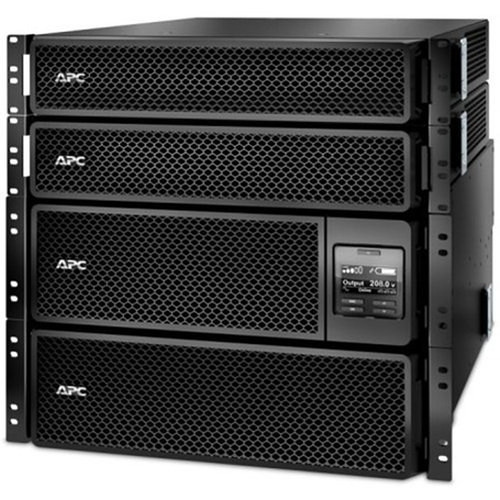
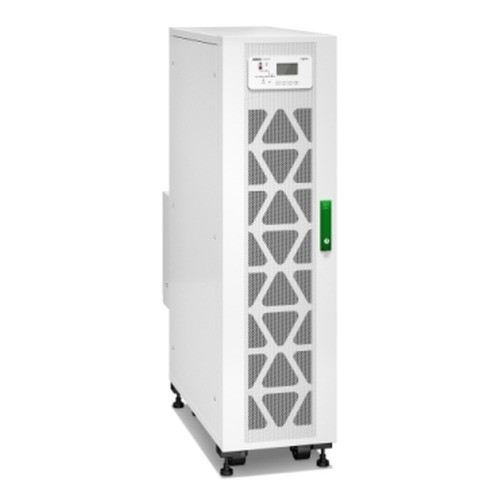
Both the SRT10KRMXLT-5KTF2 and the E3SUPS10KFBS are 10 kVA / 10,000 W rack or tower UPS units from APC by Schneider Electric, placing them in the same power-capacity class. The comparison examines three decision-critical axes for a 10 kVA UPS buyer: input voltage flexibility and topology, output configuration and protection quality, and physical/environmental fit. The SRT10KRMXLT-5KTF2 bundles two step-down transformers for mixed 208 V / 120 V environments, while the E3SUPS10KFBS targets a dedicated 208 V three-phase infrastructure.
In This Guide
- Which unit offers broader input voltage tolerance and a more resilient UPS topology?
- How do the two units compare on output power quality and load protection features?
- Which unit better fits the target installation environment in terms of form factor, voltage compatibility, and operating conditions?
- Which should you choose: the SRT10KRMXLT-5KTF2 or the E3SUPS10KFBS?
- Side-by-Side Specs
- FAQ
Which unit offers broader input voltage tolerance and a more resilient UPS topology?
The SRT10KRMXLT-5KTF2 uses a Double-conversion (Online) topology, meaning utility power is continuously rectified to DC and re-inverted to AC, so connected loads never experience a transfer-time gap during switchover. Its input voltage window spans 100 V to 275 V with a frequency acceptance range of 40–70 Hz, making it tolerant of wide utility fluctuations without switching to battery.
The E3SUPS10KFBS specs do not disclose its UPS topology. Its input voltage window is far narrower: 208 V to 220 V, with a standard 50/60 Hz frequency range. Buyers in facilities where utility voltage can sag below 208 V or spike above 220 V should note the E3SUPS10KFBS provides no specified headroom beyond that 12 V band, whereas the SRT10KRMXLT-5KTF2 accommodates swings of 175 V around nominal.
How do the two units compare on output power quality and load protection features?
The SRT10KRMXLT-5KTF2 delivers a sine-wave output with a published Total Harmonic Distortion of 2% and a crest factor of 3:1, indicating it can handle non-linear loads without output distortion that could damage sensitive electronics. Its surge energy rating is 480 J, and it includes dedicated surge protection, audible alarms, and Emergency Power Off (EPO) — a critical safety interlock for data center deployments.
The E3SUPS10KFBS specs do not state output waveform type, THD, crest factor, surge energy rating, EPO support, or audible alarm presence. Its maximum output current is specified at 31 A at 208 V, which is mathematically consistent with 10 kVA / 208 V ≈ 48 A three-phase, suggesting a three-phase output configuration, but the specs do not confirm phase count explicitly. Buyers requiring documented power-quality metrics or EPO will find the SRT10KRMXLT-5KTF2 better specified.
Which unit better fits the target installation environment in terms of form factor, voltage compatibility, and operating conditions?
The SRT10KRMXLT-5KTF2 is a rackmount unit bundled with two 208 V to 120 V, 2U, 5 kVA step-down transformers, making it purpose-built for data centers or server rooms that mix 120 V IT equipment on 208 V feeds. Its output spans 120 V to 208 V. The specs do not publish operating temperature range, humidity range, IP rating, or housing material for this model.
The E3SUPS10KFBS is a tower unit in a metal white enclosure with an IP20 rating, operating from 0–40 °C and 0–95% relative humidity (non-condensing assumed), and storing from −15–40 °C. Its output voltage stays within 208–220 V, so it is suited for purely 208 V three-phase environments without a need for step-down conversion. Web-based management capability is not stated in the provided specs for this model.
Which should you choose: the SRT10KRMXLT-5KTF2 or the E3SUPS10KFBS?
Our take: The SRT10KRMXLT-5KTF2 is the stronger choice when the installation requires double-conversion online protection, wide input voltage tolerance, and mixed 120 V / 208 V load support. Its 100–275 V input range dwarfs the E3SUPS10KFBS's 208–220 V window, its 2% output THD and 480 J surge rating provide documented power-quality assurances the E3SUPS10KFBS specs do not match, and its bundled step-down transformers eliminate a separate procurement step for 120 V loads in a 208 V facility. The E3SUPS10KFBS is the more appropriate fit for a purely 208 V three-phase environment where tower form factor is preferred, environmental ratings (IP20, 0–40 °C, 0–95% RH) matter for the installation record, and the buyer does not need voltage step-down or verified double-conversion topology. Critical specs — topology, THD, surge rating, EPO — are absent from the E3SUPS10KFBS data sheet as provided, which itself limits side-by-side evaluation.
Side-by-Side Comparison
Spec-for-spec, from manufacturer data.
| Specification | APC by Schneider Electric SRT10KRMXLT-5KTF2 | APC by Schneider Electric E3SUPS10KFBS |
|---|---|---|
| UPS Topology | Double-conversion (Online) | — |
| Output Power Capacity | 10 kVA | 10 kVA |
| Output Power | 10,000 W | 10,000 W |
| Input Voltage Min | 100 V | 208 V |
| Input Voltage Max | 275 V | 220 V |
| Input Frequency | 40–70 Hz | 50/60 Hz |
| Output Voltage Min | 120 V | 208 V |
| Output Voltage Max | 208 V | 220 V |
| Output Frequency | 50/60 Hz | 50/60 Hz |
| Output Waveform | Sine | — |
| Output THD | 2% | — |
| Crest Factor | 3:1 | — |
| Surge Energy Rating | 480 J | — |
| Emergency Power Off (EPO) | Yes | — |
| Maximum Output Current | — | 31 A |
| Form Factor | Rackmount (with 2U step-down transformers) | Tower |
| Noise Level | 55 dB | — |
| Web-based Management | Yes | — |
| IP Rating | — | IP20 |
| Operating Temperature | — | 0–40 °C |
| Operating Relative Humidity | — | 0–95% |
| Housing Material | — | Metal |
| Battery Voltage | — | 120 V |
Frequently Asked Questions
Which should you choose: the SRT10KRMXLT-5KTF2 or the E3SUPS10KFBS?
The SRT10KRMXLT-5KTF2 is the stronger choice when the installation requires double-conversion online protection, wide input voltage tolerance, and mixed 120 V / 208 V load support. Its 100–275 V input range dwarfs the E3SUPS10KFBS's 208–220 V window, its 2% output THD and 480 J surge rating provide documented power-quality assurances the E3SUPS10KFBS specs do not match, and its bundled step-down transformers eliminate a separate procurement step for 120 V loads in a 208 V facility. The E3SUPS10KFBS is the more appropriate fit for a purely 208 V three-phase environment where tower form factor is preferred, environmental ratings (IP20, 0–40 °C, 0–95% RH) matter for the installation record, and the buyer does not need voltage step-down or verified double-conversion topology. Critical specs — topology, THD, surge rating, EPO — are absent from the E3SUPS10KFBS data sheet as provided, which itself limits side-by-side evaluation.
Can the SRT10KRMXLT-5KTF2 or E3SUPS10KFBS power both 120 V and 208 V equipment from the same unit?
Only the SRT10KRMXLT-5KTF2 is specified to do so: it outputs both 120 V and 208 V and includes two 208 V to 120 V step-down transformers in the bundle. The E3SUPS10KFBS output is specified at 208–220 V only; no step-down capability is listed in its specs.
Which unit is safer for a data center that requires an Emergency Power Off circuit?
The SRT10KRMXLT-5KTF2 explicitly lists Emergency Power Off (EPO) support. The E3SUPS10KFBS specs do not mention EPO. If EPO is a code or site-policy requirement, the SRT10KRMXLT-5KTF2 is the only model here with that spec confirmed.
Is the SRT10KRMXLT-5KTF2 or E3SUPS10KFBS better suited for facilities with unstable utility power?
The SRT10KRMXLT-5KTF2 is better specified for utility instability: its double-conversion online topology continuously re-generates output power regardless of input quality, and its 100–275 V input range absorbs large voltage swings. The E3SUPS10KFBS has a 208–220 V input window and no published topology, so its behavior under significant voltage deviation is not defined by the available specs.
More UPS Comparisons
- APC by Schneider Electric SRTL10KRM4UT-5KTF2 vs Panduit U10N32V
- APC by Schneider Electric SRTL10KRM4UT-5KTF2 vs Panduit U10N11V
- APC by Schneider Electric SRTL10KRM4UT-5KTF2 vs Panduit U10N12V
- APC by Schneider Electric SRTL10KRM4UT-5KTF2 vs Vertiv GXT5-10KHVRT5UXLN
- APC by Schneider Electric SRTL10KRM4UT-5KTF2 vs APC by Schneider Electric E3SUPS10KFBS
- APC by Schneider Electric SRTL10KRM4UT-5KTF2 vs APC by Schneider Electric SRT10KRMXLT-10KTF
UPS Buying Guides
Get a Second Opinion on Your Camera Choice
Share your site layout, coverage goals, and budget. Our team will validate the camera selection, flag anything we would change, and recommend products that match the use case.