
APC by Schneider Electric SMX750I vs APC by Schneider Electric SMT750CUS: Specification Comparison
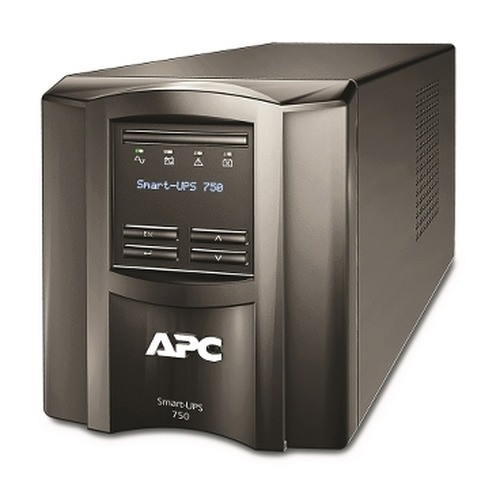
Both the SMX750I and SMT750CUS are 750 VA line-interactive Smart-UPS units from APC by Schneider Electric, targeting small servers, network closets, and workstation protection. The core comparison turns on voltage region and form factor: the SMX750I is a 230 V rack/tower convertible (2U) designed for international markets, while the SMT750CUS is a 120 V tower unit built for North American installations. Buyers cross-shopping at the 750 VA tier should weigh runtime, physical integration, and management options against their region, rack availability, and power infrastructure.
In This Guide
- How do runtime and power capacity compare at full and half load?
- Which unit better fits rack-based or regional power infrastructure?
- What management interfaces, compliance certifications, and surge protection does each unit offer?
- Which should you choose: the SMX750I or the SMT750CUS?
- Side-by-Side Specs
- FAQ
How do runtime and power capacity compare at full and half load?
At full load, the SMX750I delivers 12 minutes of backup runtime against the SMT750CUS's 4.5 minutes — a 2.7× advantage under peak draw. At half load, the gap narrows but remains significant: the SMX750I sustains 34 minutes versus 16 minutes for the SMT750CUS. Both units share the same VA rating of 750 VA, but their watt ratings differ: the SMX750I is rated at 600 W while the SMT750CUS is rated at 500 W, giving the SMX750I a higher power factor (0.80 vs 0.67). This means the SMX750I can support heavier resistive loads before throttling. Recharge time is specified only for the SMT750CUS at 3 hours; this figure is absent from the SMX750I spec sheet provided.
Which unit better fits rack-based or regional power infrastructure?
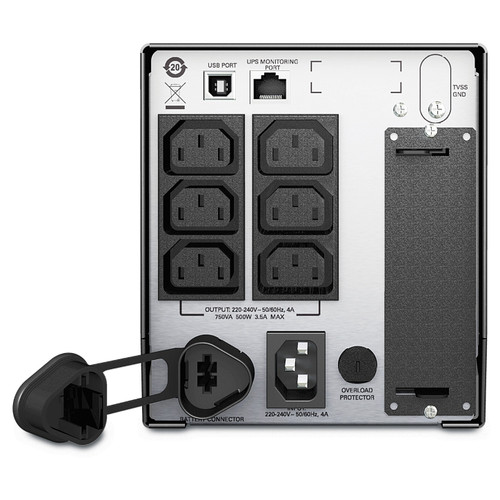
The SMX750I is explicitly a rack/tower convertible in a 2U form factor, making it a direct fit for equipment racks without a separate shelf or adapter. Its output voltage is 230 V AC, targeting regions operating on that standard (Europe, Middle East, Asia-Pacific, and others). The SMT750CUS is a tower-only unit with no rack-mount specification provided, and it operates at 120 V AC input and output — purpose-built for North American power grids. The SMT750CUS input connector is a NEMA 5-15P and its six output receptacles are NEMA 5-15R, a standard North American plug family. The SMX750I specifies 8 C13 outlets (reflected in the product name as '8X C13') and 10 total battery and surge outlets. Transfer time is specified only for the SMT750CUS at 6 ms; no transfer time is listed for the SMX750I in the provided specs.
What management interfaces, compliance certifications, and surge protection does each unit offer?
The SMT750CUS provides richer documented management connectivity: USB and Ethernet remote management interfaces, one SmartConnect port, one SmartSlot expansion slot, and an equipment protection value of $150,000 USD with a surge energy rating of 540 joules. Efficiency is explicitly stated at 97.2% (25% load), 98.4% (50% load), 98.8% (75% load), and 98.9% (100% load). Compliance certifications listed include UL 1449, UL 1778, CSA, ICES-003, FCC Part 15 B, RoHS, and REACH. The SMT750CUS also specifies a 3-year limited warranty with a 2-year battery warranty, 41 dBA acoustic noise, and an operating temperature range of 32–104 °F (0–40 °C). The SMX750I spec sheet provided does not include surge joule rating, efficiency figures, acoustic noise, warranty terms, certifications, or operating environment limits — those parameters are absent and cannot be compared.
Which should you choose: the SMX750I or the SMT750CUS?
Our take: The SMX750I is the stronger choice when the installation site runs on 230 V infrastructure and rack integration is required, while the SMT750CUS is the purpose-built option for North American 120 V deployments needing documented management, certifications, and efficiency data. Concretely: the SMX750I delivers 12 minutes at full load versus 4.5 minutes for the SMT750CUS, a 7.5-minute runtime advantage; it carries a higher watt rating of 600 W versus 500 W; and it converts between rack and tower form factors in 2U, which the SMT750CUS cannot. However, the SMT750CUS is the only unit here with documented surge protection (540 J), efficiency ratings, acoustic noise (41 dBA), operating environment specs, warranty terms, and compliance certifications. Buyers in North American server rooms or regulated environments should choose the SMT750CUS; buyers in 230 V regions requiring rack flexibility and longer runtime should choose the SMX750I.
Side-by-Side Comparison
Spec-for-spec, from manufacturer data.
| Specification | APC by Schneider Electric SMX750I | APC by Schneider Electric SMT750CUS |
|---|---|---|
| VA Rating | 750 VA | 750 VA |
| Watt Rating | 600 W | 500 W |
| UPS Technology | Line Interactive | Line Interactive |
| Output Voltage | 230 V AC | 120 V AC |
| Input Voltage | — | 120 V AC (82–144 V range) |
| Output Waveform | Sine Wave | Sine Wave |
| Runtime at Full Load | 12 min | 4.5 min |
| Runtime at Half Load | 34 min | 16 min |
| Recharge Time | — | 3 hours |
| Transfer Time | — | 6 ms |
| Form Factor | Rack/Tower Convertible, 2U | Tower only |
| Total Outlets | 10 (battery & surge) | 6 x NEMA 5-15R |
| Management Interfaces | — | USB, Ethernet, SmartConnect, SmartSlot |
| Surge Energy Rating | — | 540 J |
| Efficiency (rated) | — | 97.2%–98.9% (load-dependent) |
| Weight | 48.50 lb | 30.91 lb |
| Warranty | — | 3-yr unit / 2-yr battery |
| Certifications | — | UL 1449, UL 1778, CSA, RoHS, REACH, FCC Pt 15 B |
Frequently Asked Questions
Which should you choose: the SMX750I or the SMT750CUS?
The SMX750I is the stronger choice when the installation site runs on 230 V infrastructure and rack integration is required, while the SMT750CUS is the purpose-built option for North American 120 V deployments needing documented management, certifications, and efficiency data. Concretely: the SMX750I delivers 12 minutes at full load versus 4.5 minutes for the SMT750CUS, a 7.5-minute runtime advantage; it carries a higher watt rating of 600 W versus 500 W; and it converts between rack and tower form factors in 2U, which the SMT750CUS cannot. However, the SMT750CUS is the only unit here with documented surge protection (540 J), efficiency ratings, acoustic noise (41 dBA), operating environment specs, warranty terms, and compliance certifications. Buyers in North American server rooms or regulated environments should choose the SMT750CUS; buyers in 230 V regions requiring rack flexibility and longer runtime should choose the SMX750I.
Can I use the SMX750I in a North American data center?
No — based on the provided specs, the SMX750I operates at 230 V AC output and is designed for markets on that voltage standard. North American facilities running 120 V circuits should use the SMT750CUS, which accepts 120 V AC input via a NEMA 5-15P connector and delivers 120 V AC output across six NEMA 5-15R receptacles.
Which unit gives me longer backup time if my server draws full load?
The SMX750I provides 12 minutes at full load versus 4.5 minutes for the SMT750CUS — a difference of 7.5 minutes. At half load the gap is 34 minutes versus 16 minutes. If maximizing runtime under heavy draw is the priority, the SMX750I has the documented advantage, assuming the installation site is compatible with its 230 V output.
Does either unit support remote management for IT monitoring?
The SMT750CUS specifies USB and Ethernet remote management interfaces, one SmartConnect port, and one SmartSlot expansion slot for additional management cards. The SMX750I spec sheet provided does not list management interface details, so no comparison can be made on that dimension from the available data.
More UPS Comparisons
- APC by Schneider Electric SMT750C vs CyberPower PR750RTXL2UC
- APC by Schneider Electric SMT750C vs Vertiv GXT5-750LVRT2UXL
- APC by Schneider Electric SMT750C vs CyberPower PR750LCDRT1U
- APC by Schneider Electric SMT750C vs CyberPower AVRG750U
- APC by Schneider Electric SMT750C vs APC by Schneider Electric SMT750CUS
- APC by Schneider Electric SMT750CUS vs CyberPower PR750RTXL2UC
UPS Buying Guides
Get a Second Opinion on Your Camera Choice
Share your site layout, coverage goals, and budget. Our team will validate the camera selection, flag anything we would change, and recommend products that match the use case.