
APC by Schneider Electric SMX2200RMLV2U vs CyberPower OL2K2RTHD: Specification Comparison
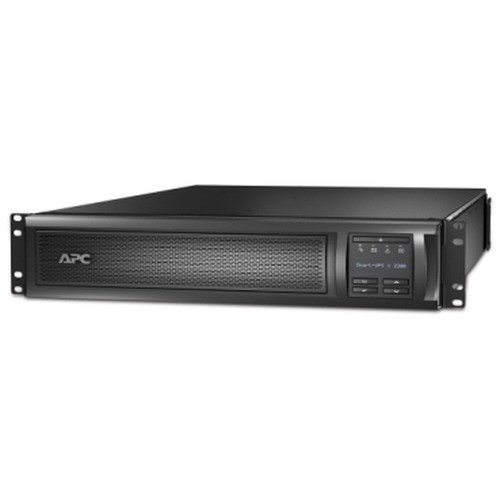
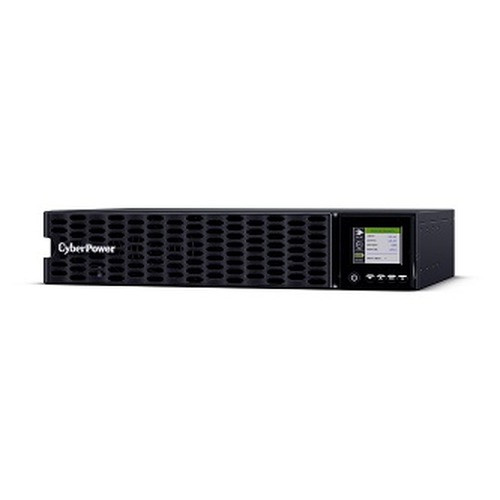
Both the APC SMX2200RMLV2U and CyberPower OL2K2RTHD are 2U rack/tower-convertible 2200 VA UPS units targeting the same mid-range data-center and server-room segment. The APC is a line-interactive design while the CyberPower employs online double-conversion topology — a fundamental architectural difference that directly affects power conditioning quality, transfer time, efficiency, and runtime. This comparison evaluates the two on power protection topology and runtime, outlet configuration and connectivity, and management and environmental specifications.
In This Guide
- Which UPS offers superior power protection topology and usable runtime?
- How do outlet count, input connections, and management interfaces compare?
- What are the physical, environmental, and compliance differences relevant to deployment?
- Which should you choose: the SMX2200RMLV2U or the OL2K2RTHD?
- Side-by-Side Specs
- FAQ
Which UPS offers superior power protection topology and usable runtime?
The APC SMX2200RMLV2U uses line-interactive topology with a 4 ms transfer time to battery and a rated output of 1980 W (power factor 0.90). At full load it delivers 10 minutes of runtime; at half load, 25 minutes. Input voltage range is wide — 70 to 153 V — providing meaningful ride-through before switching to battery.
The CyberPower OL2K2RTHD uses online double-conversion topology with a stated 0 ms transfer time, meaning connected equipment never experiences a transfer gap. Its rated output is 1800 W (power factor ~0.82 at 2200 VA). Runtime is substantially shorter: 3.1 minutes at full load and 10.3 minutes at half load. Input voltage range is narrower at 100–125 VAC. An ECO mode is available at greater than 96% efficiency, though that mode bypasses double-conversion.
For sites where power quality is poor or where zero-transfer-time is a hard requirement (blade servers, sensitive medical or industrial loads), the double-conversion CyberPower has the architectural advantage. For sites that prioritize longer runtime on battery — for example, bridging a generator start — the APC's 10- and 25-minute figures are significantly better at equivalent load. Surge suppression is also higher on the CyberPower: 710 J vs. 540 J on the APC.
How do outlet count, input connections, and management interfaces compare?
The APC SMX2200RMLV2U provides 8 total outlets: 6 × NEMA 5-15R and 2 × NEMA 5-20R. Its input plug is a NEMA L5-30P twist-lock, requiring a matching receptacle or PDU — a facility wiring consideration. Management is provided through a single Smart-Slot expansion bay; no native USB, serial, or network port is specified in the provided specs beyond that slot.
The CyberPower OL2K2RTHD provides 8 total outlets as well: 7 × NEMA 5-20R and 1 × NEMA L5-20R. Its input plug is a NEMA 5-20P standard straight-blade connector, simplifying installation in most rack environments. Native communication ports include USB, serial, SNMP, and EPO (emergency power off) — all built in. Optional remote management is available via the RMCARD205 card. PowerPanel Business Edition software is included. A manual and automatic bypass is also specified.
The CyberPower has a notably richer out-of-box connectivity profile. The APC's management capability depends on which Smart-Slot card is installed; none is specified in the provided specs, so buyers must budget for that card separately if network management is needed. The APC's twist-lock L5-30P input plug is less common in standard rack environments than the CyberPower's 5-20P, potentially adding installation cost.
What are the physical, environmental, and compliance differences relevant to deployment?
The APC SMX2200RMLV2U has published dimensions of 3.35" H × 16.97" W × 26.26" D and weighs approximately 84.60 lb (approximately 38.4 kg). Certifications listed include UL 1778, CSA, TUV, FCC Part 15 Class A, BSMI, NOM, VCCI Class A, EN 50091-2, EN 55022 Class A, and REACH. No operating temperature, humidity, or altitude range is provided in the supplied specifications.
The CyberPower OL2K2RTHD has published dimensions of 8.64 cm H × 43.31 cm W × 38.0 cm D (approximately 3.4" × 17.05" × 14.96") and weighs 17.5 kg (approximately 38.6 lb) — significantly lighter than the APC. Operating temperature is specified at 32 °F to 104 °F, humidity 0–90% non-condensing, and operating elevation up to 9,843 ft. Audible noise is rated between 24.2 and 57.1 dBA. Safety certifications include UL 1778 and CSA C22.2 No. 107.3, plus FCC Part 15 Class A. Warranty is stated as three-year limited.
The CyberPower is substantially lighter (17.5 kg vs. ~38.4 kg), which matters for rack installation and shipping logistics. The APC carries a broader international certification footprint per the supplied specs. The CyberPower provides explicit environmental operating envelopes; the APC's provided specs do not include those values. Depth on the CyberPower (38 cm / ~15") is meaningfully shallower than the APC (26.26" / ~66.7 cm), which is relevant for space-constrained or short-depth racks.
Which should you choose: the SMX2200RMLV2U or the OL2K2RTHD?
Our take: The SMX2200RMLV2U is the stronger choice when extended battery runtime and wide input voltage tolerance are the primary criteria, while the OL2K2RTHD is the stronger choice when true zero-transfer-time power conditioning, built-in network management, and lighter weight are the priorities. Key spec deltas: the APC delivers 10 min / 25 min runtime at full / half load versus only 3.1 min / 10.3 min on the CyberPower — more than 3× longer at both load points. The CyberPower counters with a 0 ms transfer time (double-conversion) versus the APC's 4 ms, plus native USB, serial, SNMP, and EPO ports already built in, where the APC requires a Smart-Slot card purchase. The CyberPower is also dramatically lighter (17.5 kg vs. ~38.4 kg) and shallower (38 cm vs. ~67 cm depth). Buyers running generator-backed environments needing bridge time should favor the APC; buyers prioritizing power quality for sensitive electronics or simplified remote management should favor the CyberPower.
Side-by-Side Comparison
Spec-for-spec, from manufacturer data.
| Specification | APC by Schneider Electric SMX2200RMLV2U | CyberPower OL2K2RTHD |
|---|---|---|
| VA Rating | 2200 VA | 2200 VA |
| Watt Rating | 1980 W | 1800 W |
| Power Factor | 0.90 | ~0.82 |
| Topology | Line Interactive | Online Double-Conversion |
| Transfer Time | 4 ms | 0 ms |
| Runtime (Full Load) | 10 min | 3.1 min |
| Runtime (Half Load) | 25 min | 10.3 min |
| Input Plug | NEMA L5-30P (twist-lock) | NEMA 5-20P |
| Input Voltage Range | 70 – 153 V | 100 – 125 VAC |
| Output Outlets | 6x NEMA 5-15R + 2x NEMA 5-20R (8 total) | 7x NEMA 5-20R + 1x NEMA L5-20R (8 total) |
| Surge Suppression | 540 J | 710 J |
| Management Ports | Smart-Slot (1 expansion bay) | USB, Serial, SNMP, EPO (native) |
| Management Software | — | PowerPanel Business Edition |
| Bypass | — | Automatic and Manual |
| Weight | ~84.60 lb (~38.4 kg) | 17.5 kg (~38.6 lb) |
| Depth | 26.26 in (~66.7 cm) | 38.0 cm (~15.0 in) |
| Rack Height | 2U | 2U |
| Warranty | — | Three-Year Limited |
| Safety Certifications | UL 1778, CSA, TUV, FCC Pt 15 Cl A, BSMI, NOM, VCCI Cl A, EN 50091-2, EN 55022 Cl A, REACH | UL 1778, CSA C22.2 No.107.3, FCC Pt 15 Cl A |
Frequently Asked Questions
Which should you choose: the SMX2200RMLV2U or the OL2K2RTHD?
The SMX2200RMLV2U is the stronger choice when extended battery runtime and wide input voltage tolerance are the primary criteria, while the OL2K2RTHD is the stronger choice when true zero-transfer-time power conditioning, built-in network management, and lighter weight are the priorities. Key spec deltas: the APC delivers 10 min / 25 min runtime at full / half load versus only 3.1 min / 10.3 min on the CyberPower — more than 3× longer at both load points. The CyberPower counters with a 0 ms transfer time (double-conversion) versus the APC's 4 ms, plus native USB, serial, SNMP, and EPO ports already built in, where the APC requires a Smart-Slot card purchase. The CyberPower is also dramatically lighter (17.5 kg vs. ~38.4 kg) and shallower (38 cm vs. ~67 cm depth). Buyers running generator-backed environments needing bridge time should favor the APC; buyers prioritizing power quality for sensitive electronics or simplified remote management should favor the CyberPower.
Which unit is better for protecting sensitive servers that cannot tolerate any power fluctuation?
The CyberPower OL2K2RTHD uses online double-conversion topology, which means connected equipment runs continuously off the inverter with a stated 0 ms transfer time — there is no gap when switching between utility and battery. The APC SMX2200RMLV2U is line-interactive with a 4 ms transfer time. For loads that are sensitive to any interruption or power-quality variation, the CyberPower's double-conversion architecture is the more appropriate choice based on the provided specifications.
Which UPS gives me more time to safely shut down equipment during a power outage?
Based on the provided specifications, the APC SMX2200RMLV2U provides substantially more runtime: 10 minutes at full load (1980 W) and 25 minutes at half load. The CyberPower OL2K2RTHD specifies only 3.1 minutes at full load (1800 W) and 10.3 minutes at half load. If bridging time to a generator start or an orderly shutdown sequence is a priority, the APC has a clear advantage by these figures.
Do I need to buy extra cards or software to monitor and manage either of these UPS units remotely?
The CyberPower OL2K2RTHD includes USB, serial, SNMP, and EPO ports natively, plus PowerPanel Business Edition software, with optional remote management via the separately available RMCARD205 card. The APC SMX2200RMLV2U includes one Smart-Slot expansion bay; the provided specifications do not list any native USB, serial, or network management port — network management capability depends on which Smart-Slot card is purchased and installed separately.
More UPS Comparisons
- CyberPower PR2200RTXL2UC vs APC by Schneider Electric SRT2200RMXLA
- CyberPower PR2200RTXL2UC vs APC by Schneider Electric SRT2200XLA
- CyberPower PR2200RTXL2UC vs APC by Schneider Electric SRT2200RMXLA-NC
- CyberPower PR2200RTXL2UC vs APC by Schneider Electric SMT2200I
- CyberPower PR2200RTXL2UC vs CyberPower OL2K2RTHD
- CyberPower PR2200RTXL2UC vs CyberPower OL2200RTXL2U
UPS Buying Guides
Get a Second Opinion on Your Camera Choice
Share your site layout, coverage goals, and budget. Our team will validate the camera selection, flag anything we would change, and recommend products that match the use case.