
APC by Schneider Electric SMTL1500RM3UC vs APC by Schneider Electric BR1500MS2: Specification Comparison
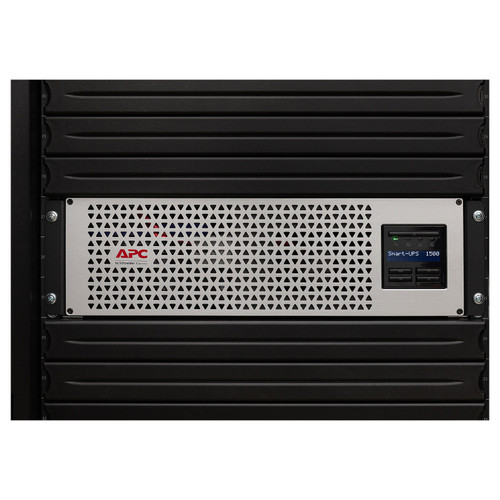
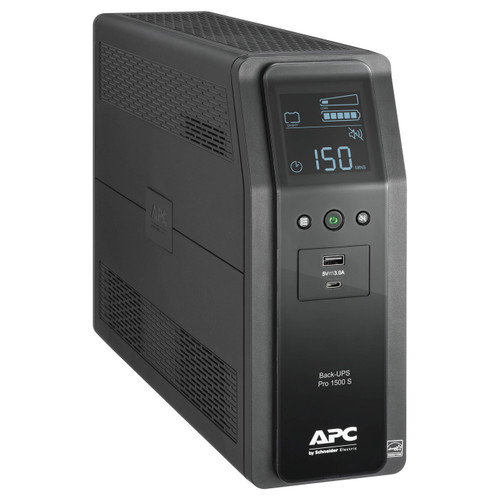
Both the SMTL1500RM3UC and BR1500MS2 are APC 1500VA line-interactive sine-wave UPS units designed for 120V North American installations, making them legitimate cross-shop candidates for buyers protecting critical loads up to 1.5kVA. The comparison turns on meaningful divergences: the SMTL1500RM3UC is a 3U rackmount with a lithium-ion battery targeting IT closets and data-center deployments, while the BR1500MS2 is a tower/desktop unit with a lead-acid battery marketed toward workstations and gaming rigs. Form factor, battery chemistry, runtime economics, and power capacity differ substantially.
In This Guide
Which UPS delivers more usable power and cleaner output under load?
The SMTL1500RM3UC carries a maximum configurable output of 1,350 W (1.44 kVA), giving IT loads substantial headroom within the 1500VA envelope. The BR1500MS2 is rated at only 900 W (1500 VA), meaning its watt-to-VA ratio is significantly lower and real-world load capacity is constrained to 900 W before the unit will alarm or shed load.
Both units deliver a true sine-wave output — critical for active power-factor-corrected (PFC) power supplies common in servers and modern workstations. Output voltage distortion for the SMTL1500RM3UC is specified at less than 5%. The BR1500MS2 spec sheet does not provide an output voltage distortion figure.
Transfer time is 6 ms typical / 10 ms maximum for the SMTL1500RM3UC versus 8 ms typical / 10 ms maximum for the BR1500MS2. Both fall within acceptable limits for most connected equipment, but the SMTL1500RM3UC has a faster typical response.
How do battery chemistry, recharge time, and expected service life compare?
Battery chemistry is the sharpest dividing line. The SMTL1500RM3UC uses a lithium-ion pack with an expected service life of 5–10 years and a typical recharge time of 2 hours from a depleted state. Its battery charge power is rated at 154 W.
The BR1500MS2 uses a conventional valve-regulated lead-acid (VRLA) battery with a design life of only 3–5 years and a typical recharge time of 16 hours — eight times longer than the lithium-ion unit. Its battery charge power is rated at just 16 W, explaining the protracted recharge window.
For installations where battery replacement cycles drive total cost of ownership or where fast recharge after an outage event matters — such as a secondary power event occurring within hours — the lithium-ion chemistry in the SMTL1500RM3UC offers a clear operational advantage. The BR1500MS2's lead-acid chemistry is mature and widely understood but imposes more frequent replacement and longer recovery windows. Volt-amp-hour capacity for the SMTL1500RM3UC is specified at 310 VAh; the BR1500MS2 spec sheet does not state a VAh figure.
Which unit better fits rack-based IT infrastructure and management needs?
The SMTL1500RM3UC is a purpose-built 3U rackmount (131 mm H × 438 mm W × 302 mm D, 19.5 kg) and ships with rack mounting support rails. Its interface ports include RJ-45 Serial, APC Smart-Slot (for optional network management cards), and USB — giving it a full complement of remote management options standard to data-center UPS deployments.
The BR1500MS2 is a tower/desktop form factor with a single published dimension of 26 cm and a weight of 12.5 kg. Its connectivity is limited to a USB cable (included); no Smart-Slot or serial port is specified. Remote SNMP or network management is not supported per the provided specifications.
Surge energy rating favors the BR1500MS2 at 1,080 J versus 680 J for the SMTL1500RM3UC, a meaningful difference for protecting equipment against sustained surge events. The BR1500MS2 also includes coaxial cable data-line protection (CATV/SATV/modem/audio-video), which the SMTL1500RM3UC does not list. The SMTL1500RM3UC carries formal approvals including UL 1778, UL 1973, CSA C22.2 No. 107.3, FCC Part 15 Class A, and NOM; the BR1500MS2 approvals are not stated in the provided specifications.
Which should you choose: the SMTL1500RM3UC or the BR1500MS2?
Our take: The SMTL1500RM3UC is the stronger choice when the deployment is rack-based, requires fast battery recovery, and demands network management integration. Three concrete spec deltas support this: first, usable watt capacity is 1,350 W versus 900 W — a 50% advantage that matters for densely loaded IT equipment; second, battery recharge time is 2 hours versus 16 hours, directly reducing risk exposure after a power event; third, the SMTL1500RM3UC's lithium-ion pack carries a 5–10 year expected life against the BR1500MS2's 3–5 year lead-acid design life, lowering long-run replacement cost. The BR1500MS2 is the more appropriate choice for a desktop or workstation environment where rack mounting is irrelevant, where the higher 1,080 J surge rating and built-in coaxial data-line protection add value, and where the lower unit weight (12.5 kg vs 19.5 kg) eases placement. Buyers protecting servers, network switches, or NVRs in a rack enclosure should specify the SMTL1500RM3UC; buyers protecting a single workstation or gaming rig should evaluate the BR1500MS2.
Side-by-Side Comparison
Spec-for-spec, from manufacturer data.
| Specification | APC by Schneider Electric SMTL1500RM3UC | APC by Schneider Electric BR1500MS2 |
|---|---|---|
| UPS Topology | Line Interactive | Line Interactive |
| Waveform | Sine wave | Sine wave |
| Rated VA | 1,500 VA | 1,500 VA |
| Max Configurable Power (W) | 1,350 W | 900 W |
| Form Factor | 3U Rackmount | Tower / Desktop |
| Battery Chemistry | Lithium-Ion | Lead-Acid (VRLA) |
| Expected Battery Life | 5–10 years | 3–5 years |
| Typical Recharge Time | 2 hours | 16 hours |
| Battery Charge Power | 154 W | 16 W |
| Battery Capacity (VAh) | 310 VAh | — |
| Transfer Time (Typical / Max) | 6 ms / 10 ms | 8 ms / 10 ms |
| Surge Energy Rating | 680 J | 1,080 J |
| Interface Ports | RJ-45 Serial, Smart-Slot, USB | USB |
| Data Line Protection | — | Coaxial (CATV/SATV/modem/AV) |
| Unit Weight | 43 lb (19.5 kg) | 27.6 lb (12.5 kg) |
| Regulatory Approvals | UL 1778, UL 1973, CSA, FCC Class A, NOM | Not stated in provided specs |
Frequently Asked Questions
Which should you choose: the SMTL1500RM3UC or the BR1500MS2?
The SMTL1500RM3UC is the stronger choice when the deployment is rack-based, requires fast battery recovery, and demands network management integration. Three concrete spec deltas support this: first, usable watt capacity is 1,350 W versus 900 W — a 50% advantage that matters for densely loaded IT equipment; second, battery recharge time is 2 hours versus 16 hours, directly reducing risk exposure after a power event; third, the SMTL1500RM3UC's lithium-ion pack carries a 5–10 year expected life against the BR1500MS2's 3–5 year lead-acid design life, lowering long-run replacement cost. The BR1500MS2 is the more appropriate choice for a desktop or workstation environment where rack mounting is irrelevant, where the higher 1,080 J surge rating and built-in coaxial data-line protection add value, and where the lower unit weight (12.5 kg vs 19.5 kg) eases placement. Buyers protecting servers, network switches, or NVRs in a rack enclosure should specify the SMTL1500RM3UC; buyers protecting a single workstation or gaming rig should evaluate the BR1500MS2.
Is the SMTL1500RM3UC or BR1500MS2 a better fit for a server rack in a small IT closet?
The SMTL1500RM3UC is purpose-built for rack deployment: it ships with rack mounting rails, occupies 3U, exposes RJ-45 Serial, USB, and an APC Smart-Slot for optional network management cards, and delivers 1,350 W of usable power. The BR1500MS2 is a tower/desktop unit with no rack-mount hardware and no Smart-Slot — it is not suited to rack infrastructure.
Which unit will be ready to protect equipment faster after a long power outage?
The SMTL1500RM3UC recharges in approximately 2 hours from a depleted state (battery charge power: 154 W). The BR1500MS2 requires approximately 16 hours to recharge (battery charge power: 16 W). If a second power event occurs within hours of the first, the SMTL1500RM3UC is far more likely to be ready; the BR1500MS2 may still be largely depleted.
Does either UPS offer better surge protection for equipment with sensitive electronics?
The BR1500MS2 carries a higher surge energy rating of 1,080 J versus 680 J for the SMTL1500RM3UC, based on the provided specifications. The BR1500MS2 also includes coaxial cable data-line protection not listed for the SMTL1500RM3UC. Both units specify full-time multi-pole noise filtering and zero clamping response time, but the BR1500MS2's higher joule rating provides greater theoretical surge absorption capacity.
More UPS Comparisons
- APC by Schneider Electric SMX1500RMI2U vs CyberPower PRL1500RT2UC
- APC by Schneider Electric SMX1500RMI2U vs CyberPower BRG1500AVRLCD2
- APC by Schneider Electric SMX1500RMI2U vs CyberPower PR1500LCD
- APC by Schneider Electric SMX1500RMI2U vs APC by Schneider Electric BR1500MS2
- APC by Schneider Electric SMX1500RMI2U vs APC by Schneider Electric SMTL1500RM3UCUS
- CyberPower PRL1500RT2UC vs APC by Schneider Electric BR1500MS2
UPS Buying Guides
Get a Second Opinion on Your Camera Choice
Share your site layout, coverage goals, and budget. Our team will validate the camera selection, flag anything we would change, and recommend products that match the use case.