
APC by Schneider Electric SMT1000CUS vs CyberPower PR1000LCD: Specification Comparison
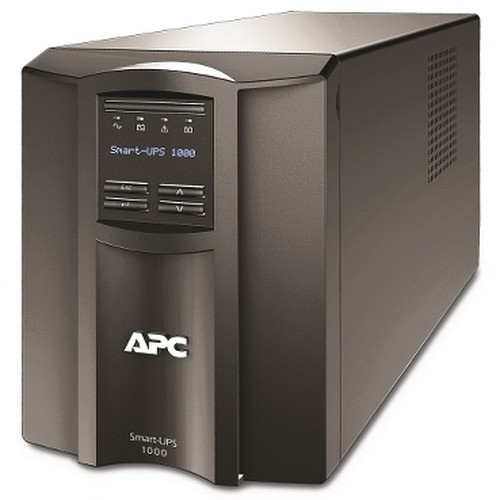
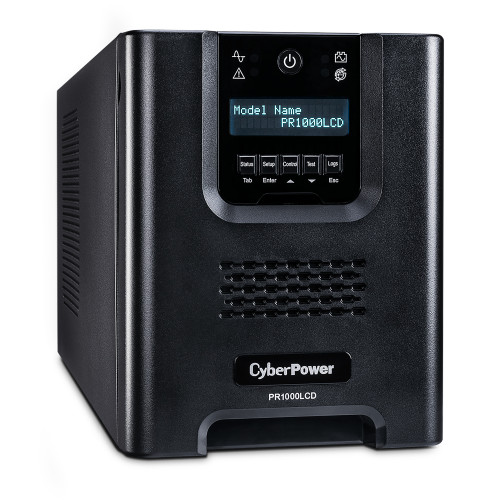
Both the APC Smart-UPS SMT1000CUS and the CyberPower PR1000LCD are 1000VA line-interactive tower UPS units designed for desktop/small-server protection at 120V AC. This comparison covers the three axes most critical to UPS selection: power capacity and output quality, runtime and battery specifications, and connectivity plus management capabilities. Each product delivers sine-wave output and eight NEMA 5-15R outlets, making them direct cross-shop candidates for installers and IT buyers protecting workstations, NAS devices, network closets, or light AV equipment.
In This Guide
- How do the SMT1000CUS and PR1000LCD differ in rated power capacity and output quality?
- Which unit provides better runtime and what are the battery replacement specifications?
- How do the SMT1000CUS and PR1000LCD compare on connectivity, display, and management software?
- Which should you choose: the SMT1000CUS or the PR1000LCD?
- Side-by-Side Specs
- FAQ
How do the SMT1000CUS and PR1000LCD differ in rated power capacity and output quality?
Both units share a 1000VA nameplate rating, but they diverge sharply on watt capacity. The APC SMT1000CUS is rated at 700W (a 0.7 power factor), meaning it can support loads up to 700W continuously. The CyberPower PR1000LCD is rated at 1000W (a 1.0 power factor), supporting loads up to 1000W — a 43% higher watt ceiling at the same VA rating. For loads that draw closer to unity power factor, such as modern server PSUs and active PFC power supplies, the PR1000LCD's higher watt rating provides substantially more usable headroom.
Both units produce a sine wave output. The APC spec describes this as 'Sine wave'; the CyberPower spec explicitly states 'Pure Sine Wave (AC and Battery),' clarifying that sine wave is maintained on battery as well. The APC spec does not explicitly confirm sine wave is preserved during battery operation, though the Smart-UPS line is generally known for this. The CyberPower also specifies output voltage tolerance of ±5%, while the APC spec does not state a tolerance figure.
The SMT1000CUS includes Automatic Voltage Regulation with an input window described as 75–154V adjustable, though the spec label ('Efficiency At Full Load') appears mislabeled in the source data — the actual stated range is 75–154V. The PR1000LCD states an operating input range of 78–149VAC. Both provide AVR to correct brownouts and overvoltages without switching to battery.
Which unit provides better runtime and what are the battery replacement specifications?
The CyberPower PR1000LCD provides explicit runtime figures: 3.1 minutes at full 1000W load and 10.5 minutes at half load (500W). The APC SMT1000CUS does not list numeric runtime figures in the provided specifications — the spec entry reads 'View Runtime Graph,' meaning no directly comparable number is available from the supplied data.
Battery specifications differ in detail. The PR1000LCD uses two 12V/12Ah sealed lead-acid batteries (total 24Ah at 12V), is user-replaceable, and carries a recharge time of 3 hours (quick charge) or 8 hours (eco mode). The SMT1000CUS lists a lead-acid battery and a replacement part number (RBC6) but does not specify voltage, Ah rating, or recharge time in the provided specs. The SMT1000CUS battery is also user-replaceable via the RBC6 cartridge.
The SMT1000CUS spec notes 'Extendable Runtime: 0,' indicating no external battery pack expansion is supported for this model. The PR1000LCD spec does not address runtime extendability. Installers requiring extended runtime should verify external battery module (EBM) compatibility independently for both models.
How do the SMT1000CUS and PR1000LCD compare on connectivity, display, and management software?
The CyberPower PR1000LCD includes USB, Serial, and SNMP connectivity as listed in its specifications. The APC SMT1000CUS lists USB, Serial, SmartConnect port, and an available expansion slot. The SmartConnect port enables cloud-based monitoring via APC's SmartConnect portal. The expansion slot on the SMT1000CUS supports optional network management cards (not included), enabling SNMP and network management as an add-on. The PR1000LCD lists SNMP as a built-in connectivity option, though it is not stated whether an SNMP card is included or a slot is provided.
The PR1000LCD includes a multifunction LCD display with a 4.5-foot removable cable, allowing the display to be positioned separately from the unit — useful in rack-adjacent or enclosed installations. The SMT1000CUS also includes an LCD display per its product name, but the provided spec data does not describe the display's cable length or removability.
Management software differs by platform. The PR1000LCD bundles PowerPanel Business Edition, a network-capable management application. The SMT1000CUS ships with 'CD with software' — the specific software title is not named in the provided specs. The SMT1000CUS also carries TAA compliance certification, relevant for US federal and government procurement. The PR1000LCD spec does not list TAA compliance.
Which should you choose: the SMT1000CUS or the PR1000LCD?
Our take: The PR1000LCD is the stronger choice when load wattage is the primary concern: its 1000W rating outpaces the SMT1000CUS's 700W ceiling by 300W — a meaningful margin for server PSUs or multi-device racks running near unity power factor. The PR1000LCD also provides explicit runtime data (10.5 min at 500W; 3.1 min at 1000W) and a known battery specification (2×12V/12Ah, user-replaceable), whereas the SMT1000CUS runtime data was not present in the supplied specs. Conversely, the SMT1000CUS is the stronger choice for government or TAA-restricted procurement, offers a cloud management path via SmartConnect without a separate card, and supports optional SNMP expansion. Installers deploying in federal environments or Schneider/APC-standardized ecosystems should favor the SMT1000CUS; those prioritizing maximum watt capacity and bundled SNMP capability at 1000VA should favor the PR1000LCD.
Side-by-Side Comparison
Spec-for-spec, from manufacturer data.
| Specification | APC by Schneider Electric SMT1000CUS | CyberPower PR1000LCD |
|---|---|---|
| Rated Capacity (VA) | 1000 VA | 1000 VA |
| Rated Capacity (W) | 700 W | 1000 W |
| Topology | Line Interactive | Line Interactive with AVR |
| Waveform | Sine wave | Pure Sine Wave (AC and Battery) |
| Input Voltage (nominal) | 120V AC | 120 VAC nominal |
| Input Operating Range | 75–154V (adjustable) | 78–149 VAC |
| Output Voltage | 120V AC ±not stated | 120 VAC ±5% |
| Output Connections | 8 × NEMA 5-15R | 8 × NEMA 5-15R (4 critical load priority) |
| Transfer Time | — | 4 ms typical |
| Runtime @ Full Load | Not stated in specs | 3.1 min @ 1000W |
| Runtime @ Half Load | Not stated in specs | 10.5 min @ 500W |
| Battery Spec | Lead-Acid (RBC6), Ah not stated | 2 × 12V/12Ah Sealed Lead-Acid, user replaceable |
| Battery Recharge Time | Not stated in specs | 3 hrs (quick) / 8 hrs (eco) |
| Surge Protection (Joules) | — | 1030 J |
| Connectivity | USB, Serial, SmartConnect, expansion slot | USB, Serial, SNMP |
| Management Software | CD with software (title not specified) | PowerPanel Business Edition |
| Display | LCD (cable detail not stated) | Multifunction LCD, 4.5 ft removable cable |
| Form Factor | Tower (0U) | Mini-Tower |
| Weight | 44.3 lb (20.1 kg) | 44 lb |
| TAA Compliance | Yes | Not stated in specs |
| Certifications | cULus, ENERGY STAR V2.0, TAA | UL1778, cUL 107.3, FCC Class A, Energy Star, RoHS |
| Warranty | Not stated in specs | 3 Year Limited + $375,000 Equipment Guarantee |
Frequently Asked Questions
Which should you choose: the SMT1000CUS or the PR1000LCD?
The PR1000LCD is the stronger choice when load wattage is the primary concern: its 1000W rating outpaces the SMT1000CUS's 700W ceiling by 300W — a meaningful margin for server PSUs or multi-device racks running near unity power factor. The PR1000LCD also provides explicit runtime data (10.5 min at 500W; 3.1 min at 1000W) and a known battery specification (2×12V/12Ah, user-replaceable), whereas the SMT1000CUS runtime data was not present in the supplied specs. Conversely, the SMT1000CUS is the stronger choice for government or TAA-restricted procurement, offers a cloud management path via SmartConnect without a separate card, and supports optional SNMP expansion. Installers deploying in federal environments or Schneider/APC-standardized ecosystems should favor the SMT1000CUS; those prioritizing maximum watt capacity and bundled SNMP capability at 1000VA should favor the PR1000LCD.
Which UPS can handle heavier watt loads — the SMT1000CUS or the PR1000LCD?
Based on the provided specifications, the PR1000LCD is rated at 1000W versus the SMT1000CUS at 700W. Both are rated 1000VA, but the CyberPower unit's higher watt rating (1.0 power factor) supports heavier real-power loads — particularly modern active-PFC server and workstation power supplies that draw close to their watt nameplate.
Does the SMT1000CUS or PR1000LCD support network SNMP management out of the box?
The PR1000LCD lists SNMP as a connectivity feature in its specifications, though the spec does not clarify whether an SNMP card is included or slot-based. The SMT1000CUS includes an expansion slot for optional network management cards but does not include SNMP natively; it does include a SmartConnect cloud-monitoring port. Buyers requiring in-band SNMP without additional hardware should verify card inclusion with the PR1000LCD before purchasing.
Is either the SMT1000CUS or PR1000LCD TAA compliant for government purchasing?
The SMT1000CUS explicitly carries TAA compliance certification per the provided specifications. The PR1000LCD specifications do not list TAA compliance. For US federal, DoD, or GSA schedule procurement requiring TAA-compliant UPS equipment, the SMT1000CUS is the documented option based on the specs supplied.
More UPS Comparisons
- CyberPower PR1000RTXL2UC vs APC by Schneider Electric SURT1000RMXLI
- CyberPower PR1000RTXL2UC vs APC by Schneider Electric SMT1000CUS
- CyberPower PR1000RTXL2UC vs Vertiv GXT5-1000LVRT2UXL
- CyberPower PR1000RTXL2UC vs APC by Schneider Electric SMT1000J
- CyberPower PR1000RTXL2UC vs CyberPower CP1000PFCLCD
- CyberPower PR1000RTXL2UC vs CyberPower PR1000LCD
UPS Buying Guides
Get a Second Opinion on Your Camera Choice
Share your site layout, coverage goals, and budget. Our team will validate the camera selection, flag anything we would change, and recommend products that match the use case.