
APC by Schneider Electric SMT1000CUS vs APC by Schneider Electric SMT1000J: Specification Comparison
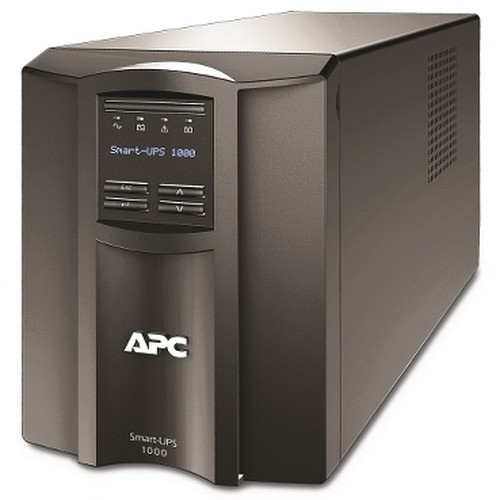
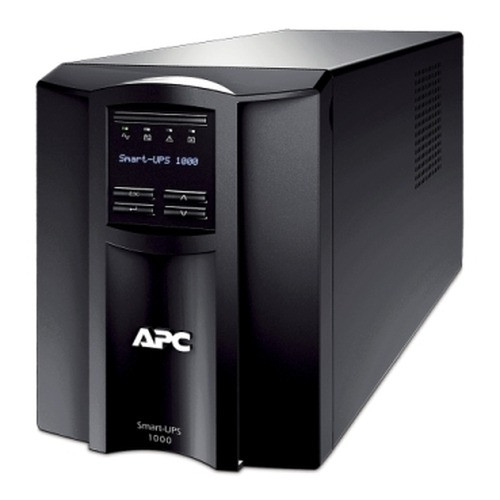
Both the SMT1000CUS and SMT1000J are 1000VA tower-form line-interactive Smart-UPS units from APC by Schneider Electric, each delivering a true sine-wave output and targeting critical IT and network-closet loads. The key differentiator is regional design: the SMT1000CUS is built for the North American 120V/60Hz grid, while the SMT1000J is localized for Japan's 100V environment. Buyers cross-shopping these two are typically evaluating import/export procurement options, multinational deployments, or regional stocking decisions across the same 1000VA platform.
In This Guide
- How do the two units differ in usable power output and input voltage compatibility?
- What do the specs reveal about battery runtime, recharge time, and battery specifications?
- How do the two units compare on connectivity, management interfaces, and certifications?
- Which should you choose: the SMT1000CUS or the SMT1000J?
- Side-by-Side Specs
- FAQ
How do the two units differ in usable power output and input voltage compatibility?
The SMT1000CUS is rated for a 120V AC input (nominal), with an adjustable input range of 75–154V and an output of 120V AC at 700W / 1000VA. The SMT1000J is rated for a 100V AC input (nominal), with an adjustable input range of 70–125V and delivers 670W / 1000VA at 100V AC ±5%. The watt rating gap — 700W vs. 670W — means the SMT1000CUS provides approximately 4.5% more usable real power at full load. Both share the same 1000VA apparent power ceiling. The SMT1000CUS input range is explicitly stated as 75–154V (adjustable), covering a wider high-side range, while the SMT1000J tops out at 125V on its adjustable range, consistent with its Japan-market 100V grid. Neither unit is dual-voltage; deploying either outside its rated input region is not supported by the provided specs.
What do the specs reveal about battery runtime, recharge time, and battery specifications?
The SMT1000CUS lists its replacement battery as RBC6 and specifies a battery charging power of 99W rated; no numeric runtime figure is given in the provided specs (the spec sheet references a runtime graph rather than a table value). The SMT1000J specifies a recharge time of 4 hours but does not call out a replacement battery part number or charging wattage in the provided specs. Both units use a sealed lead-acid battery. Because neither spec set provides a numeric runtime at a reference load (e.g., minutes at 50% load), a direct runtime comparison cannot be made from the data provided. Buyers requiring specific runtime figures should consult APC's published runtime curves for each model.
The SMT1000J additionally lists a minimum operating temperature of 32°F and a maximum of 104°F (0–40°C), and an audible noise emission of 45 dBA. The SMT1000CUS does not provide operating temperature limits or an acoustic rating in the provided specs.
How do the two units compare on connectivity, management interfaces, and certifications?
The SMT1000CUS lists four connectivity options: serial port, USB port, SmartConnect port, and one available expansion slot. The SmartConnect port enables cloud-based remote monitoring via APC's SmartConnect platform — a spec not mentioned for the SMT1000J. The SMT1000J provides one USB Type-A port for management and one SmartSlot expansion slot (listed as 1 total / 1 free), but does not reference a serial port or SmartConnect port in the provided specs.
On certifications, the SMT1000CUS carries cULus, ENERGY STAR V2.0 (USA), and TAA compliance — the last being a procurement requirement for U.S. federal and НДАА-governed contracts. The SMT1000J is certified to UL 1449, VCCI Class A ITE, RoHS Exemption 7b, and REACH, and is explicitly localized for Japan. TAA compliance is not listed for the SMT1000J. The SMT1000J includes a power cable (6 ft) and specifies a surge energy rating of 459 joules; the SMT1000CUS does not list a surge joule rating or cable inclusion in the provided specs.
Which should you choose: the SMT1000CUS or the SMT1000J?
Our take: The SMT1000CUS is the stronger choice when the deployment is on a North American 120V grid and TAA or ENERGY STAR compliance is a procurement requirement. Three concrete spec deltas support this: (1) the SMT1000CUS delivers 700W vs. the SMT1000J's 670W — a 30W real-power advantage at the same 1000VA rating; (2) the SMT1000CUS adds a SmartConnect cloud-management port not present in the SMT1000J spec set, expanding remote monitoring options without an added card; (3) the SMT1000CUS carries TAA compliance and ENERGY STAR V2.0 (USA) certifications absent from the SMT1000J. Conversely, the SMT1000J is purpose-built for Japan's 100V/50–60Hz grid, carries VCCI Class A and REACH certifications relevant to that market, and is the correct choice for Japanese deployments. Neither unit is documented as dual-voltage, so grid voltage is the primary disqualifier between them.
Side-by-Side Comparison
Spec-for-spec, from manufacturer data.
| Specification | APC by Schneider Electric SMT1000CUS | APC by Schneider Electric SMT1000J |
|---|---|---|
| UPS Topology | Line Interactive | Line Interactive |
| Rated Power (VA) | 1000 VA | 1000 VA |
| Rated Power (W) | 700 W | 670 W |
| Input Voltage (Nominal) | 120V AC | 100V AC |
| Input Voltage Range (Adjustable) | 75–154V | 70–125V AC |
| Output Voltage | 120V AC | 100V AC ±5% |
| Output Waveform | Sine wave | Sine wave |
| Input/Output Connections | NEMA 5-15P in / 8x NEMA 5-15R out | 1x NEMA 5-15 in / 8x NEMA 5-15 out |
| Input Frequency | 50/60 Hz ±3 Hz auto-sensing | 50/60 Hz |
| Battery Type | Lead-Acid | Lead-Acid |
| Replacement Battery | RBC6 | — |
| Battery Recharge Time | — | 4 hours |
| Management Interfaces | Serial, USB, SmartConnect, Expansion slot | USB, SmartSlot (1 free) |
| Surge Energy Rating | — | 459 joules |
| Mounting / Form Factor | Tower (0U rack) | Tower |
| Certifications | cULus, ENERGY STAR V2.0 (USA), TAA Compliant | UL 1449, VCCI Class A ITE, RoHS 7b, REACH |
| Localization | United States | Japan |
| Unit Weight | 44.3 lb (20.1 kg) | 50.2 lb |
| Noise Emission | — | 45 dBA |
| Operating Temperature | — | 32–104°F (0–40°C) |
Frequently Asked Questions
Which should you choose: the SMT1000CUS or the SMT1000J?
The SMT1000CUS is the stronger choice when the deployment is on a North American 120V grid and TAA or ENERGY STAR compliance is a procurement requirement. Three concrete spec deltas support this: (1) the SMT1000CUS delivers 700W vs. the SMT1000J's 670W — a 30W real-power advantage at the same 1000VA rating; (2) the SMT1000CUS adds a SmartConnect cloud-management port not present in the SMT1000J spec set, expanding remote monitoring options without an added card; (3) the SMT1000CUS carries TAA compliance and ENERGY STAR V2.0 (USA) certifications absent from the SMT1000J. Conversely, the SMT1000J is purpose-built for Japan's 100V/50–60Hz grid, carries VCCI Class A and REACH certifications relevant to that market, and is the correct choice for Japanese deployments. Neither unit is documented as dual-voltage, so grid voltage is the primary disqualifier between them.
Can I use the SMT1000J in the United States or the SMT1000CUS in Japan?
Based on the provided specs, no. The SMT1000CUS is rated for a 120V AC input and is certified for the U.S. market (cULus, ENERGY STAR V2.0 USA, TAA). The SMT1000J is rated for a 100V AC input and is localized for Japan (VCCI Class A ITE). Neither unit is documented as dual-voltage in the specs provided. Using either unit outside its rated input voltage region is not supported by the available specification data.
Which unit is required for U.S. federal or government procurement?
The SMT1000CUS. It is listed as TAA Compliant in its certifications, which is a common requirement for U.S. federal purchasing under the Trade Agreements Act. The SMT1000J does not list TAA compliance in the provided specs.
Does either unit support remote cloud monitoring out of the box?
The SMT1000CUS lists a SmartConnect port among its connectivity options, which APC uses for cloud-based remote monitoring without an additional management card. The SMT1000J's provided specs list a USB port and a SmartSlot expansion slot but do not reference a SmartConnect port. Remote cloud monitoring capability for the SMT1000J would depend on what is installed in the available SmartSlot, which is not specified in the provided data.
More UPS Comparisons
- CyberPower PR1000RTXL2UC vs APC by Schneider Electric SURT1000RMXLI
- CyberPower PR1000RTXL2UC vs APC by Schneider Electric SMT1000CUS
- CyberPower PR1000RTXL2UC vs Vertiv GXT5-1000LVRT2UXL
- CyberPower PR1000RTXL2UC vs APC by Schneider Electric SMT1000J
- CyberPower PR1000RTXL2UC vs CyberPower CP1000PFCLCD
- CyberPower PR1000RTXL2UC vs CyberPower PR1000LCD
UPS Buying Guides
Get a Second Opinion on Your Camera Choice
Share your site layout, coverage goals, and budget. Our team will validate the camera selection, flag anything we would change, and recommend products that match the use case.