
APC by Schneider Electric E3SUPS10KFBS vs APC by Schneider Electric SRT10KRMXLT-10KTF: Specification Comparison
Both units are 10 kVA / 10,000 W uninterruptible power supplies from APC by Schneider Electric, targeting mid-to-large IT and facility loads. The E3SUPS10KFBS is the Easy UPS 3S three-phase (3:3) tower model designed for internal battery expansion, while the SRT10KRMXLT-10KTF is the Smart-UPS SRT rackmount unit bundled with a 208/240 V to 120 V step-down transformer. Both serve the same output power class but differ in topology disclosure, voltage flexibility, form factor, and management features.
In This Guide
- Which UPS offers broader input voltage tolerance and output flexibility?
- What do the specs reveal about UPS topology and output power quality?
- How do the two units compare on physical form factor, environmental ratings, and management capabilities?
- Which should you choose: the E3SUPS10KFBS or the SRT10KRMXLT-10KTF?
- Side-by-Side Specs
- FAQ
Which UPS offers broader input voltage tolerance and output flexibility?
The SRT10KRMXLT-10KTF specifies a wide input voltage window of 100–275 V with an input frequency range of 40–70 Hz, accommodating significant utility fluctuations without switching to battery. Its bundled step-down transformer extends output voltage range from 120 V to 240 V, giving the installer flexibility across both North American and international load equipment in a single unit.
The E3SUPS10KFBS documents a narrower input window of 208–220 V with a standard 50/60 Hz input frequency, and its output voltage range mirrors that same 208–220 V band. No step-down transformer capability is noted in the supplied specifications. For sites where utility voltage is stable and loads are uniformly 208–220 V, this narrower envelope is adequate, but it offers less headroom against brownouts or voltage swings than the SRT model.
What do the specs reveal about UPS topology and output power quality?
The SRT10KRMXLT-10KTF explicitly states a double-conversion (online) topology, which means input power is continuously rectified and re-inverted, isolating loads from all upstream disturbances. Supporting data points include a sine-wave output waveform, output voltage THD of 2%, a crest factor of 3:1, and a surge energy rating of 480 J. These figures indicate consistent, clean power delivery suited to sensitive electronics.
The E3SUPS10KFBS specifications provided do not state a UPS topology, output waveform type, THD figure, crest factor, or surge energy rating. Without these values it is not possible to confirm on-spec whether it matches the power-quality output of the SRT unit. Buyers requiring documented double-conversion or specific THD levels should note this gap in the available E3SUPS10KFBS data.
How do the two units compare on physical form factor, environmental ratings, and management capabilities?
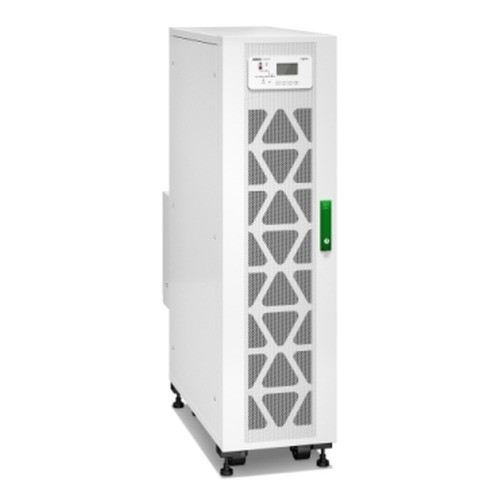
The E3SUPS10KFBS is a tower-format unit with a metal housing rated IP20, operating across 0–40 °C and 0–95 % relative humidity (non-condensing assumed). Storage range extends down to -15 °C. Its maximum output current is documented at 31 A. The unit is described as configured for internal batteries, implying an expandable or self-contained battery architecture within the tower chassis.
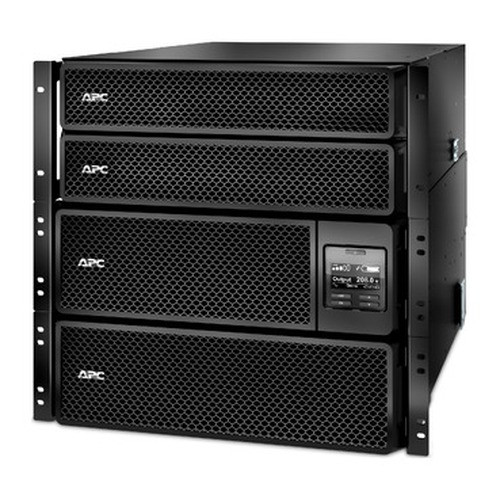
The SRT10KRMXLT-10KTF is a rackmount unit, which suits data-center or equipment-rack deployments. Its specifications include web-based management, audible alarms, and Emergency Power Off (EPO) capability—features critical for remote monitoring and safe shutdown in staffed or automated facilities. The noise level is documented at 55 dB. IP rating, operating temperature range, and maximum output current are not provided in the available SRT specifications, limiting direct environmental comparison.
Which should you choose: the E3SUPS10KFBS or the SRT10KRMXLT-10KTF?
Our take: The SRT10KRMXLT-10KTF is the stronger choice when power quality assurance, voltage flexibility, and remote management are primary requirements. Its double-conversion online topology with documented 2% output THD and a 3:1 crest factor delivers cleaner power than can be confirmed for the E3SUPS10KFBS, whose topology and waveform specs are absent. Its 100–275 V input window dwarfs the E3SUPS10KFBS's 208–220 V range, providing substantially greater resilience against utility voltage instability. The bundled step-down transformer and web-based management with EPO add operational capabilities not documented for the E3SUPS10KFBS. Conversely, the E3SUPS10KFBS—with its IP20-rated metal tower enclosure and defined environmental envelope of 0–40 °C / 0–95 % RH—may suit facilities requiring a floor-standing unit with explicit ingress-protection documentation. Buyers operating rackmount environments with sensitive loads and variable utility power should favor the SRT10KRMXLT-10KTF; those needing a tower form factor with clear environmental ratings should consider the E3SUPS10KFBS, pending topology confirmation from APC.
Side-by-Side Comparison
Spec-for-spec, from manufacturer data.
| Specification | APC by Schneider Electric E3SUPS10KFBS | APC by Schneider Electric SRT10KRMXLT-10KTF |
|---|---|---|
| Output Power Capacity | 10 kVA | 10 kVA |
| Output Power | 10,000 W | 10,000 W |
| UPS Topology | — | Double-conversion (Online) |
| Output Waveform | — | Sine |
| Output Voltage THD | — | 2% |
| Crest Factor | — | 3:1 |
| Input Voltage Range | 208–220 V | 100–275 V |
| Input Frequency Range | 50/60 Hz | 40–70 Hz |
| Output Voltage Range | 208–220 V | 120–240 V |
| Output Frequency | 50/60 Hz | 50/60 Hz |
| Maximum Output Current | 31 A | — |
| Surge Energy Rating | — | 480 J |
| Form Factor | Tower | Rackmount |
| Housing Material | Metal | — |
| IP Rating | IP20 | — |
| Operating Temperature | 0–40 °C | — |
| Operating Humidity | 0–95% | — |
| Noise Level | — | 55 dB |
| Emergency Power Off (EPO) | — | Yes |
| Web-Based Management | — | Yes |
| Audible Alarm | — | Yes |
| Step-Down Transformer Included | — | Yes (208/240 V to 120 V) |
| Battery Voltage | 120 V | — |
| Product Colour | White | — |
Frequently Asked Questions
Which should you choose: the E3SUPS10KFBS or the SRT10KRMXLT-10KTF?
The SRT10KRMXLT-10KTF is the stronger choice when power quality assurance, voltage flexibility, and remote management are primary requirements. Its double-conversion online topology with documented 2% output THD and a 3:1 crest factor delivers cleaner power than can be confirmed for the E3SUPS10KFBS, whose topology and waveform specs are absent. Its 100–275 V input window dwarfs the E3SUPS10KFBS's 208–220 V range, providing substantially greater resilience against utility voltage instability. The bundled step-down transformer and web-based management with EPO add operational capabilities not documented for the E3SUPS10KFBS. Conversely, the E3SUPS10KFBS—with its IP20-rated metal tower enclosure and defined environmental envelope of 0–40 °C / 0–95 % RH—may suit facilities requiring a floor-standing unit with explicit ingress-protection documentation. Buyers operating rackmount environments with sensitive loads and variable utility power should favor the SRT10KRMXLT-10KTF; those needing a tower form factor with clear environmental ratings should consider the E3SUPS10KFBS, pending topology confirmation from APC.
Is the E3SUPS10KFBS or SRT10KRMXLT-10KTF better for a data center rack environment?
The SRT10KRMXLT-10KTF is the rackmount unit and includes web-based management and Emergency Power Off (EPO), which are standard expectations in data center deployments. The E3SUPS10KFBS is a tower-format unit; its specifications do not document rackmount capability, web management, or EPO. For rack installations, the SRT10KRMXLT-10KTF is the spec-documented choice.
Which unit handles a wider range of input voltages, and why does that matter?
The SRT10KRMXLT-10KTF accepts input voltages from 100 V to 275 V across a 40–70 Hz frequency range, making it suitable for facilities with inconsistent utility power or international equipment mixes. The E3SUPS10KFBS specifies a 208–220 V input range at 50/60 Hz. Sites with stable, regulated 208–220 V utility feeds will find the E3SUPS10KFBS adequate; sites with variable or wide-swing utility power will benefit from the SRT's broader tolerance.
Does either UPS document its output power quality, such as waveform type or harmonic distortion?
Yes—but only the SRT10KRMXLT-10KTF. Its specifications state a pure sine-wave output, 2% total harmonic distortion (THD), and a double-conversion online topology. The E3SUPS10KFBS specifications provided do not include topology, waveform type, or THD figures. Buyers powering equipment with strict power-quality requirements (servers, medical devices, precision instruments) should verify these parameters with APC directly for the E3SUPS10KFBS before specifying it.
More UPS Comparisons
- APC by Schneider Electric SRTL10KRM4UT-5KTF2 vs Panduit U10N32V
- APC by Schneider Electric SRTL10KRM4UT-5KTF2 vs Panduit U10N11V
- APC by Schneider Electric SRTL10KRM4UT-5KTF2 vs Panduit U10N12V
- APC by Schneider Electric SRTL10KRM4UT-5KTF2 vs Vertiv GXT5-10KHVRT5UXLN
- APC by Schneider Electric SRTL10KRM4UT-5KTF2 vs APC by Schneider Electric E3SUPS10KFBS
- APC by Schneider Electric SRTL10KRM4UT-5KTF2 vs APC by Schneider Electric SRT10KRMXLT-10KTF
UPS Buying Guides
Get a Second Opinion on Your Camera Choice
Share your site layout, coverage goals, and budget. Our team will validate the camera selection, flag anything we would change, and recommend products that match the use case.