
APC by Schneider Electric BX1350M vs Vertiv PSA6-1350LVT: Specification Comparison
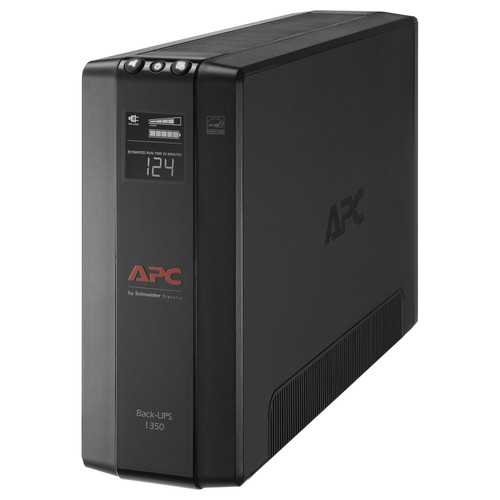
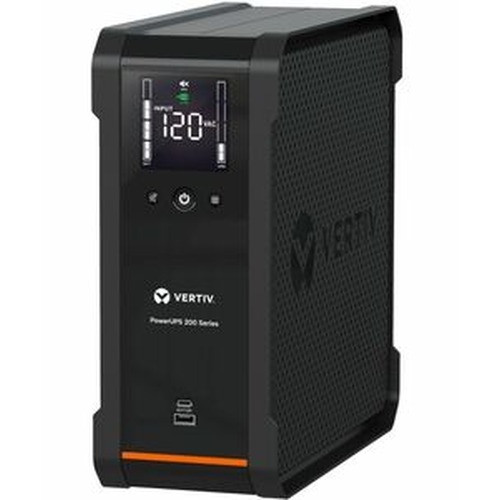
The APC BX1350M and Vertiv PSA6-1350LVT are both 1350VA line-interactive tower UPS units designed for 120V North American installations serving desktop workstations, small network equipment, and point-of-sale or light AV loads. The APC unit is rated at 810W output while Vertiv specifies 850W, placing them in the same power tier. Key differentiators center on power quality, port connectivity, runtime data availability, and warranty terms — the dimensions examined below.
In This Guide
- How do the two units compare on real power output, efficiency, and input voltage tolerance?
- What surge protection, outlet configuration, and network monitoring capabilities does each unit provide?
- How do battery specifications and warranty coverage differ between the two units?
- Which should you choose: the BX1350M or the PSA6-1350LVT?
- Side-by-Side Specs
- FAQ
How do the two units compare on real power output, efficiency, and input voltage tolerance?
The APC BX1350M is rated at 810W (60% power factor) from its 1350VA capacity. Vertiv specifies 850W from the same 1350VA, a marginal 40W advantage. Both units operate at 120VAC output.
APC publishes an explicit input operating window of 88V–139V, giving installers a concrete 51V swing to work with when assessing suitability for sites with known voltage sag or swell. Vertiv lists input voltage only as '120 VAC' with no stated tolerance band in the provided specifications — buyers cannot determine from the published data whether the Vertiv unit matches, exceeds, or falls short of APC's range without consulting the full datasheet.
APC specifies a stepped sine-wave output waveform. Vertiv does not state output waveform type in the provided specifications, which matters for active-PFC power supplies common in modern servers and workstations — such loads can behave erratically on simulated or stepped waveforms during battery transfer.
What surge protection, outlet configuration, and network monitoring capabilities does each unit provide?
APC lists a surge energy rating of 789 joules and specifies NEMA 5-15R receptacles (count stated as 5 in the product title). Vertiv provides no surge energy rating in the supplied specifications, and outlet count or type is not explicitly listed beyond the 120V output voltage — buyers cannot compare joule ratings or confirm outlet quantity from the data provided.
For network monitoring, APC includes one RJ-45 Ethernet port with 10/100/1000Base-T(X) support, enabling integration with network management systems for remote monitoring, load shedding, and graceful shutdown scripting. Vertiv's provided specifications contain no mention of a network management interface, serial port, USB connectivity, or SNMP capability — this is a significant functional gap for IT-managed environments if the omission reflects the product rather than incomplete documentation.
APC specifies three distinct audible alarm modes: on-battery alert, low-battery alert, and overload alert. Vertiv's provided specifications do not describe alarm behavior.
How do battery specifications and warranty coverage differ between the two units?
APC identifies the battery chemistry as Sealed Lead Acid (VRLA) and specifies a recharge time of 16 hours. No runtime curves or runtime-at-load figures are present in the provided specifications for either unit, so direct runtime comparison cannot be made from available data.
Vertiv provides a 3-year full-unit warranty including the battery, with advance replacement. This is a notably strong warranty for a UPS at this price tier — most competitors cover batteries separately or on a shorter cycle. APC's warranty terms are not stated in the provided specifications; buyers should verify APC's standard warranty independently before making a total-cost-of-ownership comparison.
Vertiv publishes physical dimensions (11.42 × 4.72 × 16.93 in, H×W×D) and weight (25.8 lbs), enabling rack-space and weight-budget planning. APC provides no dimensional or weight data in the supplied specifications.
Which should you choose: the BX1350M or the PSA6-1350LVT?
Our take: The BX1350M is the stronger choice when network manageability, input voltage tolerance visibility, and surge protection documentation are decision criteria. APC publishes a concrete 88–139V input window, a 789J surge rating, three alarm modes, and a 1Gb Ethernet management port — data points Vertiv does not provide in the supplied specifications, leaving critical gaps for IT procurement. However, the PSA6-1350LVT counters with a 3-year full-unit warranty including battery and advance replacement, versus APC's unstated warranty, and a marginally higher 850W output versus APC's 810W. Physical dimensions and weight are only available for the Vertiv unit. Buyers deploying in managed IT environments where remote shutdown and SNMP visibility matter should weight APC's network port heavily; buyers prioritizing warranty coverage and lower long-term battery replacement cost should examine Vertiv's 3-year battery-inclusive terms closely before deciding.
Side-by-Side Comparison
Spec-for-spec, from manufacturer data.
| Specification | APC by Schneider Electric BX1350M | Vertiv PSA6-1350LVT |
|---|---|---|
| UPS Topology | Line-Interactive | Line-Interactive (implied) |
| Capacity (VA) | 1,350 VA | 1,350 VA |
| Output Power (W) | 810 W | 850 W |
| Output Waveform | Sine | — |
| Input Voltage Range | 88–139 V | — |
| Input Frequency | 60 Hz | — |
| Output Voltage | 120 V | 120 VAC |
| Surge Energy Rating | 789 J | — |
| AC Outlet Type | NEMA 5-15R | — |
| Network Interface | 1× RJ-45 (10/100/1000Base-T) | — |
| Audible Alarms | On battery / Low battery / Overload | — |
| Battery Technology | Sealed Lead Acid (VRLA) | — |
| Battery Recharge Time | 16 h | — |
| Dimensions (H×W×D in) | — | 11.42 × 4.72 × 16.93 |
| Weight | — | 25.8 lbs |
| Warranty | — | 3-year full unit incl. battery, advance replacement |
Frequently Asked Questions
Which should you choose: the BX1350M or the PSA6-1350LVT?
The BX1350M is the stronger choice when network manageability, input voltage tolerance visibility, and surge protection documentation are decision criteria. APC publishes a concrete 88–139V input window, a 789J surge rating, three alarm modes, and a 1Gb Ethernet management port — data points Vertiv does not provide in the supplied specifications, leaving critical gaps for IT procurement. However, the PSA6-1350LVT counters with a 3-year full-unit warranty including battery and advance replacement, versus APC's unstated warranty, and a marginally higher 850W output versus APC's 810W. Physical dimensions and weight are only available for the Vertiv unit. Buyers deploying in managed IT environments where remote shutdown and SNMP visibility matter should weight APC's network port heavily; buyers prioritizing warranty coverage and lower long-term battery replacement cost should examine Vertiv's 3-year battery-inclusive terms closely before deciding.
Can I monitor either of these UPS units remotely over the network?
The APC BX1350M includes a built-in RJ-45 Ethernet port with 10/100/1000Base-T(X) connectivity, which supports network-based monitoring and management. The Vertiv PSA6-1350LVT's provided specifications contain no mention of a network management interface, USB, or serial port — if remote monitoring is a requirement, verify Vertiv's connectivity options directly with the manufacturer or datasheet before purchasing.
Which unit has the better warranty, and does it cover the battery?
Based on the provided specifications, Vertiv PSA6-1350LVT carries a 3-year full-unit warranty that explicitly includes the battery with advance replacement — a strong, clearly stated commitment. APC BX1350M warranty terms are not included in the supplied specifications, so a direct comparison cannot be made from available data; check APC's published warranty documentation separately.
Will either unit handle voltage sags and swells without switching to battery unnecessarily?
The APC BX1350M publishes an explicit input operating range of 88V to 139V, meaning it will regulate through a 51V swing using AVR (automatic voltage regulation) before transferring to battery. The Vertiv PSA6-1350LVT lists input voltage as '120 VAC' without a stated tolerance window in the provided specifications — its AVR range cannot be confirmed from available data and should be verified against Vertiv's full product datasheet before deployment at sites with known power quality issues.
More UPS Comparisons
- APC by Schneider Electric BN1350M2-CA vs CyberPower CP1350PFCLCD
- APC by Schneider Electric BN1350M2-CA vs Vertiv PSA6-1350LVT
- APC by Schneider Electric BN1350M2-CA vs APC by Schneider Electric BN1350M2
- APC by Schneider Electric BN1350M2-CA vs APC by Schneider Electric BR1350MS
- CyberPower CP1350PFCLCD vs APC by Schneider Electric BN1350M2
- CyberPower CP1350PFCLCD vs APC by Schneider Electric BR1350MS
UPS Buying Guides
Get a Second Opinion on Your Camera Choice
Share your site layout, coverage goals, and budget. Our team will validate the camera selection, flag anything we would change, and recommend products that match the use case.