
APC by Schneider Electric BR1500MS2 vs CyberPower PR1500LCD: Specification Comparison
Both the APC BR1500MS2 and CyberPower PR1500LCD are 1500 VA line-interactive, sine-wave tower UPS units designed for desktop workstations, network closets, and sensitive electronics requiring clean power. This comparison evaluates the three dimensions that most directly drive purchasing decisions in this class: power capacity and output quality, runtime and battery characteristics, and connectivity plus management features. Pricing is not addressed here; all claims are derived strictly from the manufacturer specifications provided.
In This Guide
Which UPS delivers more usable power and cleaner output under load?
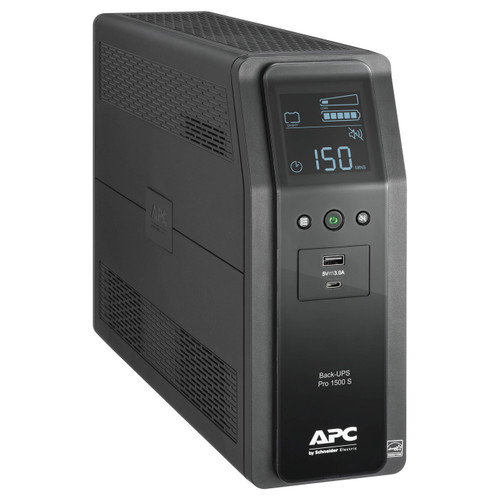
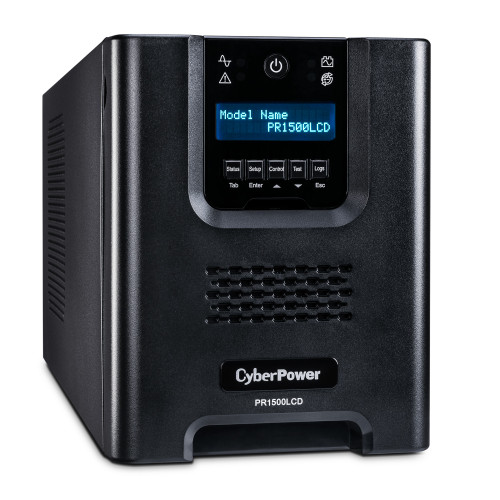
The CyberPower PR1500LCD is rated at 1500 VA / 1500 W, yielding a power factor of 1.0. The APC BR1500MS2 is rated at 1500 VA but only 900 W, giving a power factor of 0.6. For loads that approach or exceed 900 W — such as high-end workstations or multiple servers — the PR1500LCD supports 67% more real watt capacity before clipping.
Both units output a true/pure sine wave at 120 VAC, making them suitable for Active PFC power supplies. The PR1500LCD explicitly lists Active PFC compatibility and specifies output voltage regulation at ±5%. The BR1500MS2 does not state an output voltage regulation tolerance in the provided specs. The PR1500LCD also includes Automatic Voltage Regulation (AVR); the BR1500MS2 spec does not explicitly call out AVR as a named feature.
On surge protection, the BR1500MS2 specifies a 1080 J surge energy rating with full-time multi-pole noise filtering described as 5% of IEEE surge let-through and zero clamping response time. The PR1500LCD lists EMI/RFI filtration but does not state a joule rating in the provided specs.
How long will each UPS keep equipment running, and how manageable is the battery?
The CyberPower PR1500LCD provides published runtime figures: 4.7 minutes at full 1500 W load and 15.1 minutes at half load (750 W). The APC BR1500MS2 does not include runtime figures in the provided specifications, making a direct runtime comparison impossible from these specs alone.
Battery configuration differs significantly. The PR1500LCD uses two 12V/17Ah sealed lead-acid batteries (total 408 Wh theoretical), supports hot-swappable battery replacement without powering down, and carries a 3-year warranty. The BR1500MS2 uses a single lead-acid battery module with a published design life of 3–5 years, a recharge time of 16 hours, and a battery charge power draw of 16 W. Hot-swap capability is not stated for the BR1500MS2.
The BR1500MS2 lists one RBC (replacement battery cartridge) quantity and ships with one included battery module. The PR1500LCD's hot-swap feature is operationally significant for 24/7 environments where downtime for battery service is unacceptable.
What monitoring, communication, and outlet options does each unit provide?
The CyberPower PR1500LCD offers USB, serial, and SNMP connectivity, enabling integration with network management systems and remote monitoring. The APC BR1500MS2 provides USB connectivity only; serial and SNMP are not listed in the provided specs. For IT environments requiring SNMP-based power management or integration with a NMS, the PR1500LCD has a clear connectivity advantage.
On outlets, the PR1500LCD provides 8 × NEMA 5-15R receptacles, all battery and surge protected. The BR1500MS2 provides 6 NEMA 5-15R battery-backed outlets plus 4 NEMA 5-15R surge-only outlets, for 10 total — more total receptacles, but fewer battery-backed ones. Neither unit lists individually controllable outlet groups in the provided specs.
The BR1500MS2 includes coaxial cable data-line protection (CATV/SATV/modem/audio-video) and ships with a coaxial cable and USB cable, reflecting its 'Gaming performance' sub-family positioning. The PR1500LCD includes a 3-year limited warranty and a $375,000 connected equipment guarantee; the BR1500MS2's warranty terms and equipment guarantee are not stated in the provided specs. The PR1500LCD carries UL1778, cUL 107.3, FCC DOC Class A, Energy Star, and RoHS certifications; the BR1500MS2's certifications are not listed in the provided specs.
Which should you choose: the BR1500MS2 or the PR1500LCD?
Our take: The PR1500LCD is the stronger choice when real watt capacity, published runtime data, hot-swap battery service, and network management integration are the primary requirements. Its 1500 W real power rating is 67% higher than the BR1500MS2's 900 W ceiling — a decisive delta for workstation and rack-edge loads. It also publishes runtime (4.7 min at full load, 15.1 min at half), supports SNMP alongside USB and serial, and offers hot-swappable batteries, none of which are confirmed in the BR1500MS2 spec sheet. The BR1500MS2 is more suitable for desktop and home-office/gaming contexts where coaxial data-line protection, a higher total outlet count (10 vs 8), and a known 1080 J surge rating matter more than watt headroom or remote management. Buyers in IT closets or light-commercial installs requiring ≥ 900 W load support or SNMP monitoring should select the PR1500LCD; those needing AV/coax protection and a familiar APC ecosystem at sub-900 W loads may prefer the BR1500MS2.
Side-by-Side Comparison
Spec-for-spec, from manufacturer data.
| Specification | APC by Schneider Electric BR1500MS2 | CyberPower PR1500LCD |
|---|---|---|
| Capacity (VA) | 1500 VA | 1500 VA |
| Capacity (Watts) | 900 W | 1500 W |
| Power Factor | 0.60 | 1.00 |
| UPS Topology | Line Interactive | Line Interactive |
| Output Waveform | Sine Wave | True Sine Wave |
| Input Voltage Range | 88–147 V (from efficiency field) | 78–149 VAC |
| Transfer Time | 8 ms typical / 10 ms max | < 4 ms |
| Battery Type | Sealed Lead-Acid, 1 module | Sealed Lead-Acid, 2 × 12V/17Ah |
| Hot-Swap Battery | — | Yes |
| Battery Recharge Time | 16 hours | — |
| Runtime at Full Load | — | 4.7 min at 1500 W |
| Runtime at Half Load | — | 15.1 min at 750 W |
| Battery-Backed Outlets | 6 × NEMA 5-15R | 8 × NEMA 5-15R |
| Surge-Only Outlets | 4 × NEMA 5-15R | — |
| Surge Energy Rating | 1080 J | — |
| Connectivity | USB | USB / Serial / SNMP |
| AVR | — | Yes |
| Data Line Protection | Coaxial (CATV/SATV/modem/AV) | — |
| Display | Multi-function LCD | Extendable Multifunction LCD |
| Weight | 27.6 lb (12.5 kg) | 54 lb |
| Operating Temperature | — | 32–104 °F (0–40 °C) |
| Acoustic Level | 45 dBA | — |
| Connected Equipment Guarantee | — | $375,000 |
| Warranty | — | 3 Year Limited |
| Certifications | — | UL1778, cUL, FCC Class A, Energy Star, RoHS |
Frequently Asked Questions
Which should you choose: the BR1500MS2 or the PR1500LCD?
The PR1500LCD is the stronger choice when real watt capacity, published runtime data, hot-swap battery service, and network management integration are the primary requirements. Its 1500 W real power rating is 67% higher than the BR1500MS2's 900 W ceiling — a decisive delta for workstation and rack-edge loads. It also publishes runtime (4.7 min at full load, 15.1 min at half), supports SNMP alongside USB and serial, and offers hot-swappable batteries, none of which are confirmed in the BR1500MS2 spec sheet. The BR1500MS2 is more suitable for desktop and home-office/gaming contexts where coaxial data-line protection, a higher total outlet count (10 vs 8), and a known 1080 J surge rating matter more than watt headroom or remote management. Buyers in IT closets or light-commercial installs requiring ≥ 900 W load support or SNMP monitoring should select the PR1500LCD; those needing AV/coax protection and a familiar APC ecosystem at sub-900 W loads may prefer the BR1500MS2.
Can the PR1500LCD or BR1500MS2 support a high-end gaming PC or workstation that draws close to 900 W?
The PR1500LCD is rated for 1500 W of real power, so it can support loads up to 1500 W. The BR1500MS2 is rated for 900 W maximum despite its 1500 VA nameplate; loads above 900 W would exceed its capacity. For a system drawing near or above 900 W, the PR1500LCD is the spec-supported choice.
Which UPS is easier to service in a 24/7 environment where I cannot afford downtime for battery replacement?
The PR1500LCD explicitly supports hot-swappable battery replacement, meaning batteries can be changed without shutting down connected equipment. The BR1500MS2 spec does not mention hot-swap capability. For always-on environments, the PR1500LCD's hot-swap feature is the relevant differentiator based on available specs.
Does either UPS integrate with network management systems (NMS) or support SNMP monitoring?
The PR1500LCD lists USB, serial, and SNMP connectivity, enabling integration with NMS platforms and remote power monitoring. The BR1500MS2 lists USB only; SNMP and serial are not referenced in its provided specifications. IT buyers requiring SNMP-based monitoring should note this distinction.
More UPS Comparisons
- APC by Schneider Electric SMX1500RMI2U vs CyberPower PRL1500RT2UC
- APC by Schneider Electric SMX1500RMI2U vs CyberPower BRG1500AVRLCD2
- APC by Schneider Electric SMX1500RMI2U vs CyberPower PR1500LCD
- APC by Schneider Electric SMX1500RMI2U vs APC by Schneider Electric BR1500MS2
- APC by Schneider Electric SMX1500RMI2U vs APC by Schneider Electric SMTL1500RM3UCUS
- CyberPower PRL1500RT2UC vs APC by Schneider Electric BR1500MS2
UPS Buying Guides
Get a Second Opinion on Your Camera Choice
Share your site layout, coverage goals, and budget. Our team will validate the camera selection, flag anything we would change, and recommend products that match the use case.