
APC by Schneider Electric BR1500MS2 vs APC by Schneider Electric SMTL1500RM3UCUS: Specification Comparison
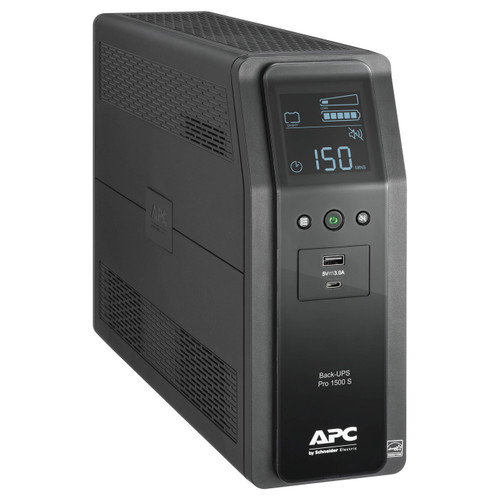
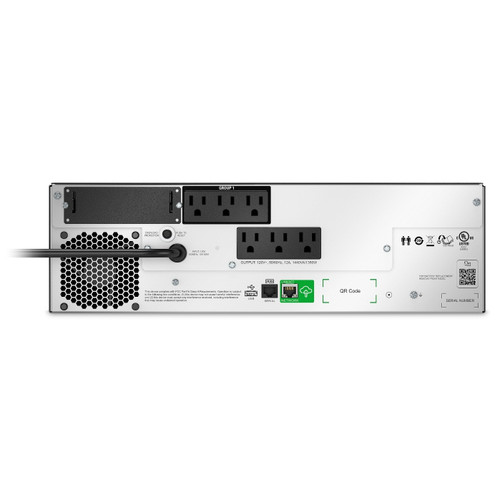
Both units are 1500VA uninterruptible power supplies from APC by Schneider Electric, making them directly cross-shoppable for anyone sizing backup power for small server rooms, networking closets, or workstation protection. The BR1500MS2 is a tower-form, consumer-leaning line-interactive UPS with lead-acid chemistry, while the SMTL1500RM3UCUS is a rack-mount, enterprise-grade Smart-UPS with lithium-ion chemistry and SmartConnect cloud management. The comparison turns on battery technology, form factor, runtime recharge speed, and management depth.
In This Guide
- How do the power capacity and output quality compare between the BR1500MS2 and SMTL1500RM3UCUS?
- Which unit wins on battery technology, recharge time, and expected service life?
- How do the form factor, installation environment, and management interfaces differ?
- Which should you choose: the BR1500MS2 or the SMTL1500RM3UCUS?
- Side-by-Side Specs
- FAQ
How do the power capacity and output quality compare between the BR1500MS2 and SMTL1500RM3UCUS?
Both units share a 1500VA nameplate rating and produce a true sine wave output, making either safe for active PFC power supplies. However, their usable wattage diverges: the BR1500MS2 is rated at 900 W (60% power factor), while the SMTL1500RM3UCUS is rated at 1,350 W — a 50% increase in real power delivery. Buyers running high-wattage servers or dense PoE switch stacks will reach the BR1500MS2 ceiling much sooner.
On output quality, the SMTL1500RM3UCUS specifies output voltage distortion of less than 5% THD. The BR1500MS2 does not list a THD figure in the provided specs. The SMTL1500RM3UCUS also supports both 50 Hz and 60 Hz input (auto-sensing), whereas the BR1500MS2 is specified only at 60 Hz — relevant for deployments in regions with mixed or variable grid standards.
Surge protection favors the BR1500MS2 at 1,080 J versus 680 J for the SMTL1500RM3UCUS, and the BR1500MS2 includes coaxial/CATV data-line protection not listed for the SMTL1500RM3UCUS. The SMTL1500RM3UCUS achieves 0.3% IEEE surge let-through versus 5% for the BR1500MS2, meaning what surges do pass through are smaller on the rack unit.
Which unit wins on battery technology, recharge time, and expected service life?
This is the sharpest differentiator. The BR1500MS2 uses a sealed lead-acid battery with a design life of 3–5 years and a typical recharge time of 16 hours. The SMTL1500RM3UCUS uses lithium-ion chemistry with an expected battery life of 5–10 years and a typical recharge time of just 2 hours — eight times faster. For sites that experience multiple outages in a day or week, the lead-acid unit may not recover between events.
Battery charge power illustrates the gap further: the SMTL1500RM3UCUS dedicates 154 W to recharging versus only 16 W on the BR1500MS2. The SMTL1500RM3UCUS also specifies a 310 Wh battery capacity figure; the BR1500MS2 does not provide this figure in the supplied specs. Actual runtime at load is not listed for either model in the provided specifications.
From a total-cost-of-ownership standpoint, lithium-ion batteries typically require fewer replacement cycles over a 10-year deployment horizon. The BR1500MS2 lists one included RBC (replacement battery cartridge), which will need replacement roughly every 3–5 years. The SMTL1500RM3UCUS's longer chemistry life reduces planned maintenance touchpoints, though replacement battery cost is not provided in the specs.
How do the form factor, installation environment, and management interfaces differ?
Form factor is a binary decision point. The BR1500MS2 is a standalone tower unit (10.24 in dimension listed; full rack dimensions not provided) weighing 27.6 lb. The SMTL1500RM3UCUS is a rack-mount unit — 3U short-depth at 11.89 in deep, 17.25 in wide, and 5.14 in tall — weighing 43 lb and shipping with rack mounting rails included. It is TAA-compliant, relevant for U.S. federal and government procurement.
Management interfaces differ substantially. The SMTL1500RM3UCUS provides RJ-45 Serial, a Smart-Slot expansion bay, and USB, enabling network management card installation for SNMP/web-based monitoring and SmartConnect cloud connectivity. The BR1500MS2 offers USB connectivity only; no network management port or expansion slot is listed in the provided specs.
Environmental ratings also diverge. The SMTL1500RM3UCUS carries an IP20 rating and is approved under UL 1778, UL 1973, CSA C22.2 No. 107.3, FCC Part 15 Class A, and NOM, and is both RoHS and Battery Directive compliant — a full compliance dossier. The BR1500MS2 lists no IP rating and no approval certifications in the provided specs. Operating altitude is 0–3,000 ft for the BR1500MS2 versus 0–10,000 ft for the SMTL1500RM3UCUS, a meaningful difference for high-elevation data centers.
Which should you choose: the BR1500MS2 or the SMTL1500RM3UCUS?
Our take: The SMTL1500RM3UCUS is the stronger choice when the installation is a rack-mount environment, requires managed network monitoring, or cannot tolerate long battery recharge windows. Its 1,350 W output rating outperforms the BR1500MS2's 900 W ceiling by 50%, its lithium-ion battery recharges in 2 hours versus 16 hours for the BR1500MS2's lead-acid pack, and its 5–10 year expected battery life versus 3–5 years reduces planned maintenance cycles. The BR1500MS2, conversely, is the appropriate selection for a desktop or tower deployment where rack space is unavailable, where coaxial/CATV surge protection is needed (1,080 J surge rating versus 680 J), or where budget is the primary constraint and managed monitoring is unnecessary. Neither model's runtime-at-load figures are provided in the supplied specifications, so runtime comparisons require consulting APC's published runtime curves at the buyer's actual load.
Side-by-Side Comparison
Spec-for-spec, from manufacturer data.
| Specification | APC by Schneider Electric BR1500MS2 | APC by Schneider Electric SMTL1500RM3UCUS |
|---|---|---|
| VA Rating | 1500 VA | 1500 VA |
| Watt Rating | 900 W | 1350 W |
| UPS Topology | Line Interactive | Not specified in provided specs |
| Wave Type | Sine wave | Sine wave |
| Battery Chemistry | Lead-Acid | Lithium-Ion |
| Typical Recharge Time | 16 hours | 2 hours |
| Expected Battery Life | 3–5 years | 5–10 years |
| Battery Charge Power | 16 W | 154 W |
| Battery Volt-Amp-Hour Capacity | — | 310 Wh |
| Transfer Time | 8 ms typical / 10 ms max | 6 ms typical / 10 ms max |
| Surge Energy Rating | 1080 J | 680 J |
| IEEE Surge Let-Through | 5% | 0.3% |
| Input Frequency | 60 Hz ±3 Hz | 50/60 Hz ±3 Hz (auto-sensing) |
| Input Connection | NEMA 5-15P | Not specified in provided specs |
| Management Interfaces | USB | RJ-45 Serial, Smart-Slot, USB |
| Form Factor / Rack Mount | Tower | 3U Rack-Mount (rails included) |
| Operating Altitude | 0–3,000 ft | 0–10,000 ft |
| Weight | 27.6 lb (12.5 kg) | 43 lb (19.5 kg) |
| IP Rating | — | IP20 |
| TAA Compliant | — | Yes |
| Coaxial/CATV Protection | Yes | — |
| Regulatory Approvals | — | UL 1778, UL 1973, CSA C22.2 No. 107.3, FCC Part 15 Class A, NOM |
| RoHS Compliant | — | Yes |
Frequently Asked Questions
Which should you choose: the BR1500MS2 or the SMTL1500RM3UCUS?
The SMTL1500RM3UCUS is the stronger choice when the installation is a rack-mount environment, requires managed network monitoring, or cannot tolerate long battery recharge windows. Its 1,350 W output rating outperforms the BR1500MS2's 900 W ceiling by 50%, its lithium-ion battery recharges in 2 hours versus 16 hours for the BR1500MS2's lead-acid pack, and its 5–10 year expected battery life versus 3–5 years reduces planned maintenance cycles. The BR1500MS2, conversely, is the appropriate selection for a desktop or tower deployment where rack space is unavailable, where coaxial/CATV surge protection is needed (1,080 J surge rating versus 680 J), or where budget is the primary constraint and managed monitoring is unnecessary. Neither model's runtime-at-load figures are provided in the supplied specifications, so runtime comparisons require consulting APC's published runtime curves at the buyer's actual load.
Can the BR1500MS2 or SMTL1500RM3UCUS be monitored remotely over a network?
Only the SMTL1500RM3UCUS supports network management. It includes an RJ-45 Serial port and a Smart-Slot expansion bay, which accepts APC network management cards for SNMP and web-based monitoring, plus SmartConnect cloud connectivity. The BR1500MS2 provides a USB port only; no network interface or expansion slot is listed in its provided specifications.
Which UPS is better suited for a rack-mount server room installation?
The SMTL1500RM3UCUS is purpose-built for rack installation — it ships as a 3U short-depth (11.89 in) rack unit with mounting rails included and carries TAA compliance for government environments. The BR1500MS2 is a tower form factor; rack dimensions are not provided in its specs, making it unsuitable as a primary rack-mount solution.
How often will I need to replace the battery in each unit?
The BR1500MS2 uses a lead-acid battery with a design life of 3–5 years; one replacement battery cartridge (RBC) is included. The SMTL1500RM3UCUS uses lithium-ion chemistry with an expected battery life of 5–10 years, meaning fewer planned replacements over the same deployment horizon. Replacement battery costs for either model are not provided in the supplied specifications.
More UPS Comparisons
- APC by Schneider Electric SMX1500RMI2U vs CyberPower PRL1500RT2UC
- APC by Schneider Electric SMX1500RMI2U vs CyberPower BRG1500AVRLCD2
- APC by Schneider Electric SMX1500RMI2U vs CyberPower PR1500LCD
- APC by Schneider Electric SMX1500RMI2U vs APC by Schneider Electric BR1500MS2
- APC by Schneider Electric SMX1500RMI2U vs APC by Schneider Electric SMTL1500RM3UCUS
- CyberPower PRL1500RT2UC vs APC by Schneider Electric BR1500MS2
UPS Buying Guides
Get a Second Opinion on Your Camera Choice
Share your site layout, coverage goals, and budget. Our team will validate the camera selection, flag anything we would change, and recommend products that match the use case.