
Altronix NETWAY4EBTB vs Vivotek GET-083A-120: Specification Comparison
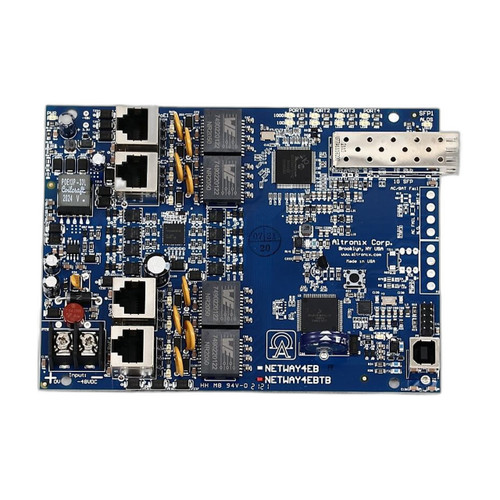
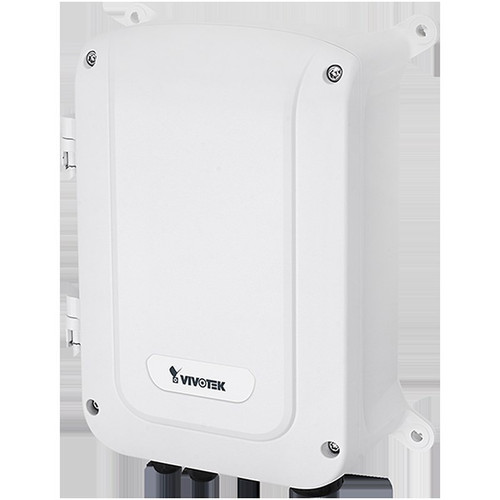
Both products are 4-port Gigabit PoE managed switches intended for IP surveillance and network edge deployments. The Altronix NETWAY4EBTB is a board-form DC-input switch designed for cabinet integration with a single-mode fiber SFP uplink and 802.3bt (PoE++) capability, while the Vivotek AW-GET-083A-120 is an IP67/IK10-rated outdoor enclosure switch with AC mains input, dual SFP slots, and additional RJ45 uplink ports. A buyer selecting between them is choosing between high-wattage indoor/cabinet deployment and ruggedized outdoor field installation.
In This Guide
- Which switch delivers more PoE power, and what device types can each port support?
- Which switch is built for outdoor or harsh-environment installation, and what physical protections does each carry?
- Which switch offers more uplink flexibility and network throughput, and what management or supervision features are specified?
- Which should you choose: the NETWAY4EBTB or the GET-083A-120?
- Side-by-Side Specs
- FAQ
Which switch delivers more PoE power, and what device types can each port support?
The NETWAY4EBTB provides a total PoE budget of 240W across four ports, with a per-port maximum of 90W under the IEEE 802.3bt (PoE++) standard. This allows it to power demanding devices such as multi-sensor pan-tilt cameras, high-power access control panels, or third-party powered equipment that requires 4-pair delivery. The 802.3bt classification means it can negotiate Type 3 (60W) or Type 4 (90W) allocations per port.
The AW-GET-083A-120 provides a total PoE budget of 120W across its four PoE ports, with a per-port maximum of 30W under IEEE 802.3af/at (PoE+). This is sufficient for the majority of IP cameras, access readers, and VoIP endpoints, but will not power 802.3bt-class devices. Per-port surge protection of 6 KV and 40 KV AC-input surge protection are specified, which the NETWAY4EBTB datasheet does not address.
For deployments mixing high-wattage endpoints — pan-tilt-zoom cameras with heaters, multi-imager units, or dual-radio wireless APs — the NETWAY4EBTB's 240W / 90W-per-port envelope is the deciding differentiator. Where standard 30W devices are universal, the Vivotek's 120W budget is adequate for four simultaneous fully-loaded PoE+ ports.
Which switch is built for outdoor or harsh-environment installation, and what physical protections does each carry?
The AW-GET-083A-120 is rated IP67 (dust-tight, immersion-resistant) and IK10 (vandal-resistant to 20-joule impacts). Its operating temperature range is -40°C to +65°C (-40°F to +149°F) and it carries vibration (IEC 60068-2-6), shock (IEC 60068-2-27), and freefall (IEC 60068-2-32) certifications. The enclosure accepts M16 and M25 cable glands and supports wall, pole, corner, and rack mounting. Housing is specified as white. Humidity tolerance is 10–90% non-condensing.
The NETWAY4EBTB is specified as a 'Switch Board' in board form factor, dimensioned at 6.25" × 4.5" × 1.25", and listed for rack mount. Its storage temperature is -30°C to 85°C (-22°F to 185°F); no operating temperature range, no IP rating, and no IK rating are present in the provided specifications. It is intended for protected indoor environments — enclosures, PDU bays, or rack cabinets.
For any installation exposed to weather, moisture, condensation, direct sunlight, or physical tampering — pole-mount camera clusters, parking structures, building exteriors, or remote utility enclosures — the AW-GET-083A-120 is the only specified option between the two. The NETWAY4EBTB's board form factor and absence of environmental ratings preclude outdoor deployment without a third-party enclosure.
Which switch offers more uplink flexibility and network throughput, and what management or supervision features are specified?
The AW-GET-083A-120 specifies a switching bandwidth of 16 Gbps and a forwarding capacity of 11.904 Mpps, with an 8K MAC table and support for 9,216-byte jumbo frames. It provides two 1G SFP slots and two additional 10/100/1G RJ45 uplink ports, enabling simultaneous fiber and copper uplink paths or redundant backbone connections. Auto-MDI/MDI-X and auto-negotiation are confirmed supported. No management software or SNMP capability is referenced in the provided specifications.
The NETWAY4EBTB specifies a single single-mode fiber SFP uplink. Switching bandwidth, forwarding capacity, MAC table size, and jumbo frame support are not stated in the provided specifications. It lists LINQ compatibility under 'Supervision,' which is Altronix's proprietary remote monitoring protocol for power and PoE management within the Altronix ecosystem. No additional uplink copper ports are specified.
For network architects requiring measurable throughput figures, dual-path uplinks, or standard metrics for network capacity planning, the AW-GET-083A-120 provides documented switching and forwarding rates. The NETWAY4EBTB's LINQ supervision is a meaningful differentiator for integrators already standardized on Altronix power infrastructure, but switching performance data is absent from the provided spec sheet. Power input also diverges significantly: the NETWAY4EBTB takes 48–56V DC (requiring an external DC supply or compatible PDU), while the AW-GET-083A-120 accepts 100–240VAC directly.
Which should you choose: the NETWAY4EBTB or the GET-083A-120?
Our take: The NETWAY4EBTB is the stronger choice when the deployment is indoors, cabinet-based, and requires high-wattage PoE++ endpoints — its 240W total budget and 90W-per-port 802.3bt rating exceed the Vivotek's 120W / 30W-per-port PoE+ ceiling by 2× on both metrics. The AW-GET-083A-120 is the correct selection for any outdoor or environmentally exposed site: it carries IP67 and IK10 ratings the NETWAY4EBTB does not specify, operates from -40°C to +65°C versus no stated operating temperature for the Altronix, and adds 6 KV per-port and 40 KV AC surge protection absent from the Altronix spec sheet. The Vivotek also provides documented switching throughput (16 Gbps / 11.904 Mpps) and dual SFP plus dual RJ45 uplink ports versus the NETWAY4EBTB's single fiber SFP. For Altronix-ecosystem integrators using LINQ-managed power infrastructure in rack or PDU environments powering high-draw cameras or access control, choose the NETWAY4EBTB. For pole-mount, exterior, or remote-site camera clusters on standard AC circuits, choose the AW-GET-083A-120.
Side-by-Side Comparison
Spec-for-spec, from manufacturer data.
| Specification | Altronix NETWAY4EBTB | Vivotek GET-083A-120 |
|---|---|---|
| Product Type | PoE Switch (Board Form Factor) | Outdoor PoE Switch (Enclosed) |
| PoE Standard | IEEE 802.3bt (PoE++) | IEEE 802.3af/at (PoE+) |
| PoE Ports | 4 | 4 |
| Max PoE per Port | 90W | 30W |
| Total PoE Budget | 240W | 120W |
| Additional Uplink Ports | — | 2x 1G RJ45 + 2x 1G SFP |
| Fiber Uplink | 1x Single-Mode SFP | 2x 1G SFP |
| Switching Bandwidth | — | 16 Gbps |
| Forwarding Capacity | — | 11.904 Mpps |
| MAC Table | — | 8K |
| Power Input | 48–56V DC | 100–240VAC / 50–60Hz |
| IP Rating | — | IP67 |
| Impact Rating | — | IK10 |
| Surge Protection (Per Port) | — | 6 KV |
| Surge Protection (AC Input) | — | 40 KV |
| Operating Temperature | — (not specified) | -40°C to +65°C |
| Storage Temperature | -30°C to 85°C | -40°C to +75°C |
| Supervision / Management | LINQ compatible | — |
| Warranty | Lifetime | 24 months |
| Dimensions | 6.25" x 4.5" x 1.25" | 315.4 x 245.8 x 118 mm |
| Mount Type | Rack | Wall / Pole / Corner / Rack |
| Environment Rating | Indoor / Cabinet | Outdoor |
| EMC Certifications | — | CE, FCC, VCCI, C-Tick Class A |
Frequently Asked Questions
Which should you choose: the NETWAY4EBTB or the GET-083A-120?
The NETWAY4EBTB is the stronger choice when the deployment is indoors, cabinet-based, and requires high-wattage PoE++ endpoints — its 240W total budget and 90W-per-port 802.3bt rating exceed the Vivotek's 120W / 30W-per-port PoE+ ceiling by 2× on both metrics. The AW-GET-083A-120 is the correct selection for any outdoor or environmentally exposed site: it carries IP67 and IK10 ratings the NETWAY4EBTB does not specify, operates from -40°C to +65°C versus no stated operating temperature for the Altronix, and adds 6 KV per-port and 40 KV AC surge protection absent from the Altronix spec sheet. The Vivotek also provides documented switching throughput (16 Gbps / 11.904 Mpps) and dual SFP plus dual RJ45 uplink ports versus the NETWAY4EBTB's single fiber SFP. For Altronix-ecosystem integrators using LINQ-managed power infrastructure in rack or PDU environments powering high-draw cameras or access control, choose the NETWAY4EBTB. For pole-mount, exterior, or remote-site camera clusters on standard AC circuits, choose the AW-GET-083A-120.
Can the NETWAY4EBTB or AW-GET-083A-120 power 802.3bt (PoE++) devices like high-wattage PTZ cameras with heaters?
Only the NETWAY4EBTB supports 802.3bt (PoE++), with up to 90W per port and a 240W total budget. The AW-GET-083A-120 is rated for IEEE 802.3af/at (PoE+) only, with a 30W per-port maximum, and will not negotiate PoE++ with Type 3 or Type 4 powered devices.
Is either switch rated for direct outdoor installation without an additional enclosure?
Yes — the AW-GET-083A-120 is rated IP67 and IK10 and supports wall, pole, corner, and rack mounting with M16/M25 cable glands for sealed conduit entry. The NETWAY4EBTB is specified as a board form factor with a rack mount listing and carries no IP or IK rating in its provided specifications, making it unsuitable for unprotected outdoor use without a third-party enclosure.
Which switch fits better into an existing Altronix power management infrastructure?
The NETWAY4EBTB is explicitly listed as LINQ compatible, which is Altronix's proprietary supervision protocol for monitoring and managing PoE and power devices within Altronix systems. The AW-GET-083A-120 does not reference LINQ or any Altronix compatibility; it operates as a standalone AC-powered switch. Integrators standardized on Altronix LINQ-managed cabinets should select the NETWAY4EBTB.
More Network Switch Comparisons
- Vivotek GET-083A-120 vs TP-Link SG1005P
- Vivotek GET-083A-120 vs Axis T8504-E
- Vivotek GET-083A-120 vs Axis D8004
- Vivotek GET-083A-120 vs Ubiquiti N-SW
- TP-Link SG1005P vs Axis T8504-E
- TP-Link SG1005P vs Axis D8004
Network Switch Buying Guides
Get a Second Opinion on Your Camera Choice
Share your site layout, coverage goals, and budget. Our team will validate the camera selection, flag anything we would change, and recommend products that match the use case.