
Altronix NETWAY4EBTB vs Axis D8004: Specification Comparison
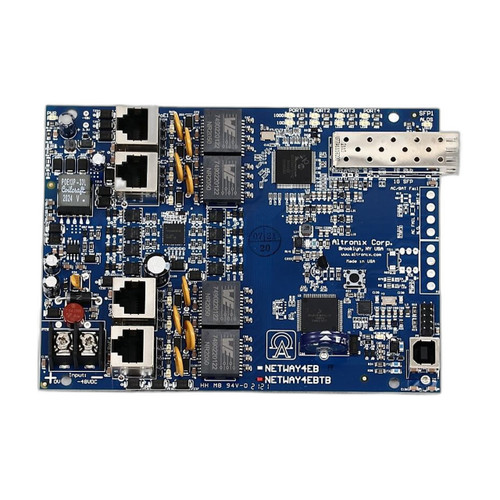
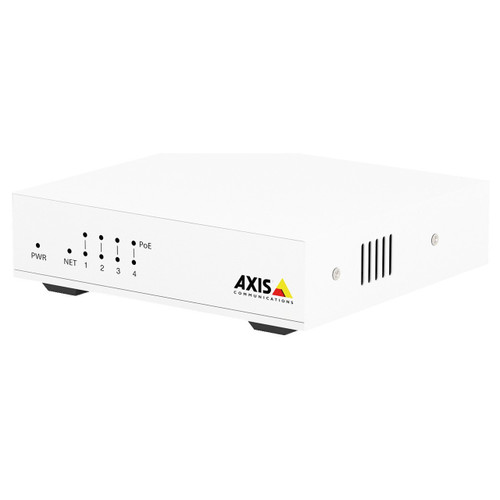
Both the Altronix NETWAY4EBTB and the Axis D8004 are 4-port gigabit PoE switches designed to power and connect IP cameras and edge devices. The NETWAY4EBTB is a board-form-factor unit targeting cabinet and PDU integration with a high-wattage PoE++ budget and fiber uplink capability. The Axis D8004 is a compact, white metal-cased unit aimed at clean, minimal-footprint indoor installations. This comparison examines PoE power delivery, physical and environmental specifications, and management and integration features to help installers and IT buyers select the right unit for their deployment.
In This Guide
- Which switch delivers more PoE power, and what device types does each support?
- How do the two switches differ in form factor, input power, and operating environment?
- How do the two switches compare on uplink connectivity, management, and system integration?
- Which should you choose: the NETWAY4EBTB or the D8004?
- Side-by-Side Specs
- FAQ
Which switch delivers more PoE power, and what device types does each support?
The Altronix NETWAY4EBTB provides a total PoE budget of 240W across its four ports, with up to 90W per port under the 802.3bt (PoE++) standard. This supports high-draw devices such as multi-sensor panoramic cameras, PTZ cameras with heaters, and 4PPoE-class endpoints that require more than 30W per port.
The Axis D8004 delivers a maximum of 60W total across its four PoE ports, compliant with 802.3af (15W) and 802.3at (30W) standards. It does not support 802.3bt. This is adequate for single-sensor fixed cameras, access control readers, and most standard IP cameras, but it cannot power PoE++ devices.
The NETWAY4EBTB's per-port ceiling of 90W is four times higher than the D8004's implied 15W per port at 60W total. Installers powering high-wattage endpoints must use the NETWAY4EBTB; the D8004 is limited to conventional PoE and PoE+ loads.
How do the two switches differ in form factor, input power, and operating environment?
The Altronix NETWAY4EBTB is a board-form-factor device measuring 6.25" × 4.5" × 1.25", designed for rack or cabinet installation inside a PDU or enclosure. It accepts 48–56V DC input, meaning it requires an external DC power source and is not directly wall-plug operable. Its storage temperature range is specified at –30°C to 85°C.
The Axis D8004 is a self-contained, wall-mountable metal unit in white, measuring 90 × 80 × 21 mm (3.54" × 3.15" × 0.83") and weighing 172 g. It accepts 100–240V AC at 50–60 Hz directly from a standard outlet at up to 62W draw, requiring no external DC power supply. Its operating temperature range is 0°C to 50°C, with storage at –10°C to 50°C.
The D8004 is ready for plug-in deployment in finished indoor spaces. The NETWAY4EBTB is intended for integration inside electrical enclosures or cabinets with an existing DC bus. Neither unit is rated for outdoor use based on the provided specifications. Operating temperature limits are spec'd only for the D8004; the NETWAY4EBTB's operating range is not stated in the provided specs.
How do the two switches compare on uplink connectivity, management, and system integration?
The Altronix NETWAY4EBTB includes a single-mode fiber SFP uplink port, enabling backbone runs over extended distances and providing electrical isolation from the upstream network—a significant advantage in installations where copper uplinks would introduce ground loops or EMI. It also supports LINQ, Altronix's supervisory communication protocol, for remote monitoring within compatible Altronix system architectures.
The Axis D8004 provides one RJ45 copper gigabit uplink in addition to its four PoE ports. It is an unmanaged switch with no stated management interface, CLI, SNMP, or vendor supervision protocol. Included accessories—mounting brackets, feet, adapter, and power cord—support straightforward stand-alone installation. It carries CE, FCC Part 15 Class B, RoHS, and WEEE certifications.
The NETWAY4EBTB's fiber SFP uplink is a distinct structural advantage for long-haul or electrically noisy runs. The D8004's copper uplink is appropriate for short-run, typical indoor environments. Management is absent on both units based on provided specs, except the NETWAY4EBTB's LINQ supervision. Certifications are stated only for the D8004; the NETWAY4EBTB's regulatory approvals are not listed in the provided specs.
Which should you choose: the NETWAY4EBTB or the D8004?
Our take: The NETWAY4EBTB is the stronger choice when the deployment requires high-wattage PoE++ endpoints, fiber backbone uplinks, or integration into a DC-powered Altronix enclosure system. Its 240W total budget with 90W per port—versus the D8004's 60W total with 802.3at as its ceiling—makes it the only viable option for 4PPoE cameras, heated PTZ units, or any 802.3bt device. The single-mode fiber SFP uplink adds reach and EMI immunity unavailable on the D8004. Conversely, the Axis D8004 is the stronger choice for simple, finished-space installations: it accepts standard 100–240V AC directly, ships with all mounting hardware, and carries documented CE/FCC/RoHS certifications not stated for the NETWAY4EBTB. Installers deploying standard PoE/PoE+ cameras in office or retail environments will find the D8004 faster to commission with no external DC supply required.
Side-by-Side Comparison
Spec-for-spec, from manufacturer data.
| Specification | Altronix NETWAY4EBTB | Axis D8004 |
|---|---|---|
| Product Type | PoE Switch (Board Form Factor) | PoE Switch (Compact Enclosure) |
| PoE Standard | 802.3bt (PoE++) | 802.3af / 802.3at (PoE / PoE+) |
| Total PoE Budget | 240W | 60W |
| Max PoE per Port | 90W | 15W (af) / 30W (at) |
| PoE Ports | 4 | 4 |
| Uplink Port | 1× Single-Mode Fiber SFP | 1× RJ45 Gigabit Copper |
| Input Power | 48–56V DC | 100–240V AC, 50–60 Hz |
| Max Power Draw | — | 62.4W |
| Form Factor | Switch Board (Rack/Cabinet) | Compact Metal Enclosure |
| Dimensions | 6.25" × 4.5" × 1.25" | 90 × 80 × 21 mm (3.54" × 3.15" × 0.83") |
| Weight | — | 172 g (0.38 lb) |
| Operating Temperature | — | 0°C to 50°C (32°F to 122°F) |
| Storage Temperature | –30°C to 85°C | –10°C to 50°C |
| Management / Supervision | LINQ compatible | Unmanaged |
| Regulatory Approvals | — | CE, FCC Part 15 Class B, RoHS, WEEE |
| Warranty | Lifetime | 3 years |
Frequently Asked Questions
Which should you choose: the NETWAY4EBTB or the D8004?
The NETWAY4EBTB is the stronger choice when the deployment requires high-wattage PoE++ endpoints, fiber backbone uplinks, or integration into a DC-powered Altronix enclosure system. Its 240W total budget with 90W per port—versus the D8004's 60W total with 802.3at as its ceiling—makes it the only viable option for 4PPoE cameras, heated PTZ units, or any 802.3bt device. The single-mode fiber SFP uplink adds reach and EMI immunity unavailable on the D8004. Conversely, the Axis D8004 is the stronger choice for simple, finished-space installations: it accepts standard 100–240V AC directly, ships with all mounting hardware, and carries documented CE/FCC/RoHS certifications not stated for the NETWAY4EBTB. Installers deploying standard PoE/PoE+ cameras in office or retail environments will find the D8004 faster to commission with no external DC supply required.
Can the Axis D8004 power PoE++ cameras such as high-wattage PTZ or multi-sensor units?
No. The D8004 is rated to 802.3af/at only, with a maximum total PoE output of 60W. It cannot supply the per-port power levels required by 802.3bt (PoE++) devices. For PoE++ loads, the Altronix NETWAY4EBTB supports up to 90W per port under the 802.3bt standard.
Does the NETWAY4EBTB plug into a standard AC wall outlet?
No. The NETWAY4EBTB requires a 48–56V DC input and must be installed inside or alongside an Altronix enclosure or other DC power system that supplies that voltage. The Axis D8004, by contrast, accepts 100–240V AC directly from a standard outlet.
Which switch is better suited for long cable runs between the switch and the upstream network?
The NETWAY4EBTB includes a single-mode fiber SFP uplink, supporting extended backbone distances and electrical isolation. The Axis D8004 provides only a copper RJ45 uplink, which is limited to 100m per standard Ethernet constraints. For runs beyond 100m or in electrically noisy environments, the NETWAY4EBTB's fiber uplink is the applicable choice.
More Network Switch Comparisons
- Vivotek GET-083A-120 vs TP-Link SG1005P
- Vivotek GET-083A-120 vs Axis T8504-E
- Vivotek GET-083A-120 vs Axis D8004
- Vivotek GET-083A-120 vs Ubiquiti N-SW
- TP-Link SG1005P vs Axis T8504-E
- TP-Link SG1005P vs Axis D8004
Network Switch Buying Guides
Get a Second Opinion on Your Camera Choice
Share your site layout, coverage goals, and budget. Our team will validate the camera selection, flag anything we would change, and recommend products that match the use case.