
Aiphone IX-DVF-6 vs Aiphone JOS-1FW: Specification Comparison
Both the Aiphone IX-DVF-6 and the Aiphone JOS-1FW are video intercom products featuring a camera-equipped door station and audio/video communication capability — the core definition of a video door station system. However, they target fundamentally different deployment tiers: the IX-DVF-6 is a standalone IP-network door station designed for multi-tenant or commercial SIP/ONVIF infrastructure, while the JOS-1FW is a consumer-grade box set (master station plus door station) built around a proprietary 4-wire connection with Wi-Fi mobile-app access. A buyer cross-shopping these would be choosing between a network-integrated commercial door station and a self-contained residential/light-commercial intercom kit.
In This Guide
- Which product fits the deployment architecture — networked multi-unit or self-contained single-entry?
- How do the camera, audio codec, and video codec specs compare for image and voice quality?
- Which unit is rated for harsher environments, and how is each powered?
- Which should you choose: the IX-DVF-6 or the JOS-1FW?
- Side-by-Side Specs
- FAQ
Which product fits the deployment architecture — networked multi-unit or self-contained single-entry?
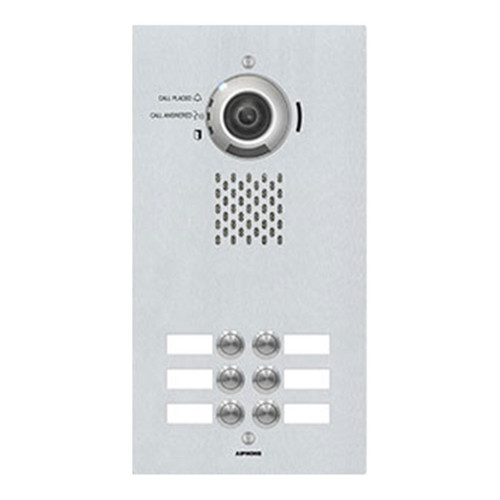
The IX-DVF-6 is a pure IP door station with 6 individual call buttons, SIP protocol support, and ONVIF Profile S compliance. It integrates directly into existing IP networks via Cat-5e/6, supports IPv4/IPv6, and can interoperate with any SIP-compliant master station, NVR, or access control system. Its 6-call-button configuration explicitly targets multi-tenant or multi-zone commercial deployments where individual directories are required.
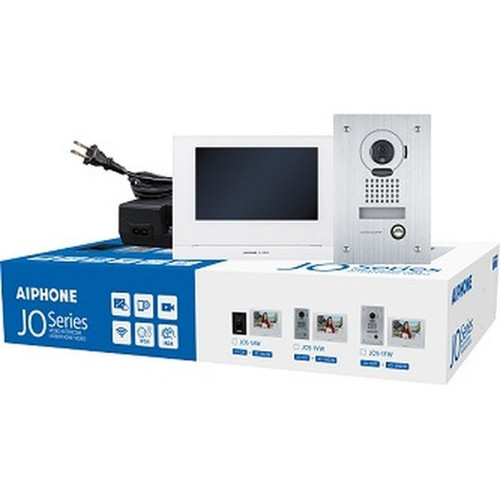
The JOS-1FW is a closed box set: it ships with a JO-1MDW 7-inch touchscreen master station, a JO-DVF flush-mount door station, an 18V power supply, and a 4-wire interconnect cable. It is designed for single-entry residential or light-commercial use. Mobile-app connectivity extends reach to up to 8 iOS/Android devices via Wi-Fi, but the system does not expose SIP or ONVIF interfaces — it is not spec'd for integration into third-party IP infrastructure.
For multi-tenant buildings, commercial lobbies, or any site already running a SIP PBX or VMS, the IX-DVF-6 is the architecturally appropriate device. For a single-door installation requiring a turnkey kit with a dedicated indoor screen and mobile-app answer, the JOS-1FW is purpose-built for that scenario.
How do the camera, audio codec, and video codec specs compare for image and voice quality?
The IX-DVF-6 specifies a 1.23-megapixel camera with a minimum illumination of 5 lux, white-LED low-light assistance, and a vertical tilt range of +15°, 0°, or −8° for field-of-view adjustment. Video is encoded in H.264/AVC or Motion JPEG, and audio uses G.711 or G.722 codecs — G.722 providing wideband audio at 7 kHz bandwidth for noticeably clearer voice reproduction compared to the narrowband G.711.
The JOS-1FW door station (JO-DVF) uses a 1/4-inch color CMOS sensor. Resolution, minimum illumination, codec type, and audio codec are not specified in the provided data. The master station features a 7-inch TFT touchscreen display, which is an advantage for the indoor viewing experience, but the door-station imaging specs cannot be compared numerically to the IX-DVF-6.
On the basis of available specifications, the IX-DVF-6 provides quantifiable camera performance data (1.23 MP, 5 lux, G.722 wideband audio, H.264 video). The JOS-1FW's door-station camera specs are absent from the provided data; buyers requiring documented imaging performance for procurement or compliance purposes cannot evaluate the JOS-1FW on those criteria from the specs provided.
Which unit is rated for harsher environments, and how is each powered?
The IX-DVF-6 carries an IP65 ingress-protection rating (dust-tight, protected against water jets) and an IK08 impact rating (resistant to 5-joule impacts). Its operating temperature range spans −40°F to 140°F, making it suitable for extreme outdoor climates — northern winters or desert installations. Power is sourced via PoE (IEEE 802.3af, Class 0) or 24V DC, with a measured draw of 5.28W. PoE eliminates the need for a local power run to the door station.
The JOS-1FW door station carries an IP54 rating (dust-protected, splash-resistant — not jet-resistant) and an IK07 impact rating (2-joule resistance). Note: the provided specs contain an inconsistency — IP54/IK07 appears in some fields while IP65 and IK08 appear in others; this comparison uses the lower, more conservative values (IP54/IK07) as the defensible figures absent clarification. Power is supplied by the included PS-1820UL 18V UL/CSA-certified power supply via the 4-wire cable — no PoE infrastructure is required.
The IX-DVF-6 offers a meaningfully stronger environmental envelope: IP65 vs IP54 (jet-water vs splash protection) and IK08 vs IK07 (5J vs 2J impact resistance), plus a far wider operating temperature range. PoE powering simplifies commercial cable runs. The JOS-1FW's included power supply and 4-wire cable reduce infrastructure cost for simple single-door installs but add a local AC outlet dependency.
Which should you choose: the IX-DVF-6 or the JOS-1FW?
Our take: The IX-DVF-6 is the stronger choice when the deployment calls for network-integrated, multi-tenant, or commercial-grade video intercom infrastructure. It supports SIP and ONVIF Profile S for third-party system integration, carries an IP65/IK08 environmental rating versus the JOS-1FW's IP54/IK07, and operates across a −40°F to 140°F temperature range with no stated cold-weather floor. Its 1.23 MP camera with documented 5-lux minimum illumination and G.722 wideband audio codec provide quantifiable audiovisual performance that the JOS-1FW's specs do not match with comparable figures. Conversely, the JOS-1FW is the appropriate choice for a single-entry residential or small-office installation: the box set includes a 7-inch touchscreen master station, mobile-app support for up to 8 devices, and a complete 4-wire kit requiring no separate PoE switch or SIP infrastructure. Platform qualifier: IX-DVF-6 belongs on IP/SIP infrastructure; JOS-1FW is a standalone, self-contained kit.
Side-by-Side Comparison
Spec-for-spec, from manufacturer data.
| Specification | Aiphone IX-DVF-6 | Aiphone JOS-1FW |
|---|---|---|
| Product Type | IP Door Station (door unit only) | Box Set (door station + master station) |
| Call Buttons | 6 (individual directories) | — |
| Camera Sensor | 1.23 MP | 1/4" color CMOS (resolution not specified) |
| Min. Illumination | 5 lux | — |
| Low-Light Aid | White LED | — |
| Video Codec | H.264/AVC, Motion JPEG | — |
| Audio Codec | G.711, G.722 | — |
| Protocol / Integration | SIP, ONVIF Profile S, IPv4/IPv6, TCP/UDP, RTSP, RTP, RTCP, SMTP, SFTP, DHCP, NTP, DNS | Wi-Fi (mobile app); no SIP/ONVIF specified |
| Power | PoE IEEE 802.3af Class 0 or 24V DC | 18V via included PS-1820UL power supply |
| Power Draw | 5.28W | — |
| IP Rating | IP65 | IP54 |
| Impact Rating | IK08 | IK07 |
| Operating Temperature | −40°F to 140°F | — |
| Indoor Display | — (door station only) | 7" TFT Touchscreen (JO-1MDW) |
| Mobile App Support | — | Up to 8 iOS/Android devices |
| Storage | microSD card | microSD 4–32 GB (~1,000 calls) |
| Compliance / Certification | IEEE 802.1x, SIP, ONVIF Profile S | UL, CSA |
| Warranty | — | 2-Year |
Frequently Asked Questions
Which should you choose: the IX-DVF-6 or the JOS-1FW?
The IX-DVF-6 is the stronger choice when the deployment calls for network-integrated, multi-tenant, or commercial-grade video intercom infrastructure. It supports SIP and ONVIF Profile S for third-party system integration, carries an IP65/IK08 environmental rating versus the JOS-1FW's IP54/IK07, and operates across a −40°F to 140°F temperature range with no stated cold-weather floor. Its 1.23 MP camera with documented 5-lux minimum illumination and G.722 wideband audio codec provide quantifiable audiovisual performance that the JOS-1FW's specs do not match with comparable figures. Conversely, the JOS-1FW is the appropriate choice for a single-entry residential or small-office installation: the box set includes a 7-inch touchscreen master station, mobile-app support for up to 8 devices, and a complete 4-wire kit requiring no separate PoE switch or SIP infrastructure. Platform qualifier: IX-DVF-6 belongs on IP/SIP infrastructure; JOS-1FW is a standalone, self-contained kit.
Is the IX-DVF-6 or JOS-1FW better for a multi-tenant apartment building?
The IX-DVF-6 is the appropriate choice for multi-tenant deployments. It has 6 individual call buttons with separate directories, supports SIP so it can connect to any SIP-capable master stations or softphones in each unit, and carries ONVIF Profile S for VMS integration. The JOS-1FW is spec'd as a single-entry, single-master-station box set and does not expose SIP or ONVIF interfaces per the provided specifications.
Can either unit work in very cold outdoor climates?
The IX-DVF-6 is rated for operation down to −40°F, making it suitable for extreme cold-weather installations. The JOS-1FW's provided specifications do not include an operating temperature range, so its cold-weather suitability cannot be confirmed from the available data. Buyers in cold climates should verify JOS-1FW temperature ratings with Aiphone before specifying it for outdoor use.
Do I need a separate indoor monitor or master station for the IX-DVF-6?
Yes. The IX-DVF-6 is a door station only — it ships without an indoor master station. It connects over IP via Cat-5e/6 cable and communicates via SIP, so it requires a compatible SIP master station, IP phone, or softphone client. The JOS-1FW, by contrast, is a complete box set that includes the JO-1MDW 7-inch touchscreen master station, the JO-DVF door station, a power supply, and interconnect cable — everything needed for a single-entry installation.
More Intercom Comparisons
- Hanwha TID-600R vs Aiphone IX-EA
- Hanwha TID-600R vs Axis A8207-VE
- Hanwha TID-600R vs Aiphone IX-DVF-6
- Hanwha TID-600R vs Aiphone JOS-1FW
- Aiphone IX-EA vs Axis A8207-VE
- Aiphone IX-EA vs 2N 01273-001
Intercom Buying Guides
Get a Second Opinion on Your Camera Choice
Share your site layout, coverage goals, and budget. Our team will validate the camera selection, flag anything we would change, and recommend products that match the use case.