
Zebra ZT42163-T110000Z vs Zebra ZT41142-T0100A0Z: Specification Comparison
Both the Zebra ZT42163-T110000Z and ZT41142-T0100A0Z are industrial thermal label printers targeting high-volume fixed-station printing environments. They share the same print speed, thermal technology, symbology support, and Bluetooth 4.1 MFi connectivity, making them genuine cross-shop candidates. Key differentiators are print width, maximum resolution, wireless options, RFID capability, and memory—dimensions that determine label format flexibility, deployment topology, and integration depth for warehouse, manufacturing, and logistics operations.
In This Guide
Which printer handles wider labels and finer resolution output?
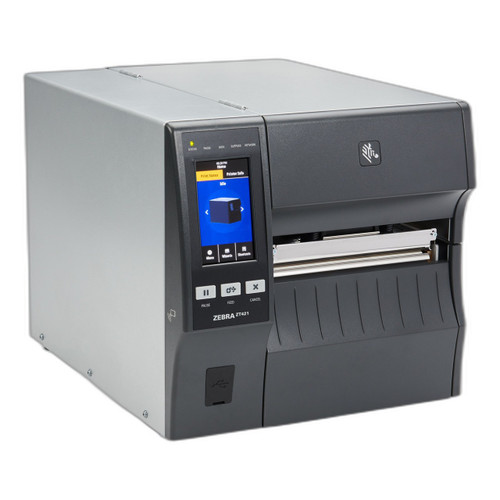
The ZT42163-T110000Z supports a maximum print width of 6 inches and offers selectable resolution of 203, 300, or 600 dpi. The 600 dpi option enables high-density barcode output and fine-pitch graphics on wider media, giving it clear advantage when label content complexity or substrate width demands it.
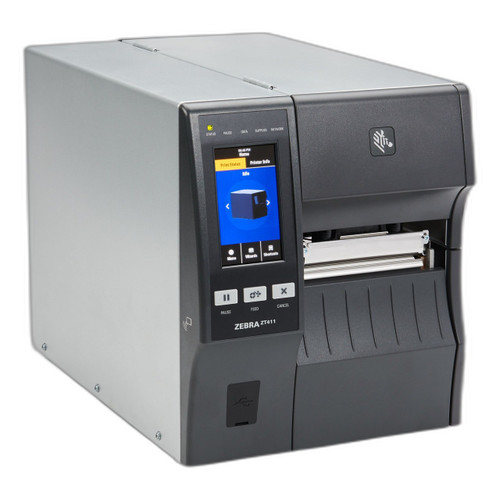
The ZT41142-T0100A0Z is limited to a 4-inch maximum print width. Its specified native resolution is 203 dpi; the datasheet field '~Resolution' explicitly states 203 dpi, though the structured spec field lists 203, 300, and 600 dpi as options—buyers should confirm with Zebra documentation which resolutions are field-selectable on this specific SKU. For standard warehouse label runs at 4-inch width, 203 dpi is sufficient for all listed symbologies.
Print width is a hard constraint: if your label stock or format exceeds 4 inches, the ZT41142-T0100A0Z is disqualified regardless of other attributes. The ZT42163-T110000Z's 6-inch path accommodates both narrow and wide media without hardware change.
Which unit offers broader connectivity and integration options?
The ZT41142-T0100A0Z includes Ethernet, Bluetooth 4.1 MFi, and Wi-Fi in its connectivity spec. Wi-Fi support enables fully wireless fixed-station or roaming deployments without running cabled infrastructure to the printer location. It also carries an RFID integrated encoding capability per its datasheet field, adding a second media type to its output repertoire.
The ZT42163-T110000Z lists Ethernet and Bluetooth 4.1 MFi but does not include Wi-Fi in its provided specifications. No RFID capability is listed for this model. Its connectivity is adequate for wired-network environments but does not support cable-free installation or RFID smart label encoding from the documented specs.
For deployments requiring wireless placement flexibility or RFID encoding alongside barcode labels, the ZT41142-T0100A0Z holds a measurable advantage on connectivity breadth. The ZT42163-T110000Z's connectivity set is more constrained based on the provided specifications.
How do the integrated scan engine, memory, and physical characteristics compare?
Both units include an integrated 2D scan engine supporting QR Code, Data Matrix, PDF417, Code 128, Code 39, UPC, and EAN—enabling inline label verification without external hardware. The ZT42163-T110000Z specs explicitly reference auto peel as an included feature; no such feature is listed for the ZT41142-T0100A0Z.
The ZT41142-T0100A0Z provides a documented memory spec of 256 MB SDRAM, which supports storage of documentation, source code, programming languages, and templates. No memory specification is present in the provided data for the ZT42163-T110000Z.
Physical weight data is available only for the ZT41142-T0100A0Z, listed at 36–40 lbs (16.33–18.14 kg) depending on configuration. No weight is specified for the ZT42163-T110000Z. A mount type of Rack is listed for the ZT41142-T0100A0Z; no mount type spec is given for the ZT42163-T110000Z. Both carry a 1-year warranty.
Which should you choose: the ZT42163-T110000Z or the ZT41142-T0100A0Z?
Our take: The ZT42163-T110000Z is the stronger choice when label width exceeds 4 inches or when high-density output at 600 dpi is required—its 6-inch print path and three-step resolution (203/300/600 dpi) versus the ZT41142-T0100A0Z's 4-inch path and documented native 203 dpi give it a decisive edge for wide-format and fine-pitch applications. Conversely, the ZT41142-T0100A0Z offers Wi-Fi (absent on the ZT42163-T110000Z per spec), integrated RFID encoding, and 256 MB SDRAM memory (not specified for the ZT42163-T110000Z), making it better suited for wireless deployments, RFID smart label runs, or environments requiring onboard template and language storage. Both models match on print speed (14 ips), symbology support, Bluetooth 4.1 MFi, and 1-year warranty. Choose the ZT42163-T110000Z for wired, wide-media, high-resolution label operations; choose the ZT41142-T0100A0Z for wireless, RFID-capable, 4-inch-format deployments.
Side-by-Side Comparison
Spec-for-spec, from manufacturer data.
| Specification | Zebra ZT42163-T110000Z | Zebra ZT41142-T0100A0Z |
|---|---|---|
| Product Type | Industrial Thermal Printer | Industrial Thermal Printer |
| Maximum Print Width | 6 inches | 4 inches |
| Print Speed | 14 ips | 14 ips |
| Print Resolution | 203 / 300 / 600 dpi | 203 dpi (native); 203/300/600 dpi listed in structured spec—verify with Zebra |
| Thermal Technology | Thermal | Thermal |
| Ethernet | Yes | Yes |
| Wi-Fi | — | Yes |
| Bluetooth | 4.1 MFi | 4.1 MFi |
| RFID Encoding | — | Yes (integrated) |
| Integrated 2D Scan Engine | Yes | Yes |
| Symbologies 1D | Code 128, Code 39, UPC, EAN | Code 128, Code 39, UPC, EAN |
| Symbologies 2D | QR Code, Data Matrix, PDF417 | QR Code, Data Matrix, PDF417 |
| Memory | — | 256 MB SDRAM |
| Auto Peel | Yes (listed in features) | — |
| Weight | — | 36–40 lbs / 16.33–18.14 kg |
| Warranty | 1 year | 1 year |
Frequently Asked Questions
Which should you choose: the ZT42163-T110000Z or the ZT41142-T0100A0Z?
The ZT42163-T110000Z is the stronger choice when label width exceeds 4 inches or when high-density output at 600 dpi is required—its 6-inch print path and three-step resolution (203/300/600 dpi) versus the ZT41142-T0100A0Z's 4-inch path and documented native 203 dpi give it a decisive edge for wide-format and fine-pitch applications. Conversely, the ZT41142-T0100A0Z offers Wi-Fi (absent on the ZT42163-T110000Z per spec), integrated RFID encoding, and 256 MB SDRAM memory (not specified for the ZT42163-T110000Z), making it better suited for wireless deployments, RFID smart label runs, or environments requiring onboard template and language storage. Both models match on print speed (14 ips), symbology support, Bluetooth 4.1 MFi, and 1-year warranty. Choose the ZT42163-T110000Z for wired, wide-media, high-resolution label operations; choose the ZT41142-T0100A0Z for wireless, RFID-capable, 4-inch-format deployments.
Can the ZT41142-T0100A0Z print 6-inch wide labels like the ZT42163-T110000Z?
No. The ZT41142-T0100A0Z has a maximum print width of 4 inches per its specifications. If your label stock or format requires more than 4 inches, the ZT42163-T110000Z with its 6-inch print path is the only option of the two.
Does either printer support Wi-Fi for wireless installation?
Only the ZT41142-T0100A0Z lists Wi-Fi in its connectivity specifications. The ZT42163-T110000Z specifies Ethernet and Bluetooth 4.1 MFi but does not include Wi-Fi in the provided specs, making it dependent on a wired Ethernet connection for network access.
Which model is better for printing RFID smart labels in addition to barcodes?
The ZT41142-T0100A0Z lists integrated RFID encoding capability in its datasheet specifications. The ZT42163-T110000Z has no RFID capability listed in the provided specifications. If your workflow requires encoding RFID smart labels alongside barcode printing, the ZT41142-T0100A0Z is the appropriate choice between these two models.
More Label Printer Comparisons
- Honeywell PX940 vs Sato WWCLP3B01-WAR
- Honeywell PX940 vs Sato WWCLP3801-NAR
- Honeywell PX940 vs Sato WWCLP3801-WAR
- Honeywell PX940 vs Wasp WPL408
- Honeywell PX940 vs Honeywell PX4654-020
- Honeywell PX940 vs Honeywell PX6654-000
Label Printer Buying Guides
Get a Second Opinion on Your Camera Choice
Share your site layout, coverage goals, and budget. Our team will validate the camera selection, flag anything we would change, and recommend products that match the use case.