
Zebra ZT41142-T01000GA vs Zebra ZT42162-T01000GA: Specification Comparison
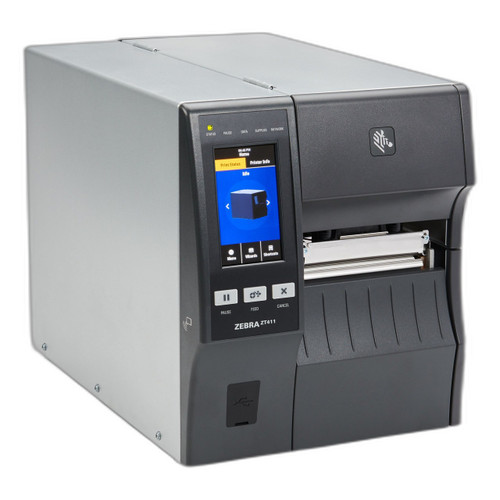
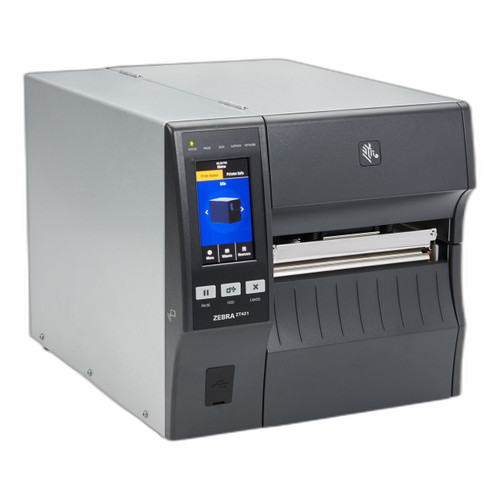
Both the Zebra ZT41142-T01000GA and ZT42162-T01000GA are desktop thermal label printers in Zebra's ZT400 series, sharing the same print speed, resolution options, symbology support, memory, and integrated 2D scan engine. The primary differentiation lies in maximum print width—4 inches versus 6 inches—and wireless connectivity capability, specifically whether Wi-Fi is included alongside Ethernet and Bluetooth. Buyers choosing between these two units are typically deciding based on label width requirements and network deployment topology, making them direct cross-shop candidates within the same product class.
In This Guide
- Which model supports the label width and throughput your workflows demand?
- Which unit offers the wireless and wired connectivity options your network infrastructure requires?
- How do the integrated scan engine and compliance attributes compare between the two models?
- Which should you choose: the ZT41142-T01000GA or the ZT42162-T01000GA?
- Side-by-Side Specs
- FAQ
Which model supports the label width and throughput your workflows demand?
The ZT41142-T01000GA is rated for a maximum print width of 4 inches, while the ZT42162-T01000GA extends that to 6 inches. Both models share an identical rated print speed of 14 ips. Both also offer the same resolution range—203 dpi native, with 300 dpi and 600 dpi available—meaning neither model requires a hardware swap to change resolution. For operations printing standard shipping, compliance, or product labels up to 4 inches wide, the ZT41142 covers the requirement fully. For wide-format warehouse labels, bin tags, pallet placards, or retail shelf labels exceeding 4 inches, only the ZT42162 can physically accommodate the media. Throughput at speed is spec-identical between the two, so width—not speed—is the deciding capacity axis.
Which unit offers the wireless and wired connectivity options your network infrastructure requires?
The ZT41142-T01000GA specifies Gigabit Ethernet, dual-band Wi-Fi, and Bluetooth 4.1 with MFi. The ZT42162-T01000GA specifies Ethernet and Bluetooth 2.1/MFi; Wi-Fi is not listed in its provided specifications. This is a meaningful difference for wireless deployments: the ZT41142 can connect over a Wi-Fi network without a physical Ethernet drop, making it suitable for dynamic floor environments or locations where cabling is impractical. The ZT42162, per its specs, requires a wired Ethernet connection for network printing. Additionally, Bluetooth versions differ—4.1 on the ZT41142 versus 2.1/MFi on the ZT42162—which may affect pairing range and compatibility with newer mobile devices. Both models include USB and Serial in their standard package contents, per the listed specs.
How do the integrated scan engine and compliance attributes compare between the two models?
Both the ZT41142-T01000GA and ZT42162-T01000GA include an integrated 2D scan engine supporting the same symbology set: QR Code, Data Matrix, and PDF417 (2D); Code 128, Code 39, UPC, and EAN (1D). Neither model requires a separate external scanner for barcode verification or scan-based workflows. The ZT41142 explicitly carries a TAA-compliant designation in its specifications; TAA compliance is not listed in the provided specifications for the ZT42162. For organizations subject to federal procurement requirements or contracts governed by the Trade Agreements Act—GSA schedules, Department of Defense, or similar—this distinction is operationally significant. Both units carry a 1-year warranty and are listed with 256 MB SDRAM and an 850 nm IR lowlight specification. Memory and weight specs are identical across both as provided.
Which should you choose: the ZT41142-T01000GA or the ZT42162-T01000GA?
Our take: The ZT41142-T01000GA is the stronger choice when wireless network flexibility, newer Bluetooth compatibility, and TAA compliance are requirements. It adds dual-band Wi-Fi (absent on the ZT42162), upgrades Bluetooth from 2.1 to 4.1, and carries an explicit TAA-compliant designation—three concrete spec advantages. Conversely, the ZT42162-T01000GA is the necessary choice when label width exceeds 4 inches: its 6-inch maximum print width is physically unavailable on the ZT41142. Print speed (14 ips), resolution range (203/300/600 dpi), integrated 2D scan engine, symbology support, memory (256 MB), and warranty (1 year) are identical per the provided specs. Choose the ZT41142 for wired-or-wireless mixed deployments, government or TAA-regulated procurement, and standard-width label applications. Choose the ZT42162 for wide-format label production where 4-inch media is insufficient and a wired Ethernet connection is available.
Side-by-Side Comparison
Spec-for-spec, from manufacturer data.
| Specification | Zebra ZT41142-T01000GA | Zebra ZT42162-T01000GA |
|---|---|---|
| Product Class | 4-inch Desktop Thermal Printer | 6-inch Desktop Thermal Printer |
| Maximum Print Width | 4 inches | 6 inches |
| Print Speed | 14 ips | 14 ips |
| Native Resolution | 203 dpi | 203 dpi |
| Optional Resolutions | 300 dpi, 600 dpi | 300 dpi, 600 dpi |
| Ethernet | Gigabit Ethernet | Ethernet (speed not specified) |
| Wi-Fi | Dual-band Wi-Fi | — |
| Bluetooth | Bluetooth 4.1 with MFi | Bluetooth 2.1/MFi |
| Integrated Scan Engine | 2D | 2D |
| 1D Symbologies | Code 128, Code 39, UPC, EAN | Code 128, Code 39, UPC, EAN |
| 2D Symbologies | QR Code, Data Matrix, PDF417 | QR Code, Data Matrix, PDF417 |
| TAA Compliance | TAA-compliant | Not specified |
| Memory | 256 MB SDRAM | 256 MB SDRAM |
| Warranty | 1 year | 1 year |
| Weight | 36–40 lbs. (16.33–18.14 kg) | 36–40 lbs. (16.33–18.14 kg) |
| Package Contents | USB, Serial, Ethernet, Bluetooth | USB, Serial, Ethernet, Bluetooth |
Frequently Asked Questions
Which should you choose: the ZT41142-T01000GA or the ZT42162-T01000GA?
The ZT41142-T01000GA is the stronger choice when wireless network flexibility, newer Bluetooth compatibility, and TAA compliance are requirements. It adds dual-band Wi-Fi (absent on the ZT42162), upgrades Bluetooth from 2.1 to 4.1, and carries an explicit TAA-compliant designation—three concrete spec advantages. Conversely, the ZT42162-T01000GA is the necessary choice when label width exceeds 4 inches: its 6-inch maximum print width is physically unavailable on the ZT41142. Print speed (14 ips), resolution range (203/300/600 dpi), integrated 2D scan engine, symbology support, memory (256 MB), and warranty (1 year) are identical per the provided specs. Choose the ZT41142 for wired-or-wireless mixed deployments, government or TAA-regulated procurement, and standard-width label applications. Choose the ZT42162 for wide-format label production where 4-inch media is insufficient and a wired Ethernet connection is available.
Can the ZT42162-T01000GA connect over Wi-Fi like the ZT41142-T01000GA?
No. Based on the provided specifications, the ZT42162-T01000GA lists Ethernet and Bluetooth 2.1/MFi as its connectivity options; Wi-Fi is not specified for that model. The ZT41142-T01000GA explicitly includes dual-band Wi-Fi alongside Gigabit Ethernet and Bluetooth 4.1.
Is the ZT41142-T01000GA or ZT42162-T01000GA better for printing wide warehouse or pallet labels?
The ZT42162-T01000GA is required for labels wider than 4 inches, as it supports a maximum print width of 6 inches. The ZT41142-T01000GA is limited to 4-inch maximum print width. If your label media or format exceeds 4 inches, only the ZT42162 can accommodate it.
Do both models include an integrated barcode scanner, or does one require a separate external scanner?
Both models include an integrated 2D scan engine supporting the same symbology set: QR Code, Data Matrix, PDF417, Code 128, Code 39, UPC, and EAN. Neither requires a separate external scanner for 2D or 1D barcode reading per the provided specifications.
More Label Printer Comparisons
- Brother TD4550DNWB vs Sato WWCT04241-WCN
- Brother TD4550DNWB vs Sato WWCT04241-NDR
- Brother TD4550DNWB vs Sato WT212-404CW-EX1-2
- Brother TD4550DNWB vs Sato WWCT04441-WDR
- Brother TD4550DNWB vs Brother TD4420DNC
- Brother TD4550DNWB vs Brother TD4410D
Label Printer Buying Guides
Get a Second Opinion on Your Camera Choice
Share your site layout, coverage goals, and budget. Our team will validate the camera selection, flag anything we would change, and recommend products that match the use case.