
Vertiv PSA6-1500LVT vs Vertiv PSA6E-1500LVT: Specification Comparison
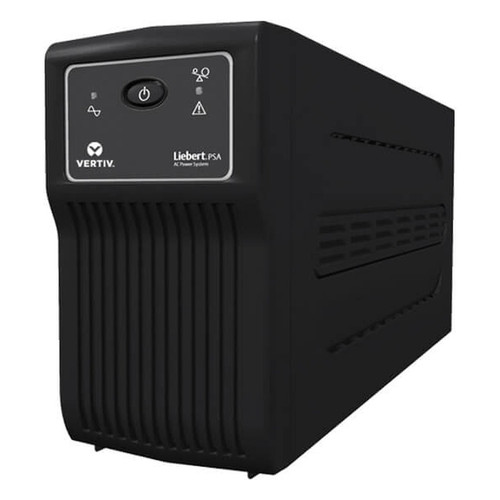
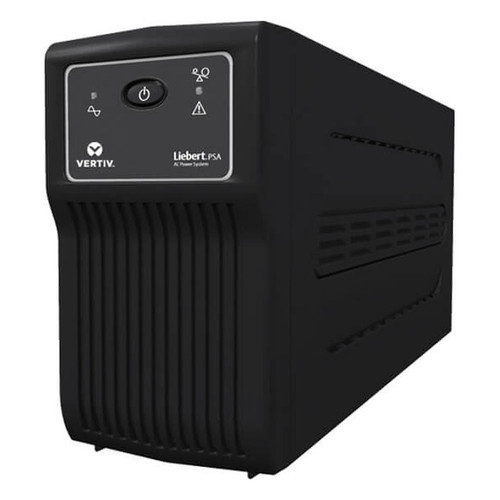
Both products are 1440VA, 120V line-interactive desktop UPS units from Vertiv's PowerUPS 200 family, making them direct cross-shop candidates for small office, workstation, and light network-closet battery-backup applications. The PSA6-1500LVT carries the 'Premium' sub-brand designation while the PSA6E-1500LVT is labeled 'Essential.' The primary differentiation visible in the provided specifications is wattage output (935W vs 850W) and physical size and weight, which drive meaningful differences in runtime capability and deployment flexibility.
In This Guide
- Which model delivers more usable watt capacity and what does that mean for runtime?
- How do the two units differ in physical size and weight, and does that affect installation options?
- Are the warranty terms and battery serviceability equivalent between the two models?
- Which should you choose: the PSA6-1500LVT or the PSA6E-1500LVT?
- Side-by-Side Specs
- FAQ
Which model delivers more usable watt capacity and what does that mean for runtime?
The PSA6-1500LVT (Premium) is rated at 935W true power output at the 1440VA apparent power rating, yielding a power factor of approximately 0.65. The PSA6E-1500LVT (Essential) is rated at 850W at the same 1440VA, yielding a power factor of approximately 0.59. The 85W difference (roughly 10%) is meaningful when protecting high-wattage workstations, tower servers, or multi-monitor setups where real watts—not VA—determine whether the UPS can actually carry the load. Neither datasheet is reproduced here, so runtime curves at specific wattages are not available from the provided specs; buyers should consult the linked datasheets for runtime tables.
Both units share the same VA rating, so they will accept the same maximum apparent load, but the Premium model will sustain a higher real-power load before reaching its watt ceiling. For loads drawing between 851W and 935W, only the PSA6-1500LVT can serve as a qualifying UPS.
How do the two units differ in physical size and weight, and does that affect installation options?
The PSA6-1500LVT measures 11.42 × 4.72 × 16.93 in (H × W × D) and weighs 26.5 lbs. The PSA6E-1500LVT measures 7.68 × 5.71 × 15.75 in and weighs 21.2 lbs—a reduction of roughly 3.74 inches in height, 5.3 lbs in mass, and a slightly wider but shallower footprint. Note: the PSA6E spec omits the H × W × D axis labels, so direct per-axis comparisons should be confirmed against its datasheet.
Both are specified as desktop form factors. The Essential model's lower weight and reduced height may favor under-desk or shelf-constrained deployments. The Premium model's larger chassis likely accommodates a larger or additional battery cell, which is consistent with its higher watt rating, though battery capacity (Ah) is not specified in the provided data for either unit.
Are the warranty terms and battery serviceability equivalent between the two models?
The PSA6-1500LVT specifies '3 years full unit coverage including battery'—explicitly calling out battery inclusion in warranty coverage. The PSA6E-1500LVT specifies only '3 years' with no mention of battery coverage in the provided specs. This is a potentially significant difference: UPS batteries typically degrade within 3–5 years, and explicit battery warranty inclusion on the Premium model provides a clearer contractual basis for a warranty replacement claim should the battery fail within the coverage window.
Both models list user-replaceable batteries, which is important for total cost of ownership—hot-swap or tool-free battery replacement avoids depot returns and minimizes downtime. The efficiency figure of greater than 95% at full load is cited only for the PSA6-1500LVT; no efficiency rating is provided in the PSA6E-1500LVT specs.
Which should you choose: the PSA6-1500LVT or the PSA6E-1500LVT?
Our take: The PSA6-1500LVT is the stronger choice when load wattage is between 851W and 935W, when battery warranty coverage must be explicitly contractual, or when efficiency rating matters to the buyer. Concretely: (1) the Premium delivers 935W versus the Essential's 850W—an 85W advantage at identical VA; (2) its warranty explicitly includes the battery for 3 years versus an unspecified 3-year term on the Essential; (3) it carries a stated greater-than-95% efficiency at full load, a figure absent from the Essential's spec sheet. The PSA6E-1500LVT is the appropriate pick where the load draws 850W or less, desk or shelf space is constrained (it is 3.74 in shorter and 5.3 lbs lighter), and budget sensitivity favors the Essential tier. Buyers protecting mid-range workstations or single NVR/switch stacks within the 850W ceiling will find the Essential fully adequate.
Side-by-Side Comparison
Spec-for-spec, from manufacturer data.
| Specification | Vertiv PSA6-1500LVT | Vertiv PSA6E-1500LVT |
|---|---|---|
| Sub-Brand / Tier | PowerUPS 200 Premium | PowerUPS 200 Essential |
| SKU | PSA6-1500LVT | PSA6E-1500LVT |
| VA Rating | 1440 VA | 1440 VA |
| Watt Rating | 935 W | 850 W |
| Power Factor | ~0.65 | ~0.59 |
| Topology | Line Interactive | Line Interactive |
| Input Voltage | 120 VAC | 120 VAC |
| Output Voltage | 120 VAC | 120 VAC |
| Form Factor | Desktop | Desktop |
| Height | 11.42 in | 7.68 in |
| Width | 4.72 in | 5.71 in |
| Depth | 16.93 in | 15.75 in |
| Weight | 26.5 lbs | 21.2 lbs |
| Battery Type | User-replaceable | User-replaceable |
| Efficiency | >95% at full load | — |
| Warranty | 3 years (unit + battery) | 3 years (battery coverage not specified) |
Frequently Asked Questions
Which should you choose: the PSA6-1500LVT or the PSA6E-1500LVT?
The PSA6-1500LVT is the stronger choice when load wattage is between 851W and 935W, when battery warranty coverage must be explicitly contractual, or when efficiency rating matters to the buyer. Concretely: (1) the Premium delivers 935W versus the Essential's 850W—an 85W advantage at identical VA; (2) its warranty explicitly includes the battery for 3 years versus an unspecified 3-year term on the Essential; (3) it carries a stated greater-than-95% efficiency at full load, a figure absent from the Essential's spec sheet. The PSA6E-1500LVT is the appropriate pick where the load draws 850W or less, desk or shelf space is constrained (it is 3.74 in shorter and 5.3 lbs lighter), and budget sensitivity favors the Essential tier. Buyers protecting mid-range workstations or single NVR/switch stacks within the 850W ceiling will find the Essential fully adequate.
Is the PSA6-1500LVT or PSA6E-1500LVT better for a workstation drawing around 800 watts?
Either unit can technically handle an 800W load—both are rated above that threshold (935W and 850W respectively). However, the PSA6-1500LVT provides more headroom above 800W and carries an explicit battery warranty, making it the lower-risk pick for workstation protection if budget allows.
Does the Essential model (PSA6E-1500LVT) include battery warranty coverage?
The provided specifications for the PSA6E-1500LVT state only '3 years' warranty without explicitly mentioning battery coverage. The PSA6-1500LVT spec explicitly states '3 years full unit coverage including battery.' Buyers requiring confirmed battery warranty should verify the PSA6E terms directly with Vertiv or consult its datasheet before purchasing.
Can both units fit under a standard desk or on a shelf?
Both are desktop form factors. The PSA6E-1500LVT is the more compact of the two at 7.68 in tall versus 11.42 in for the PSA6-1500LVT, and it weighs 5.3 lbs less (21.2 lbs vs 26.5 lbs). If vertical clearance or weight on a shelf is a constraint, the Essential model has the physical advantage.
More UPS Comparisons
- APC by Schneider Electric SMC1500-2UC vs Vertiv PSA6-1500LVT
- APC by Schneider Electric SMC1500-2UC vs Vertiv PSA6E-1500LVT
- APC by Schneider Electric SMC1500-2UC vs APC by Schneider Electric SMC1500C
- APC by Schneider Electric SMC1500-2UC vs APC by Schneider Electric SMT1500X93
- APC by Schneider Electric SMC1500C vs Vertiv PSA6-1500LVT
- APC by Schneider Electric SMC1500C vs Vertiv PSA6E-1500LVT
UPS Buying Guides
Get a Second Opinion on Your Camera Choice
Share your site layout, coverage goals, and budget. Our team will validate the camera selection, flag anything we would change, and recommend products that match the use case.