
APC by Schneider Electric SMC1500-2UC vs APC by Schneider Electric SMC1500C: Specification Comparison
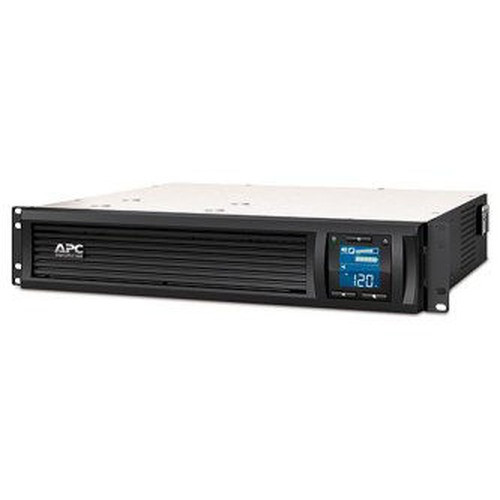
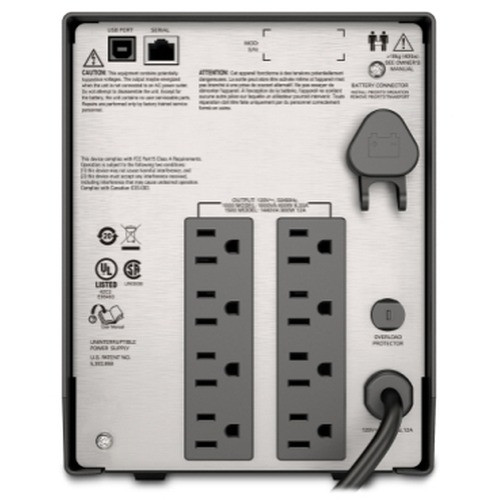
Both units are APC Smart-UPS C 1440VA / 900W line-interactive UPS devices operating at 120V with true sine-wave output — the same power class, the same topology, and direct cross-shop candidates. The SMC1500-2UC is a 2U rackmount chassis with 6 outlets, while the SMC1500C is a tower chassis with 8 NEMA outlets. The comparison centers on form factor and installation environment, input voltage tolerance, and outlet count — the three axes most relevant to buyers choosing between rack-deployed and tower-deployed UPS protection at this capacity tier.
In This Guide
- Which form factor and installation environment does each unit suit?
- How does each unit handle low-voltage or brownout input conditions?
- How many protected outlets does each unit provide, and does that affect load flexibility?
- Which should you choose: the SMC1500-2UC or the SMC1500C?
- Side-by-Side Specs
- FAQ
Which form factor and installation environment does each unit suit?
The SMC1500-2UC is a 2U rackmount unit, designed to be integrated directly into a standard equipment rack alongside servers, network switches, and other rack-mounted security or IT infrastructure. This makes it the natural choice for data closets, telecom rooms, or any deployment where rack space is already allocated and cable management runs through the rack.
The SMC1500C is a tower unit intended for floor or shelf placement adjacent to equipment — common in small offices, reception areas, or distributed edge deployments where no rack is present. Its tower orientation means no rack rails or rack space are consumed, but it occupies floor or shelf footprint instead. Buyers with existing racks should favor the -2UC; buyers without rack infrastructure should favor the tower C.
How does each unit handle low-voltage or brownout input conditions?
The SMC1500C accepts an input operating voltage range of 85V to 136V. This wider low-end tolerance means the unit will continue to supply conditioned AC power from the utility line — without switching to battery — down to 85V, providing meaningful protection against sustained brownout conditions common in older building wiring or in regions with variable utility quality.
The SMC1500-2UC has a narrower input range of 93V to 136V. Below 93V the unit will switch to battery. In environments with stable utility power this difference is rarely triggered, but in locations prone to extended brownouts or voltage sag below 93V, the SMC1500C's 8V additional low-end tolerance represents a tangible advantage in battery runtime conservation. Both units share the same 136V upper limit and the same 50/60 Hz input frequency acceptance.
How many protected outlets does each unit provide, and does that affect load flexibility?
The SMC1500C provides 8 NEMA outlets. With 8 receptacles, installers have greater flexibility to connect a larger number of devices — cameras, NVRs, switches, modems, access control panels — without requiring a separate PDU or outlet expander.
The SMC1500-2UC provides 6 outlets. In a rack environment this is often sufficient because rack-mounted equipment typically uses IEC C13/C14 connections via a separate rack PDU rather than direct NEMA plugs; the 6-outlet figure is therefore less limiting in practice for rack deployments than it appears in isolation. For tower deployments requiring 7 or 8 direct NEMA connections, the SMC1500C is the only option of the two.
Which should you choose: the SMC1500-2UC or the SMC1500C?
Our take: The SMC1500C is the stronger choice when input voltage stability is uncertain or when 8 direct NEMA outlet positions are required; the SMC1500-2UC is the stronger choice for any rack-mounted deployment. Concretely: the SMC1500C tolerates input voltage down to 85V versus 93V on the SMC1500-2UC — an 8V lower brownout threshold that reduces unnecessary battery cycling in marginal utility environments. The SMC1500C also provides 8 outlets versus 6, offering two additional protected receptacles without a PDU. The SMC1500-2UC, however, is a 2U rackmount chassis, making it the only option of the two for rack-integrated installations such as server rooms or security head-end closets. All other measured specs — 1.44 kVA / 900W capacity, sine-wave output, 680J surge rating, 6–10ms hold time, 5% output THD, 45 dB noise, and 50/60Hz operation — are identical across both models.
Side-by-Side Comparison
Spec-for-spec, from manufacturer data.
| Specification | APC by Schneider Electric SMC1500-2UC | APC by Schneider Electric SMC1500C |
|---|---|---|
| UPS Topology | Line-Interactive | Line-Interactive |
| Output Power Capacity | 1.44 kVA | 1.44 kVA |
| Output Power | 900 W | 900 W |
| Waveform | Sine | Sine |
| Form Factor | 2U Rackmount | Tower |
| Outlet Count | 6 | 8 NEMA |
| Input Voltage Min | 93 V | 85 V |
| Input Voltage Max | 136 V | 136 V |
| Output Voltage Min | 110 V | 110 V |
| Output Voltage Max | 127 V | 127 V |
| Input Frequency | 50/60 Hz | 50/60 Hz |
| Output Frequency | 50/60 Hz | 50/60 Hz |
| Surge Energy Rating | 680 J | 680 J |
| Hold Time | 6–10 ms | 6–10 ms |
| Output Voltage THD | 5% | 5% |
| Noise Level | 45 dB | 45 dB |
Frequently Asked Questions
Which should you choose: the SMC1500-2UC or the SMC1500C?
The SMC1500C is the stronger choice when input voltage stability is uncertain or when 8 direct NEMA outlet positions are required; the SMC1500-2UC is the stronger choice for any rack-mounted deployment. Concretely: the SMC1500C tolerates input voltage down to 85V versus 93V on the SMC1500-2UC — an 8V lower brownout threshold that reduces unnecessary battery cycling in marginal utility environments. The SMC1500C also provides 8 outlets versus 6, offering two additional protected receptacles without a PDU. The SMC1500-2UC, however, is a 2U rackmount chassis, making it the only option of the two for rack-integrated installations such as server rooms or security head-end closets. All other measured specs — 1.44 kVA / 900W capacity, sine-wave output, 680J surge rating, 6–10ms hold time, 5% output THD, 45 dB noise, and 50/60Hz operation — are identical across both models.
Can I install the SMC1500-2UC in a standard 19-inch equipment rack?
Yes. The SMC1500-2UC is specifically designed as a 2U rackmount unit for 19-inch racks. The SMC1500C is a tower unit and is not designed for direct rack mounting.
Does either UPS perform better during brownouts or low-voltage utility conditions?
Yes — the SMC1500C accepts input voltage as low as 85V before switching to battery, compared to 93V for the SMC1500-2UC. In environments with frequent voltage sag or brownouts below 93V, the SMC1500C will remain on utility power longer, conserving battery runtime. Both units share the same 136V upper input limit.
Is the SMC1500-2UC or SMC1500C better for connecting more devices directly?
The SMC1500C provides 8 NEMA outlets versus 6 on the SMC1500-2UC, so it supports two additional directly connected devices without a separate power strip or PDU. For rack deployments this distinction is often moot since rack equipment typically connects through a rack PDU, but for tower/shelf deployments the SMC1500C's outlet count is an advantage.
More UPS Comparisons
- APC by Schneider Electric SMC1500-2UC vs Vertiv PSA6-1500LVT
- APC by Schneider Electric SMC1500-2UC vs Vertiv PSA6E-1500LVT
- APC by Schneider Electric SMC1500-2UC vs APC by Schneider Electric SMT1500X93
- APC by Schneider Electric SMC1500C vs Vertiv PSA6-1500LVT
- APC by Schneider Electric SMC1500C vs Vertiv PSA6E-1500LVT
- APC by Schneider Electric SMC1500C vs APC by Schneider Electric SMT1500X93
UPS Buying Guides
Get a Second Opinion on Your Camera Choice
Share your site layout, coverage goals, and budget. Our team will validate the camera selection, flag anything we would change, and recommend products that match the use case.