
APC by Schneider Electric SMC1500-2UC vs APC by Schneider Electric SMT1500X93: Specification Comparison
Both the SMC1500-2UC and SMT1500X93 are APC Smart-UPS line-interactive units rated at 1440 VA on 120 V circuits, making them direct cross-shop candidates for small server rooms, network closets, and edge deployments. The comparison centers on runtime and power delivery, input voltage tolerance and transfer characteristics, and connectivity plus outlet configuration — the three axes that most directly determine which unit fits a given installation's power environment and load profile.
In This Guide
- Which unit delivers more usable watts and how does each handle the AC-to-battery transfer?
- How wide an input voltage window does each unit accept before switching to battery?
- What physical connectivity and outlet configuration does each unit provide?
- Which should you choose: the SMC1500-2UC or the SMT1500X93?
- Side-by-Side Specs
- FAQ
Which unit delivers more usable watts and how does each handle the AC-to-battery transfer?
The SMT1500X93 edges ahead on real power output, rated at 1000 W versus the SMC1500-2UC's 900 W — a 100 W (11%) advantage at the same 1440 VA capacity. That gap matters when loads approach the watt ceiling: the SMT1500X93 supports heavier server or switch stacks before clipping. Both units produce a true sine-wave output, which protects active-PFC power supplies found in modern servers and storage arrays.
Transfer behavior differs in the available spec data. The SMC1500-2UC lists a hold time range of 6–10 ms, meaning the inverter sustains output for at least 6 ms before a connected load would see any gap — a figure that directly governs whether attached equipment rides through the switchover. The SMT1500X93 lists a response time of 6 ms; note that 'response time' and 'hold time' are not identical metrics, so a strict apples-to-apples comparison cannot be made from the provided data alone. Both deliver 50/60 Hz output with THD specified only for the SMC1500-2UC at ≤5%; the SMT1500X93's output THD is not stated in the provided specs.
How wide an input voltage window does each unit accept before switching to battery?
The SMT1500X93 operates on a significantly wider input voltage window: 82–144 V versus the SMC1500-2UC's 93–136 V. The lower floor of 82 V (versus 93 V) means the SMT1500X93 can ride through deeper voltage sags — such as those common in older buildings, rural utility feeds, or facilities with heavy motor loads — without switching to battery. The upper ceiling of 144 V (versus 136 V) likewise handles overvoltage events that would force the SMC1500-2UC onto battery prematurely.
Staying on utility power longer preserves battery life and avoids unnecessary charge-discharge cycles. For installations on stable, well-regulated utility feeds this difference is marginal, but for sites with known voltage instability the SMT1500X93's 62 V total window (versus 43 V for the SMC1500-2UC) is a meaningful operational advantage. Both units accept 50/60 Hz input, so neither has a frequency-tolerance advantage per the provided specs. The SMC1500-2UC's output window is specified as 110–127 V; the SMT1500X93 lists only an output maximum of 120 V with no minimum stated.
What physical connectivity and outlet configuration does each unit provide?
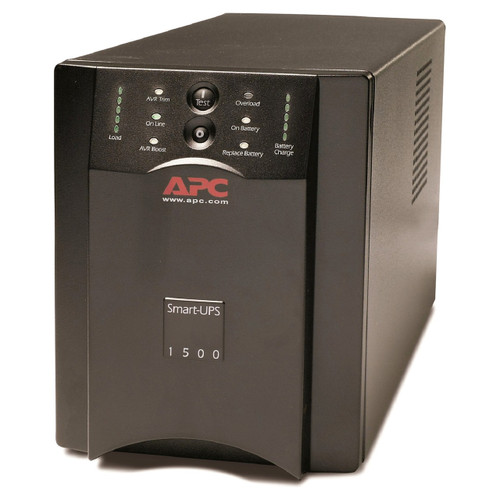
The SMT1500X93 provides explicit outlet details: 8 × NEMA 5-15R receptacles, a NEMA 5-15P input plug, and a USB Type-B management port. The USB port enables software-based graceful shutdown via APC PowerChute or compatible UPS management utilities. The SMC1500-2UC's provided specs do not list outlet count, outlet type, plug type, or a USB/management port; those values are absent from the data supplied.
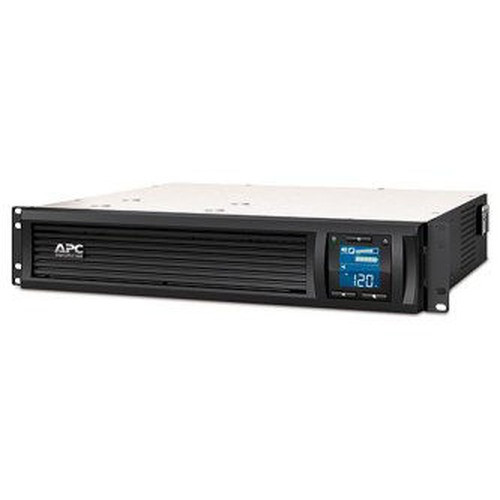
The SMC1500-2UC is identified as a 2U rackmount form factor in its product name, making it suited to standard 19-inch rack deployments in equipment cabinets. The SMT1500X93's form factor is not specified in the provided data. The SMC1500-2UC includes EMI/RFI noise filtering (explicitly listed); the SMT1500X93 does not include that spec in the provided data. Surge energy ratings are close: 693 J for the SMT1500X93 versus 680 J for the SMC1500-2UC — a negligible 2% difference.
Which should you choose: the SMC1500-2UC or the SMT1500X93?
Our take: The SMT1500X93 is the stronger choice when load wattage, input voltage tolerance, and software-managed shutdown are the primary concerns. It delivers 1000 W versus the SMC1500-2UC's 900 W — a 100 W margin that matters for denser server or network loads — and its 82–144 V input window is substantially wider than the SMC1500-2UC's 93–136 V, making it more resilient on unstable utility feeds. Its documented USB Type-B port and 8 × NEMA 5-15R outlets round out a well-specified package. Conversely, the SMC1500-2UC is confirmed as a 2U rackmount unit — critical for structured rack installations — includes explicit EMI/RFI filtering, and specifies output THD at ≤5%; the SMT1500X93 lacks those specs in the provided data. Choose the SMC1500-2UC for rack-mount deployments requiring documented noise filtering; choose the SMT1500X93 for higher-watt loads or sites with wide voltage swings.
Side-by-Side Comparison
Spec-for-spec, from manufacturer data.
| Specification | APC by Schneider Electric SMC1500-2UC | APC by Schneider Electric SMT1500X93 |
|---|---|---|
| UPS Topology | Line-Interactive | Line-Interactive |
| Output Power Capacity | 1440 VA | 1440 VA |
| Output Power (Watts) | 900 W | 1000 W |
| Waveform Type | Sine | Sine |
| Input Voltage Min | 93 V | 82 V |
| Input Voltage Max | 136 V | 144 V |
| Input Frequency | 50/60 Hz | 50/60 Hz |
| Output Voltage Min | 110 V | — |
| Output Voltage Max | 127 V | 120 V |
| Output Frequency | 50/60 Hz | 50/60 Hz |
| Surge Energy Rating | 680 J | 693 J |
| Transfer / Hold Time | Hold time: 6–10 ms | Response time: 6 ms |
| Output THD | ≤5% | — |
| EMI/RFI Filtering | Yes | — |
| Noise Level | 45 dB | 45 dB |
| USB Management Port | — | USB Type-B |
| AC Outlets | — | 8 × NEMA 5-15R |
| Input Plug | — | NEMA 5-15P |
| Form Factor | 2U Rackmount | — |
| Audible Alarms | Yes | Yes |
Frequently Asked Questions
Which should you choose: the SMC1500-2UC or the SMT1500X93?
The SMT1500X93 is the stronger choice when load wattage, input voltage tolerance, and software-managed shutdown are the primary concerns. It delivers 1000 W versus the SMC1500-2UC's 900 W — a 100 W margin that matters for denser server or network loads — and its 82–144 V input window is substantially wider than the SMC1500-2UC's 93–136 V, making it more resilient on unstable utility feeds. Its documented USB Type-B port and 8 × NEMA 5-15R outlets round out a well-specified package. Conversely, the SMC1500-2UC is confirmed as a 2U rackmount unit — critical for structured rack installations — includes explicit EMI/RFI filtering, and specifies output THD at ≤5%; the SMT1500X93 lacks those specs in the provided data. Choose the SMC1500-2UC for rack-mount deployments requiring documented noise filtering; choose the SMT1500X93 for higher-watt loads or sites with wide voltage swings.
Is the SMC1500-2UC or SMT1500X93 better for a server rack with heavy power loads?
Based on provided specs, the SMT1500X93 supports 1000 W versus the SMC1500-2UC's 900 W, giving it a 100 W advantage before the unit clips. For heavier server or storage loads approaching that ceiling, the SMT1500X93 provides more headroom. However, the SMC1500-2UC is confirmed as a 2U rackmount unit, which may be a requirement for structured rack deployments; the SMT1500X93's form factor is not stated in the provided specs.
Which UPS handles poor or fluctuating utility voltage better — the SMC1500-2UC or SMT1500X93?
The SMT1500X93 has a wider input operating range of 82–144 V compared to the SMC1500-2UC's 93–136 V. That 62 V total window versus 43 V means the SMT1500X93 stays on utility power through deeper voltage sags and higher overvoltage events before switching to battery, which preserves battery longevity and reduces unnecessary discharge cycles on unstable or aging utility feeds.
Does either the SMC1500-2UC or SMT1500X93 include a management interface for graceful server shutdown?
The SMT1500X93 lists a USB Type-B port in its provided specs, which supports connection to a host server for software-based graceful shutdown via compatible UPS management software. The SMC1500-2UC's provided specs do not include any USB or network management port information, so that capability cannot be confirmed from the data supplied for that model.
More UPS Comparisons
- APC by Schneider Electric SMC1500-2UC vs Vertiv PSA6-1500LVT
- APC by Schneider Electric SMC1500-2UC vs Vertiv PSA6E-1500LVT
- APC by Schneider Electric SMC1500-2UC vs APC by Schneider Electric SMC1500C
- APC by Schneider Electric SMC1500C vs Vertiv PSA6-1500LVT
- APC by Schneider Electric SMC1500C vs Vertiv PSA6E-1500LVT
- APC by Schneider Electric SMC1500C vs APC by Schneider Electric SMT1500X93
UPS Buying Guides
Get a Second Opinion on Your Camera Choice
Share your site layout, coverage goals, and budget. Our team will validate the camera selection, flag anything we would change, and recommend products that match the use case.