
Vertiv GXT5LI-1000LVRT2UXL vs Vertiv RDU101: Specification Comparison
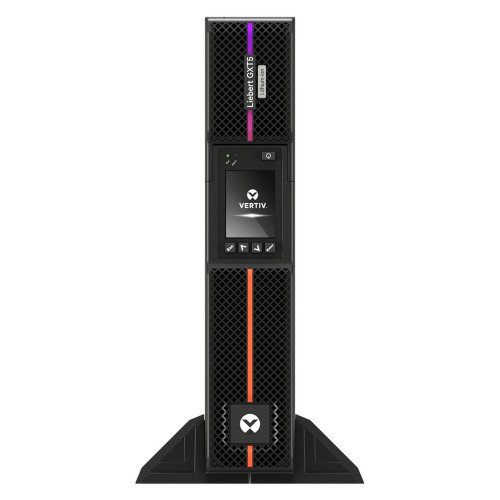
Both units are Vertiv GXT5 1000VA / 1000W online double-conversion rack/tower UPS systems in a 2U form factor, targeting the same IT closet and edge-compute buyer segment. The GXT5LI-1000LVRT2UXL pairs the platform with a lithium-ion battery, while the GXT5-1000LVRT2UXLN ships with a conventional (VRLA) battery and bundles the RDU101 network management card. The comparison centers on battery chemistry, efficiency, management connectivity, and receptacle programmability — the three axes most consequential for a security or IT infrastructure purchaser.
In This Guide
- How do battery chemistry and energy efficiency differ between the two units?
- Which unit offers more management and connectivity options out of the box?
- Are there differences in outlet programmability, physical dimensions, or compliance certifications?
- Which should you choose: the GXT5LI-1000LVRT2UXL or the RDU101?
- Side-by-Side Specs
- FAQ
How do battery chemistry and energy efficiency differ between the two units?
The GXT5LI-1000LVRT2UXL uses a lithium-ion battery pack, certified under UL 1973 and UL 1642 — standards specific to lithium battery systems. Lithium-ion chemistry typically delivers a longer service life, lighter weight per equivalent capacity, and tolerance for higher ambient temperatures before derating, though the spec sheet notes 10% derating at 50°C. Its stated online efficiency is up to 92%, rising to 98% in Active ECO Mode.
The GXT5-1000LVRT2UXLN uses a conventional battery (chemistry not explicitly stated in the provided specs) and does not carry UL 1973 or UL 1642 listings. Its efficiency curve is more favorable in online mode — up to 95% online versus 92% for the lithium model — and also reaches 98% in Active ECO Mode. Neither datasheet specifies runtime at full or half load, so runtime cannot be directly compared from the provided specs alone.
For installations where battery replacement labor cost, weight, or long battery service life is a priority, the lithium-ion chemistry of the GXT5LI-1000LVRT2UXL is the differentiating factor. For installations where online-mode efficiency headroom is the priority, the GXT5-1000LVRT2UXLN's 95% online figure is higher by 3 percentage points.
Which unit offers more management and connectivity options out of the box?
The GXT5LI-1000LVRT2UXL provides USB, RS232, a Dry-Contact Terminal Block, and an Intellislot expansion bay for optional management cards. SNMP and web management require adding an optional RDU101 network card — it does not ship with one. The RS-level interface is RS232.
The GXT5-1000LVRT2UXLN bundles the RDU101 network management card in the box, enabling SNMP and web management without an additional purchase. Its interface list also expands to include RS485 in addition to RS232 and USB, and it retains the terminal block and IntelliSlot bay (noted as compatible with the RDU120 card). The RDU120 is listed as the optional card for this model, indicating a newer management card generation than the RDU101 referenced for the lithium model.
For buyers who need immediate out-of-band SNMP and web visibility — common in security NVR closets or IT environments requiring centralized UPS monitoring — the GXT5-1000LVRT2UXLN provides that capability without an extra line item. The GXT5LI-1000LVRT2UXL requires a separate network card purchase to reach parity on remote management.
Are there differences in outlet programmability, physical dimensions, or compliance certifications?
Both units provide six NEMA 5-15R output receptacles and share the same rack height (3.4 in / 2U) and width (16.9 in). The GXT5-1000LVRT2UXLN explicitly specifies that four of the six receptacles are individually programmable, with two non-programmable — a feature not mentioned in the GXT5LI-1000LVRT2UXL spec sheet. Programmable outlets enable load-shedding and sequenced restart, which is operationally significant in multi-device security or IT racks.
Depth differs: the GXT5LI-1000LVRT2UXL is 17.3 in deep versus 15.7 in for the GXT5-1000LVRT2UXLN — a 1.6 in difference that may matter in shallow two-post or short-depth rack environments. The lithium model is also heavier: 37.5 lb versus 37 lb.
On certifications, the GXT5LI-1000LVRT2UXL adds UL 1973, UL 1642, and Energy Star 2.0 to the shared UL 1778, RoHS, WEEE, and REACH listings. The GXT5-1000LVRT2UXLN holds UL 1778 4th edition, CSA 22.2 No. 107.1, Energy Star 2.0, RoHS2, WEEE, and REACH. The CSA listing on the UXLN model is relevant for Canadian deployments; the lithium-specific UL listings on the LI model are required for lithium battery installations in jurisdictions that enforce them.
Which should you choose: the GXT5LI-1000LVRT2UXL or the RDU101?
Our take: The GXT5LI-1000LVRT2UXL is the stronger choice when lithium-ion battery longevity, reduced battery replacement frequency, or lithium-specific compliance (UL 1973, UL 1642) are hard requirements for the installation. The GXT5-1000LVRT2UXLN outperforms it on three concrete dimensions: online-mode efficiency reaches 95% versus 92% (a 3-point gap that compounds at scale), SNMP and web management are included in the box via the bundled RDU101 card rather than requiring a separate purchase, and four of its six outlets are individually programmable for load-shedding — a feature absent from the lithium model's spec sheet. The UXLN also runs 1.6 in shallower (15.7 in vs 17.3 in), an advantage in constrained rack depths. Buyers running mixed IT/security racks who need immediate remote monitoring and outlet-level control should favor the GXT5-1000LVRT2UXLN; those with lithium battery mandates or long replacement-cycle requirements should select the GXT5LI-1000LVRT2UXL.
Side-by-Side Comparison
Spec-for-spec, from manufacturer data.
| Specification | Vertiv GXT5LI-1000LVRT2UXL | Vertiv RDU101 |
|---|---|---|
| Power Rating | 1000VA / 1000W | 1000VA / 1000W |
| Battery Chemistry | Lithium-ion | Not specified in provided specs |
| Topology | Not stated in provided specs | Online double-conversion |
| Input Voltage Range (Nominal) | 102–150 VAC | 120V nominal / 60–150V range |
| Output Voltage | 100/110/115/120/125VAC (user-configurable) | 110/115/120/125VAC (user-configurable) ±3% |
| Online Efficiency | Up to 92% | Up to 95% |
| Active ECO Mode Efficiency | Up to 98% | Up to 98% |
| Output Receptacles | 6× NEMA 5-15R | 6× NEMA 5-15R (4 programmable, 2 non-programmable) |
| Input Plug | NEMA 5-15P | NEMA 5-15P |
| Network Management (Included) | No — optional RDU101 required | Yes — RDU101 bundled |
| Interface Options | USB, RS232, Dry-Contact Terminal Block, Intellislot | USB, RS232, RS485, Terminal Block, IntelliSlot (RDU120 optional) |
| Height | 3.4 in | 3.4 in |
| Width | 16.9 in | 16.9 in |
| Depth | 17.3 in | 15.7 in |
| Weight | 37.5 lb | 37 lb |
| Certifications | UL 1778, UL 1973, UL 1642, Energy Star 2.0, RoHS, WEEE, REACH | UL 1778 4th ed., CSA 22.2 No. 107.1, Energy Star 2.0, RoHS2, WEEE, REACH |
Frequently Asked Questions
Which should you choose: the GXT5LI-1000LVRT2UXL or the RDU101?
The GXT5LI-1000LVRT2UXL is the stronger choice when lithium-ion battery longevity, reduced battery replacement frequency, or lithium-specific compliance (UL 1973, UL 1642) are hard requirements for the installation. The GXT5-1000LVRT2UXLN outperforms it on three concrete dimensions: online-mode efficiency reaches 95% versus 92% (a 3-point gap that compounds at scale), SNMP and web management are included in the box via the bundled RDU101 card rather than requiring a separate purchase, and four of its six outlets are individually programmable for load-shedding — a feature absent from the lithium model's spec sheet. The UXLN also runs 1.6 in shallower (15.7 in vs 17.3 in), an advantage in constrained rack depths. Buyers running mixed IT/security racks who need immediate remote monitoring and outlet-level control should favor the GXT5-1000LVRT2UXLN; those with lithium battery mandates or long replacement-cycle requirements should select the GXT5LI-1000LVRT2UXL.
Does the GXT5LI-1000LVRT2UXL include a network management card, or do I need to buy one separately?
Based on the provided specs, the GXT5LI-1000LVRT2UXL does not include a network management card. SNMP and web management require an optional RDU101 network card purchased separately. The GXT5-1000LVRT2UXLN, by contrast, bundles the RDU101 card in the box.
Can either unit fit in a shallow rack cabinet?
The GXT5-1000LVRT2UXLN is 15.7 in deep, while the GXT5LI-1000LVRT2UXL is 17.3 in deep. Both are 2U (3.4 in) tall and 16.9 in wide. If your rack has a usable depth under 17.3 in, only the GXT5-1000LVRT2UXLN will fit without modification.
Which unit is better if I need to shed non-critical loads during a power event?
The GXT5-1000LVRT2UXLN specifies four individually programmable receptacles (plus two non-programmable), enabling outlet-level load-shedding and sequenced restart. The GXT5LI-1000LVRT2UXL spec sheet does not mention programmable outlets, so that capability cannot be confirmed for that model based on the provided specifications.
More UPS Comparisons
- CyberPower PR1000RTXL2UC vs APC by Schneider Electric SURT1000RMXLI
- CyberPower PR1000RTXL2UC vs APC by Schneider Electric SMT1000CUS
- CyberPower PR1000RTXL2UC vs Vertiv GXT5-1000LVRT2UXL
- CyberPower PR1000RTXL2UC vs APC by Schneider Electric SMT1000J
- CyberPower PR1000RTXL2UC vs CyberPower CP1000PFCLCD
- CyberPower PR1000RTXL2UC vs CyberPower PR1000LCD
UPS Buying Guides
Get a Second Opinion on Your Camera Choice
Share your site layout, coverage goals, and budget. Our team will validate the camera selection, flag anything we would change, and recommend products that match the use case.