
Vertiv GXT5-1500LVRT2UXL vs Vertiv PSI5-1500RT120LI: Specification Comparison
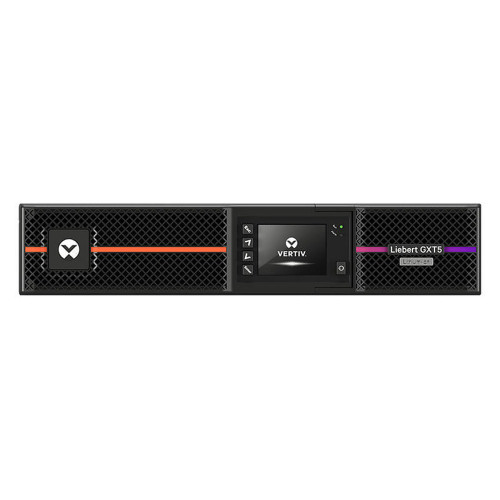
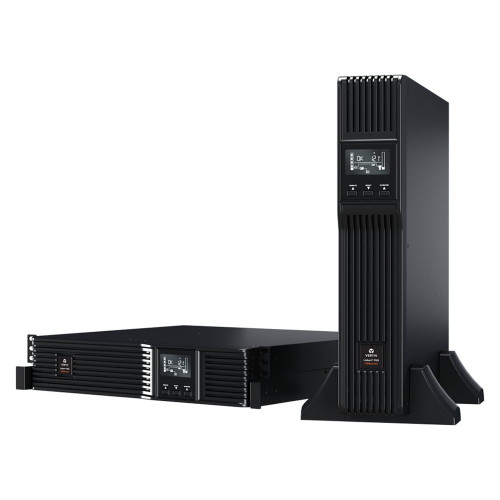
Both the Vertiv Liebert GXT5-1500LVRT2UXL and the Vertiv Liebert PSI5-1500RT120LI are 1500VA / 1350W rack/tower convertible UPS units targeting small-to-midsize IT infrastructure and physical-security deployments. The comparison centers on three operationally critical axes: power protection topology and output quality, battery technology and serviceability, and connectivity plus compliance footprint. Buyers choosing between these two are weighing the premium of online double-conversion against the lighter weight and lithium-ion battery advantages of the line-interactive PSI5.
In This Guide
- Which UPS provides stronger power protection topology and output quality?
- How do battery technology, weight, and field serviceability compare?
- Which unit offers broader connectivity options and compliance coverage?
- Which should you choose: the GXT5-1500LVRT2UXL or the PSI5-1500RT120LI?
- Side-by-Side Specs
- FAQ
Which UPS provides stronger power protection topology and output quality?
The GXT5-1500LVRT2UXL uses Online Double Conversion topology, meaning all connected loads are continuously powered from the inverter with zero transfer time to battery. This eliminates any switching window and fully re-conditions output regardless of input quality, delivering 110/115/120/125VAC ±3% pure sinewave at all times.
The PSI5-1500RT120LI uses Line-Interactive topology with Automatic Voltage Regulation (AVR). It provides pure sinewave output only when running on battery; under normal grid conditions the output passes through with AVR correction. Its input range is wider at 75–146VAC versus the GXT5's 60–150VAC, meaning it tolerates low-voltage sags somewhat deeper on the lower end (75V vs 60V threshold — the GXT5 tolerates lower sags). Transfer time for the PSI5 is not specified in the provided data; for the GXT5 it is zero by design.
For loads sensitive to even brief power anomalies — network switches, NVRs with spinning disks, or access-control servers — the double-conversion topology of the GXT5 provides a measurably stronger protection envelope. The PSI5's line-interactive design is appropriate where budget or weight constraints dominate and brief transfer windows are acceptable.
How do battery technology, weight, and field serviceability compare?
The PSI5-1500RT120LI uses a Lithium-Ion battery, a fundamental architectural difference. Lithium-ion chemistry typically delivers a longer cycle life, a wider operating temperature tolerance (though both units share the same 32–104°F / 0–40°C operating spec as stated), and significantly lower weight. The PSI5 weighs 28.4 lbs. Battery access is front-facing with hot-swappable battery kits.
The GXT5-1500LVRT2UXL uses conventional VRLA (lead-acid) chemistry — the spec sheet describes hot-swappable user-replaceable battery modules but does not specify lithium-ion. It weighs 46.2 lbs, 62.7% heavier than the PSI5. Hot-swap capability is confirmed on both units, preserving runtime continuity during replacement without powering down attached equipment.
For dense rack environments or installations where a single technician must handle the unit, the PSI5's 17.8 lb weight advantage is material. For deployments where battery longevity over charge cycles and reduced maintenance intervals matter, the PSI5's lithium-ion chemistry is the differentiator. The GXT5's battery chemistry specifics beyond 'hot-swappable modules' are not further detailed in the provided spec data.
Which unit offers broader connectivity options and compliance coverage?
Both units share a core connectivity set: USB port, optional Liebert IntelliSlot network card (SNMP and web management), and an EPO connector. The GXT5-1500LVRT2UXL adds a Serial (DB9) interface not listed for the PSI5, giving it an additional out-of-band management path for legacy infrastructure or scripted monitoring environments.
On compliance, the GXT5-1500LVRT2UXL carries TAA Compliance and Energy Star 2.0 Certification — both are procurement-critical for U.S. federal, SLED, and GSA-schedule buyers. The PSI5-1500RT120LI lists UL 1778, c-UL-us Listed, UN38.3 (lithium battery transport), NOM, FCC Part 15 Class B — safety and emissions certifications appropriate for commercial installations, but TAA compliance is not stated in the provided data.
Efficiency figures are close: the GXT5 reaches up to 98% in ECO mode; the PSI5 specifies 0.986 (98.6%) — though it is not specified whether this is in a particular mode or at a specific load. Buyers subject to federal acquisition regulations or needing TAA-compliant hardware should verify PSI5 TAA status independently, as it is absent from the provided spec data.
Which should you choose: the GXT5-1500LVRT2UXL or the PSI5-1500RT120LI?
Our take: The GXT5-1500LVRT2UXL is the stronger choice when zero-transfer-time protection, TAA compliance, and Serial/DB9 legacy management connectivity are required. Its Online Double Conversion topology eliminates transfer windows entirely — a fundamental advantage over the PSI5's line-interactive design for sensitive NVR, access-control, or server loads. It also carries confirmed TAA and Energy Star 2.0 certifications absent from the PSI5's provided spec data. Conversely, the PSI5-1500RT120LI is the stronger choice when weight and battery longevity are prioritized: at 28.4 lbs versus 46.2 lbs, it is 17.8 lbs lighter, and its lithium-ion battery chemistry typically delivers longer cycle life than conventional VRLA. Both units are 1500VA / 1350W with 6 × NEMA 5-15R outlets and hot-swap battery access. Choose the GXT5 for federal or compliance-sensitive deployments and double-conversion protection; choose the PSI5 for commercial installations where reduced weight and lithium-ion battery longevity outweigh topology differences.
Side-by-Side Comparison
Spec-for-spec, from manufacturer data.
| Specification | Vertiv GXT5-1500LVRT2UXL | Vertiv PSI5-1500RT120LI |
|---|---|---|
| Topology | Online Double Conversion | Line-Interactive (AVR) |
| Capacity | 1500VA / 1350W | 1500VA / 1350W |
| Form Factor | Rack/Tower Convertible, 2U | Rack/Tower Convertible, 2U |
| Output Waveform | Pure Sinewave (always) | Pure Sinewave (on battery) |
| Transfer Time | Zero (continuous) | Not specified |
| Input Voltage Range | 60–150VAC | 75–146VAC |
| Output Voltage Options | 110/115/120/125VAC ±3% | 120VAC default; 100/110/115/125VAC selectable |
| Outlets | 6 × NEMA 5-15R | 6 × NEMA 5-15R |
| Battery Type | VRLA (hot-swappable modules) | Lithium-Ion (hot-swappable kits) |
| Weight | 46.2 lbs | 28.4 lbs |
| Efficiency | Up to 98% (ECO mode) | 98.6% (mode not specified) |
| Connectivity | USB, Serial DB9, optional IntelliSlot | USB, EPO, optional IntelliSlot UNITY |
| Display | Not specified | Rotatable LCD |
| TAA Compliance | Yes | Not specified in provided data |
| Energy Star | Energy Star 2.0 Certified | Not specified in provided data |
| Warranty | 3-Year Advanced Replacement | Not specified in provided data |
Frequently Asked Questions
Which should you choose: the GXT5-1500LVRT2UXL or the PSI5-1500RT120LI?
The GXT5-1500LVRT2UXL is the stronger choice when zero-transfer-time protection, TAA compliance, and Serial/DB9 legacy management connectivity are required. Its Online Double Conversion topology eliminates transfer windows entirely — a fundamental advantage over the PSI5's line-interactive design for sensitive NVR, access-control, or server loads. It also carries confirmed TAA and Energy Star 2.0 certifications absent from the PSI5's provided spec data. Conversely, the PSI5-1500RT120LI is the stronger choice when weight and battery longevity are prioritized: at 28.4 lbs versus 46.2 lbs, it is 17.8 lbs lighter, and its lithium-ion battery chemistry typically delivers longer cycle life than conventional VRLA. Both units are 1500VA / 1350W with 6 × NEMA 5-15R outlets and hot-swap battery access. Choose the GXT5 for federal or compliance-sensitive deployments and double-conversion protection; choose the PSI5 for commercial installations where reduced weight and lithium-ion battery longevity outweigh topology differences.
Is the GXT5-1500LVRT2UXL or PSI5-1500RT120LI better for protecting sensitive NVR or access-control servers?
The GXT5-1500LVRT2UXL is the more protective choice for sensitive loads. Its Online Double Conversion topology provides zero transfer time — the inverter continuously powers the load with no switching gap. The PSI5-1500RT120LI uses Line-Interactive topology with pure sinewave output on battery, but its transfer time to battery is not specified in the provided data. For NVRs with spinning drives or access-control servers intolerant of any power interruption, double-conversion is the safer topology.
Does the PSI5-1500RT120LI's lithium-ion battery make a meaningful difference in a rack deployment?
Yes, in two measurable ways from the provided specs. First, weight: the PSI5 is 28.4 lbs versus the GXT5's 46.2 lbs — a 17.8 lb difference that matters when a single technician must install or service the unit in a rack. Second, lithium-ion chemistry inherently supports more charge cycles than conventional VRLA before capacity degrades, though specific cycle-count figures are not stated in either product's provided spec data. If rack weight limits or extended battery service intervals are priorities, the PSI5 has a clear advantage.
Which unit is required for U.S. federal or government procurement?
The GXT5-1500LVRT2UXL is confirmed TAA Compliant per its provided specifications, making it eligible for GSA schedule and federal acquisition requirements. The PSI5-1500RT120LI's provided spec data does not list TAA compliance. Buyers with federal, SLED, or GSA procurement requirements should verify PSI5 TAA status directly with Vertiv before specifying it, as that certification is absent from the data provided for this comparison.
More UPS Comparisons
- APC by Schneider Electric SMX1500RMI2U vs CyberPower PRL1500RT2UC
- APC by Schneider Electric SMX1500RMI2U vs CyberPower BRG1500AVRLCD2
- APC by Schneider Electric SMX1500RMI2U vs CyberPower PR1500LCD
- APC by Schneider Electric SMX1500RMI2U vs APC by Schneider Electric BR1500MS2
- APC by Schneider Electric SMX1500RMI2U vs APC by Schneider Electric SMTL1500RM3UCUS
- CyberPower PRL1500RT2UC vs APC by Schneider Electric BR1500MS2
UPS Buying Guides
Get a Second Opinion on Your Camera Choice
Share your site layout, coverage goals, and budget. Our team will validate the camera selection, flag anything we would change, and recommend products that match the use case.