
Ubiquiti USW-LITE-8-POE vs Ubiquiti USW-ULTRA-210W: Specification Comparison
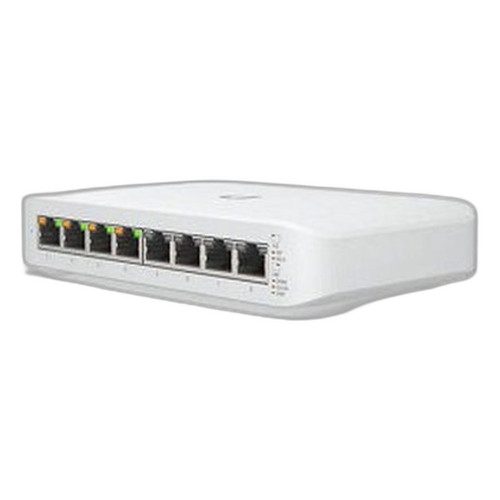
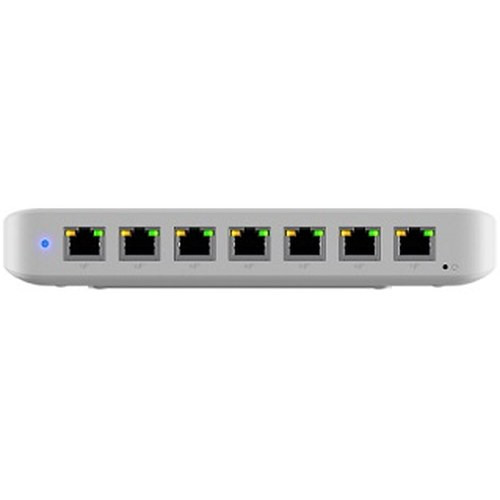
Both the USW-LITE-8-POE and the USW-ULTRA-210W are Ubiquiti 8-port gigabit managed PoE switches sharing the same switching capacity, forwarding rate, port count, and UniFi management platform. The critical differentiators are PoE power budget (52W versus 210W), PoE standard (802.3at+ versus 802.3bt PoE++), VLAN scale (1,000 versus 256), and operating temperature range. This comparison targets installers and IT buyers choosing between a lightweight edge switch for low-draw endpoints and a high-wattage switch for power-hungry devices or outdoor-adjacent deployments.
In This Guide
- Which switch delivers enough PoE power for your connected devices?
- Which switch is better suited to the physical installation environment and power source?
- Which switch offers the right level of VLAN segmentation and network management capability?
- Which should you choose: the USW-LITE-8-POE or the USW-ULTRA-210W?
- Side-by-Side Specs
- FAQ
Which switch delivers enough PoE power for your connected devices?
The USW-LITE-8-POE provides a 52W total PoE+ (802.3at) budget across all 8 ports, sourced from an included 60W external AC/DC adapter. At 802.3at, each port delivers up to 30W, making the switch suitable for standard IP cameras, Wi-Fi 5/6 access points, VoIP phones, and low-draw IoT devices. However, the 52W shared budget limits simultaneous full-power draws; powering all 8 ports at maximum 802.3at rates is not possible within the budget.
The USW-ULTRA-210W provides a 210W total PoE++ (802.3bt) budget across all 8 ports, sourced from an included 210W external AC/DC adapter. The 802.3bt standard supports up to 90W per port, enabling the switch to power high-draw devices such as Wi-Fi 6E/7 access points, PTZ cameras with heaters, video door stations, and multi-radio APs. The 210W aggregate budget is more than four times that of the LITE-8-POE, and Ubiquiti states all 8 ports can be powered simultaneously at the rated total output. For deployments where per-port or aggregate power headroom is the primary constraint, the ULTRA-210W is the materially stronger option.
Which switch is better suited to the physical installation environment and power source?
The USW-LITE-8-POE is rated for operating temperatures of -15°C to +40°C (5°F to 104°F) and is housed in a polycarbonate enclosure. Its power input is AC/DC only (50–57V DC, 60W external adapter). Mount options are compact desktop or wall-mount. Dimensions are 99.6 × 163.7 × 31.7 mm and weight is 295 g. The narrower temperature range limits deployment to conditioned or semi-conditioned indoor spaces; it is not specified for unheated enclosures or outdoor cabinets that see sub-zero ambient temperatures.
The USW-ULTRA-210W is rated for operating temperatures of -30°C to +60°C (-22°F to +140°F) when powered via PoE++ input, a 15°C wider cold-end and 20°C wider hot-end range compared to the LITE-8-POE. It accepts both AC/DC (210W external adapter) and PoE++ input (50–57V DC), allowing it to be powered directly from an upstream PoE++ switch or injector—eliminating the need for a local AC outlet at remote or outdoor sites. Mount options are desktop, wall, and magnetic. Dimensions are 203 × 76 × 33 mm and weight is 320 g. The broader thermal range and dual power-input capability make the ULTRA-210W the appropriate choice for outdoor enclosures, unheated MDF/IDF closets, or any site where AC power at the switch location is unavailable.
Which switch offers the right level of VLAN segmentation and network management capability?
The USW-LITE-8-POE supports up to 1,000 VLANs. Both switches share identical switching capacity (16 Gbps), forwarding rate (12 Mpps), 8 Gbps non-blocking throughput, and Ethernet-based management. The higher VLAN count on the LITE-8-POE is directly relevant in enterprise, multi-tenant, or complex segmented deployments where cameras, IoT devices, corporate LAN, guest traffic, and management planes each require dedicated VLANs—particularly when the switch feeds a multi-VLAN trunk to an upstream aggregation layer.
The USW-ULTRA-210W supports up to 256 VLANs. For most small-to-medium physical security deployments—where a camera VLAN, a corporate VLAN, an IoT VLAN, and a management VLAN cover all practical segmentation needs—256 VLANs is more than sufficient. Neither switch's management interface specifications (beyond Ethernet connectivity) are detailed in the provided specs; both are managed via UniFi Network, but no additional software features, Layer 3 capabilities, or spanning-tree details are stated in the supplied data. Buyers requiring advanced Layer 3 routing, OSPF, or similar features should verify those capabilities independently, as the provided specifications do not address them.
Which should you choose: the USW-LITE-8-POE or the USW-ULTRA-210W?
Our take: The USW-LITE-8-POE is the stronger choice when the connected devices are standard 802.3at loads (IP cameras, Wi-Fi 5/6 APs, VoIP phones), the installation is in a conditioned indoor space (-15°C to +40°C), and VLAN segmentation depth (up to 1,000 VLANs) is a priority. The USW-ULTRA-210W is the stronger choice when power budget, thermal range, or power-input flexibility is the constraint: its 210W PoE++ budget is 4× the LITE-8-POE's 52W, its -30°C to +60°C operating range accommodates unheated or outdoor enclosures where the LITE-8-POE would fail, and its PoE++ input option removes the dependency on a local AC outlet at the switch. The trade-off is 256 VLANs versus 1,000 on the LITE-8-POE—a gap that matters in dense multi-tenant or enterprise segmentation scenarios but is irrelevant in most edge security deployments. Both switches are NDAA-compliant and share the same UniFi management platform.
Side-by-Side Comparison
Spec-for-spec, from manufacturer data.
| Specification | Ubiquiti USW-LITE-8-POE | Ubiquiti USW-ULTRA-210W |
|---|---|---|
| Port Count | 8 | 8 |
| Port Speed | 1 Gbps | 1 Gbps |
| PoE Standard | 802.3at (PoE+) | 802.3bt (PoE++) |
| Total PoE Budget | 52W | 210W |
| Power Supply (included) | 60W external AC/DC | 210W external AC/DC |
| Power Input Options | AC/DC only | AC/DC or PoE++ input |
| Switching Capacity | 16 Gbps | 16 Gbps |
| Non-Blocking Throughput | 8 Gbps | 8 Gbps |
| Forwarding Rate | 12 Mpps | 12 Mpps |
| VLAN Support | 1,000 | 256 |
| Operating Temperature | -15°C to +40°C | -30°C to +60°C (PoE++ input) |
| Power Consumption (excl. PoE) | 8W | 9W |
| Dimensions (mm) | 99.6 × 163.7 × 31.7 | 203 × 76 × 33 |
| Weight | 295 g (10.4 oz) | 320 g (11.3 oz) |
| Mount Options | Desktop, wall | Desktop, wall, magnetic |
| NDAA Compliant | Yes | Yes |
Frequently Asked Questions
Which should you choose: the USW-LITE-8-POE or the USW-ULTRA-210W?
The USW-LITE-8-POE is the stronger choice when the connected devices are standard 802.3at loads (IP cameras, Wi-Fi 5/6 APs, VoIP phones), the installation is in a conditioned indoor space (-15°C to +40°C), and VLAN segmentation depth (up to 1,000 VLANs) is a priority. The USW-ULTRA-210W is the stronger choice when power budget, thermal range, or power-input flexibility is the constraint: its 210W PoE++ budget is 4× the LITE-8-POE's 52W, its -30°C to +60°C operating range accommodates unheated or outdoor enclosures where the LITE-8-POE would fail, and its PoE++ input option removes the dependency on a local AC outlet at the switch. The trade-off is 256 VLANs versus 1,000 on the LITE-8-POE—a gap that matters in dense multi-tenant or enterprise segmentation scenarios but is irrelevant in most edge security deployments. Both switches are NDAA-compliant and share the same UniFi management platform.
Can the USW-ULTRA-210W power all 8 ports at the same time, and can the USW-LITE-8-POE do the same?
The USW-ULTRA-210W specifies a 210W total PoE++ budget with a 210W power supply, and Ubiquiti's spec language states all 8 ports can be simultaneously powered within that budget. The USW-LITE-8-POE specifies a 52W total PoE+ budget with a 60W supply; with up to 30W per port under 802.3at, the 52W aggregate budget does not support all 8 ports at maximum draw simultaneously—actual simultaneous capacity depends on per-device draw.
Is the USW-ULTRA-210W suitable for outdoor or unheated enclosure installations where the USW-LITE-8-POE is not?
Yes. The USW-ULTRA-210W is rated -30°C to +60°C (PoE++ input mode), while the USW-LITE-8-POE is rated only -15°C to +40°C. The 15°C colder lower limit and 20°C hotter upper limit on the ULTRA-210W make it the appropriate choice for outdoor enclosures, unheated equipment cabinets, or climates where ambient temperatures exceed +40°C or drop below -15°C. The LITE-8-POE's spec does not cover those conditions.
Which switch should I choose for a multi-VLAN segmented deployment with cameras, IoT, and corporate traffic?
If the VLAN count is the primary concern, the USW-LITE-8-POE supports up to 1,000 VLANs versus 256 on the USW-ULTRA-210W—a meaningful difference for multi-tenant or enterprise environments requiring many isolated segments. However, if device power requirements exceed 802.3at (e.g., Wi-Fi 6E/7 APs, PTZ cameras with heaters) or if the site needs PoE++ input power (no local AC), the ULTRA-210W's 210W PoE++ budget and dual power-input mode are necessary regardless of the lower VLAN ceiling. Most physical-security edge deployments operate comfortably within 256 VLANs.
More Network Switch Comparisons
- Vivotek IHT-1271 vs TP-Link SG3210XHP-M2
- Vivotek IHT-1271 vs TP-Link S4500-8GP2F
- Vivotek IHT-1271 vs TP-Link SG1210P
- Vivotek IHT-1271 vs Allied Telesis AT-x530L-10GHXm-10
- Vivotek IHT-1271 vs Vivotek GEV-108A-130
- Vivotek IHT-1271 vs Vivotek IHT-1000
Network Switch Buying Guides
Get a Second Opinion on Your Camera Choice
Share your site layout, coverage goals, and budget. Our team will validate the camera selection, flag anything we would change, and recommend products that match the use case.