
Ubiquiti USW-FLEX vs Code Blue SLNP0048: Specification Comparison
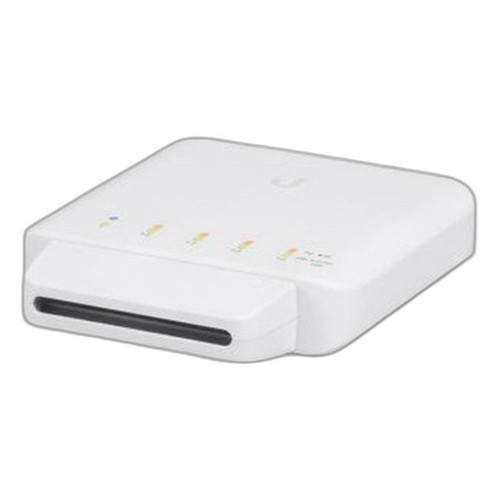
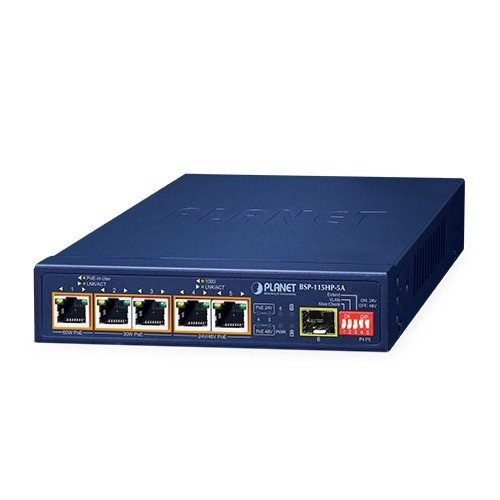
Both the Ubiquiti USW-FLEX and the Code Blue SLNP0048 are 5-port PoE network switches aimed at edge and field deployments where powered endpoints — cameras, intercoms, access points — must receive data and power from a compact, remotely installable unit. The USW-FLEX targets general-purpose managed network infrastructure with full Layer 2 configuration; the SLNP0048 is a purpose-built switch designed specifically to serve Code Blue emergency communication endpoints. This comparison covers port power and throughput, physical installation and environmental resilience, and management and ecosystem compatibility.
In This Guide
- Which switch delivers more PoE power and network throughput to connected endpoints?
- Which switch is better suited to demanding physical installation environments?
- Which switch offers more management capability and ecosystem flexibility?
- Which should you choose: the USW-FLEX or the SLNP0048?
- Side-by-Side Specs
- FAQ
Which switch delivers more PoE power and network throughput to connected endpoints?
The USW-FLEX specifies a total PoE++ (802.3bt) output budget of 60 W across its 5 ports, with an output voltage of 54 V at 1.11 A and ESD protection rated at ±16 kV air and ±16 kV contact. Its switching capacity is stated as 10 Gbps with a non-blocking throughput of 5 Gbps and a forwarding rate of 7 Mpps, supporting speeds of 1G/100M/10M per port. The device itself consumes only 5 W excluding PoE output.
The SLNP0048 is specified as a PoE+ (802.3at) switch. No total power budget figure, per-port power allocation, switching capacity, throughput, forwarding rate, or per-port speed are provided in the available specifications. Buyers requiring confirmed PoE power headroom or throughput numbers for the SLNP0048 should request a formal datasheet from Code Blue.
Which switch is better suited to demanding physical installation environments?
The USW-FLEX carries a specified operating temperature range of -40 °C to 55 °C (-40 °F to 131 °F) at 46 W PoE output, with a storage range of -30 °C to 70 °C. Its compact form factor (122.5 × 107.1 × 28 mm, 230 g) supports desktop, wall-mount, and pole-mount configurations. It accepts power input via PoE+ at 46 W or 20 W and operates on a 50–57 V PoE voltage range. Certifications include CE, FCC, IC, and Anatel.
The SLNP0048 supports wall, pole, recessed, and rack mounting — a broader set of mount types than the USW-FLEX, notably adding recessed and rack options. However, no operating temperature range, dimensions, weight, input voltage range, power consumption, or environmental/regulatory certifications are provided in the available specifications for the SLNP0048. Its PoE standard is PoE+ (802.3at), which is one tier below the USW-FLEX's PoE++ (802.3bt).
Which switch offers more management capability and ecosystem flexibility?
The USW-FLEX is a fully managed switch supporting up to 1,000 VLANs and is managed via Ethernet (UniFi controller ecosystem). It is NDAA compliant and integrates into Ubiquiti's UniFi platform, enabling centralized configuration, monitoring, and traffic segmentation across security zones. It is suitable for multi-vendor deployments where granular Layer 2 control is required.
The SLNP0048 is described in its specifications as designed to deliver PoE+ power and data to Code Blue endpoints specifically, with product copy referencing use in tower, wall-mount, and refuge-area clusters. No management interface, VLAN support, software platform, NDAA compliance status, or third-party interoperability data are provided in the available specifications. Its positioning is as a purpose-built accessory within the Code Blue ecosystem rather than a general-purpose managed switch.
Which should you choose: the USW-FLEX or the SLNP0048?
Our take: The USW-FLEX is the stronger choice when buyers need a fully specified, managed, multi-vendor edge switch with documented throughput and environmental ratings. It provides a confirmed 60 W PoE++ output budget versus the SLNP0048's unquantified PoE+ capability, a -40 °C to 55 °C operating range versus no stated range for the SLNP0048, and 1,000-VLAN managed switching versus no documented management capability on the SLNP0048. The SLNP0048's specification data is too sparse for a complete side-by-side evaluation on power budget, throughput, or environmental resilience. The SLNP0048 is best evaluated solely as a Code Blue ecosystem component — if a site is standardized on Code Blue emergency communication hardware and Code Blue recommends this switch for their endpoints, it warrants review of Code Blue's own technical documentation before comparing it against general-purpose infrastructure switches.
Side-by-Side Comparison
Spec-for-spec, from manufacturer data.
| Specification | Ubiquiti USW-FLEX | Code Blue SLNP0048 |
|---|---|---|
| PoE Standard | PoE++ (802.3bt) | PoE+ (802.3at) |
| Total PoE Output Budget | 60 W | — |
| Number of Ports | 5 | 5 |
| Port Speed | 1G / 100M / 10M | — |
| Switching Capacity | 10 Gbps | — |
| Non-Blocking Throughput | 5 Gbps | — |
| Forwarding Rate | 7 Mpps | — |
| VLAN Support | 1,000 VLANs | — |
| Management | Managed (UniFi / Ethernet) | — |
| Operating Temperature | -40 °C to 55 °C | — |
| Storage Temperature | -30 °C to 70 °C | — |
| Mount Types | Desktop, wall, pole | Wall, pole, recessed, rack |
| Dimensions | 122.5 × 107.1 × 28 mm | — |
| Weight | 230 g (8.1 oz) | — |
| Power Consumption (excl. PoE) | 5 W | — |
| NDAA Compliant | Yes | — |
| Certifications | CE, FCC, IC, Anatel | — |
| ESD Protection | ±16 kV air / ±16 kV contact | — |
Frequently Asked Questions
Which should you choose: the USW-FLEX or the SLNP0048?
The USW-FLEX is the stronger choice when buyers need a fully specified, managed, multi-vendor edge switch with documented throughput and environmental ratings. It provides a confirmed 60 W PoE++ output budget versus the SLNP0048's unquantified PoE+ capability, a -40 °C to 55 °C operating range versus no stated range for the SLNP0048, and 1,000-VLAN managed switching versus no documented management capability on the SLNP0048. The SLNP0048's specification data is too sparse for a complete side-by-side evaluation on power budget, throughput, or environmental resilience. The SLNP0048 is best evaluated solely as a Code Blue ecosystem component — if a site is standardized on Code Blue emergency communication hardware and Code Blue recommends this switch for their endpoints, it warrants review of Code Blue's own technical documentation before comparing it against general-purpose infrastructure switches.
Is the USW-FLEX or SLNP0048 better for powering high-draw cameras and access points?
Based on available specifications, the USW-FLEX is the only model with a documented total PoE output budget: 60 W PoE++ (802.3bt). The SLNP0048 is specified as PoE+ (802.3at) but provides no total power budget figure. If per-port or aggregate PoE capacity is a decision factor, the USW-FLEX is the only option with confirmed numbers; buyers should request a formal Code Blue datasheet to obtain SLNP0048 power figures before making a final selection.
Can either switch be used in outdoor or unheated enclosures?
The USW-FLEX specifies an operating range of -40 °C to 55 °C, making it suitable for outdoor, dock, and unheated cabinet deployments. The SLNP0048 does not include an operating temperature range in its available specifications, so its suitability for outdoor or extreme-temperature environments cannot be confirmed from the provided data. Installers with outdoor requirements should verify the SLNP0048's rated temperature range directly with Code Blue.
Is the USW-FLEX or SLNP0048 a better fit for a multi-vendor security network with VLAN segmentation?
The USW-FLEX is explicitly specified as a managed switch supporting 1,000 VLANs and integrates with the Ubiquiti UniFi management platform, making it suited to multi-vendor deployments requiring traffic isolation. The SLNP0048 has no documented VLAN support or management interface in the available specifications and appears designed as a dedicated Code Blue ecosystem component. For mixed-vendor deployments requiring managed switching, the USW-FLEX is the only option with confirmed capability.
More Network Switch Comparisons
- TP-Link ES205GP vs Ubiquiti USW-FLEX
- TP-Link ES205GP vs Ubiquiti USW-FLEX-MINI
- TP-Link ES205GP vs Ubiquiti USW-FLEX-3
- TP-Link ES205GP vs Ubiquiti USW-FLEX-MINI-3
- TP-Link ES205GP vs TP-Link SG105PP-M2
- TP-Link SG105PP-M2 vs Ubiquiti USW-FLEX
Network Switch Buying Guides
Get a Second Opinion on Your Camera Choice
Share your site layout, coverage goals, and budget. Our team will validate the camera selection, flag anything we would change, and recommend products that match the use case.