
Transition Networks SISPM1040-384-LRT-C vs Transition Networks SISPM1040-582-LRT: Specification Comparison
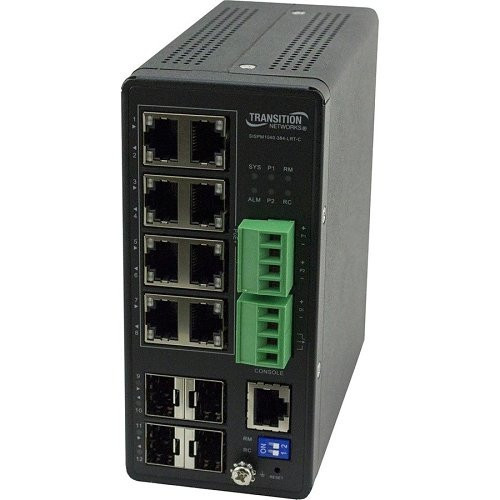
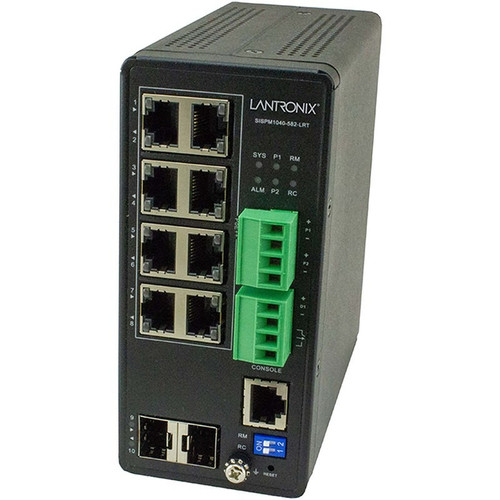
Both the SISPM1040-384-LRT-C and the SISPM1040-582-LRT are Transition Networks 8-port managed hardened Gigabit Ethernet PoE switches designed for outdoor and field-hardened security deployments. They share the same port count, MAC table size, physical dimensions, TAA compliance, and management feature set. The primary differentiator under evaluation is PoE power delivery standard — PoE+ (802.3at) versus PoE++ (802.3bt) — along with minor differences in documented management capabilities and environmental spec disclosures.
In This Guide
- How much PoE power can each switch deliver per port, and which endpoints does that support?
- How do these switches compare in physical build, form factor, and environmental hardening?
- What Layer 2/3 management and network segmentation capabilities does each switch provide?
- Which should you choose: the SISPM1040-384-LRT-C or the SISPM1040-582-LRT?
- Side-by-Side Specs
- FAQ
How much PoE power can each switch deliver per port, and which endpoints does that support?
The SISPM1040-384-LRT-C delivers up to 30W per port under IEEE 802.3at (PoE+). All 8 ports are PoE+-capable, making it suitable for standard IP cameras, access control readers, VoIP phones, and most fixed-lens security cameras that draw under 30W.
The SISPM1040-582-LRT delivers up to 90W per port under IEEE 802.3bt (PoE++). All 8 ports carry this elevated budget, which covers PTZ cameras, thermal imaging cameras, 802.11ax Wi-Fi access points, and other high-draw endpoints that exceed the 30W PoE+ ceiling.
The gap is significant: 90W versus 30W per port is a 3× difference in per-port power headroom. For deployments mixing standard fixed cameras with PTZ or thermal units, only the SISPM1040-582-LRT avoids the need for a separate power injector or mid-span.
How do these switches compare in physical build, form factor, and environmental hardening?
Both units share identical stated dimensions of 18" × 16" × 10" and carry an outdoor/field-hardened designation. The SISPM1040-384-LRT-C explicitly lists an 'Outdoor' environment rating in its structured specs.
The SISPM1040-582-LRT is described as fanless, sealed, and hardened for temperature extremes. No equivalent fanless or sealed designation is stated in the SISPM1040-384-LRT-C spec data provided; that detail is absent for Product A.
Both are TAA compliant and carry a lifetime warranty per their top-level structured specs. Note: the SISPM1040-384-LRT-C's tilde-prefixed enrichment data references a '5-Year limited warranty,' which conflicts with the structured spec listing of 'Lifetime.' Buyers should verify the warranty term against the official datasheet at /content/product-datasheets/SISPM1040-384-LRT-C.pdf before specifying.
What Layer 2/3 management and network segmentation capabilities does each switch provide?
The SISPM1040-384-LRT-C is described as fully managed with VLAN (802.1Q) and QoS support. No explicit mention of SNMP, port security, or Layer 2/3 classification is found in the provided specs.
The SISPM1040-582-LRT is documented as a managed Layer 2 switch with VLAN support, port security, SNMP, and QoS. The presence of SNMP and port security as named features gives installers and IT teams explicit hooks for network monitoring and access control enforcement.
Both switches carry an 8K MAC address table, suitable for mid-scale distributed architectures. Neither product's provided specs state switching capacity (Gbps), backplane throughput, or jumbo frame support, so no comparison can be made on those dimensions.
Which should you choose: the SISPM1040-384-LRT-C or the SISPM1040-582-LRT?
Our take: The SISPM1040-582-LRT is the stronger choice when the deployment includes PTZ cameras, thermal imagers, or any endpoint requiring more than 30W — because its 90W-per-port PoE++ (IEEE 802.3bt) budget is 3× the 30W-per-port PoE+ (IEEE 802.3at) ceiling of the SISPM1040-384-LRT-C. Both switches share the same 8-port Gigabit layout, 8K MAC table, TAA compliance, and identical 18" × 16" × 10" footprint, so the decision reduces almost entirely to power tier and documented management depth. The SISPM1040-582-LRT also explicitly lists SNMP and port security in its spec data — capabilities absent from the SISPM1040-384-LRT-C's provided specs. For installations limited to standard fixed-lens IP cameras and access control readers drawing under 30W, the SISPM1040-384-LRT-C remains a valid option, but buyers should first resolve the warranty discrepancy (structured spec says Lifetime; enrichment copy says 5-Year) against the official datasheet.
Side-by-Side Comparison
Spec-for-spec, from manufacturer data.
| Specification | Transition Networks SISPM1040-384-LRT-C | Transition Networks SISPM1040-582-LRT |
|---|---|---|
| SKU | SISPM1040-384-LRT-C | SISPM1040-582-LRT |
| Device Type | Managed Hardened PoE+ Switch | Managed Hardened PoE++ Switch |
| Total Ports | 8 | 8 |
| Port Speed | 10/100/1000 Mbps | 10/100/1000 Mbps (Gigabit) |
| PoE Standard | IEEE 802.3at (PoE+) | IEEE 802.3bt (PoE++) |
| Max PoE Per Port | 30W | 90W |
| All Ports PoE-Capable | Yes (all 8) | Yes (all 8) |
| MAC Address Table | 8K entries | 8K entries |
| Management | Fully Managed, VLAN, QoS | Layer 2 Managed, VLAN, QoS, SNMP, Port Security |
| TAA Compliant | Yes | Yes |
| Environment Rating | Outdoor | Field-Hardened, Fanless, Sealed |
| Fanless / Sealed | — | Yes |
| Warranty (Structured Spec) | Lifetime | Lifetime |
| Warranty (Enrichment Note) | 5-Year limited (conflict — verify) | — |
| Dimensions | 18" x 16" x 10" | 18" x 16" x 10" |
| Datasheet | /content/product-datasheets/SISPM1040-384-LRT-C.pdf | /content/product-datasheets/SISPM1040-582-LRT.pdf |
Frequently Asked Questions
Which should you choose: the SISPM1040-384-LRT-C or the SISPM1040-582-LRT?
The SISPM1040-582-LRT is the stronger choice when the deployment includes PTZ cameras, thermal imagers, or any endpoint requiring more than 30W — because its 90W-per-port PoE++ (IEEE 802.3bt) budget is 3× the 30W-per-port PoE+ (IEEE 802.3at) ceiling of the SISPM1040-384-LRT-C. Both switches share the same 8-port Gigabit layout, 8K MAC table, TAA compliance, and identical 18" × 16" × 10" footprint, so the decision reduces almost entirely to power tier and documented management depth. The SISPM1040-582-LRT also explicitly lists SNMP and port security in its spec data — capabilities absent from the SISPM1040-384-LRT-C's provided specs. For installations limited to standard fixed-lens IP cameras and access control readers drawing under 30W, the SISPM1040-384-LRT-C remains a valid option, but buyers should first resolve the warranty discrepancy (structured spec says Lifetime; enrichment copy says 5-Year) against the official datasheet.
Can the SISPM1040-384-LRT-C power a PTZ or thermal camera?
Based on the provided specs, the SISPM1040-384-LRT-C delivers up to 30W per port under IEEE 802.3at (PoE+). Many PTZ and thermal cameras require more than 30W. If your endpoint's power draw exceeds 30W, the SISPM1040-582-LRT — rated at up to 90W per port under IEEE 802.3bt (PoE++) — is the appropriate choice. Verify your camera's PoE class requirement before specifying either switch.
Do both switches support SNMP for network monitoring?
Only the SISPM1040-582-LRT explicitly lists SNMP in the provided spec data. The SISPM1040-384-LRT-C's provided specs reference VLAN and QoS support but do not mention SNMP. Buyers who require SNMP-based monitoring should confirm SISPM1040-384-LRT-C capabilities against its official datasheet before purchasing.
Which switch is better suited for a TAA-compliant government deployment with long lifecycle requirements?
Both switches are documented as TAA compliant and both list a lifetime warranty in their structured spec fields. Neither has a clear advantage on those two criteria alone. However, the SISPM1040-384-LRT-C's enrichment copy states a '5-Year limited warranty,' which conflicts with the structured 'Lifetime' listing — buyers on government contracts should verify the warranty term directly with Transition Networks before committing to that model.
More Network Switch Comparisons
- Vivotek IHT-1271 vs TP-Link SG3210XHP-M2
- Vivotek IHT-1271 vs TP-Link S4500-8GP2F
- Vivotek IHT-1271 vs TP-Link SG1210P
- Vivotek IHT-1271 vs Allied Telesis AT-x530L-10GHXm-10
- Vivotek IHT-1271 vs Vivotek GEV-108A-130
- Vivotek IHT-1271 vs Vivotek IHT-1000
Network Switch Buying Guides
Get a Second Opinion on Your Camera Choice
Share your site layout, coverage goals, and budget. Our team will validate the camera selection, flag anything we would change, and recommend products that match the use case.