
Transition Networks S4224 vs Transition Networks SM24T6DPA-NA: Specification Comparison
Both products are 24-port unmanaged Gigabit Ethernet switches from Transition Networks, targeting physical security and industrial network deployments where plug-and-play simplicity is preferred over managed complexity. The S4224 (SKU S4224) and SM24T6DPA-NA (SKU SM24T6DPA-NA) share the same port count, speed tier, management philosophy, and lifetime warranty, but diverge on environmental hardening, physical mounting, fiber uplink capability, and layer-2 loop protection — the three axes most relevant to installers choosing between a hardened field switch and a standard-environment distribution switch.
In This Guide
How do the port configurations and fiber uplink capabilities compare?
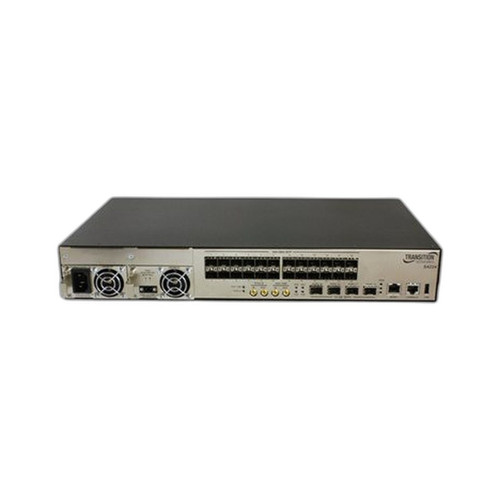
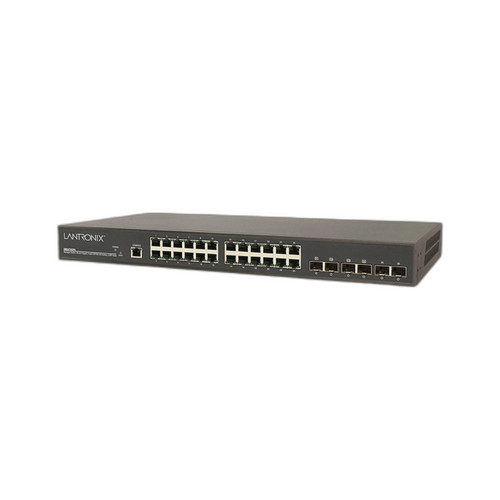
Both switches provide 24 Gigabit Ethernet ports running full-duplex, sufficient to terminate a dense array of IP cameras, access-control readers, and IoT endpoints on a single device. The S4224 adds a multi-mode fiber uplink rated to 1000 m, giving installers a copper-free, EMI-immune backbone run — a meaningful advantage in electrically noisy industrial environments such as manufacturing floors, utility substations, or transportation infrastructure. The SM24T6DPA-NA specifies 24 Gigabit ports with SFP slots listed as '00', meaning no fiber uplink capability is documented in the provided specifications. Buyers requiring fiber extension beyond the 100 m copper limit must select the S4224; the SM24T6DPA-NA is documented only for copper-connected, short-reach deployments.
Which switch is built for harsher physical and environmental conditions?
The S4224 carries an explicit industrial operating temperature rating and is designed for DIN rail mounting, the standard form factor for control cabinets, industrial enclosures, and field panels where rack space does not exist. This combination makes it directly deployable inside electrical panels alongside PLCs, relays, and terminal blocks without a separate enclosure. The SM24T6DPA-NA provides no operating temperature specification in the supplied data — neither an industrial rating nor a commercial range is stated — and no mount type is documented. Its weight is listed at 5.3 (units unspecified), suggesting a conventional chassis form factor. Installers targeting outdoor cabinets, transportation hubs, or environments with wide temperature swings should treat the S4224's industrial rating as a hard differentiator; the SM24T6DPA-NA's environmental envelope cannot be evaluated from available specs.
What layer-2 intelligence does each switch provide despite being unmanaged?
Both switches are unmanaged and require no configuration, but they differ in what passive network protection they offer. The SM24T6DPA-NA implements 802.1D Spanning Tree Protocol (STP), which detects and blocks redundant cable paths that would otherwise cause broadcast storms — a real risk in ring or mesh cable layouts common in perimeter security runs. The S4224 does not document any STP or loop-protection mechanism in the provided specifications. Conversely, the SM24T6DPA-NA's specs contain a conflicting data point: the 'Management' field references 'VLAN and Private management of up to 8 traffic types,' yet the 'Architecture' field explicitly states 'No VLAN or remote management support.' Neither claim can be confirmed without the full datasheet; buyers requiring verified VLAN segmentation should consult the SM24T6DPA-NA datasheet directly before specifying.
Which should you choose: the S4224 or the SM24T6DPA-NA?
Our take: The S4224 is the stronger choice when the installation environment demands industrial-grade temperature tolerance, DIN rail mounting inside a control cabinet, or a fiber uplink to extend the network beyond copper's 100 m limit. It delivers three concrete spec advantages: a documented industrial operating temperature rating (SM24T6DPA-NA has none on record), DIN rail mount compatibility (SM24T6DPA-NA mount type is unspecified), and a multi-mode fiber uplink to 1000 m (SM24T6DPA-NA shows zero SFP slots). The SM24T6DPA-NA counters with 802.1D STP loop protection, which the S4224 does not document, making it the more defensible choice for standard commercial environments where cable redundancy or accidental loop creation is a concern. Both carry a lifetime warranty and 24 Gigabit ports. Platform qualifier: specify the S4224 for hardened field cabinets and fiber runs; specify the SM24T6DPA-NA for climate-controlled, copper-only, commercial-building deployments where STP is a site requirement.
Side-by-Side Comparison
Spec-for-spec, from manufacturer data.
| Specification | Transition Networks S4224 | Transition Networks SM24T6DPA-NA |
|---|---|---|
| SKU | S4224 | SM24T6DPA-NA |
| Total Ports | 24 | 24 |
| Port Speed | Gigabit | Gigabit |
| Fiber Uplink | Multi-mode, up to 1000 m | — |
| SFP Slots | — | 0 (none specified) |
| Management | Unmanaged | Unmanaged |
| Loop Protection | Not specified | 802.1D STP |
| Operating Temperature | Industrial-rated | Not specified |
| Mount Type | DIN Rail | Not specified |
| Form Factor | DIN Rail module | Chassis (5.3 weight units) |
| VLAN Support | Not specified | Conflicting — not confirmed |
| Warranty | Lifetime | Lifetime |
| Datasheet | S4224.pdf | SM24T6DPA-NA.pdf |
| Brand | Transition Networks | Transition Networks |
Frequently Asked Questions
Which should you choose: the S4224 or the SM24T6DPA-NA?
The S4224 is the stronger choice when the installation environment demands industrial-grade temperature tolerance, DIN rail mounting inside a control cabinet, or a fiber uplink to extend the network beyond copper's 100 m limit. It delivers three concrete spec advantages: a documented industrial operating temperature rating (SM24T6DPA-NA has none on record), DIN rail mount compatibility (SM24T6DPA-NA mount type is unspecified), and a multi-mode fiber uplink to 1000 m (SM24T6DPA-NA shows zero SFP slots). The SM24T6DPA-NA counters with 802.1D STP loop protection, which the S4224 does not document, making it the more defensible choice for standard commercial environments where cable redundancy or accidental loop creation is a concern. Both carry a lifetime warranty and 24 Gigabit ports. Platform qualifier: specify the S4224 for hardened field cabinets and fiber runs; specify the SM24T6DPA-NA for climate-controlled, copper-only, commercial-building deployments where STP is a site requirement.
Is the S4224 or SM24T6DPA-NA better for outdoor or industrial cabinet installations?
The S4224 is the documented choice for industrial environments. It carries an explicit industrial operating temperature rating and DIN rail mounting, making it suitable for control cabinets, field enclosures, and electrically noisy locations. The SM24T6DPA-NA has no operating temperature rating or mount type listed in its available specifications, so its suitability for harsh environments cannot be confirmed from the provided data.
Which switch supports fiber uplinks for long cable runs between buildings or across a campus?
Only the S4224 documents fiber uplink support — multi-mode fiber rated to 1000 m. The SM24T6DPA-NA lists SFP slots as '00', meaning no fiber uplink capability is specified. If a fiber backbone run is required, the S4224 is the only option of the two with a documented fiber interface.
Does either switch protect against broadcast storms caused by accidental cable loops?
The SM24T6DPA-NA documents 802.1D Spanning Tree Protocol (STP), which actively detects and blocks loops that would otherwise cause broadcast storms. The S4224 does not document STP or any equivalent loop-protection mechanism in the provided specifications. For deployments where ring cabling or redundant paths are possible, the SM24T6DPA-NA's STP support is a meaningful differentiator.
More Network Switch Comparisons
- TP-Link S5500-24GP4XF vs NETGEAR GS728TP-300NAS
- TP-Link S5500-24GP4XF vs Comnet CNGE24FX12TX12MSPOE
- TP-Link S5500-24GP4XF vs Ubiquiti USW-24
- TP-Link S5500-24GP4XF vs Ubiquiti USW-ENTERPRISEXG-24
- TP-Link S5500-24GP4XF vs TP-Link SL2428P
- TP-Link S5500-24GP4XF vs TP-Link SG3428XPP-M2
Network Switch Buying Guides
Get a Second Opinion on Your Camera Choice
Share your site layout, coverage goals, and budget. Our team will validate the camera selection, flag anything we would change, and recommend products that match the use case.